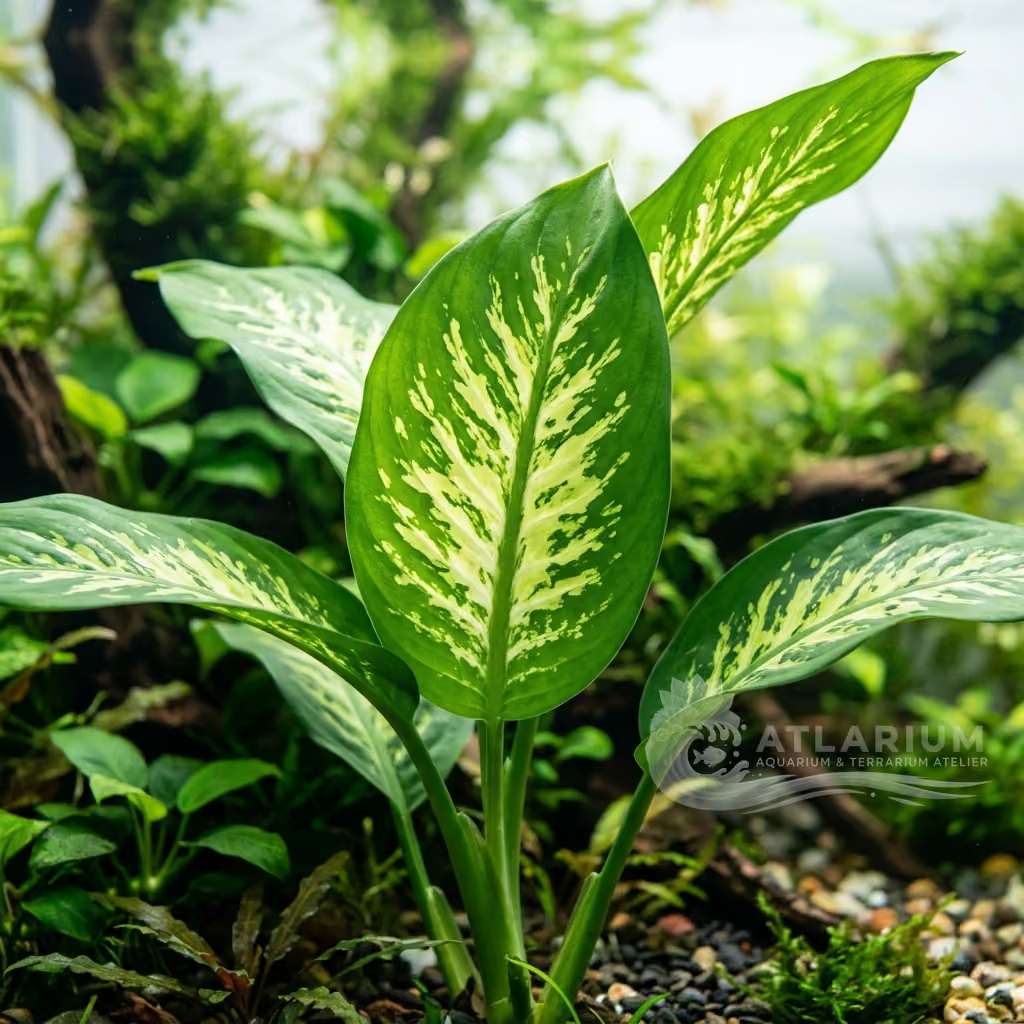
Cabomba palaeformis 'Grün'
Cabomba palaeformis 'Grün'
A resilient green variety from Central America, Cabomba palaeformis 'Grün' tolerates hard water and high temperatures better than other species. It needs medium-high light to maintain compact nodes.
Température de l’eau
20 - 33 °C
Valeur du pH
6 - 8
Type d'eau
Eau douce
Lumière
Medium to High
CO2
Faible - Élevée
Hauteur attendue
45 cm
Largeur attendue
15 cm
KH
7 - 21 dKH

Description de l'espèce
Geographical Origin and Habitat: This species is native to Central America, particularly Mexico, Guatemala, and Honduras. It grows in running or still waters, often in warm rivers, canals, and low-altitude lakes, adapting well to hot, humid tropical climates.
Taxonomy & Genetics: Belongs to the Cabombaceae family. The 'Grün' (Green) variety is a cultivated form selected to maintain a deep emerald green
Color & Texture: even under varying light conditions, and is genetically hardier and more tolerant of water hardness than Cabomba caroliniana.
Physical Structure: It features branched, flexible, and relatively strong stems. The submerged leaves are arranged in finely divided fans along the stem, though with slightly broader and less dense lobes compared to Cabomba aquatica. It develops small white or purplish floating flowers at the stem tips.
Color & Texture: Uniform bright lime or emerald green. The leaf texture is feathery and airy, creating beautiful contrasts of volume and texture within the aquascape layout.

Soins, reproduction et cohabitation
Lighting & CO2: Requires medium to high lighting to thrive and keep leaf nodes compact along the stem. CO2 injection is not mandatory, but it stimulates much more lush growth and dense branching.
Nutrition & Substrate: Benefits from both root nutrition (with a fertilized sandy substrate) and foliar nutrition (via liquid fertilizers containing iron and potassium). The presence of nutrients in the
Water Chemistry: Unlike other Cabomba species, it tolerates and prefers moderately hard to hard water (KH 7-21) and a neutral or slightly alkaline pH (6.0-8.0). It is also highly tolerant of high temperatures, up to 33°C, making it ideal for warm tropical aquariums.
Space Management & Placement: Best placed in the background of the tank or on the sides of the midground. Growing quickly, it requires open space and should not be shaded by taller species or bulky hardscape.
Pruning: Pruning is done by cutting off vigorous tops and planting them in the substrate. The remaining stem will produce new lateral branches, thickening the area.
Risks & Diseases: If exposed to insufficient light, it tends to drop its lower leaves and rot. The accumulation of debris or hair algae between the feathery leaves can quickly suffocate the plant if not supported by adequate water flow.

Origine et répartition géographiques
This species is native to Central America, particularly Mexico, Guatemala, and Honduras. It grows in running or still waters, often in warm rivers, canals, and low-altitude lakes, adapting well to hot, humid tropical climates.
Origine
Amérique centrale et Caraïbes

Profil de plante
- Emplacement
- Plan intermédiaire
- Because of its rapid vertical growth and tall stature, Cabomba palaeformis 'Grün' is typically utilized as a classic background plant. It looks incredibly striking when planted in dense groups or large bunches, creating a beautiful, soft textured curtain at the back of the aquarium. It should be placed in an area that receives intense, unobstructed light, as shading will cause the lower sections to lose their leaves and eventually rot. Due to its delicate structure, it should be kept away from strong, direct filter outflows that might damage its fine leaves.
- Forme botanique
- Tige
- The botanical form of Cabomba palaeformis 'Grün' is characterized by its long, flexible stems covered in finely divided, fan-shaped leaves that give it a highly feathery texture. The leaves are arranged in whorls along the stem, creating a lush, voluminous appearance when viewed in clusters. Depending on the exact variant and the light intensity, the color can range from bright, vivid green to striking shades of red, orange, or copper. When it reaches the surface and is allowed to grow emersed, it may produce small, floating leaves and delicate, attractive flowers.
- Croissance
- Rapide
- Cabomba palaeformis 'Grün' is renowned for its incredibly rapid growth rate, easily reaching the surface of the aquarium in a matter of weeks under optimal conditions. This vigorous growth makes it an excellent plant for absorbing excess nutrients and combating algae outbreaks in newly established tanks. However, this fast pace means that aquarists must be prepared for frequent and regular pruning to keep the plant well-shaped and prevent it from shading out other species. If left unchecked, it will quickly trail across the water surface and block out light to the lower levels of the tank.
- Substrat
- Faible
- A soft, nutrient-rich substrate is highly beneficial for the optimal development of Cabomba palaeformis 'Grün'. The plant develops an extensive, fine root system that efficiently extracts nutrients deeply buried in the aquasoil. While it can theoretically grow in plain gravel or sand, growth will be markedly slower and the internodes may become undesirably elongated. Using a high-quality aquatic soil or enriching an inert substrate with root tabs will ensure the stems remain thick and the foliage stays dense.
- Fertilisation de la colonne d'eau
- Recommandée
- Water column fertilization plays a crucial role in maintaining the lush canopy of Cabomba palaeformis 'Grün'. Due to its rapid metabolic rate, it rapidly depletes the water column of essential macronutrients and trace elements, necessitating a comprehensive liquid dosing regime. Providing a steady supply of potassium and iron is particularly important to prevent yellowing leaves and to encourage strong, vibrant new shoots. Dosing should be carefully calibrated to match the high uptake rate of the plant while avoiding excesses that could lead to algae blooms.
- Fertilisation racinaire
- Aucune
- Although Cabomba palaeformis 'Grün' absorbs a significant portion of its nutrients through its foliage, strong root fertilization leads to dramatically thicker stems and more robust overall health. Planting the stems in a nutrient-dense aquasoil or regularly inserting root tabs near its base will provide a steady, slow-release source of vital elements. This dual approach of column and root feeding ensures that the plant never experiences a nutrient deficiency during its rapid growth spurts. Strong roots also help anchor the highly buoyant stems securely in the substrate.
- Taille
- Occasionnelle
- Frequent trimming is necessary to prevent the plant from overtaking the aquarium and blocking light from other species. To prune, simply cut the top portion of the stem and replant it to create a denser bush. The remaining bottom portion will often develop side shoots, further increasing the volume of the plant. Discard any old, bare stems that have lost their lower leaves to maintain a pristine look.
- Propagation
- Boutures
- Propagating Cabomba palaeformis 'Grün' is incredibly easy and follows the standard procedure for most aquatic stem plants. To multiply the plant, simply use sharp scissors to cut the top portion of a healthy stem, ensuring the cutting is at least a few inches long. The bottom section left in the substrate will soon develop side shoots and become bushier, while the newly cut top portion can be directly replanted into the substrate. Gently pushing the new cutting into the aquasoil will allow it to quickly develop roots and establish itself as an independent, growing stem.
- Sensibilité
- Modérée
- This species is particularly sensitive to poor water conditions, lack of light, and certain chemical treatments. Low lighting will quickly cause the lower leaves to drop off, leaving bare, unattractive stems. It also prefers clean water with low levels of suspended organic waste to prevent algae from choking its fine leaves. Sudden changes in water chemistry can cause the delicate foliage to melt.
- Rôle dans le décor
- Plan intermédiaire, Arrière-plan
- This plant is widely used to create dense, textured background bushes that provide a dramatic backdrop for the aquascape. Its fine leaves offer excellent hiding spots for small fish and fry, adding to the tank's overall ecosystem. The soft, feathery look softens the hard lines of rocks and driftwood. When planted in large groups, it creates a striking visual impact that draws the eye.

Espèces associées
Recommandations regroupées par proches parents, compagnons et soins similaires.