Ceratopteris thalictroides
Ceratopteris thalictroides
Water sprite is a fast-growing, amphibious fern forming large rosettes of finely divided, parsley-like leaves. It requires medium to high light and acts as an excellent natural filter for nitrates.
Température de l’eau
18 - 30 °C
Valeur du pH
5 - 8
Type d'eau
Eau douce
Lumière
Medium to High
CO2
Faible - Élevée
Hauteur attendue
50 cm
Largeur attendue
40 cm
KH
0 - 21 dKH

Description de l'espèce
Geographical Origin and Habitat: Found throughout tropical and subtropical regions worldwide, particularly in Asia, Africa, Central and South America, and northern Australia. It populates shallow water bodies, rice paddies, wet ditches, and muddy riverbanks, displaying a prominent amphibious behavior.
Taxonomy & Genetics: Commonly known as water sprite or water fern. It belongs to the Pteridaceae family. This species shows high morphological variability based on growth conditions, a property regulated by a flexible genome that responds to light intensity and water availability.
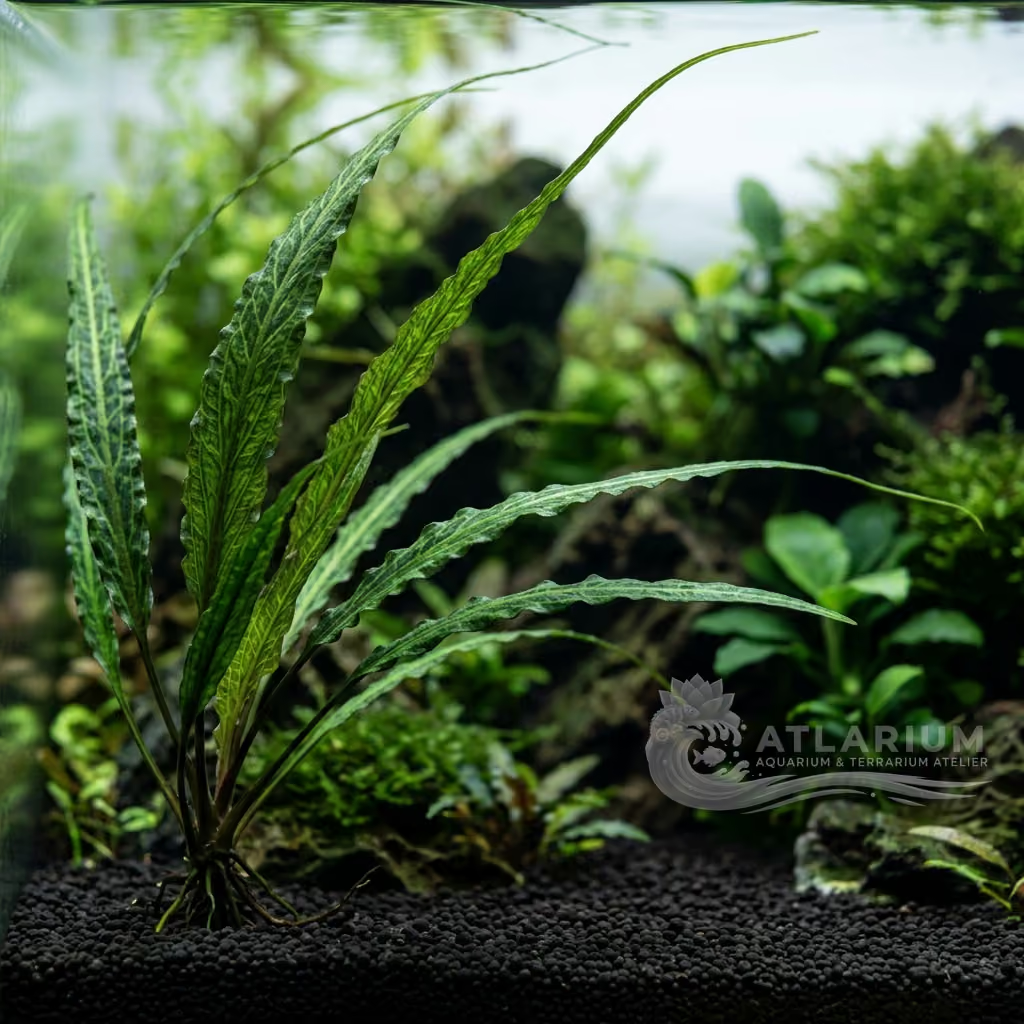
Physical Structure: Grows forming large rosettes from which erect, widely divided, and lobed fronds extend. The roots are abundant, long, and thread-like, floating when the plant is kept adrift or anchoring in the mud. It lacks true stems, having sturdy petioles that support the leaves.
Color & Texture: Features a bright green or light olive green coloration. The visual texture is rich and deeply divided, resembling parsley or celery, creating dense and decorative bushes that break the rigid geometry of aquascapes.

Soins, reproduction et cohabitation
Lighting & CO2: Prefers medium to high lighting. It benefits from CO2 injection in submerged setups but grows equally well without it in open aquariums if its leaves can reach the surface and access atmospheric air.
Nutrition & Substrate: Extremely nutrient-hungry. It absorbs nitrates and phosphates at an astonishing rate directly from the
Water Chemistry: Tolerates water from very soft to very hard (KH 0-21) and pH levels from 5.0 to 8.0. The optimal temperature range is between 18 and 30°C. It adapts well to stagnant water as well as moderate currents.
Space Management & Placement: Placed in the background of the aquarium to quickly fill large spaces, or left floating. As a floating plant, its roots hang down, creating a magnificent natural biotope for surface fish like labyrinth fish.
Pruning: Pruning consists of removing decayed or oversized outer fronds by cutting the petiole close to the central rosette. It must be pruned regularly to prevent it from invading the entire tank.
Risks & Diseases: Sensitive to potassium deficiency (causing pinholes in leaves) and iron deficiency (causing yellowing). The leaves are fragile and can rot if the plant is buried too deeply, covering the crown of the central rosette.

Origine et répartition géographiques
Found throughout tropical and subtropical regions worldwide, particularly in Asia, Africa, Central and South America, and northern Australia. It populates shallow water bodies, rice paddies, wet ditches, and muddy riverbanks, displaying a prominent amphibious behavior.
Origine
Asie du Sud et du Sud-EstAmérique centrale et CaraïbesAmérique du NordAfrique et MadagascarAsie de l'EstAustralie, Nouvelle-Guinée et Océanie

Profil de plante
- Emplacement
- Plan intermédiaire
- It is extremely versatile and can be anchored in the substrate, attached to hardscape, or allowed to float freely. Care must be taken not to bury the central rosette to avoid suffocating the plant.
- Forme botanique
- Rosette
- The plant produces deeply incised, delicate, bright green fronds that create a lush, feathery texture. As it matures, the leaves can become quite large and complex, adding significant volume to the aquascape.
- Croissance
- VERY_FAST
- It is famously fast-growing, quickly transforming from a small sprig into a massive, bushy centerpiece. Regular and sometimes aggressive trimming is required to keep its size manageable.
- Substrat
- Faible
- Ceratopteris thalictroides is an incredibly versatile fern that can be grown either rooted in an inert substrate or left to float freely at the water's surface. When planted, a simple gravel or sand base is perfectly adequate, as it primarily draws its nutrients directly from the water column through its extensive, fine root network. If planting in the substrate, ensure the crown of the plant remains slightly exposed above the gravel to prevent rotting while allowing the roots to securely anchor the buoyant foliage.
- Fertilisation de la colonne d'eau
- Recommandée
- It feeds heavily from the water column, absorbing macronutrients and trace elements rapidly. Consistent liquid dosing is highly beneficial and promotes vigorous, healthy new growth.
- Fertilisation racinaire
- Aucune
- If planted, it establishes an extensive root system and will heavily utilize nutrients from aquasoil or root tabs. It is, however, not strictly reliant on substrate feeding.
- Taille
- Occasionnelle
- To prune, simply snip off the oldest, outermost leaves as close to the base as possible. Thinning out the plant regularly ensures that light reaches the inner growth and prevents bottom leaves from dying off.
- Propagation
- Division
- It naturally and continuously produces small plantlets along the margins of its older leaves. These baby plants can be easily detached and replanted to create a dense thicket.
- Sensibilité
- Modérée
- It is generally a very resilient and beginner-friendly plant, though its leaves are physically delicate. It may melt slightly when first introduced to a new tank but usually recovers quickly.
- Rôle dans le décor
- Plan intermédiaire, Arrière-plan
- It is widely used as a bright green background plant or a stunning, fast-growing centerpiece. Floating it provides fantastic cover for fry and creates beautiful, trailing roots.

Galerie d'images
Images sous licence liées à l'espèce ou, lorsqu'elles sont indiquées, au taxon représentatif le plus proche.

Espèces associées
Recommandations regroupées par proches parents, compagnons et soins similaires.