

mg/L
CO2

What is it
Carbon dioxide is a gas dissolved in water and the main engine of photosynthesis: plants use light energy to combine CO2 and water, producing sugars and releasing oxygen.
Water naturally exchanges gases with the atmosphere, but the equilibrium level, about 2-3 mg/L, is far too low for submerged aquatic plants. High-tech layouts therefore inject carbon dioxide from pressurized cylinders through porous diffusers.
CO2 injection forms carbonic acid and lowers pH. The relationship among injected CO2, KH buffering, and resulting pH is a central part of planted-aquarium chemistry.
Why it matters
Adding intense light without adding CO2 is like pressing an accelerator in neutral: plant metabolism speeds up, but plants lack the carbon needed to build new cells. The inevitable result is stunted growth and a major algae outbreak.
CO2 injection, up to 30 mg/L, can increase plant growth by an extraordinary factor, up to 1000%. It makes demanding species such as Monte Carlo and HC Cuba carpets possible and intensifies red coloration by stimulating anthocyanin production.
At adequate concentrations it enables pearling: plants produce oxygen so fast that water saturates and O2 forms tiny silver bubbles on leaves that rise to the surface.
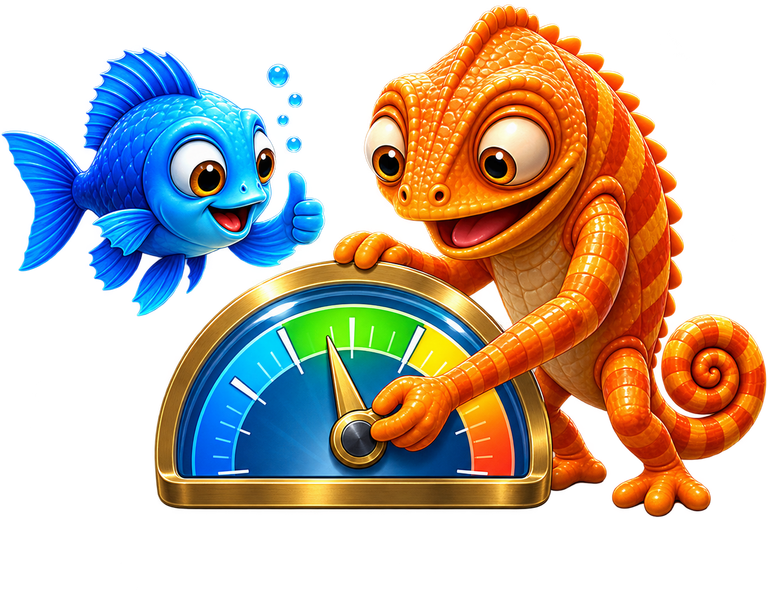
Ideal ranges
Interactions with other parameters
The KH relationship is mathematical: KH plus CO2 determines final pH. Adding CO2 also increases uptake of every other nutrient—N, P, K, and Fe—by a factor of ten, so water-column fertilization must begin almost immediately.
| Tank type | Min | Max | Unit |
|---|---|---|---|
| Tropical community | 5 | 15 | mg/L |
| Planted high-tech | 25 | 35 | mg/L |
| Planted low-tech | 2 | 5 | mg/L |
| Shrimp tank | 5 | 15 | mg/L |
Out of range: what happens
Deficiency or absence under medium/high light causes stunted, weak stem growth, white lime deposits on leaves from biogenic decalcification, and invasions of black brush algae (BBA) and filamentous algae.
Toxic excess (> 30-40 mg/L) prevents fish from expelling carbon dioxide produced by cellular respiration. Fish gasp at the surface, become lethargic, and die by suffocation unless the cylinder is shut off and water is aerated promptly.
CO2 fluctuations, for example irregular injection or DIY yeast cylinders, are a primary cause of BBA. Stable levels while the lights are on matter more than the absolute value.
Common Myths
- CO2 always harms fish; within 30 mg/L it is not a problem, but it lowers dissolved oxygen, so good surface circulation is required.
- An airstone at night wastes all CO2; true, and it is good practice to prevent lethal nighttime accumulation.
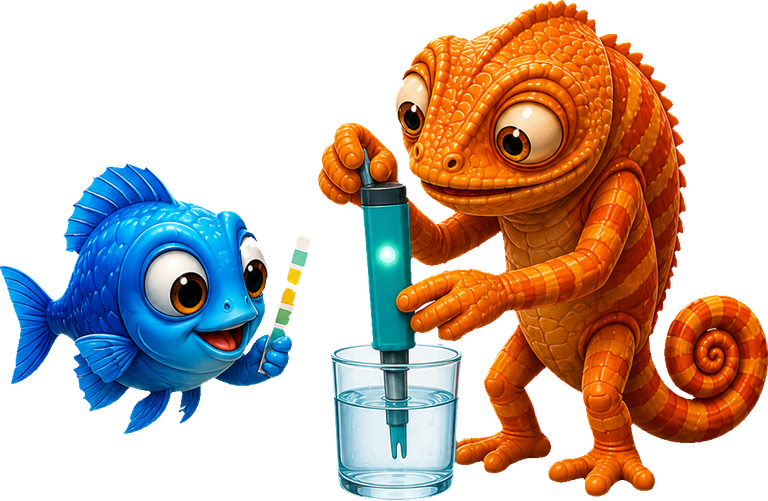
Measurement and adjustment
How to measure
A drop checker is the most common visual safe method: an inverted glass bulb with fixed-KH 4 water and pH indicator. It reacts to gaseous CO2: blue means low CO2, dark green good CO2, lime green optimal CO2 (30 mg/L), and yellow toxic CO2. Its reading lags by about 2 hours.
With precise KH and pH measurements, and no other humic acids, standard tables derive CO2 in mg/L. An exact 1-point pH drop from the degassed, CO2-off value corresponds approximately to 30 mg/L.
Continuous digital CO2 probes exist but are very expensive. Electronic pH controllers switch the cylinder on and off to hold a target pH, indirectly controlling CO2.
How to adjust
To raise injection, carefully adjust the cylinder regulator needle valve by only a few bubbles per second, wait 3 hours, then check the drop checker and fish behavior. Never make large changes without being able to monitor the following hours.
To lower it, reduce bubbles per second. In a gas emergency—gasping fish and a yellow drop checker—shut off the gas immediately and direct filter flow to the surface or add an airstone to degas CO2 rapidly.
Optimize flow as well: the problem is often poor distribution, not insufficient injection. CO2 must be broken into invisible microbubbles with an in-line atomizer, and filtration needs about 10x tank volume per hour to carry gas-rich water to every corner and leaf.
Pro Tips
- Start CO2 2 hours before lights turn on and stop it 1 hour before lights off, so plants have maximum gas as photosynthesis begins.
- Drop-checker color lags 2 hours: after changing the regulator, make no further change until the next day to avoid poisoning.