Giant Australian Mantis
Hierodula majuscula
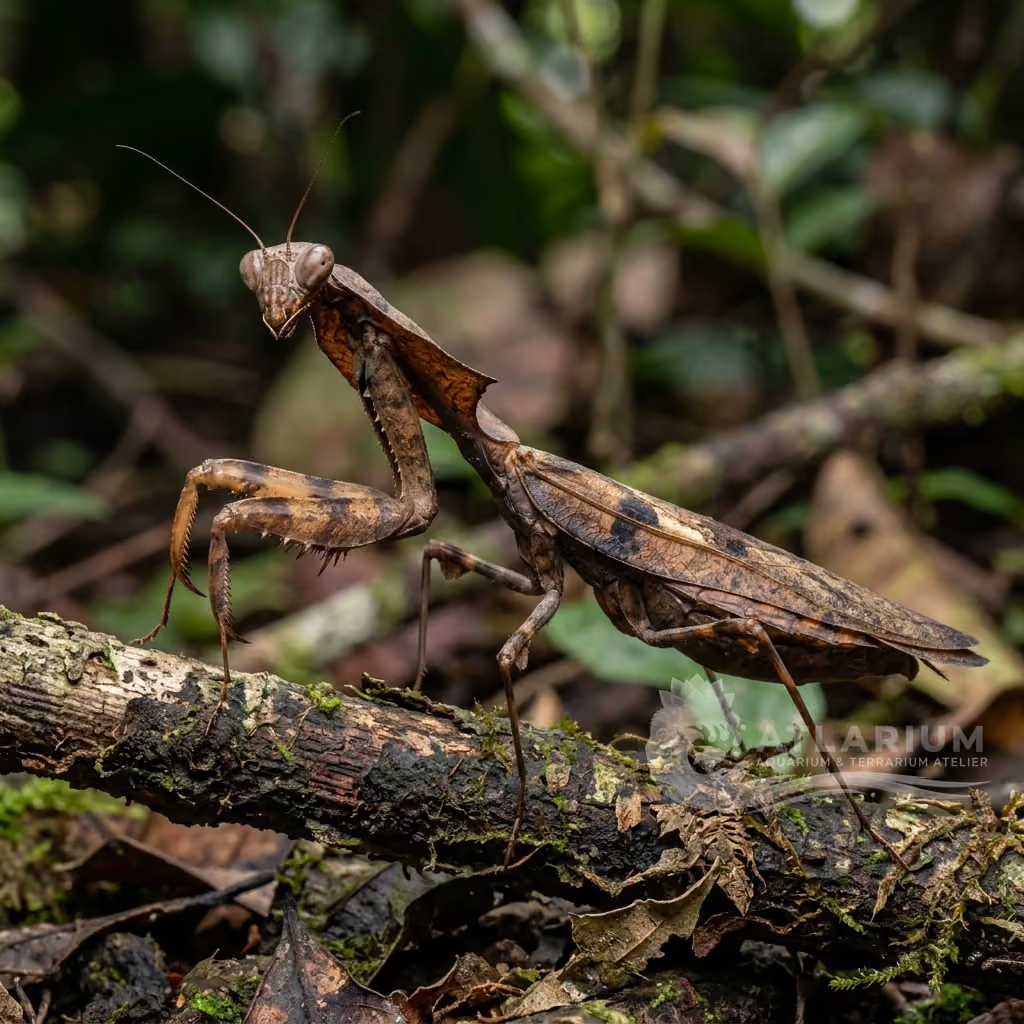
The Hierodula majuscula, or Giant Australian Rainforest Mantis. It is the undisputed titan of Oceania and the largest Australian mantis, as well as one of the most colorful. Upon reaching adulthood, it reveals its most spectacular trait: the inside of the raptorial legs is tinged with intense Cherry Red, Cobalt Blue and Black, revealed in a magnificent threat posture (deimatic display). Slightly more demanding than its Asian cousin (H. membranacea) in terms of heat and very high humidity, it compensates with legendary voracity and an immense size (up to 4.3 inches). Identical management: tall terrarium, mesh for grips and abundant diet based on mobile insects. Exhibits ruthless cannibalism.
Terrestrial
60 - 70 %
25 - 30 °C
20 - 22 °C

Species description

Care, breeding and tankmates

Geographic origin and distribution
Origin

Terrestrial invertebrate profile
- Diet
- Insectivore
- They are formidable predators capable of taking down large insects. A varied diet of adult crickets, large roaches (like Dubia or Red Runners), and flying insects such as blue bottle flies is optimal. They require frequent feeding to sustain their fast growth rate.
- Adult size
- 10 cm
- Lifestyle/Microhabitat
- Arboreal
- This species leads an exclusively arboreal lifestyle in the coastal forests and rainforest edges of Northern Australia. They require well-ventilated, tall enclosures with sturdy branches and broad leaves that mimic their natural canopy habitat and provide appropriate surfaces for molting and hunting.
- Activity cycle
- Diurnal
- The Giant Australian Mantis is a diurnal species, active primarily during the day when its keen eyesight is most effective for hunting. It spends long periods perched high up in vegetation, utilizing a sit-and-wait strategy and relying on camouflage until prey ventures close enough to strike.
- Sociality
- Solitary
- Hierodula majuscula is solitary and highly cannibalistic. From a very early instar, individuals must be housed separately in their own enclosures. Attempting a communal setup will invariably result in the strongest mantis consuming its siblings, regardless of how much external food is provided.
- Reproduction
- Oviparous
- Mating carries a high risk of sexual cannibalism. The female must be heavily fed prior to introducing the male. If successful, she will attach several large, spongy oothecae to branches over her lifespan, each capable of hatching over a hundred small nymphs.
- Venomous
- No
- Handling tolerance
- Tolerant
- They are a robust and generally calm species, making them suitable for gentle handling. They can easily be prompted to step onto a flat hand. However, sudden movements should be avoided, and care must be taken to not forcefully dislodge their gripping tarsi from a surface.
- Brumation
- Not required
- Endemic to the tropical and subtropical regions of Australia, this mantis requires warm, humid conditions consistently throughout its lifecycle. They do not undergo brumation. Exposing them to cold drafts or sustained low temperatures will negatively affect their metabolism and overall health.
- Molting
- Periodic
- Like all mantises, molting is a delicate process requiring significant vertical clearance. The mantis will hang upside down and slowly extract itself from its old skin. High humidity is required to prevent the exoskeleton from adhering, and the mantis must not be touched during the process.

Related species
Recommendations grouped by close relatives, companion choices, and similar care.