Encyclopaedia
ReptileTerrestrialEasy
©AI Generated·Proprietary
Viper Gecko
Hemidactylus imbricatus
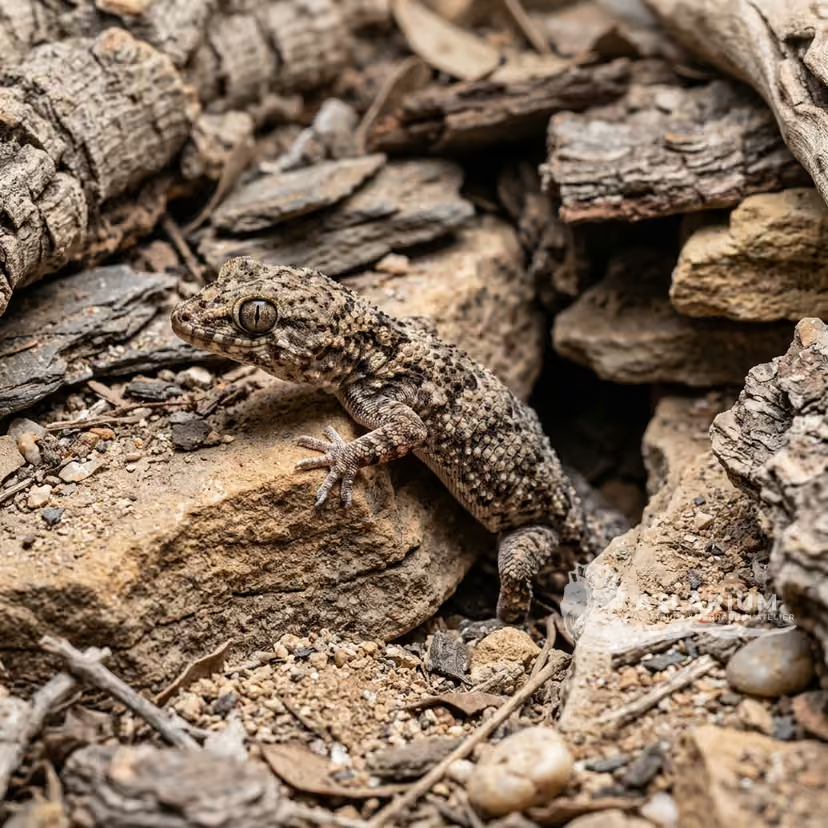
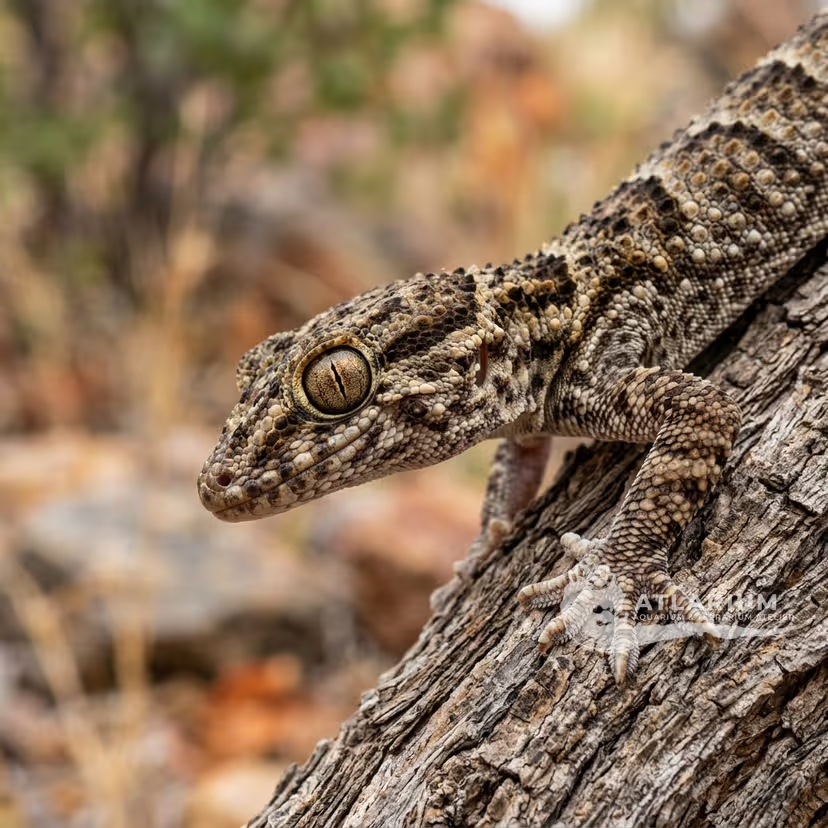
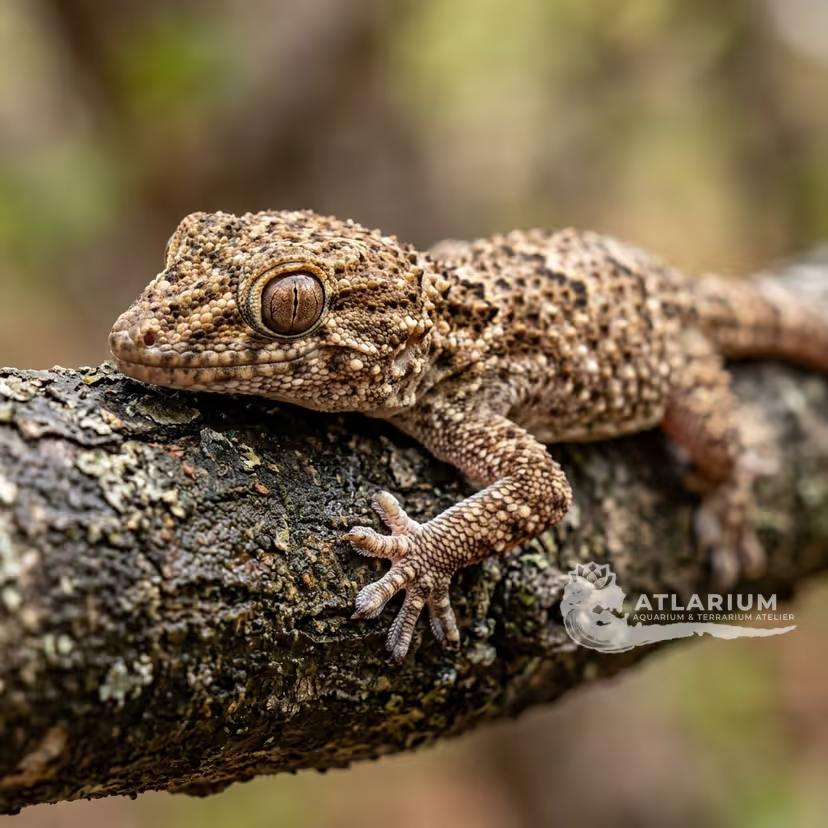
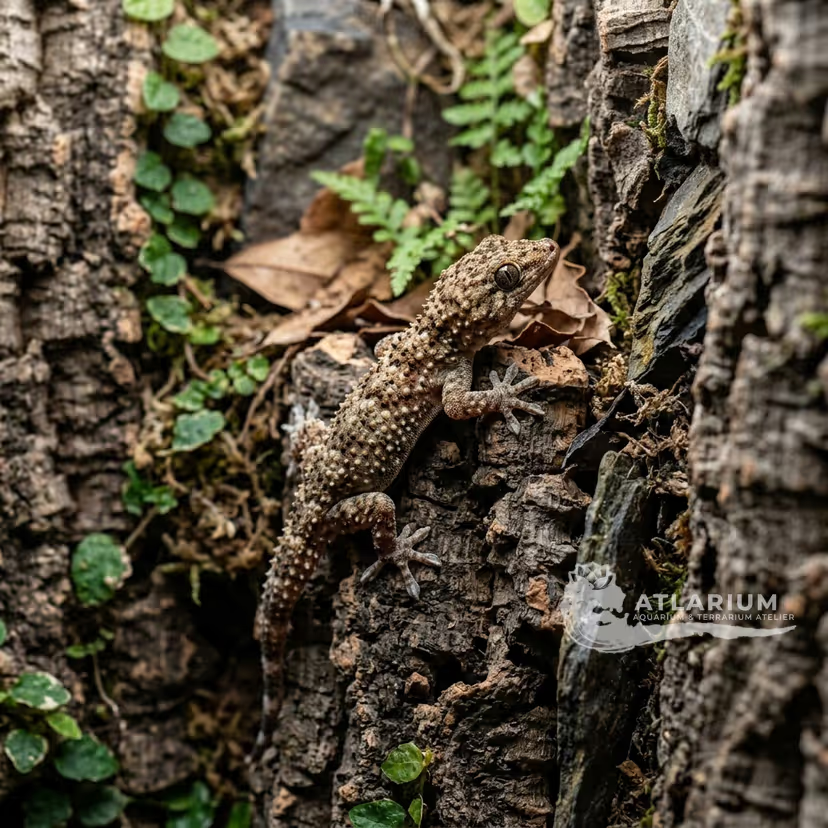
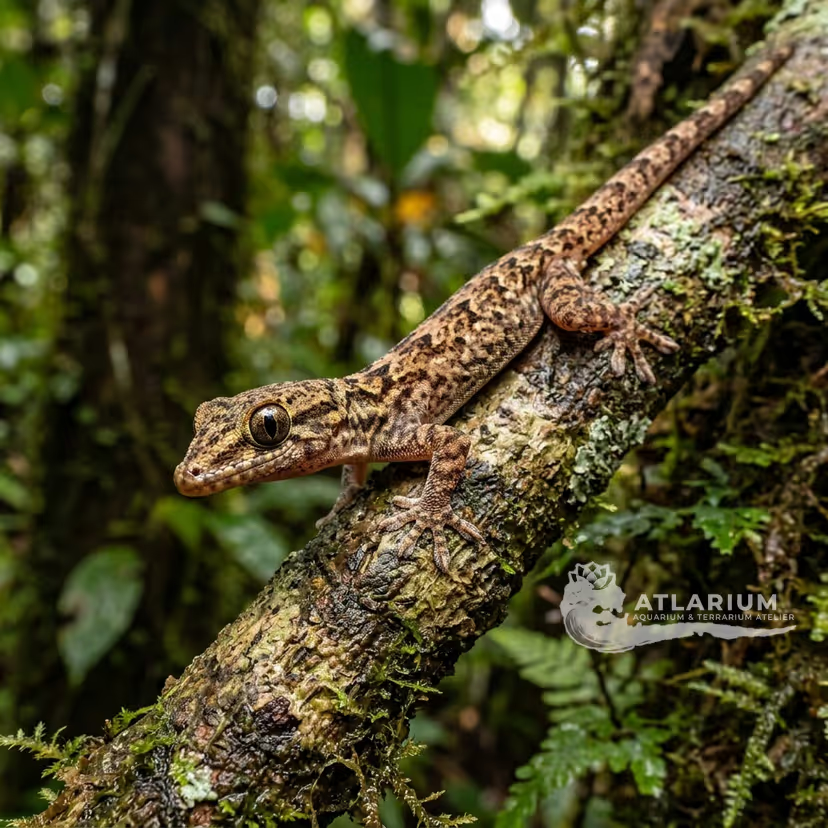
Viper gecko. A tiny terrestrial gecko from Pakistan, famous for its overlapping viper-like scales, distinctive banded pattern, and turnip-shaped fat tail.
Class:Squamata
Order:Squamata
Family:Gekkonidae
Genus:Teratolepis
Species:Hemidactylus imbricatus*
Formerly known as:Teratolepis fasciata
* Source-reviewed taxonomy (The Reptile Database, 2026-07-24): The Reptile Database accepts Hemidactylus imbricatus (Bauer et al., 2008) and lists Teratolepis fasciata as a historical synonym. GBIF independently returns the same accepted species (https://www.gbif.org/species/6066681).
Share
Check out Viper Gecko on Atlarium
Environment
Terrestrial
Humidity
40 - 50 %
Day temperature
28 - 32 °C
Night temperature
20 - 24 °C
Adult size
5.6 cm
UVB
None - Low
Species description
Geographical Origin and Habitat: Native to the arid desert plateaus, rocky areas, and scrublands of Pakistan and northwestern India. It is a terrestrial and crepuscular species that spends the hot daytime hours sheltering in humid rock crevices or under bark to escape extreme temperatures.
Taxonomy and Genetics: A tiny lizard that rarely exceeds 7 to 9 cm in length. It is famous for its unique, overlapping body scales that resemble those of a viper. It features a short, thick, turnip-shaped tail used as an emergency fat reserve, and lacks adhesive toe pads, instead possessing small claws suited for digging.
Behavior and Habits: Crepuscular and nocturnal, emerging after dusk to hunt for small insects. They are docile, slow-moving, and use their acute sense of smell and sight to navigate. The tail serves as a vital energy reservoir during dry periods.
Morphology: Adult males are slightly smaller and more slender than females. They are distinguished by prominent preanal pores forming a V-shape and visible hemipenal bulges at the base of the tail.
Care, breeding and tankmates
Terrarium Setup: An enclosure measuring at least 45x30x30 cm is suitable for a pair or trio. Use a dry substrate such as clay-sand mix, and provide plenty of hiding spots on both the warm and cool sides, including a humid hide filled with damp sphagnum moss.
Lighting and Heating: Requires a thermal gradient. Provide a basking spot heated to 30-32°C using a heat mat or overhead bulb, with a cool side around 24°C and a night drop to 20°C. Low-level UVB (ShadeDweller 5-7%) is highly recommended.
Humidity and Hydration: Ambient humidity should remain low (30-40%). Provide a shallow water dish at all times. The humid hide must be kept damp to ensure clean shedding, especially to prevent skin retention on their tiny toes.
Feeding and Supplementation: Strictly insectivorous. Feed daily to juveniles and every other day to adults with small crickets, roaches, or occasional mealworms. Dust all prey items with calcium at every feeding, and add Vitamin D3 and multivitamins twice a week.
Compatibility: Solitary by nature. Males must never be housed together as they will fight aggressively. A single male can be housed with two or three females in a spacious enclosure, but monitoring is necessary to prevent breeding stress.
Health and Common Diseases: Highly susceptible to metabolic bone disease (MBD) without calcium and D3. Tail loss (autotomy) can occur if handled roughly; the tail will regenerate but will be shorter and smoother. Watch for "stick tail" (extreme thinness) which indicates parasites.
Geographic Origin and Distribution
Native to the arid desert plateaus, rocky areas, and scrublands of Pakistan and northwestern India. It is a terrestrial and crepuscular species that spends the hot daytime hours sheltering in humid rock crevices or under bark to escape extreme temperatures.
Origin
Europe, Mediterranean, and West AsiaSouth and Southeast Asia
Reptile profile
- Diet
- No verified data available
- Life expectancy
- No verified data available
- Adult size
- 5.6 cm
- Lifestyle/Microhabitat
- No verified data available
- Activity cycle
- No verified data available
- Sociality
- No verified data available
- Reproduction
- No verified data available
- Handling tolerance
- No verified data available
- Brumation
- No verified data available
- Molting
- No verified data available
The catalog's scalar value is 5.6 cm. The ReptTraits v1.2 source reports a maximum adult measurement of 5.6 cm for this species, recorded as snout–vent length (SVL). These figures are not interchangeable: the first is the profile's editorial reference, whereas the second is a published maximum under a specific measurement convention; differences among sources can reflect sex, population, life stage and measuring method.
Image gallery
Licensed images linked to the species or, when marked, to the closest representative taxon.
Related species
Recommendations grouped by close relatives, companion choices, and similar care.