Prideaux's Hermit Crab
Pagurus prideaux
A temperate marine hermit crab famous for its obligate symbiotic relationship with the cloak anemone Adamsia palliata, which wraps around and expands the shell as the crab grows.
Water Temperature
12 - 20 °C
pH Value
8.1 - 8.4
Water type
Marine
Invertebrate type
Hermit crab
Adult size
6 cm
Minimum group
>= 1
KH
8 - 12 dKH
Ecological role
Scavenger
Copper sensitivity
High

Species description
Geographical Origin and Habitat: Found in the Mediterranean Sea, the Adriatic Sea, and the northeastern Atlantic Ocean, ranging from Norway down to the Cape Verde islands and West Africa. It lives on sandy, muddy, or gravelly sea floors from shallow waters down to depths of 60 to 100 meters.
Taxonomy: Belongs to the class Malacostraca, order Decapoda, family Paguridae, and genus Pagurus. Scientifically described by Leach in 1815. It is renowned for its mutualistic symbiosis with the sea anemone Adamsia palliata (commonly known as the cloak anemone).
Social Behavior: Highly active and peaceful. It exhibits a remarkable mutualistic partnership with its anemone. The anemone attaches to the crab's shell, wrapping its body around it. In return for transportation and access to food scraps, the anemone provides protection with its stinging cells (nematocysts).
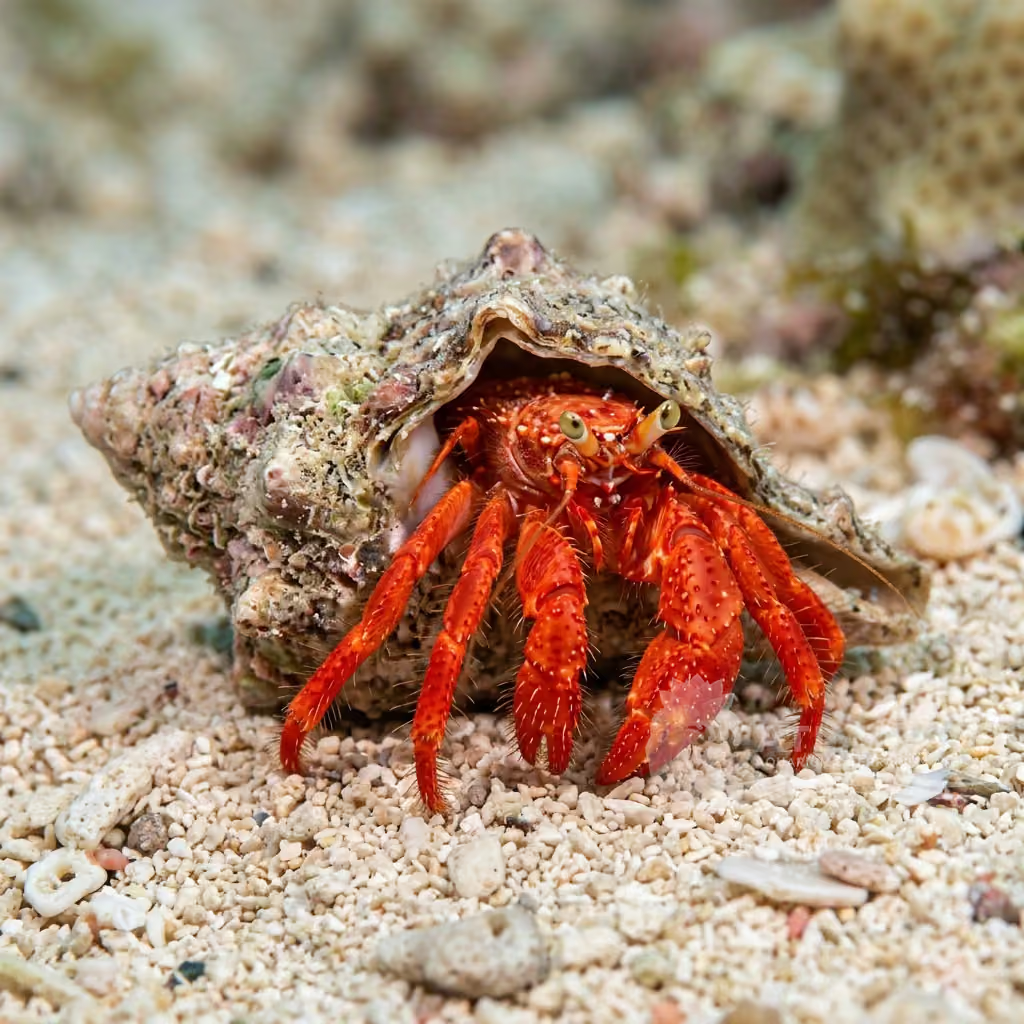
Coloration and Sexual Dimorphism: The body is pale yellowish, orange, or muddy red with lighter patches. The right claw is slightly larger than the left. Sexual dimorphism is not prominent externally; sex is determined by the location of the gonopores on the coxae of the legs.

Care, breeding and tankmates
Tank Setup: Requires a temperate or coldwater marine aquarium of at least 100 liters (25 gallons). The bottom must be covered with fine sand or smooth gravel to replicate their natural foraging grounds. Sturdy rocks can be added, but leave plenty of open floor space.
Diet and Feeding: Omnivorous scavenger. Accepts sinking pellets, chopped seafood (shrimp, mussels, fish), and frozen foods. The symbiotic anemone feeds on scraps released during the crab's feeding, but can be target-fed with small pieces of food using a pipette.
Water Quality: Requires cool water temperatures, ideally between 15°C and 20°C (59-68°F); a chiller is highly recommended for summer months. Maintain salinity at SG 1.024-1.026, pH 8.1-8.4, and ensure high oxygen levels through strong water movement.
Compatibility and Tankmates: Best kept in a specialized temperate reef or coldwater tank. Compatible with other peaceful coldwater fish and mobile invertebrates. Stinging tentacles of the associated anemone may harm delicate corals if the crab brushes past them.
Aquarium Breeding: Not recorded in captivity. Like most marine crabs, they release planktonic larvae that require specific micro-currents and live phytoplankton/zooplankton feeds that are typically cleared by home aquarium filters.
Risks and Diseases: Temperature spikes (above 22°C/72°F) are the most critical risk, leading to the death of both the crab and the anemone. Extremely sensitive to copper treatments. If the anemone dies, the hermit crab loses its primary protection.

Geographic origin and distribution
Found in the Mediterranean Sea, the Adriatic Sea, and the northeastern Atlantic Ocean, ranging from Norway down to the Cape Verde islands and West Africa. It lives on sandy, muddy, or gravelly sea floors from shallow waters down to depths of 60 to 100 meters.
Origin
Tropical oceans and reefsAfrica and MadagascarEurope, Mediterranean, and West AsiaEast Asia

Invertebrate profile
- Diet
- Omnivore
- *Pagurus prideaux* is an opportunistic bottom feeder that relies on scavenging to survive. In an aquarium, they happily accept sinking meaty pellets, chunks of clam or shrimp, and various macroalgae. Feeding them a diverse diet ensures they receive the necessary nutrients for robust health.
- Ecological role
- Scavenger
- Serving as a key detritivore in temperate shorelines, *Pagurus prideaux* recycles organic debris and dead organisms. This continuous cleaning action prevents the buildup of toxic ammonia and hydrogen sulfide in the wild. In an aquarium, they perform the exact same beneficial sanitation duties.
- Adult size
- 6 cm
- Jump risk
- Yes
- Due to the heavy nature of their adopted shells, *Pagurus prideaux* is incapable of jumping. They are adept at climbing textured background walls and thick algae stands, but escape is highly unlikely. Standard rimmed aquariums generally provide sufficient containment without heavy latching lids.
- Shock sensitivity
- Medium
- *Pagurus prideaux* is particularly vulnerable to heat shock if placed in standard tropical aquarium temperatures. Maintaining water consistently between 50-65°F (10-18°C) is absolutely critical. They also require slow acclimation to any salinity changes to prevent osmotic shock.
- Calcium and minerals
- Medium
- Regular dosing or high-quality water changes are necessary to provide the calcium and alkalinity *Pagurus prideaux* needs. Cold-water systems can sometimes suffer from depleted trace elements if not monitored properly. Calcium is critical for their successive molts and general vitality.
- Molting
- Shell growth
- During their molting phase, *Pagurus prideaux* will seek a quiet, dark crevice to cast off its old exoskeleton. This process is highly stressful, and they must not be handled or disturbed during this time. Make sure several empty, appropriately sized shells are scattered around the tank for them.
- Reproduction
- Oviparous
- Reproduction in the home aquarium is an incredibly rare event for *Pagurus prideaux*. They release planktonic larvae that require a cold, nutrient-rich water column to survive and metamorphose. Replicating the specific tidal and seasonal cues needed to trigger successful spawning is virtually impossible for most hobbyists.
- Compatibility & tankmates
- Community
- *Pagurus prideaux* can be somewhat aggressive toward smaller slow-moving invertebrates if food or shells are scarce. They are best kept in a cold-water biotope with hardy anemones, robust starfish, and temperate fish species. Snails may occasionally become victims if the crab decides it wants a new home.

Related species
Recommendations grouped by close relatives, companion choices, and similar care.