Twin-spotted Rattlesnake
Crotalus pricei
The twin-spotted rattlesnake (Crotalus pricei) is a small venomous rattlesnake adapted to high-altitude montane habitats in the southwestern US and Mexico.
Umgebung
Terrestrisch
Luftfeuchtigkeit
50 - 70 %
Tagestemperatur
10 - 24 °C
Umgebungstemperatur
10 - 24 °C
Nachttemperatur
14 - 16 °C
Sonnenplatz
26 - 28 °C
Erwachsenengröße
50 cm
Mindestgehäuse
>= 100 L

Artbeschreibung
Geographical Origin and Habitat: This species is native to the high-elevation mountain ranges (sky islands) of southeastern Arizona in the United States and the Sierra Madre Occidental in northern Mexico. It inhabits pine-oak forests, rocky talus slopes, steep canyons, and grassy clearings at altitudes ranging from 1,800 to over 3,000 meters above sea level, where cool climatic conditions prevail.
Taxonomy and Genetics: Crotalus pricei belongs to the family Viperidae, subfamily Crotalinae (pit vipers), and the genus Crotalus. It is a specialized high-altitude species. Genetic studies show evolutionary isolation among various mountain range populations. Its venom contains a mix of hemotoxins and specific neurotoxic fractions. Two subspecies are recognized.
Behavior and Habits: A solitary, predominantly diurnal reptile. Diurnal activity is essential to exploit solar radiation for thermoregulation in cold montane environments. It spends the night sheltered deep in rock crevices. It is a sit-and-wait ambush predator, feeding primarily on mountain lizards (Sceloporus), small rodents, and frogs. Its warning rattle is small and produces a quiet buzz.
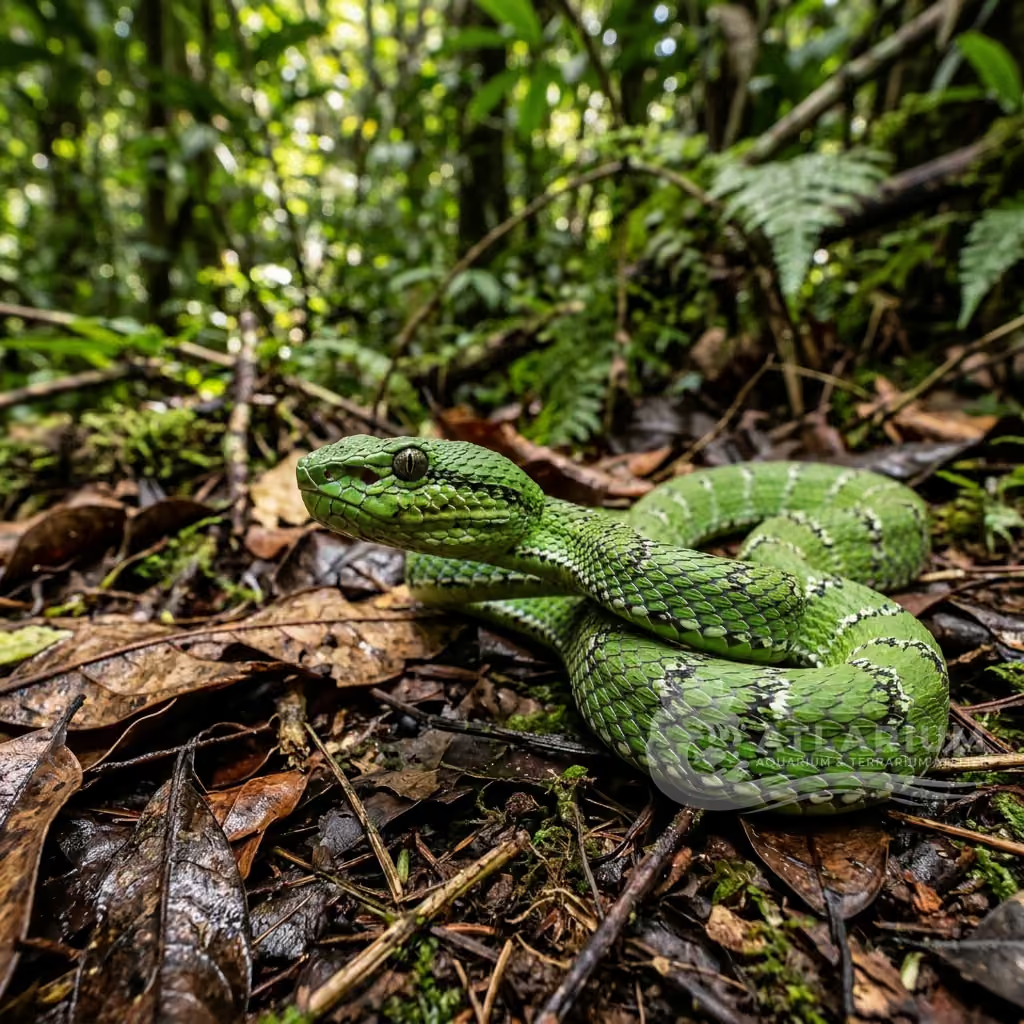
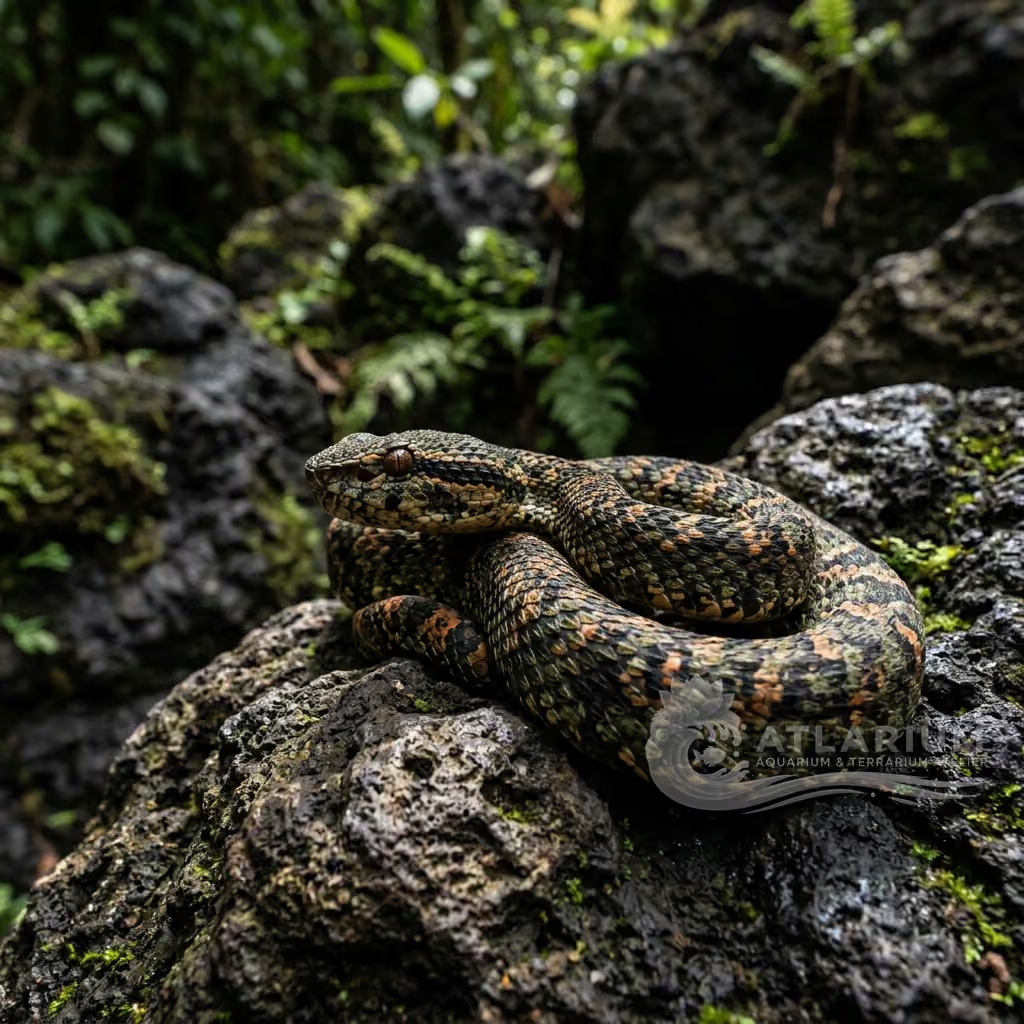
Morphology: One of the smallest rattlesnakes, with adults averaging only 50 to 60 cm in total length, rarely exceeding 65 cm. The body is slender and the head is relatively small, only slightly distinct from the neck. Coloration is a light grey to blue-grey, marked by a double row of small, dark, paired spots running parallel down the length of the back.

Pflege, Zucht und Mitbewohner
Terrarium Setup: Requires a medium-sized terrarium of at least 80x40x40 cm (about 20 gallons) for a single adult, which must be escape-proof and locked. Use a dry substrate mix of soil, sand, and fine bark. Provide numerous flat rocks and cork bark pieces to create secure crevices. Add sturdy branches, as this species occasionally climbs low bushes. Ensure excellent ventilation.
Lighting and Heating: Being a high-altitude species, it does not tolerate hot temperatures. Maintain daytime ambient temperatures between 20°C and 24°C, with a localized basking spot of 26-28°C using a low-wattage basking bulb. Provide a significant nighttime temperature drop to 15-18°C. A linear 10% UVB light is mandatory to replicate high-altitude solar radiation.
Humidity and Hydration: Keep relative humidity moderate, around 40-50%. Lightly mist one corner of the enclosure once a week. A heavy, stable water dish with fresh, clean water must be provided on the cool side at all times for drinking. Keep the main substrate dry to prevent skin blister disease. Clean the bowl and change the water regularly.
Feeding and Supplementation: Strictly carnivorous. In captivity, they feed on appropriate-sized mice or pinkies every 10 to 14 days, while juveniles may require scenting with lizard scent. Feed using long feeding tongs. Do not overfeed, as they have a slow metabolism adapted to cool climates. Dust prey with a multivitamin supplement once a month.
Compatibility: Solitary and venomous. It must be housed individually. Keeping multiple snakes together leads to territorial stress, fighting, and potential cannibalism, and complicates safe management during feeding and tank cleaning.
Health and Common Diseases: Highly sensitive to overheating; temperatures above 28-30°C cause heat stroke and can be fatal. Excessively wet conditions combined with poor ventilation cause respiratory infections and skin rot. Because it is venomous, all maintenance must be performed with hooks and safety protocols by experienced keepers.

Geografische Herkunft und Verbreitung
This species is native to the high-elevation mountain ranges (sky islands) of southeastern Arizona in the United States and the Sierra Madre Occidental in northern Mexico. It inhabits pine-oak forests, rocky talus slopes, steep canyons, and grassy clearings at altitudes ranging from 1,800 to over 3,000 meters above sea level, where cool climatic conditions prevail.
Ursprung
Mittelamerika und KaribikNordamerika

Reptilienprofil
- Diät
- Carnivore
- The Twin-spotted Rattlesnake is a montane specialist that preys largely on lizards native to its high-altitude rocky habitats. Yarrow's spiny lizards are a particularly favored food source, though it will also take small mammals like mice when available. It operates as a sit-and-wait predator, utilizing the cover of talus slopes and rock crevices to ambush its prey. Its venom easily incapacitates these small, cold-blooded and warm-blooded animals alike.
- Erwachsenengröße
- 50 cm
- Lebensstil/Mikrohabitat
- Terrestrial
- It is a terrestrial snake specialized for montane forests, scree slopes, and rocky outcroppings where it hunts small lizards and mammals among the stones.
- Aktivitätszyklus
- Diurnal
- Living in high-elevation 'sky islands', this species is largely diurnal, absorbing the sun's warmth on exposed rock faces during the day and seeking shelter as nightfall brings rapid cooling.
- Sozialität
- Solitary
- This small, secretive rattlesnake spends much of its life hidden among the rocks and scree of montane pine-oak forests. It is primarily active during the day when temperatures are mild enough, frequently basking on rocks to thermoregulate. It is generally a very docile species, relying almost entirely on its gray or brown camouflage to blend into the stony background. Instead of aggressively rattling, it often remains motionless and relies on crypsis to avoid predation.
- Reproduktion
- Viviparous
- Like all rattlesnakes, this species gives birth to live young, a critical adaptation for surviving in cool, high-elevation environments where eggs would struggle to incubate. Females typically give birth to very small litters, often ranging from only two to eight neonates. These young are born in late summer or early fall and are miniature replicas of the adults. They are precocial and immediately disperse to find food and winter shelter.
- Handhabungstoleranz
- Expert only
- Despite its modest size, its venom requires absolute respect. Free-handling is prohibited; only those with venomous experience should perform necessary enclosure maintenance using hooks.
- Brumation
- Nicht erforderlich
- They undergo a rigorous winter brumation to survive the snow and freezing temperatures common at the high elevations of their natural habitat.
- Häutung
- Regular
- Normal, moderate humidity is sufficient for shedding. The periodic addition of a damp moss hide when the snake's eyes go opaque helps ensure the rattle and skin shed flawlessly.

Verwandte Arten
Empfehlungen gruppiert nach nahen Verwandten, Auswahl von Begleitern und ähnlicher Betreuung.