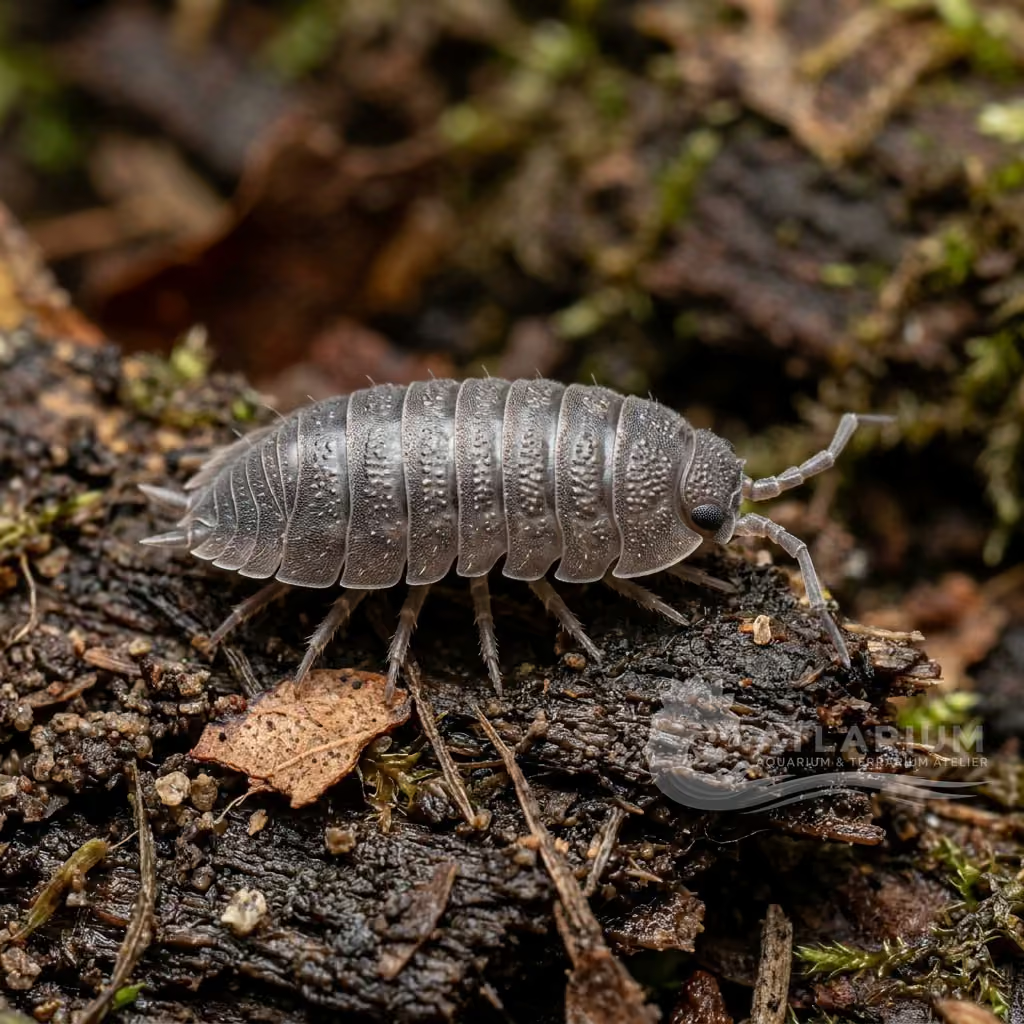
Triangular-Front Woodlouse
Armadillidium frontetriangulum
A charming Greek terrestrial isopod adapted to dry habitats, distinguished by a skirted, flattened body and a unique triangular front lobe on its head.
Umgebung
Terrestrisch
Luftfeuchtigkeit
50 - 70 %
Tagestemperatur
21 - 26 °C
Nachttemperatur
18 - 22 °C

Artbeschreibung
Geographical Origin and Habitat: Endemic to the island of Corfu (Ionian Islands, Greece) and the western Peloponnese. It inhabits dry rocky slopes, sun-exposed screes, and limestone crevices in typical Mediterranean environments characterized by high ventilation and low summer rainfall, where it finds shelter from extreme aridity.
Taxonomy and Genetics: It is a terrestrial isopod crustacean belonging to the family Armadillidiidae. Characterized by a wide, slightly flattened body (known as the 'skirted' type). It is distinguished by the prominent and distinctly triangular scutellum (the frontal plate of the head), from which the specific name frontetriangulum derives.
Behavior and Habits: Predominantly nocturnal and shy species. During the day it shelters deep under flat limestone rocks or in dry soil to avoid dehydration. It has rather slow movements and is inclined to roll up (volvation) if disturbed, although its flattened morphology makes the closure less spherical than other species.
Morphology: Dusty-grey or clay-grey carapace, often decorated with patches or longitudinal stripes of yellow-ochre or cream, arranged in neat rows along the dorsal segments. It reaches a maximum size of approximately 1.8 centimeters. There is no clear external sexual dimorphism, except for slight differences in the structure of the pleopods in adult males.

Pflege, Zucht und Mitbewohner
Terrarium Setup: Requires a well-ventilated terrarium with mesh walls or generous cross-ventilation holes to prevent air stagnation. The ideal substrate consists of a mix of clayey soil and sand, enriched with fragments of limestone rock, bark, and an abundant surface layer of dry leaves (preferably oak or beech) which serve as both food and shelter.
Lighting and Heating: Keep at moderate room temperature, optimal between 23 and 26 °C (73-79 °F). Does not require specific lighting systems; indirect daylight is sufficient. Absolutely avoid direct heat sources or heating lamps that could excessively dry out the air in the terrarium.
Humidity and Hydration: Xerophilic species requiring a predominantly dry environment. The relative humidity must be kept low, between 30% and 50%. It is essential that approximately 80-90% of the substrate remains completely dry, leaving only a small damp area (about 10-20% of the surface) covered with constantly moist sphagnum moss. Excessive humidity and condensation are fatal.
Feeding and Supplementation: Feeds mainly on dry leaves and rotting wood, which must always be present. Supplement the diet with a constant source of calcium (cuttlebone or powdered limestone) essential for molting and the strength of the carapace, and with occasional protein inputs (such as fish flake food, gammarus, or brewer's yeast) to stimulate reproduction.
Compatibility: Breeding in species-only terrariums is highly recommended. Having rather slow growth and reproduction rates, it easily suffers competition from more prolific isopods or predators. It is not suitable as a bioactive cleaner for humid tropical terrariums.
Health and Common Diseases: The main risks are related to humidity stagnation and poor ventilation, which cause bacterial or fungal infections of the carapace (mycosis) and high mortality during molting. An environment that is too dry can likewise cause death from dehydration if the moist corner is missing.

Geografische Herkunft und Verbreitung
Endemic to the island of Corfu (Ionian Islands, Greece) and the western Peloponnese. It inhabits dry rocky slopes, sun-exposed screes, and limestone crevices in typical Mediterranean environments characterized by high ventilation and low summer rainfall, where it finds shelter from extreme aridity.
Ursprung
Europa, Mittelmeerraum und Westasien

Profil der terrestrischen Wirbellosen
- Diät
- Detritivore
- This species thrives on a varied diet rich in decaying organic matter. They primarily consume high-quality leaf litter and soft rotting wood. Supplemental calcium and occasional vegetable scraps are essential for maintaining proper health and a strong exoskeleton.
- Erwachsenengröße
- 2 cm
- Lebensstil/Mikrohabitat
- Terrestrial
- They are robust terrestrial invertebrates that thrive in a well-maintained terrarium environment. A distinct moisture gradient is crucial to prevent both fatal dehydration and harmful fungal infections. They spend the vast majority of their time navigating the complex microhabitats of the damp forest floor.
- Aktivitätszyklus
- Nocturnal
- This species is primarily active during the night and the dimmer crepuscular hours. They typically remain hidden during the peak daylight hours to conserve vital moisture and avoid predators. Providing a natural day-night light cycle helps regulate their natural foraging and resting behaviors.
- Sozialität
- Solitary
- Highly gregarious and social, thriving in large colony settings. They naturally cluster together in preferred microclimates within the enclosure and show no aggression towards one another.
- Reproduktion
- Marsupial
- Reproduction occurs consistently throughout the year when kept under optimal terrarium conditions. Females incubate their developing eggs within a specialized ventral brood pouch known as a marsupium. The young emerge as fully formed miniatures and require stable moisture to survive their initial delicate molts.
- Giftig
- No
- Handhabungstoleranz
- Tolerant
- Handling should be kept to an absolute minimum to avoid causing unnecessary stress. Their incredibly delicate bodies and limbs can be easily injured by improper or forceful grasping. If relocation is absolutely necessary, gently move them by scooping up the bark or leaf they are resting on.
- Brumation
- Nicht erforderlich
- They generally do not require any brumation period when kept in a controlled captive environment. Maintaining stable and appropriately warm temperatures ensures continuous year-round activity and breeding success. It is important to avoid extreme cold to prevent potential and sudden colony crashes.
- Häutung
- Periodic
- Molting occurs in two very distinct phases to allow the isopod continuous mobility during the process. Adequate environmental humidity is absolutely essential for them to successfully shed their old exoskeleton without complications. They will usually consume their freshly shed skin in order to rapidly reclaim lost calcium.

Verwandte Arten
Empfehlungen gruppiert nach nahen Verwandten, Auswahl von Begleitern und ähnlicher Betreuung.