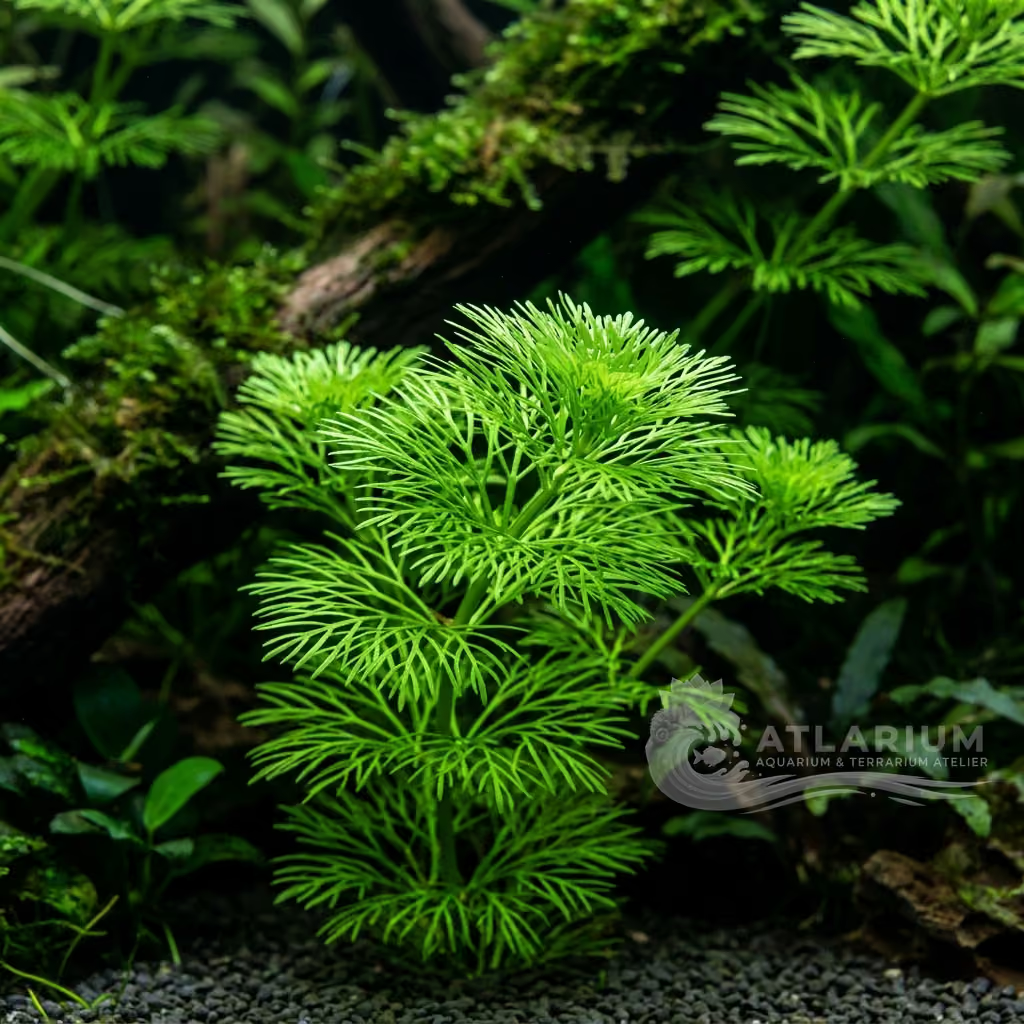
Callitriche palustris agg.
Callitriche palustris agg.
A delicate, thread-like stem plant from the Northern Hemisphere forming floating star-shaped rosettes. It requires medium-high light and cool water, melting rapidly if temperatures exceed 26°C.
Wassertemperatur
4 - 26 °C
pH-Wert
5 - 7
Wassertyp
Süßwasser
Licht
Medium to High
CO2
Niedrig - Hoch
Erwartete Höhe
40 cm
Erwartete Breite
4 cm
KH
0 - 21 dKH

Artbeschreibung
Geographical Origin and Habitat: Distributed across temperate regions of the Northern Hemisphere, including Europe, northern Asia, and North America. It grows in stagnant or slow-moving waters such as ditches, marshes, ponds, and shallow lake margins, often forming dense submerged or floating mats.
Taxonomy & Genetics: Belongs to the Plantaginaceae family (formerly Callitrichaceae) and the genus Callitriche. The abbreviation 'agg.' (aggregate) refers to a group of closely related and morphologically nearly identical species that are difficult to distinguish without microscopic examination of the seeds.
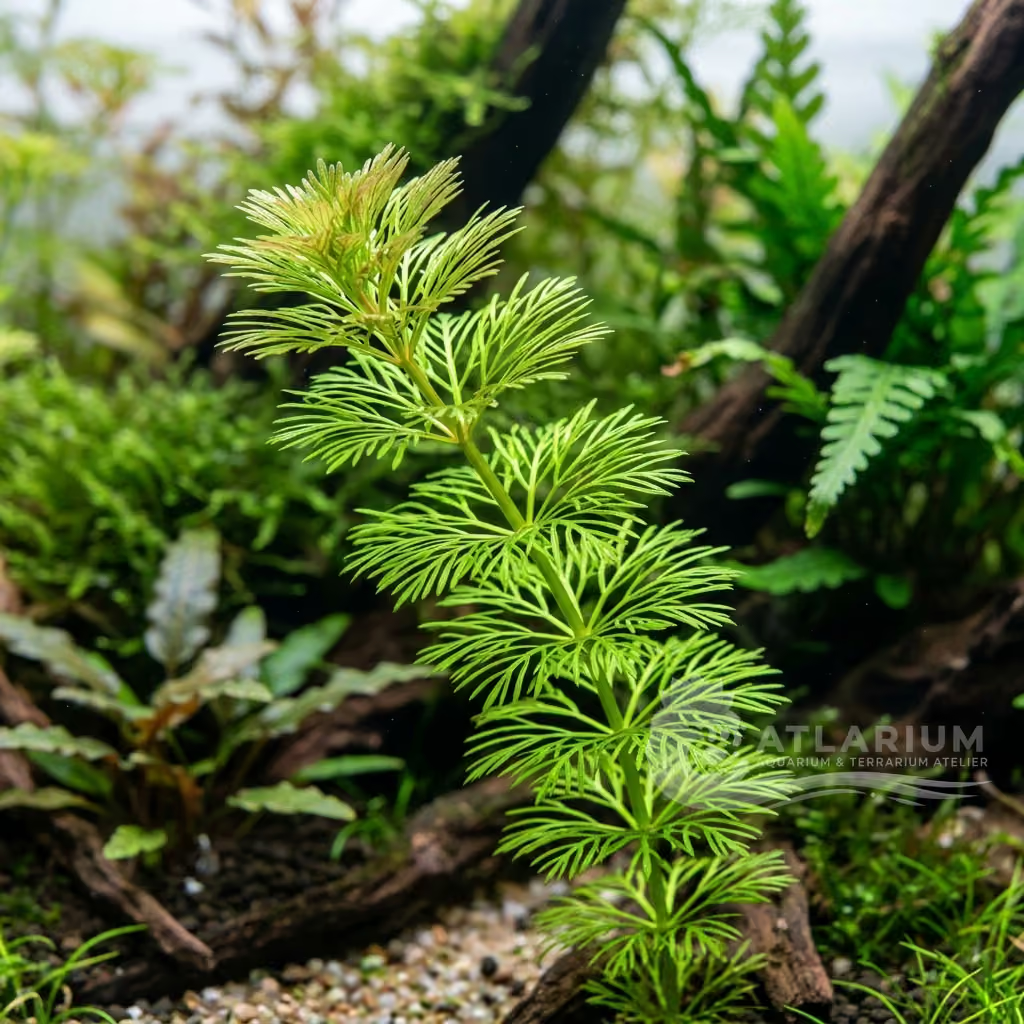
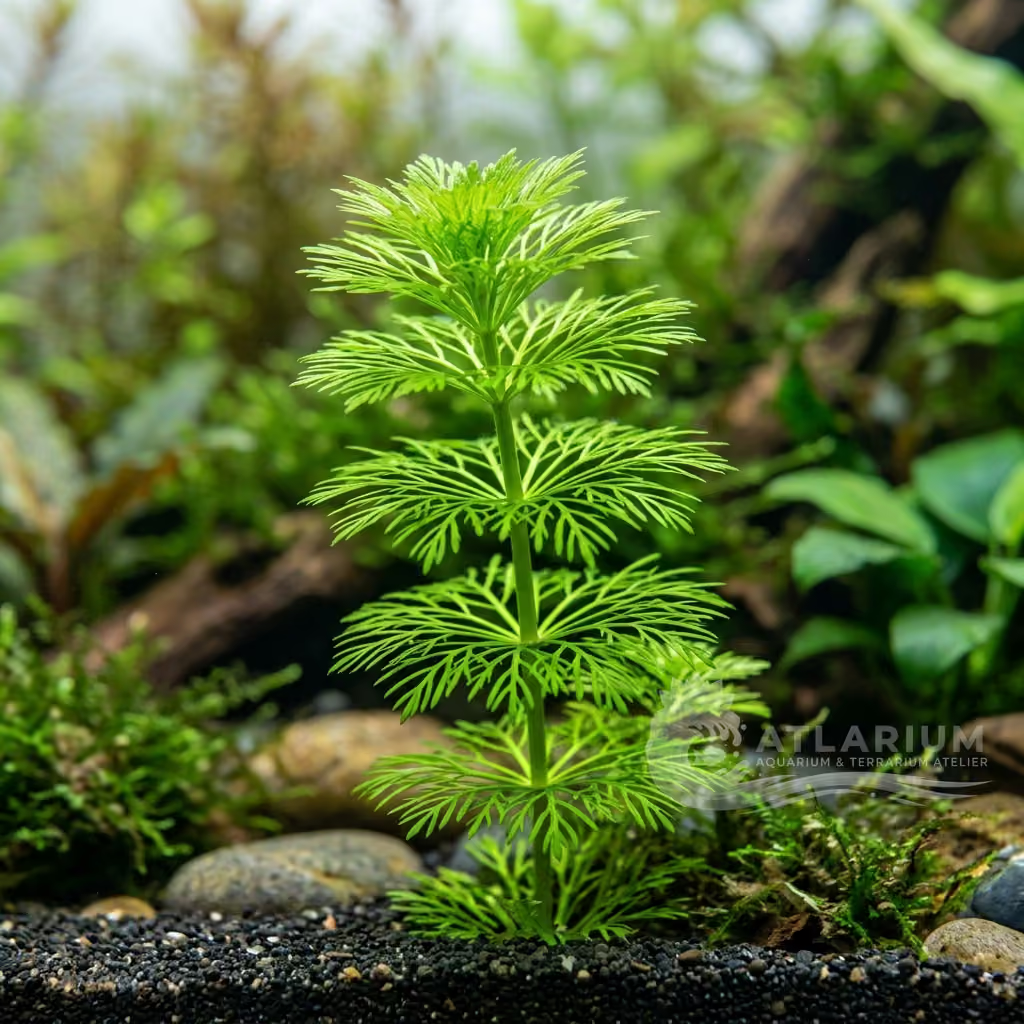
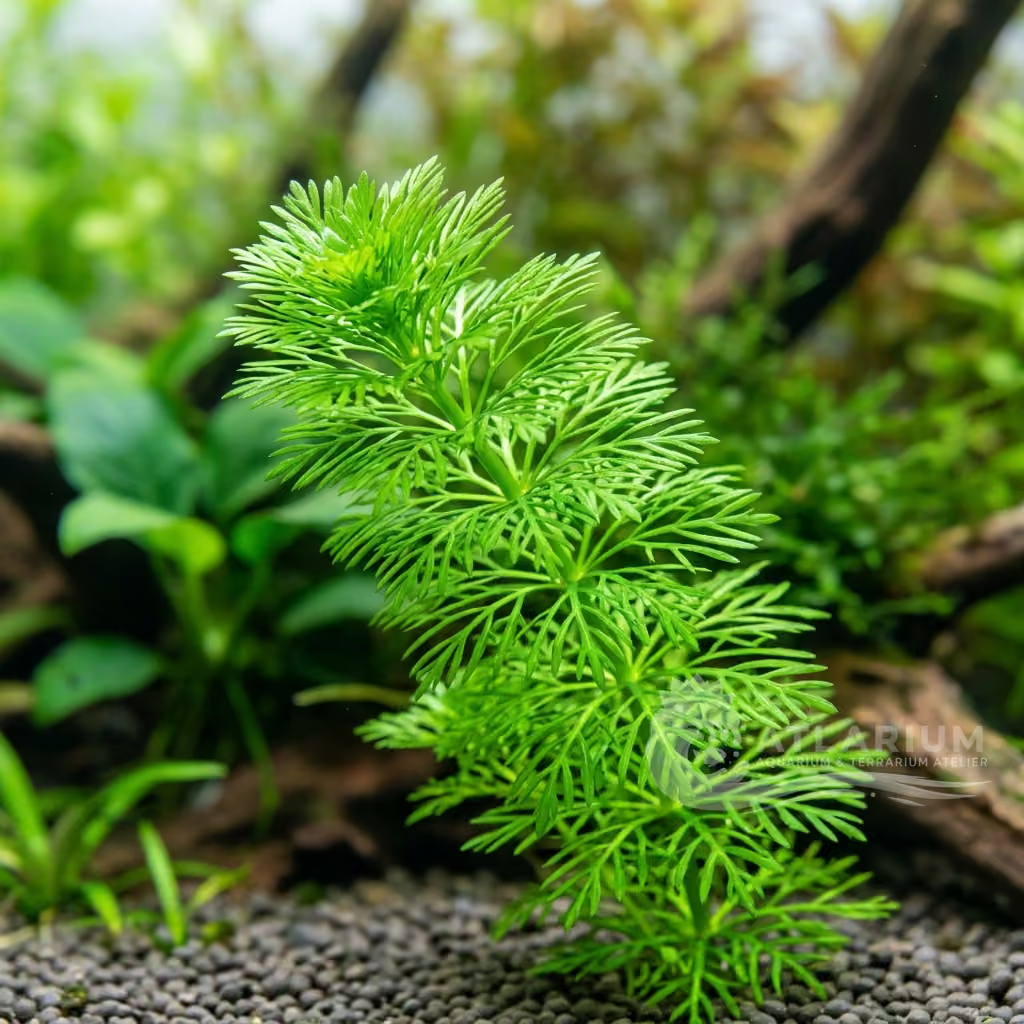
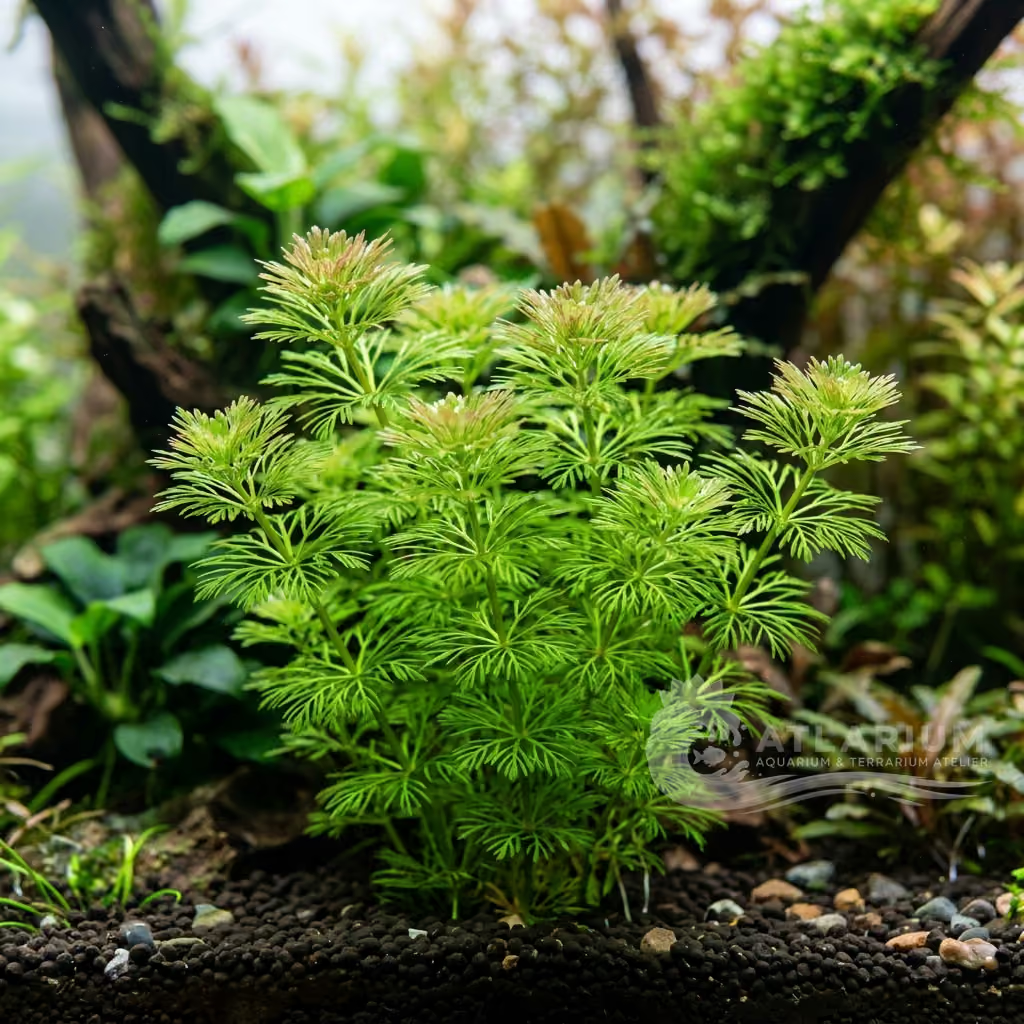
Physical Structure: Features very thin, fragile, and thread-like stems that grow vertically. Submerged leaves are opposite, linear, and elongated, while at the stem apex on the water surface, they form a characteristic star-shaped floating rosette made of broader, spatulate leaves.
Color & Texture: Bright grass green or light golden green, offering a highly natural look. The leaf texture is soft and delicate, with flexible stems that sway gracefully with the gentlest currents, mimicking European river biotopes.

Pflege, Zucht und Mitbewohner
Lighting & CO2: Requires medium to high lighting to grow compactly and avoid leggy stems. CO2 injection is not strictly required but prevents yellowing of submerged leaves and accelerates the formation of the floating rosettes.
Nutrition & Substrate: Absorbs nutrients mainly from the
Water Chemistry: Prefers cool to cold water (4-26°C), failing to tolerate prolonged summer heat above 26°C. The ideal pH range is 5.0 to 7.0, with a broad tolerance for water hardness (KH 0-21).
Space Management & Placement: Suitable for the midground or background. Individual stems should be planted gently and spaced slightly apart. Upon reaching the surface, it will spread to form decorative floating stars.
Pruning: Trim by cutting the stems with very sharp scissors to avoid crushing them. Cut portions can be replanted to propagate the plant, while the parent plant will produce new lateral shoots.
Risks & Diseases: Highly sensitive to elevated temperatures, which lead to rapid melting of the stems. Because of its fragile nature, it can be easily damaged or uprooted by larger herbivorous or digging fish.

Geografische Herkunft und Verbreitung
Distributed across temperate regions of the Northern Hemisphere, including Europe, northern Asia, and North America. It grows in stagnant or slow-moving waters such as ditches, marshes, ponds, and shallow lake margins, often forming dense submerged or floating mats.
Ursprung
Europa, Mittelmeerraum und WestasienNordamerikaOstasien

Pflanzenprofil
- Platzierung
- Mittelgrund
- This plant is uniquely suited for the background or as a midground accent, often grown so it reaches the surface. It tends to form beautiful floating rosettes of leaves if allowed to reach the top of the water column. It requires high light and should not be placed beneath the shade of larger plants.
- Botanische Form
- Stängel
- The plant is characterized by very thin stems bearing opposite, linear leaves when submerged, transitioning to spoon-shaped floating leaves in beautiful terminal rosettes at the surface. The dual leaf morphology makes it a fascinating addition to open-top tanks. The stems are fragile and sway gracefully in moderate water currents.
- Wachstum
- Schnell
- Under high light and CO2 supplementation, Callitriche palustris exhibits a very fast growth rate. The stems quickly shoot towards the surface, requiring regular pruning if a submerged bush-like appearance is desired. In lower light setups, growth slows considerably and the internodes become noticeably elongated.
- Substrat
- Mittel
- It prefers a soft, fine-grained substrate that is relatively rich in nutrients. Aquasoils or sand mixed with clay additives work best to support its very fine, hair-like root system. A harsh or overly coarse gravel will damage the roots and hinder the plant's ability to anchor itself securely.
- Säulendüngung
- Empfohlen
- Liquid fertilization is crucial, as the thin submerged leaves absorb a significant amount of nutrients directly from the water. A comprehensive EI or lean dosing schedule will keep the plant fed during its rapid upward growth. Potassium and trace elements must be replenished regularly to avoid structural weakness in the stems.
- Wurzeldüngung
- Keine
- While it feeds heavily from the water column, root fertilization provides a stable nutritional base that prevents bottom deterioration. Providing root tabs deep in the soil encourages strong root development, anchoring the buoyant stems securely. This is particularly important for older stems that might otherwise rot at the base.
- Trimmen
- Gelegentlich
- Trimming is straightforward; simply cut the stems or leaves to the desired length. Regular pruning encourages bushier, denser growth and prevents the plant from taking over the tank. Replant the healthy trimmings if you wish to expand its footprint.
- Ausbreitung
- Stecklinge
- Propagation is incredibly easy; simply cut the stem at any point and replant the top portion into the substrate. The cutting will root within a few days, and the lower portion will usually develop new shoots. Floating broken off pieces will also continue to grow and can be planted later.
- Empfindlichkeit
- HIGH
- Generally robust but can melt if water parameters swing drastically. It prefers stable conditions and clean water with good flow. Algae can be an issue if organic waste is allowed to accumulate on its delicate leaves.
- Layoutrolle
- Mittelgrund, Hintergrund
- Excellent for creating natural-looking thickets or adding a touch of wildness to the aquascape. It bridges the gap between different plant groups beautifully. Its unique texture provides a great contrast to broad-leaved plants.

Verwandte Arten
Empfehlungen gruppiert nach nahen Verwandten, Auswahl von Begleitern und ähnlicher Betreuung.