Cyperus helferi
Cyperus helferi
Native to Thailand, Cyperus helferi is a unique and elegant rosette plant. Its long, thin, flexible leaves sway beautifully in the current, creating a breathtaking, dynamic midground or background.
Wassertemperatur
15 - 30 °C
pH-Wert
5 - 7
Wassertyp
Süßwasser
Licht
Medium to High
CO2
Niedrig - Hoch
Erwartete Höhe
50 cm
Erwartete Breite
20 cm
KH
0 - 10 dKH

Artbeschreibung
Geographical Origin and Habitat: This plant is native to southern Asia, particularly Thailand. It grows along slow-flowing streams, forest creeks, and warm marshes. It is accustomed to living both submerged in clear waters and partially emersed on muddy banks, benefiting from the constant water flow that carries nutrients to the leaves.
Taxonomy & Genetics: It belongs to the family Cyperaceae and was the first species of this family to be successfully adapted to aquarium life. There are no widespread commercial hybrids; it is a pure botanical species that retains its natural genetics.
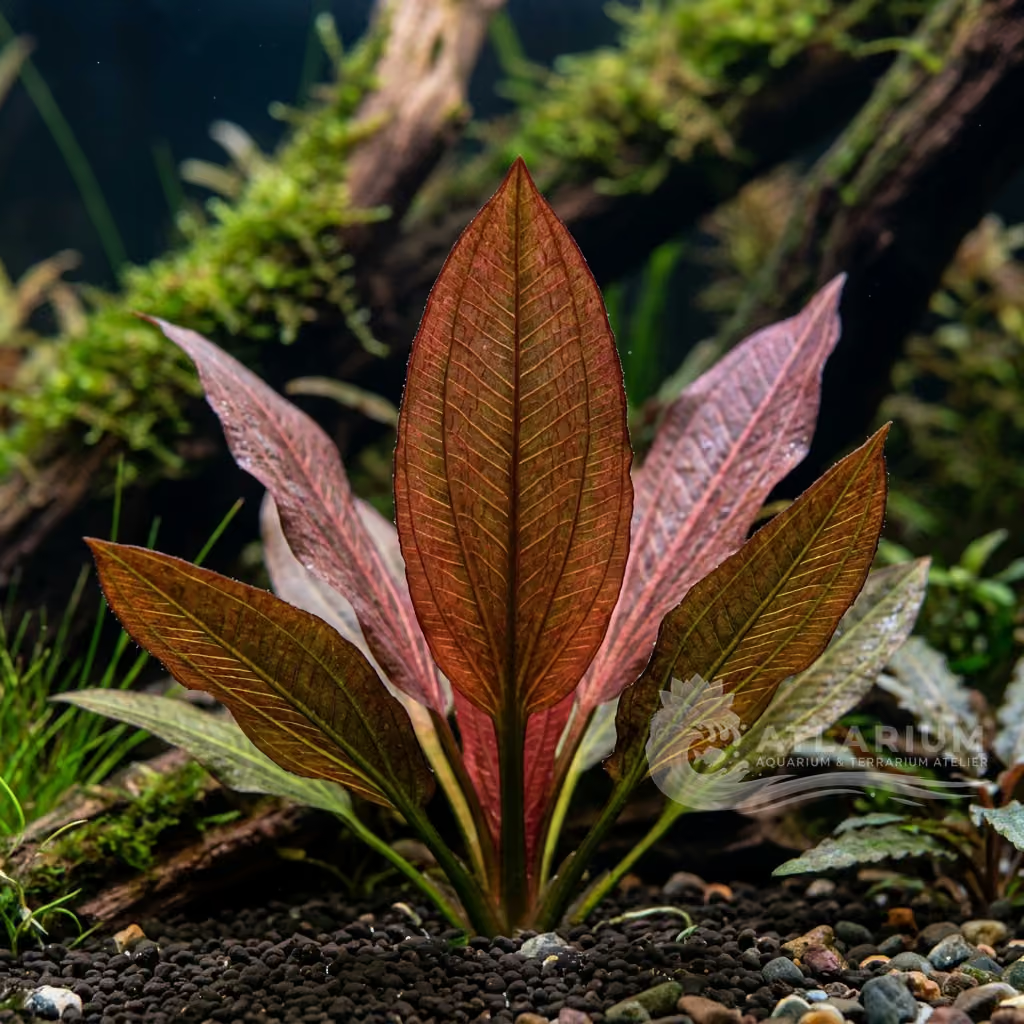
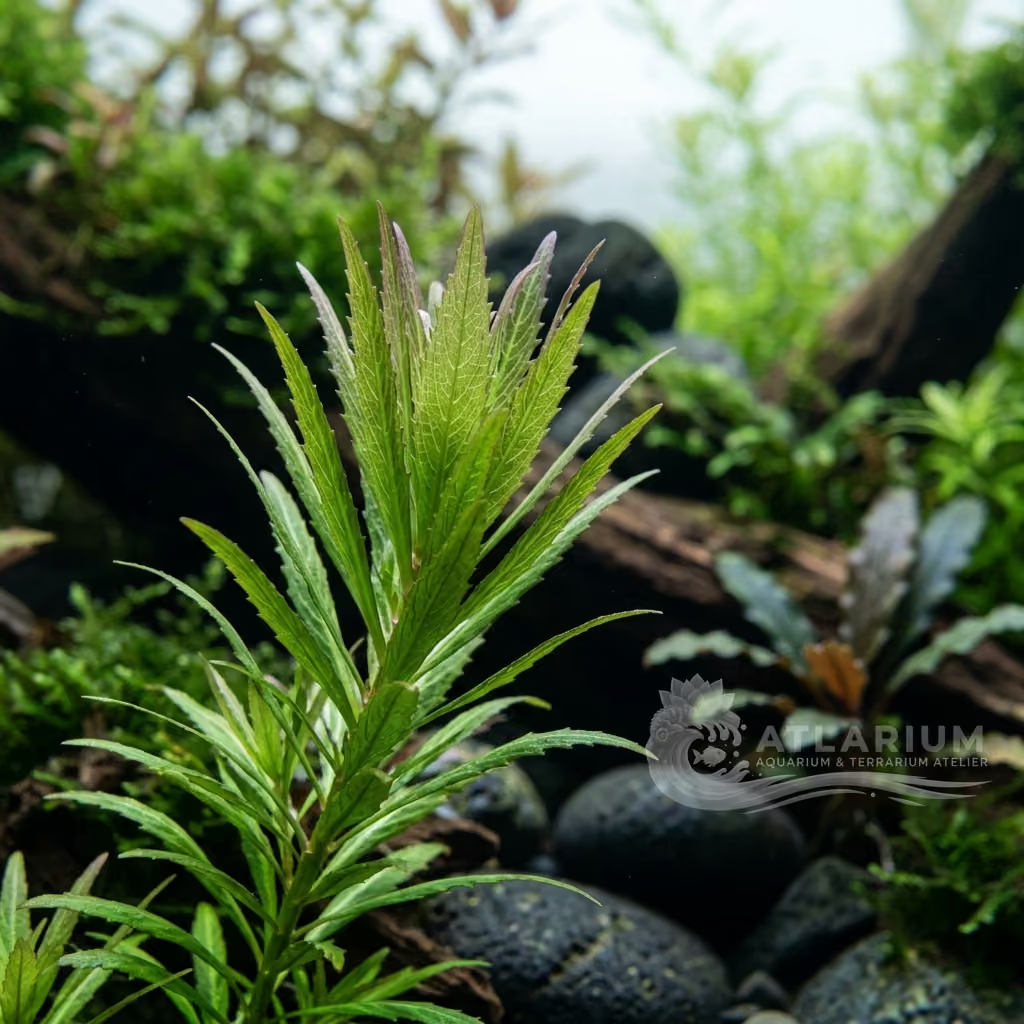
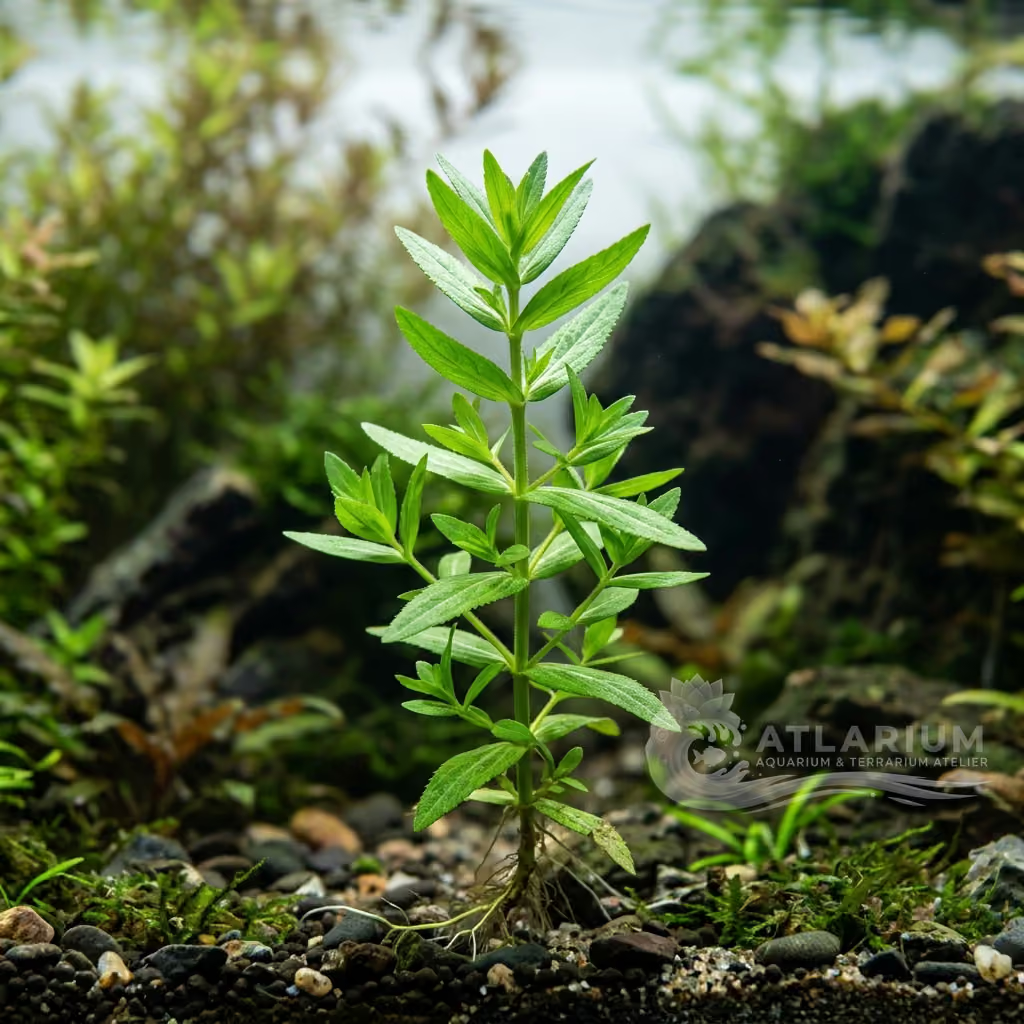
Physical Structure: It does not develop a true stem, but a compact central rosette from which dozens of long, ribbon-like leaves emerge. These leaves are extremely flexible, similar to giant grass blades, and can reach lengths between 30 and 50 cm, swaying gently in the aquarium's current.
Color & Texture: The leaves have a bright light green coloration, which is very fresh and relaxing. The leaf texture is smooth but rigid enough not to collapse on itself, with sharp edges and closely spaced parallel longitudinal veins that give the leaf a satin appearance.

Pflege, Zucht und Mitbewohner
Lighting & CO2: Requires medium-high lighting. Under too weak light, the plant stops growing and the older leaves tend to rot. CO2 is highly recommended to promote photosynthesis and stimulate steady growth, which is otherwise very slow.
Nutrition & Substrate: Requires a rich and deep substrate. The roots are thick and long, absorbing nutrients directly from the bottom. It is advisable to use periodic root fertilizers based on iron and potassium to prevent leaves from yellowing.
Water Chemistry: Adapts to cold to warm temperatures (15°C - 30°C), but prefers a range of 22-26°C. The optimal pH is slightly acidic or neutral (5.0 - 7.0), with carbonate hardness (KH) preferably low or moderate (0-10 dKH).
Space Management & Placement: The perfect position is in the midground or background, ideally near the filter outlet to enhance the movement of its leaves in the current. Being slow-growing at first, it should be placed where it cannot be covered by faster plants.
Pruning: Pruning must be done by removing individual damaged or yellowed leaves, cutting them at the base of the rosette. Absolutely avoid trimming the leaves at mid-height, as the cut tips will turn brown and stop growing, ruining the plant's aesthetics.
Risks & Diseases: It is sensitive to fluctuations in water parameters and can undergo leaf rot during adaptation. Additionally, long leaves can be an easy target for filamentous algae or black beard algae if the water flow is not optimal or if there are nutrient imbalances.

Geografische Herkunft und Verbreitung
This plant is native to southern Asia, particularly Thailand. It grows along slow-flowing streams, forest creeks, and warm marshes. It is accustomed to living both submerged in clear waters and partially emersed on muddy banks, benefiting from the constant water flow that carries nutrients to the leaves.
Ursprung
Süd- und Südostasien

Pflanzenprofil
- Platzierung
- Mittelgrund
- Ideal for the midground or background of the aquarium, depending on the tank's height. Its graceful, arching leaves create a beautiful flowing effect in the water current. It should be placed where it won't be overshadowed by larger, broader-leaved plants.
- Botanische Form
- Rosette
- Features long, slender, tape-like leaves that form a dense rosette. The leaves are typically a vibrant light green and are quite soft, allowing them to sway elegantly in the water flow. It resembles tall aquatic grass but is actually a true sedge.
- Wachstum
- Langsam
- Grows at a slow to moderate pace, making it an excellent choice for aquascapes that require less frequent maintenance. The addition of CO2 and good lighting will steadily increase its growth rate. It takes some time to adapt and establish its roots after planting.
- Substrat
- Hoch
- Cyperus helferi establishes a massive and intricate root system that demands a nutrient-dense and deep substrate. A rich layer of aqua soil, supplemented with root fertilizer tabs, is ideal to meet its substantial mineral requirements. It thrives best when planted in at least 5-7 centimeters of substrate, ensuring a stable anchor for its long, flowing leaves. The plant heavily relies on this rich bottom layer to maintain its elegant form and vigorous submerged growth.
- Säulendüngung
- Empfohlen
- Responds well to a regular dosing of liquid macronutrients and micronutrients. Adequate fertilization ensures that the long leaves remain vibrant and do not develop pale or transparent spots. However, it is not considered a heavy feeder from the water column.
- Wurzeldüngung
- Keine
- Develops a substantial root system and greatly benefits from a nutrient-rich substrate. Using root tabs near its base will encourage healthier growth and a denser rosette. A deep substrate is recommended to anchor its extensive roots securely.
- Trimmen
- Gelegentlich
- Pruning should be done selectively by removing older, yellowing, or damaged leaves at the very base of the plant. Avoid trimming the leaves straight across the top, as this looks unnatural and the cut ends will decay. Simply peel or cut the outer leaves away as needed.
- Ausbreitung
- Stecklinge
- Propagates by producing small plantlets at the center of the adult rosette or occasionally on flower stalks. Once these daughter plants develop their own roots, they can be carefully separated and replanted. It is a slow process compared to stem plants.
- Empfindlichkeit
- Mäßig
- Can be prone to algae growth on its slow-growing leaves if the aquarium has nutrient imbalances or poor circulation. It prefers cooler to moderate water temperatures and might struggle in very warm discus tanks. It requires an initial acclimation period during which growth might stall.
- Layoutrolle
- Mittelgrund, Hintergrund
- Provides a stunning visual impact as a background or focal midground plant, especially in Nature Aquarium layouts. Its long, flowing leaves add a sense of movement and tranquility when placed in the water current. It softens the hardscape and contrasts well with broad-leaved species.

Verwandte Arten
Empfehlungen gruppiert nach nahen Verwandten, Auswahl von Begleitern und ähnlicher Betreuung.