Ceratopteris cornuta
Ceratopteris cornuta
A robust, fast-growing water fern from tropical Africa with broad, fleshy, lobed green fronds. Adaptable as a floating or rooted plant, it requires medium to high light and consumes abundant nitrates.
Wassertemperatur
18 - 30 °C
pH-Wert
5 - 8
Wassertyp
Süßwasser
Licht
Medium to High
CO2
Niedrig - Hoch
Erwartete Höhe
40 cm
Erwartete Breite
25 cm
KH
0 - 21 dKH

Artbeschreibung
Geographical Origin and Habitat: Ceratopteris cornuta is native to tropical Africa, Madagascar, and parts of Asia, where it inhabits stagnant ponds, warm swamps, and calm riverbanks. It grows in both submersed and floating forms in nutrient-rich, sunlit waters, adapting well to seasonal fluctuations.
Taxonomy & Genetics: Belonging to the Pteridaceae family, it is often confused with *Ceratopteris thalictroides*, but Ceratopteris cornuta features submersed leaves with wider, less finely divided lobes. Genetically, it is a polyploid fern with an extraordinary capacity for vegetative reproduction via adventitious buds.
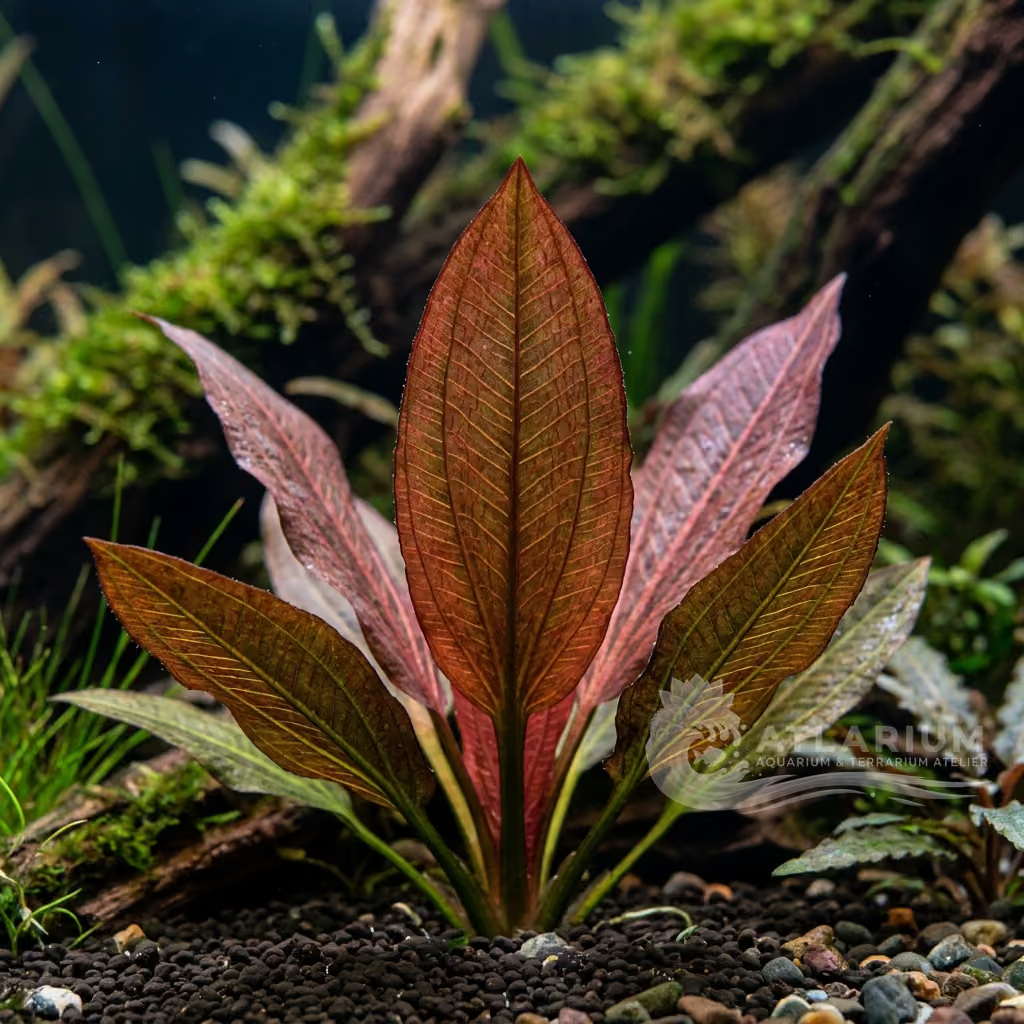
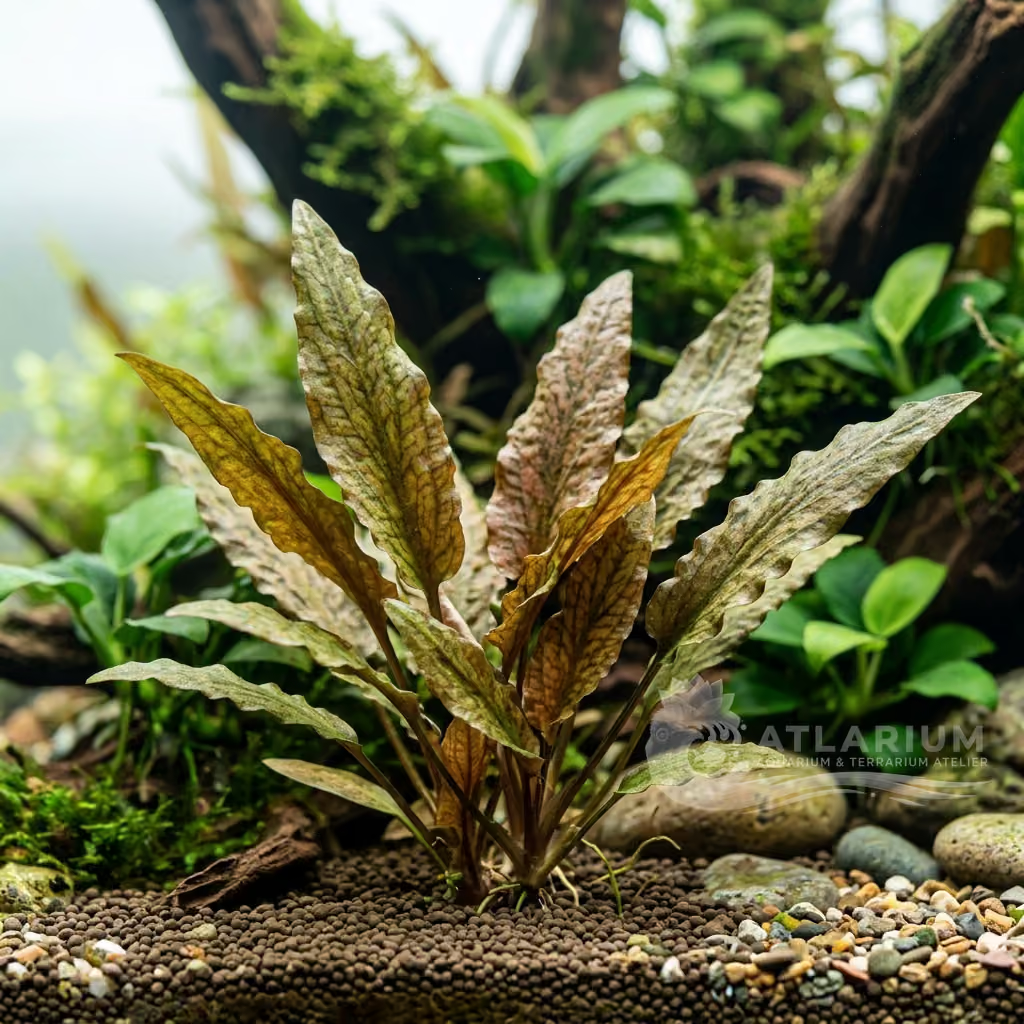
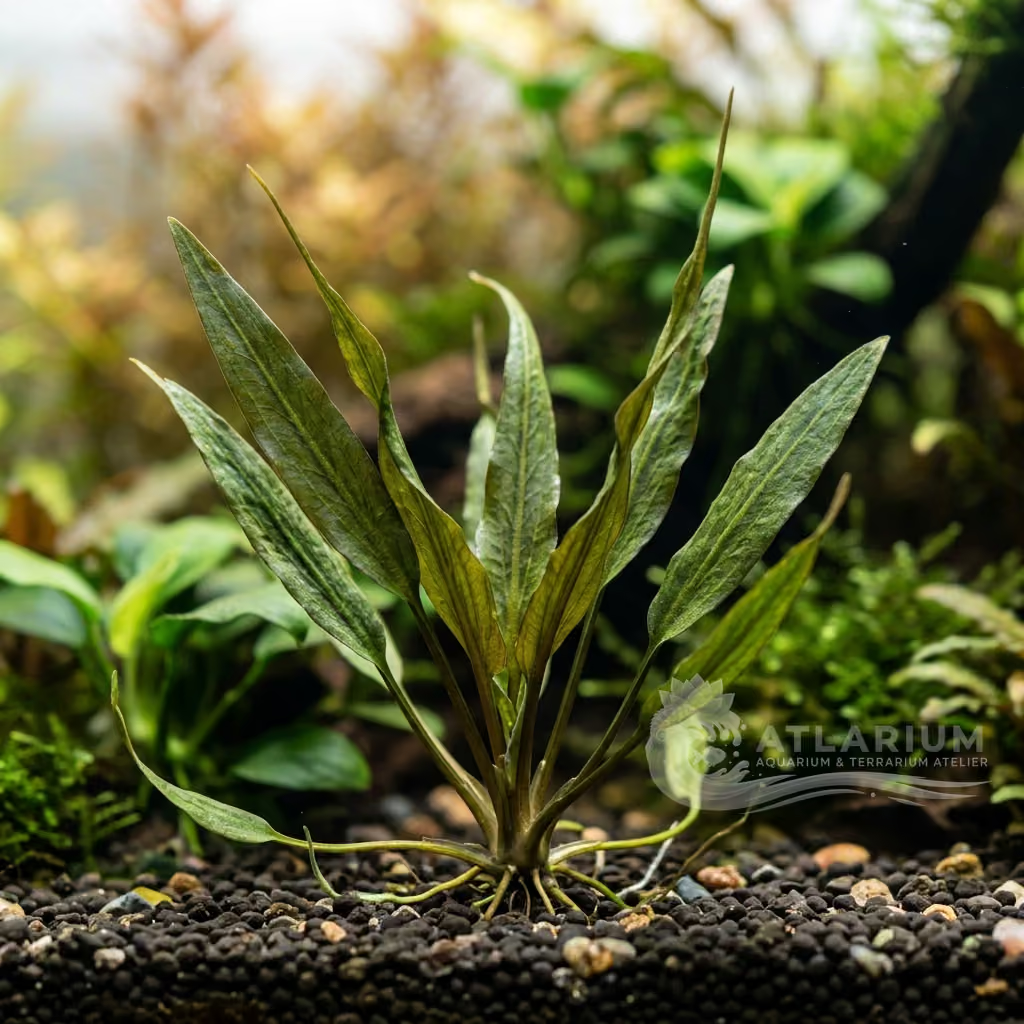
Physical Structure: It forms a dense, robust rosette. Submersed leaves are broad, lobed, and fleshy, while the floating leaves are simpler and more expanded. The root system of the floating form is extremely dense, dark, and highly branched, hanging down several centimeters into the water column.
Color & Texture: The leaves exhibit a bright, fresh light green. The texture is soft, fleshy, and herbaceous, with internal air pockets that facilitate floating. The lobed yet broad shape of the leaves provides an excellent visual contrast and a lush, natural feel.

Pflege, Zucht und Mitbewohner
Lighting & CO2: It requires medium to high light levels to support its very fast metabolism. Floating specimens benefit from direct overhead light; submersed plants need strong light to prevent the rosette from thinning out. CO2 injection is not required but stimulates even faster growth.
Nutrition & Substrate: It is a heavy nutrient feeder, consuming large quantities of nitrates, phosphates, and potassium, making it useful for controlling algae. If rooted, it prefers a soft, fertile substrate, though nutrient absorption is primarily through the
Water Chemistry: It is exceptionally tolerant of a wide range of water parameters, adapting to pH 5.0 to 8.0 and KH 0 to 21. The optimal temperature is between 18°C and 30°C. Regular water changes are recommended to replenish nutrients consumed by its rapid growth.
Space Management & Placement: Due to its fast growth and large potential size, it is best placed in the background or midground of spacious tanks. As a floating plant, it must be thinned regularly to prevent it from covering the entire surface and shading out plants below.
Pruning: Prune by removing older, larger, or damaged fronds at the base of the rosette. When kept floating, simply remove excess daughter plants. The plant propagates itself easily by producing small adventitious plantlets along the margins of mature leaves.
Risks & Diseases: The fronds are soft and fragile, making them susceptible to physical damage from strong currents or large herbivorous fish. Nutrient deficiencies (especially iron and nitrogen) cause the leaves to turn yellow, translucent, and rot.

Geografische Herkunft und Verbreitung
Ceratopteris cornuta is native to tropical Africa, Madagascar, and parts of Asia, where it inhabits stagnant ponds, warm swamps, and calm riverbanks. It grows in both submersed and floating forms in nutrient-rich, sunlit waters, adapting well to seasonal fluctuations.
Ursprung
Afrika und MadagaskarSüd- und SüdostasienOstasien

Pflanzenprofil
- Platzierung
- Mittelgrund
- It is incredibly versatile and can be grown rooted in the substrate or left to float at the surface. When rooted, it forms a large, impressive rosette, while floating allows its roots to trail beautifully in the water.
- Botanische Form
- Rosette
- It features broader, less deeply divided leaves compared to other Water Sprite varieties, giving it a somewhat more substantial appearance. The bright green, lobed fronds add a lush, tropical feel to the aquarium.
- Wachstum
- VERY_FAST
- It exhibits a very fast growth rate, especially when allowed to float near the light source. Regular pruning is necessary to prevent it from overshadowing neighboring plants.
- Substrat
- Mittel
- Ceratopteris cornuta features a moderate substrate demand, benefiting from a moderately nutrient-rich bed to support its robust root system. When planted, its thick roots spread efficiently through fine gravel or aqua soil to extract essential minerals. A substrate depth of 4-6 centimeters ensures adequate anchorage for its large, buoyant fronds. Alternatively, it can also adapt to growing as a floating plant, though a fertile substrate encourages a more substantial, anchored growth form.
- Säulendüngung
- Empfohlen
- It feeds aggressively from the water column, particularly when grown as a floating plant. Regular dosing of liquid macronutrients and trace elements is highly recommended to support its rapid development.
- Wurzeldüngung
- Keine
- When planted in the substrate, it develops a substantial root system that benefits from nutrient-rich soil or root tabs. However, it can thrive perfectly well without substrate fertilization if the water column is rich.
- Trimmen
- Gelegentlich
- To trim, older, larger outer leaves can be removed at the base to control the plant's overall size. Floating specimens may need their trailing roots trimmed if they become too long and messy.
- Ausbreitung
- Teilung
- Propagation is very easy, as adventitious plantlets frequently form on the edges of older, mature leaves. These small plantlets can be carefully detached and replanted or allowed to float once they have developed their own roots.
- Empfindlichkeit
- Mäßig
- It is a generally hardy plant but the delicate fronds can be easily damaged by boisterous or herbivorous fish. It prefers moderate to high lighting and may become pale or leggy in shaded areas.
- Layoutrolle
- Mittelgrund, Hintergrund
- In the layout, it serves as a stunning midground or background focal point when rooted. As a floater, its trailing roots create a natural, jungle-like ambiance while providing excellent cover for surface-dwelling fish.

Verwandte Arten
Empfehlungen gruppiert nach nahen Verwandten, Auswahl von Begleitern und ähnlicher Betreuung.