Derasa Clam
Tridacna derasa
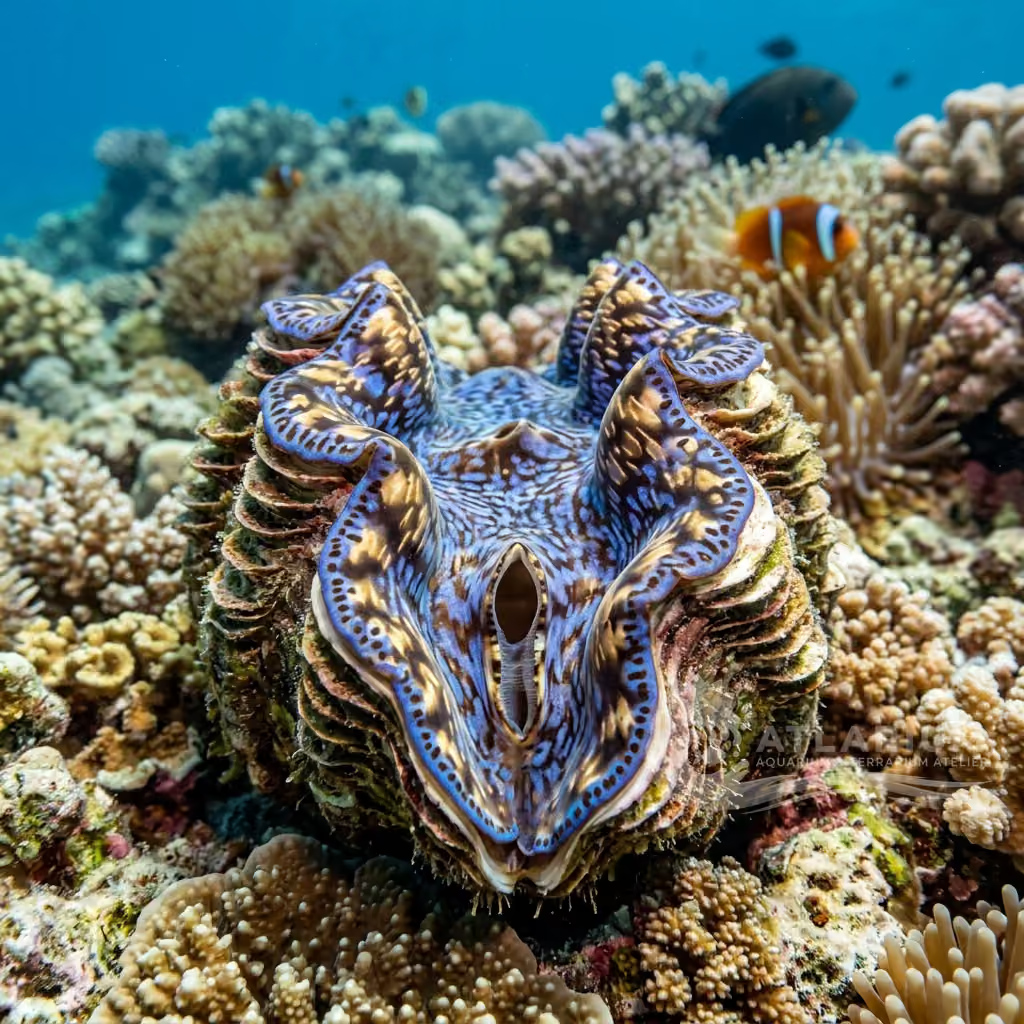
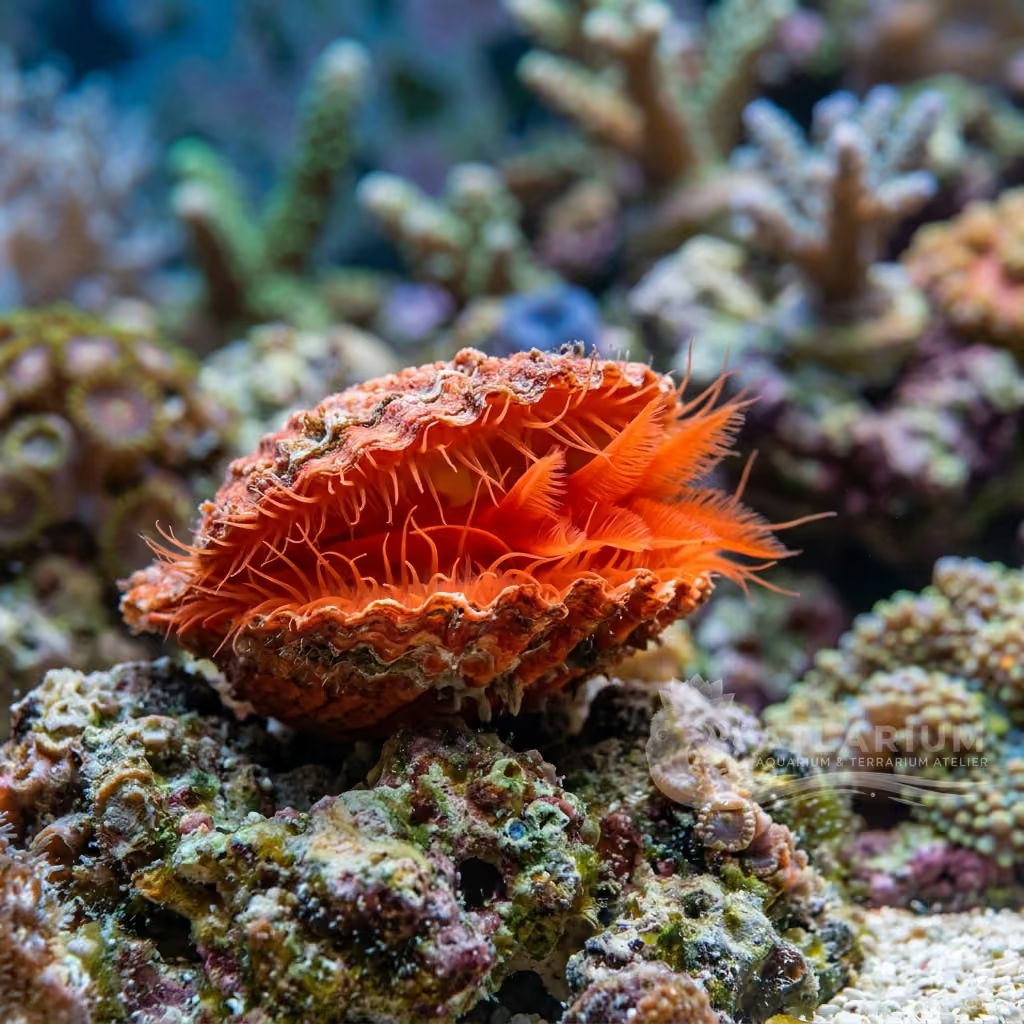
The second-largest giant clam species, highly sought after in reef aquariums for its breathtaking mantle patterns and remarkable overall hardiness.
Wassertemperatur
24 - 28 °C
pH-Wert
8.1 - 8.4
Wassertyp
Meerwasser
Wirbelloser Typ
Bivalve
Erwachsenengröße
50 cm
Mindestgruppe
>= 1
KH
8 - 12 dKH
Ökologische Rolle
Filter feeder
Kupferempfindlichkeit
High

Artbeschreibung
Geographical Origin and Habitat: Tridacna derasa, commonly known as the Derasa Clam or Smooth Giant Clam, is native to the tropical waters of the Indo-Pacific region. It is widely distributed across the Great Barrier Reef of Australia, Fiji, Tonga, Samoa, New Caledonia, and the Philippines. It inhabits protected outer reef slopes, sandy lagoons, and shallow coral rubble fields at depths from 1 to 20 meters, where clear waters allow intense sunlight penetration for its symbiotic microalgae.
Taxonomy: Belonging to the family Cardiidae (formerly Tridacnidae) and the genus Tridacna, it is known as the "smooth giant clam" due to its shell morphology. Unlike other clams like T. maxima or T. squamosa, its shell is relatively smooth with low, undulating ridges and lack distinct scales (scutes). It is the second-largest species of giant clam in the world, surpassed in size only by the massive Tridacna gigas.
Social Behavior: It is a sessile, benthic organism. Juveniles produce thin byssal threads to anchor themselves to rocks or coral rubble; however, as they grow, they lose this byssal gland, and their sheer weight becomes sufficient to keep them securely in place on sandy or gravel substrates. It shows no social behavior but reacts to shadows or physical contact by rapidly retracting its mantle and closing its valves.
Coloration and Sexual Dimorphism: The colorful, fleshy mantle extended during the day displays spectacular patterns of brown, green, gold, and electric-blue wavy lines. These colors protect the clam from solar radiation and host zooxanthellae. Giant clams are simultaneous hermaphrodites, meaning each individual possesses both male and female reproductive organs, and therefore no sexual dimorphism exists between specimens.

Pflege, Zucht und Mitbewohner
Tank Setup: A marine reef aquarium of at least 300 liters is required to support the long-term growth of this species (which can reach 50-60 cm in size). It should be placed on the sandy substrate rather than high up on the rocks. You can place a small flat rock underneath the sand for the clam to settle on. Ensure it is placed in an area with high-intensity lighting and low to moderate, indirect water flow.
Diet and Feeding: The majority of its nutritional needs are met through photosynthesis by the symbiotic zooxanthellae housed in its mantle tissues. However, it benefits from filter-feeding on phytoplankton, especially when young (under 10 cm in length) as their mantle area is smaller. They also absorb dissolved organic compounds, nitrates, and ammonium directly from the water column.
Water Quality: High chemical stability is paramount: water temperature between 24°C and 26°C, pH range of 8.1 to 8.4, specific gravity between 1.023 and 1.025, and calcium levels maintained between 400 and 450 mg/l. Carbonate hardness (KH) must be kept stable at 8 to 10 dKH and magnesium at 1300-1350 mg/l, as these clams consume substantial amounts of calcium to build their heavy shells.
Compatibility and Tankmates: Reef-safe, but must be protected from nipping tankmates. Avoid housing them with angelfish, butterflyfish, triggerfish, large wrasses, or non-reef-safe crabs and shrimps that can pick at the sensitive mantle tissue. Suitable tankmates include peaceful reef fish such as gobies, tangs, chromis, and non-aggressive corals that do not shade or sting the clam.
Aquarium Breeding: Spawning in home aquariums is extremely difficult and rarely successful. They are broadcast spawners, releasing sperm first and eggs later to prevent self-fertilization, typically triggered by thermal or chemical cues. The external fertilization results in free-swimming planktonic larvae that require highly specialized aquaculture facilities and rotifer feeding to rear successfully.
Risks and Diseases: The primary risk is pinched mantle syndrome or bleaching due to insufficient lighting or sudden temperature shocks. They are also highly vulnerable to parasitic pyramidellid snails, which hide near the clam's foot and feed on its tissue at night. Regular manual inspections of the clam's shell base are required to detect and remove these pests before they kill the clam.

Geografische Herkunft und Verbreitung
Tridacna derasa, commonly known as the Derasa Clam or Smooth Giant Clam, is native to the tropical waters of the Indo-Pacific region. It is widely distributed across the Great Barrier Reef of Australia, Fiji, Tonga, Samoa, New Caledonia, and the Philippines. It inhabits protected outer reef slopes, sandy lagoons, and shallow coral rubble fields at depths from 1 to 20 meters, where clear waters allow intense sunlight penetration for its symbiotic microalgae.
Ursprung
Tropische Ozeane und RiffeSüd- und SüdostasienAustralien, Neuguinea und Ozeanien

Wirbelloses Profil
- Diät
- Photosynthetic
- The diet of Tridacna derasa typically consists of organic detritus, microalgae, or specific planktonic particles. In a home aquarium, they constantly forage along the substrate or rockwork looking for nourishment. Supplemental feeding with specialized invertebrate pellets or liquid foods may be necessary. Ensuring a varied and nutritious diet will promote vibrant colors and long-term health. Overfeeding should be avoided to maintain optimal water quality.
- Ökologische Rolle
- Filter feeder
- In the wild, Tridacna derasa plays a crucial role in maintaining the balance of its native ecosystem. They often act as natural cleaners, breaking down waste materials and unconsumed food. Their constant movement helps aerate the sand bed and prevent the buildup of toxic gases. By managing algae growth, they create space for slow-growing corals and sponges to thrive. A balanced aquarium ecosystem relies heavily on their diligent cleaning efforts.
- Erwachsenengröße
- 50 cm
- Sprungrisiko
- No
- Stoßempfindlichkeit
- High
- This invertebrate is highly sensitive to rapid fluctuations in water parameters. Sudden changes in temperature, salinity, or pH can cause severe osmotic shock and death. A slow and careful acclimation process, preferably drip acclimation, is absolutely necessary. Maintain stable aquarium conditions through regular monitoring and automated top-offs. Avoid performing excessively large water changes at once.
- Kalzium und Mineralien
- Medium
- Proper calcium levels are absolutely vital for the structural integrity and growth of this species. They continuously extract calcium carbonate from the water to build their shells, skeletons, or protective tubes. Maintaining calcium levels between 400 and 450 ppm ensures they remain healthy. It is also important to balance alkalinity and magnesium alongside calcium supplementation. Regular testing is required in heavily stocked reef aquariums.
- Häutung
- Shell growth
- If applicable to its morphology, this invertebrate undergoes periodic molting to facilitate growth. During the molting process, the organism becomes extremely vulnerable to predation and stress. It is crucial to provide ample hiding spaces, such as caves or crevices, where they can retreat safely. Do not remove the discarded exoskeleton, as they often consume it to quickly replenish essential minerals. Disturbing them during this delicate phase can lead to fatal complications.
- Reproduktion
- Oviparous
- Reproduction in the home aquarium is often challenging and rare for many invertebrate species. Most require highly specific environmental triggers, such as temperature shifts or lunar cycles. The resulting larvae usually have a prolonged planktonic stage, making them difficult to rear. Specialized food sources like phytoplankton are needed to sustain the offspring. Consequently, most specimens available in the hobby are wild-caught or professionally aquacultured.
- Kompatibilität & Tankkameraden
- Reef safe
- Compatibility varies largely based on the specific species and tank mates. They are generally peaceful but can fall prey to aggressive or predatory fish. Ensure they are housed with calm tank mates that will not nip or harass them. Research individual species requirements to avoid territorial disputes. Always monitor new additions carefully to ensure harmonious interactions.

Wissenschaftliche Modelle & Parameter
SeaLifeBase
Zugang zu den offiziellen wissenschaftlichen Daten der Art
SeaLifeBase v26.04Daten synchronisiert am: 15.06.2026
- Belastbarkeit
- Niedrig (4,5 - 14 Jahre)

Verwandte Arten
Empfehlungen gruppiert nach nahen Verwandten, Auswahl von Begleitern und ähnlicher Betreuung.