Randall pistol shrimp
Alpheus randalli
Randall's Pistol Shrimp is a small, specialized crustacean from the Western Pacific. It forms perfect goby partnerships and requires a deep sand bed for tunneling.
Wassertemperatur
24 - 28 °C
pH-Wert
8.1 - 8.4
Wassertyp
Meerwasser
Wirbelloser Typ
Marine shrimp
Erwachsenengröße
3 cm
Mindestgruppe
>= 1
Ökologische Rolle
Scavenger
Kupferempfindlichkeit
High

Artbeschreibung
Geographical Origin and Habitat: Randall's Pistol Shrimp (*Alpheus randalli*) is a fascinating, highly specialized benthic marine crustacean natively endemic to the warm, shallow reef flats and sandy lagoons of the Western Pacific Ocean (particularly around Indonesia and the Philippines). Their natural biotope is defined by expansive, sunlit stretches of fine coral sand interspersed with loose rubble, where they meticulously construct deep, highly complex, and architecturally sound tunnel systems beneath the substrate.
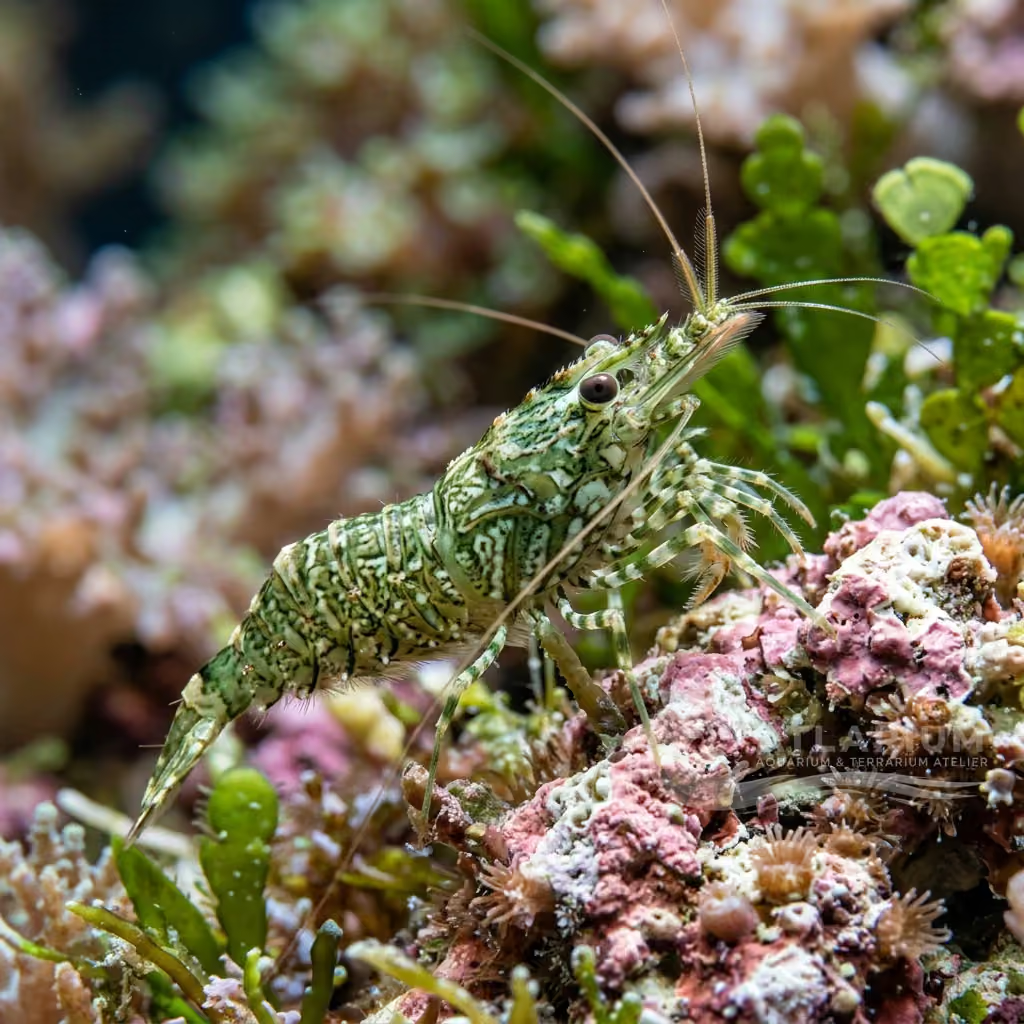
Taxonomy: Scientifically classified within the Alpheidae (Snapping Shrimp) family, they are a small but formidable decapod. Fully mature adults reach only 3.0 to 4.0 centimeters (1.2-1.6 inches) in length. Their morphology is iconic: one of their front claws is massively enlarged and highly modified into a biological "pistol." By rapidly snapping this claw shut, they fire a high-velocity jet of water that creates a cavitation bubble; the collapse of this bubble produces a loud "pop" and a shockwave.
Social Behavior: They are intensely industrious, nearly blind, and profoundly symbiotic. They spend their entire lives continuously excavating and reinforcing their burrows.
Fascinating Trait: Because they have terrible eyesight, they form a legendary mutualistic symbiosis with specific Shrimp Gobies (e.g. *Amblyeleotris* or *Cryptocentrus*). The shrimp acts as the blind "builder," while the Goby acts as the "lookout." The shrimp keeps one antenna touching the Goby's tail at all times; if the Goby darts into the burrow, the shrimp instantly follows.
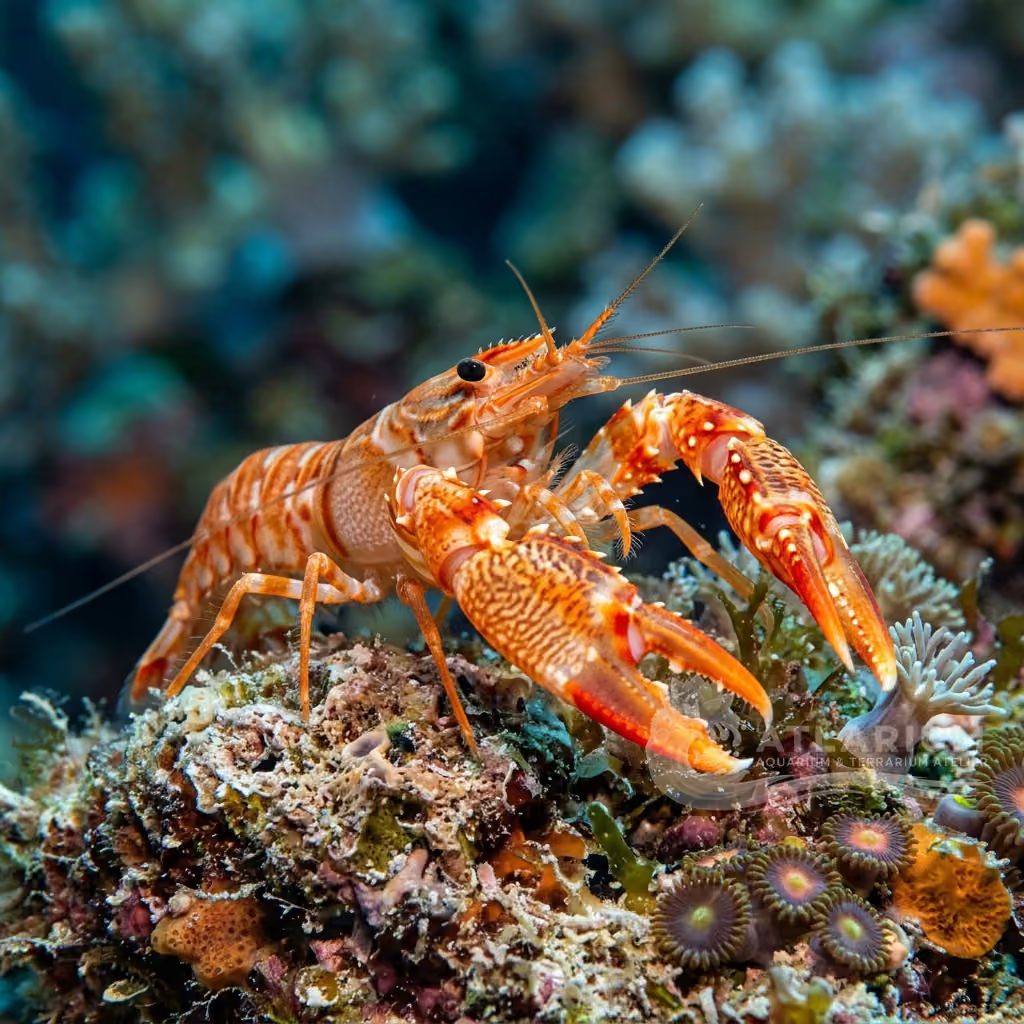
Coloration and Sexual Dimorphism: Sexual dimorphism is visually non-existent. Their coloration is vibrant, disruptive, and unmistakable. The base body coloration is a striking, translucent milky-white or pale yellow. This canvas is boldly banded with thick, highly contrasting vertical stripes of deep, saturated brick-red or maroon. The massively enlarged snapping claw is similarly banded and often features a slightly translucent, golden-yellow tip.

Pflege, Zucht und Mitbewohner
Tank Setup: The aquarium architecture MUST accommodate their absolute need to dig complex tunnels. A minimum 75-liter (20-gallon) marine aquarium is sufficient.
CRITICAL REQUIREMENT: The tank MUST possess a deep sand bed (at least 3 inches) composed of a mix of fine aragonite sand and coarse coral rubble. The shrimp uses the coarse rubble as "bricks" to reinforce the roof of its tunnels.
SAFETY WARNING: All live rock MUST be placed directly on the glass bottom BEFORE adding sand to prevent lethal rock collapses.
Diet and Feeding: They are omnivorous scavengers. In the wild, they rely heavily on food brought to the burrow by their symbiotic Goby partner, or they scavenge organic matter from the sand. In the aquarium, they are generally unfussy eaters but MUST be ensured they receive food. If paired with a Goby, feed the Goby heavy, sinking meaty foods (Mysis shrimp, sinking carnivore pellets) near the burrow entrance; the Goby will often share or the shrimp will snatch the scraps.
Water Quality: As marine invertebrates, they are highly sensitive to water chemistry fluctuations. They demand stable tropical heat (24-27°C / 75-81°F). Specific gravity (salinity) MUST be maintained precisely between 1.023 and 1.025. They require hard, highly alkaline water (pH 8.1 - 8.4) with flawless Calcium (400-450 ppm) and stable Alkalinity to support their frequent molting process. They thrive in low to moderate water flow; massive flow will constantly collapse their carefully built sand tunnels.
Compatibility and Tankmates: Compatibility is universally excellent, provided they are kept with peaceful fish. They are 100% reef-safe and completely ignore corals.
CRITICAL REQUIREMENT: To observe their natural behavior and ensure their psychological health, they MUST be purchased and housed with a compatible Shrimp Goby (*Amblyeleotris randalli* or *Cryptocentrus cinctus*). They MUST NEVER be housed with predatory fish (Triggerfish, large Wrasses, Hawkfish) that will view them as an easy snack when they emerge from the burrow.
Aquarium Breeding: Breeding Randall's Pistol Shrimp in captivity is extremely rare for home hobbyists. While pairs will frequently mate in the aquarium, establishing the exact sex of the individuals is nearly impossible. Mated females will carry a mass of bright green eggs under their abdomen (swimmerets) for several weeks before releasing thousands of microscopic, pelagic larvae into the water column at night. Rearing these delicate larvae requires complex plankton cultures and is practically impossible in a display tank.
Risks and Diseases:
CRITICAL TOXICITY WARNING: Like all ornamental shrimp, they are immediately and fatally hypersensitive to COPPER (Cu) and heavy metals. Never use copper medications in a tank housing shrimp. The second major risk is death by crushing; if your live rock is placed on top of the sand, the shrimp WILL undermine it, causing the rock to collapse and crush the shrimp (and potentially crack the aquarium glass). The third risk is starvation if kept without a Goby.

Geografische Herkunft und Verbreitung
Randall's Pistol Shrimp (*Alpheus randalli*) is a fascinating, highly specialized benthic marine crustacean natively endemic to the warm, shallow reef flats and sandy lagoons of the Western Pacific Ocean (particularly around Indonesia and the Philippines). Their natural biotope is defined by expansive, sunlit stretches of fine coral sand interspersed with loose rubble, where they meticulously construct deep, highly complex, and architecturally sound tunnel systems beneath the substrate.
Ursprung
Tropische Ozeane und RiffeSüd- und SüdostasienOstasien

Wirbelloses Profil
- Diät
- Carnivore
- The diet of Alpheus randalli typically reflects its natural foraging behavior as a marine snapping shrimp. It thrives on a varied diet that can include specialized commercial foods, naturally occurring biofilm, and appropriately sized organic matter. Providing a balanced nutritional profile ensures robust health, strong coloration, and proper energy levels. Supplemental feeding should be adjusted based on the maturity of the tank and the presence of natural food sources.
- Ökologische Rolle
- Scavenger
- In its native habitat and the home aquarium, Alpheus randalli plays a vital ecological role. It contributes significantly to the processing of organic waste and the maintenance of a balanced micro-ecosystem. By engaging in natural behaviors like scavenging, grazing, or sifting, it helps prevent the accumulation of detritus. This species is often considered a crucial component of a comprehensive clean-up crew.
- Erwachsenengröße
- 3 cm
- Sprungrisiko
- Yes
- Despite being aquatic, Alpheus randalli can present a flight or jump risk under certain conditions. Many invertebrates will attempt to climb out of the water if parameters drop off, oxygen is low, or they are harassed by tank mates. A tightly fitting lid or screen top is highly recommended to prevent accidental desiccation. Ensuring ideal water conditions is the best deterrent to escape attempts.
- Stoßempfindlichkeit
- High
- Sudden shifts in water parameters can trigger severe osmotic shock in Alpheus randalli. It requires slow, careful acclimation, preferably using the drip method over several hours. Rapid changes in temperature, salinity, or pH can lead to immediate stress, failed molts, or mortality. Maintaining absolute stability in the tank is more important than chasing specific target values.
- Kalzium und Mineralien
- Medium
- Adequate calcium levels are absolutely essential for the structural integrity and growth of Alpheus randalli. For crustaceans and snails, it facilitates proper shell and exoskeleton development, while for corals, it builds the skeletal structure. Aquarists must regularly monitor calcium concentration alongside alkalinity and magnesium. Supplementation through specialized products or mineral-rich foods may be necessary in depleted systems.
- Häutung
- Yes
- If applicable to this species, the molting process is a highly vulnerable period for Alpheus randalli. During this time, the animal will hide while its new exoskeleton hardens, requiring peace and stable water chemistry. The discarded molt should generally be left in the tank, as it provides a valuable source of recycled minerals. A lack of iodine or calcium can lead to fatal molting issues, often referred to as the 'white ring of death'.
- Reproduktion
- Oviparous
- The reproductive strategy of Alpheus randalli can range from simple cloning and fragmentation to complex larval stages requiring varying water conditions. Successful captive breeding often signifies excellent water quality and a well-balanced environment. While some species will readily multiply and populate the tank, others may require specialized rearing setups for the offspring to survive. Researching their specific larval development phase is critical for aquarists aiming to breed them.
- Kompatibilität & Tankkameraden
- Verify
- When selecting tank mates for Alpheus randalli, cautious planning is imperative to avoid predation or aggressive competition. Small or peaceful invertebrates should not be housed with aggressive fish, loaches, or large crabs that might view them as food. Conversely, some specialized invertebrates form symbiotic relationships that can be highlighted in a community setup. A heavily planted or intricately rock-scaped tank often provides necessary refuges.

Bildergalerie
Lizenzierte Bilder, die mit der Art oder, wenn markiert, mit dem nächstgelegenen repräsentativen Taxon verknüpft sind.

Verwandte Arten
Empfehlungen gruppiert nach nahen Verwandten, Auswahl von Begleitern und ähnlicher Betreuung.