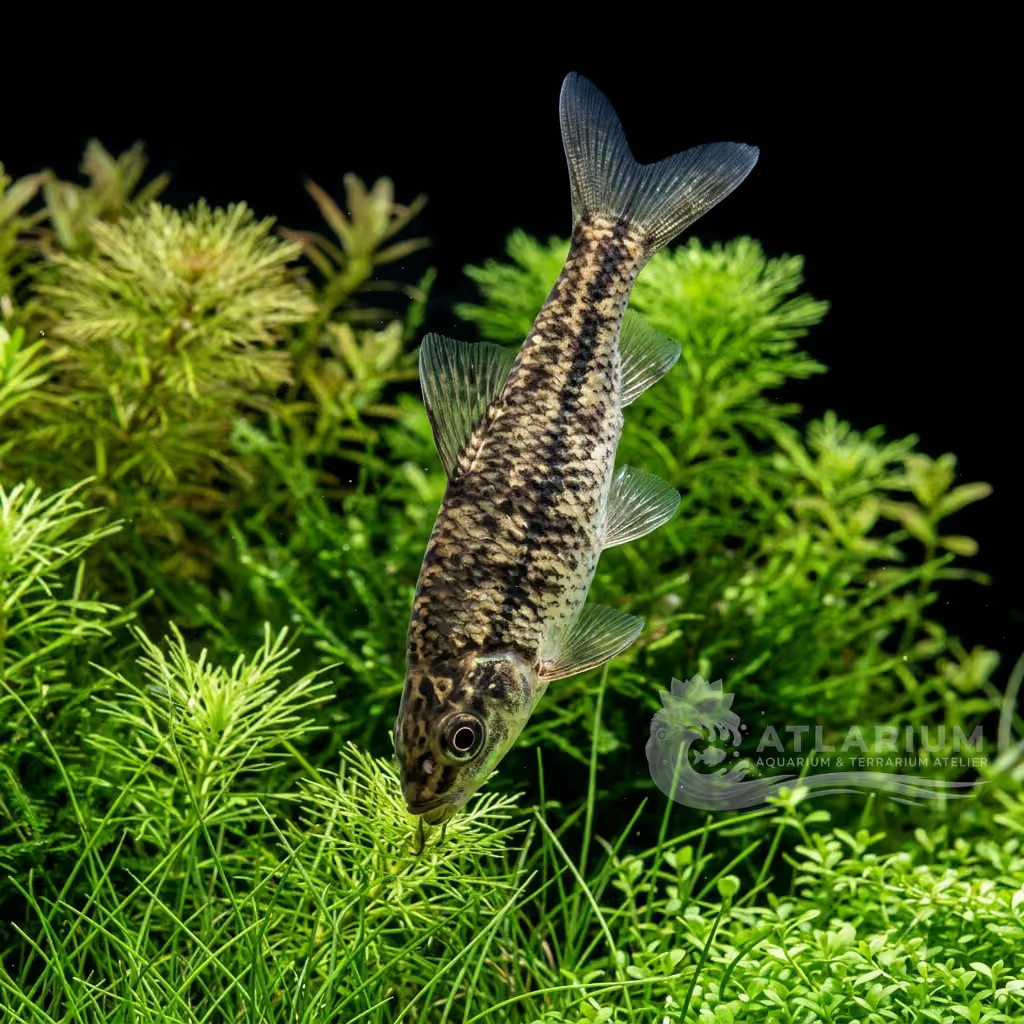
Primitive Archerfish
Toxotes lorentzi
A rare, strictly freshwater archerfish from Australia and New Guinea. Known for shooting terrestrial insects, it requires a specialized 200L paludarium with open surface space and a secure cover.
Wassertemperatur
24 - 30 °C
pH-Wert
6.5 - 7.5
Wassertyp
Süßwasser
Tankfüllstand
Oberfläche
Erwachsenengröße
15 cm
Mindesttankvolumen
>= 200 L
Mindestgruppe
>= 5
GH
4 - 15 dGH
KH
2 - 7 dKH
TDS
80 - 295 ppm
Leitfähigkeit
125 - 461 uS/cm

Artbeschreibung
Geographical Origin and Habitat:
Toxotes lorentzi is native to northern Australia and southern New Guinea. Unlike other archerfish species that dwell in brackish estuaries, this species is restricted to freshwater habitats, including slow-flowing forest streams and swampy wetlands shaded by overhanging trees.
Taxonomy and Morphology:
Member of the family Toxotidae. It is considered one of the most primitive archerfish species. It features a laterally compressed body, a straight dorsal profile, and a large, upward-directed mouth designed for surface feeding. Grows to about 15 cm in length.
Social Behavior:
A peaceful but shy surface predator. It can be kept individually or in small groups if given sufficient space. It spends most of its time hovering just below the water surface, scanning overhanging branches for prey.
Coloration and Sexual Dimorphism:
The body coloration is relatively plain, consisting of a uniform bronze, silver, or light brown metallic hue, lacking the bold vertical black bars found in other Toxotes species. Fine dark speckles may appear along the sides. No visible sexual dimorphism.

Pflege, Zucht und Mitbewohner
Aquarium Setup:
Must be housed in a large paludarium or specialized aquarium of at least 200 liters, with the water level lowered to leave a significant air space at the top. Arrange overhanging branches or artificial plants above the water to facilitate natural hunting. A tight-fitting lid is mandatory.
Diet and Feeding:
Strictly carnivorous, specializing in surface insects. Feed live insects like crickets, flies, fruit flies, and mealworms on the land area or overhanging branches. They also accept floating frozen foods like krill and brine shrimp. Dry foods are rarely accepted.
Water Quality:
Unlike other archerfish, this species requires pure freshwater rather than brackish water. Maintain pH between 6.5 and 7.5, and moderate hardness. Keep temperature warm, between 24 and 30 °C. Provide excellent filtration but avoid strong surface currents.
Compatibility and Cohabitation:
Peaceful with fish of similar size that occupy lower levels of the tank. Good tankmates include large rainbowfish, freshwater gobies, and peaceful catfish. Any small fish or insects at the surface will be treated as prey.
Aquarium Breeding:
Breeding has not been recorded in home aquariums. Very little is known about their reproductive biology in the wild, though it is believed they spawn during the wet season, scatter-releasing eggs near submerged vegetation.
Risks and Diseases:
High jump hazard; a tightly sealed lid is required to prevent escape during hunting attempts. Extremely sensitive to nitrate buildup and sudden water parameter changes, which can lead to stress, lethargy, and secondary skin infections.

Geografische Herkunft und Verbreitung
Toxotes lorentzi is native to northern Australia and southern New Guinea. Unlike other archerfish species that dwell in brackish estuaries, this species is restricted to freshwater habitats, including slow-flowing forest streams and swampy wetlands shaded by overhanging trees.
Ursprung
Afrika und MadagaskarAustralien, Neuguinea und Ozeanien

Fischprofil
- Temperament
- Peaceful
- They are relatively peaceful but highly predatory. They do not aggressively attack tank mates unless hungry. They may establish a loose pecking order during meals.
- Diät
- Carnivore
- It is an opportunistic predator focused on insects. Frozen foods and high-quality pellets are usually accepted. Floating foods are preferred over sinking ones.
- Lebenserwartung
- 5-10 years
- Erwachsenengröße
- 15 cm
- Geschlechterverhältnis
- School
- Keeping them in a small school is beneficial. A specific ratio of males to females is not critical. A larger group reduces targeted aggression.
- Fütterungsfrequenz
- Twice daily
- Feed them carefully once or twice a day. Ensure all food is consumed quickly. Remove any uneaten food to prevent water fouling.
- Bioload
- Medium to High
- This archerfish has a significant bioload. It consumes large meals and creates substantial waste. High-capacity filtration is necessary to maintain water quality.
- Fluss
- Strong
- They appreciate areas of calm water near the surface. Gentle flow is preferred over turbulent currents. This allows them to effectively scan for surface prey.
- Sprungrisiko
- Yes
- They are notorious for jumping out of aquariums. They naturally leap to grab overhanging insects. A secure canopy is completely non-negotiable.
- Reproduktion
- Oviparous
- Captive breeding has not been well documented. The triggers for spawning remain a mystery. It is assumed they scatter eggs in open water.
- Kompatibilität & Tankkameraden
- Peaceful
- Keep with robust companions of similar size. Anything small enough to fit in its mouth will become a meal. It does well with larger rainbowfish or peaceful cichlids.
- Tankfüllstand
- Top
- They are obligate surface dwellers. They spend nearly all their time at the top of the water column. A long, wide tank is better than a tall one.

Wissenschaftliche Modelle & Parameter
FishBase
Zugang zu den offiziellen wissenschaftlichen Daten der Art
FishBase v25.04Daten synchronisiert am: 15.06.2026
- Trophäenniveau
- 3,2 ± 0,4 se
- Belastbarkeit
- Hoch (weniger als 15 Monate)
- Phylogenetische Einzigartigkeit (PD50)
- 0.5156
- Bayessche Längen-Gewichts-Beziehung
- a = 0.0166, b = 3
- AnfälligkeitGeringe Anfälligkeit (12 / 100)

Verwandte Arten
Empfehlungen gruppiert nach nahen Verwandten, Auswahl von Begleitern und ähnlicher Betreuung.