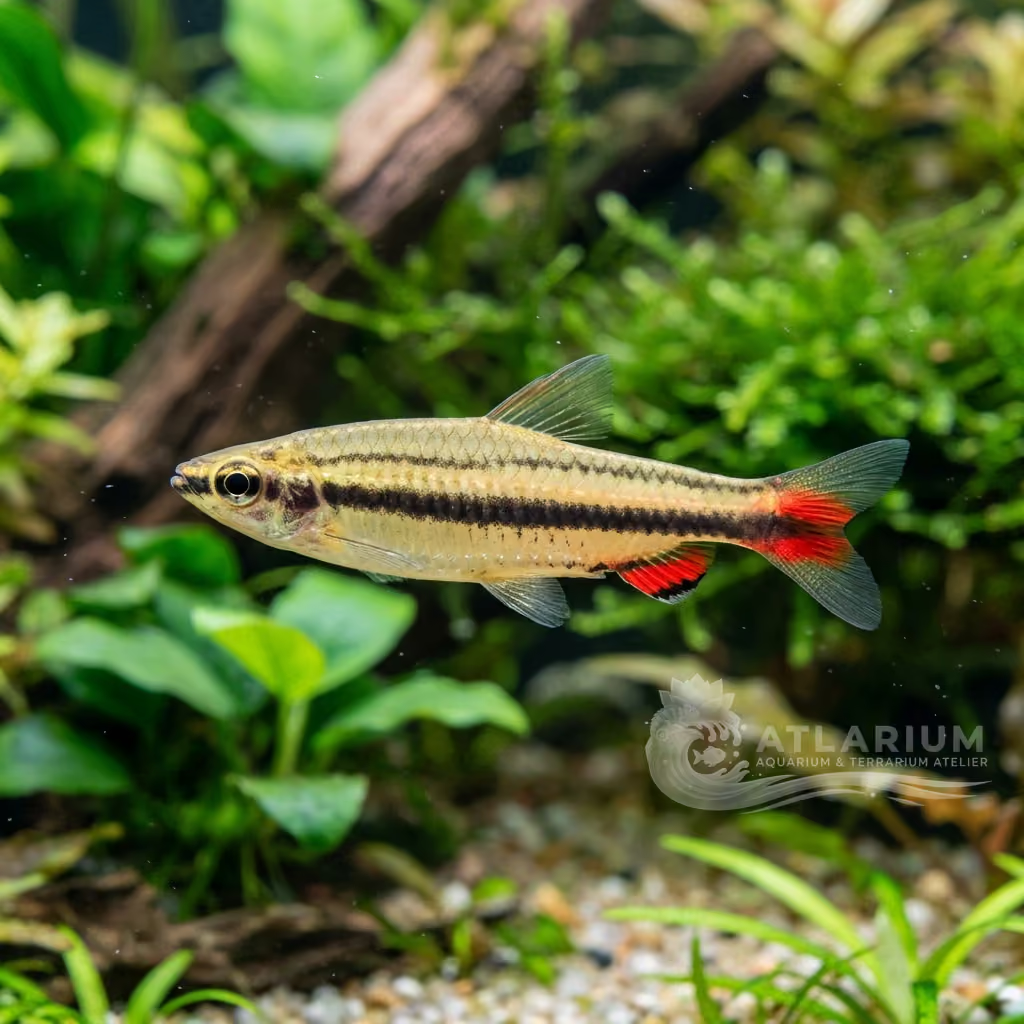
Armored stickleback
Indostomus paradoxus
A tiny, armor-plated freshwater stickleback-like fish that is peaceful yet highly demanding. It requires live micro-foods and must be kept in a species-only or extremely peaceful tank.
Wassertemperatur
26 - 30 °C
pH-Wert
5 - 6.5
Wassertyp
Süßwasser
Tankfüllstand
Unten
Erwachsenengröße
3 cm
Mindesttankvolumen
>= 30 L
Mindestgruppe
>= 1
GH
0 - 5 dGH
KH
1 - 2 dKH
TDS
10 - 95 ppm
Leitfähigkeit
16 - 148 uS/cm

Artbeschreibung
Geographical Origin and Habitat: Native to Southeast Asia, particularly Myanmar (Burma), where it inhabits still waters, peat swamps, heavily vegetated ponds, and very slow-flowing streams with thick leaf litter and aquatic plants.
Taxonomy and Morphology: Belongs to the family Indostomidae, genus Indostomus. Features an elongated, slender body covered in protective bony plates arranged in longitudinal rows, resembling a miniature crocodile. Reaches a maximum adult size of only 2.5 to 3 centimeters.
Social Behavior: Peaceful, cryptic, and extremely slow-moving species. They are not schooling fish but tolerate and benefit from the presence of conspecifics in groups of 5-6 individuals if plenty of hiding places are provided.
Coloration and Sexual Dimorphism: Body coloration ranges from light brown to sandy beige with dark transverse bands and olive hues that aid camouflage in leaf litter. Sexual dimorphism is visible in mature males, which exhibit elongated and curved pelvic fins, and more developed dorsal and anal fins with dark edges.

Pflege, Zucht und Mitbewohner
Aquarium Setup: Requires small dedicated aquariums (nano tanks starting from 30-40 liters) with dense fine vegetation, mosses (Taxiphyllum, Vesicularia), and a soft substrate topped with oak or catappa leaves. Small pipes or bamboo tubes are essential as shelter.
Diet and Feeding: A highly specialized micro-predator that accepts almost exclusively small live foods such as baby brine shrimp, copepods, newborn daphnia, and microworms. They categorically refuse dry flakes or pellet foods.
Water Quality: Demands clean and well-filtered water with very gentle current. Optimal parameters: temperature between 22 and 26°C, slightly acidic to neutral pH (6.0 - 7.5), and low to medium water hardness (GH 3-10).
Compatibility and Cohabitation: A species-only tank is highly recommended. If tankmates are chosen, they must be extremely small and peaceful, such as freshwater shrimp (Neocaridina) or tiny surface fish (e.g., Boraras), to ensure the Indostomus is not outcompeted for food.
Aquarium Breeding: Possible in captivity. Eggs are deposited inside small crevices or narrow tubes, where the male guards and fans them until they hatch. Fry require infusoria and rotifers as their first food.
Risks and Diseases: The primary risk is starvation due to lack of suitable live foods or active food competition. They are also sensitive to sudden water parameter fluctuations and high levels of nitrogenous waste (ammonia and nitrites).

Geografische Herkunft und Verbreitung
Native to Southeast Asia, particularly Myanmar (Burma), where it inhabits still waters, peat swamps, heavily vegetated ponds, and very slow-flowing streams with thick leaf litter and aquatic plants.
Ursprung
Süd- und Südostasien

Fischprofil
- Temperament
- Semi-aggressive
- They have a completely peaceful, almost cryptic temperament. They are shy and deliberate, moving very slowly to stalk their tiny prey. They rely heavily on camouflage and hiding places to feel secure in the aquarium.
- Diät
- Omnivore
- They are strict micro-predators that often refuse dry foods entirely. Their diet must consist of live micro-foods such as microworms, newly hatched brine shrimp, and daphnia. Occasionally, they can be trained to accept frozen baby brine shrimp, but live food is essential.
- Lebenserwartung
- 3-5 years
- Erwachsenengröße
- 3 cm
- Geschlechterverhältnis
- Pair
- Sexing them is challenging; males possess larger pelvic fins that are uniquely shaped to clasp the female during mating. Females are slightly plumper when carrying eggs. A small group will naturally pair off.
- Fütterungsfrequenz
- Twice daily
- Because of their tiny stomachs and slow hunting style, they should be fed small amounts once or twice daily. Ensure food reaches their specific location, as they will not actively chase it across the tank. Target feeding with a pipette is highly recommended.
- Bioload
- Low
- This tiny, pipefish-like creature produces an extremely low bioload. They are incredibly small, meaning their waste output is practically negligible. However, they require pristine water conditions, so regular maintenance and efficient biological filtration are mandatory.
- Fluss
- Stagnant
- They require very low to almost stagnant water flow, similar to their native heavily vegetated swamps. Strong currents will blow them around and prevent them from hunting effectively. Gentle sponge filtration is the only appropriate choice for their aquariums.
- Sprungrisiko
- Yes
- The risk of jumping is exceedingly low for this bottom-dwelling, slow-moving species. They spend their time hiding among plants and detritus near the substrate. A lid is still recommended to maintain water stability and prevent evaporation.
- Reproduktion
- Oviparous
- They are cave spawners, laying small clutches of eggs inside tiny tubes, such as bamboo sections. The male takes on the responsibility of guarding the eggs until they hatch. The fry are microscopic and require infusoria as their first food.
- Kompatibilität & Tankkameraden
- Species only
- They are exceedingly peaceful and easily outcompeted for food by almost any other fish. They are best kept in a species-only tank or with very small, peaceful nano fish and dwarf shrimp. Never keep them with anything aggressive, fast, or large enough to eat them.
- Tankfüllstand
- Bottom
- They exclusively inhabit the bottom levels, intricately navigating through leaf litter, moss, and dense planting. The tank must be heavily structured with botanicals and fine-leaved plants to provide security. They despise open, brightly lit spaces.

Wissenschaftliche Modelle & Parameter
FishBase
Zugang zu den offiziellen wissenschaftlichen Daten der Art
FishBase v25.04Daten synchronisiert am: 15.06.2026
- Trophäenniveau
- 3,3 ± 0,32 se
- Phylogenetische Einzigartigkeit (PD50)
- 0.75
- Bayessche Längen-Gewichts-Beziehung
- a = 0.00389, b = 3.12
- AnfälligkeitGeringe Anfälligkeit (10 / 100)

Verwandte Arten
Empfehlungen gruppiert nach nahen Verwandten, Auswahl von Begleitern und ähnlicher Betreuung.