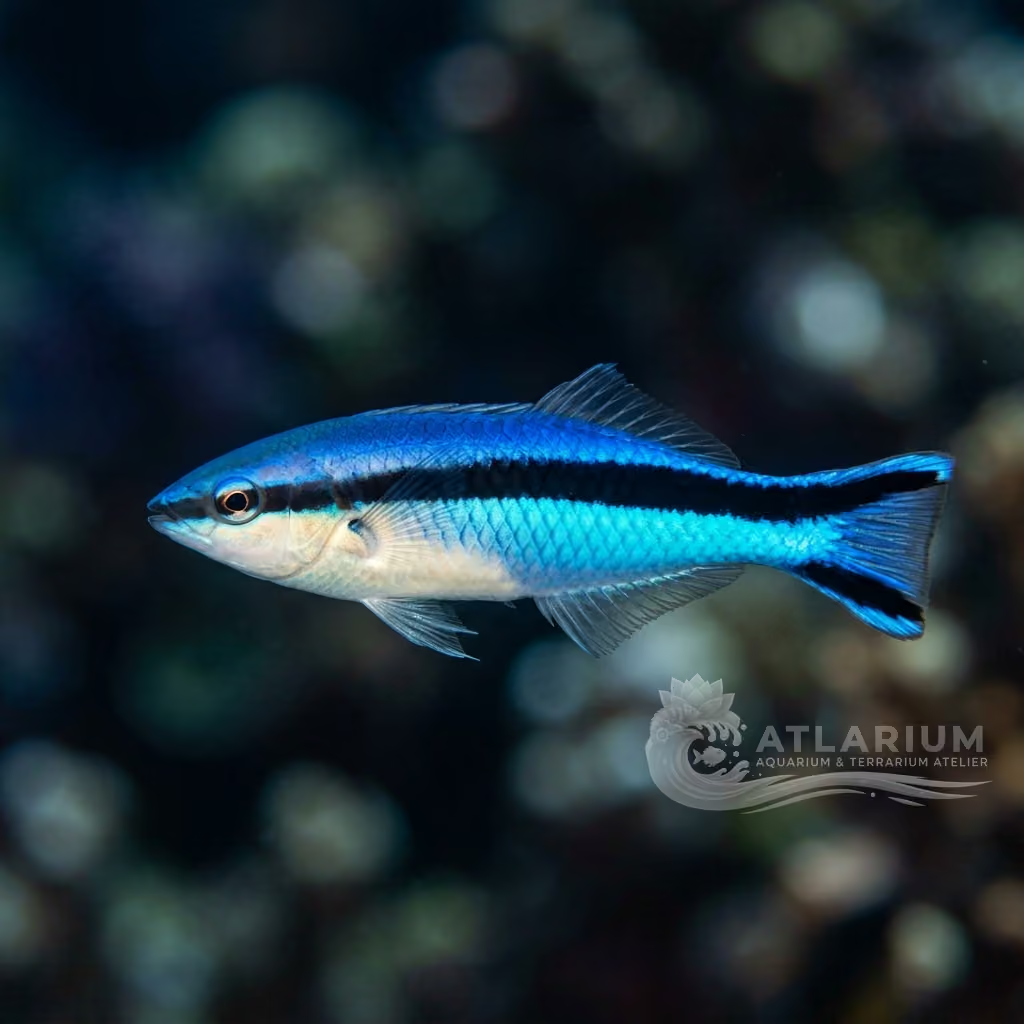
Midas blenny
Ecsenius midas
Renowned for its stunning golden-peach coloration and eel-like swimming motion, the Midas Blenny delightfully hovers to catch zooplankton. A charming, curious addition to community reef tanks.
Wassertemperatur
24 - 27 °C
pH-Wert
8.1 - 8.4
Wassertyp
Meerwasser
Tankfüllstand
Mitte
Erwachsenengröße
13 cm
Mindesttankvolumen
>= 200 L
Mindestgruppe
>= 1

Artbeschreibung
Geographical Origin and Habitat: Indo-Pacific (Red Sea to the Marquesas Islands). Inhabits rich coral reefs and shallow reefs kissed by currents, finding refuge in tiny holes.
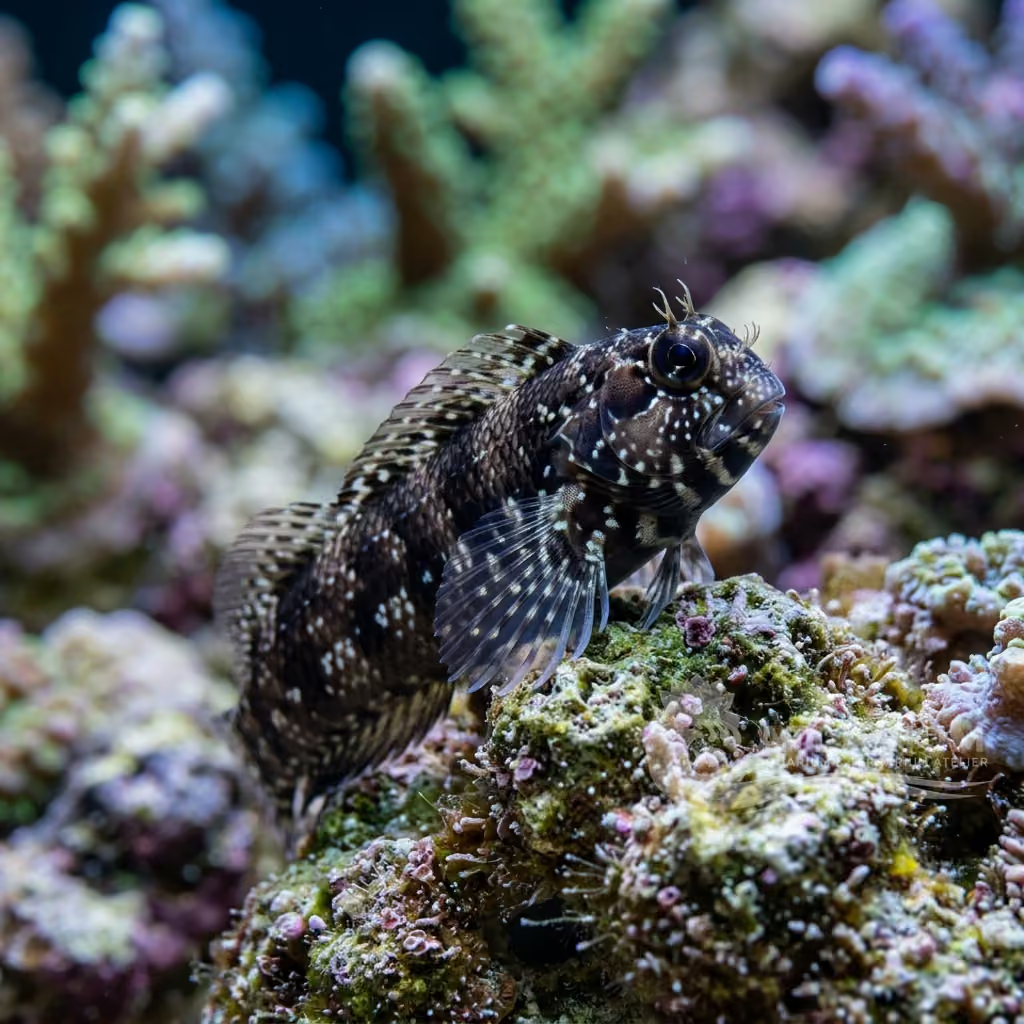
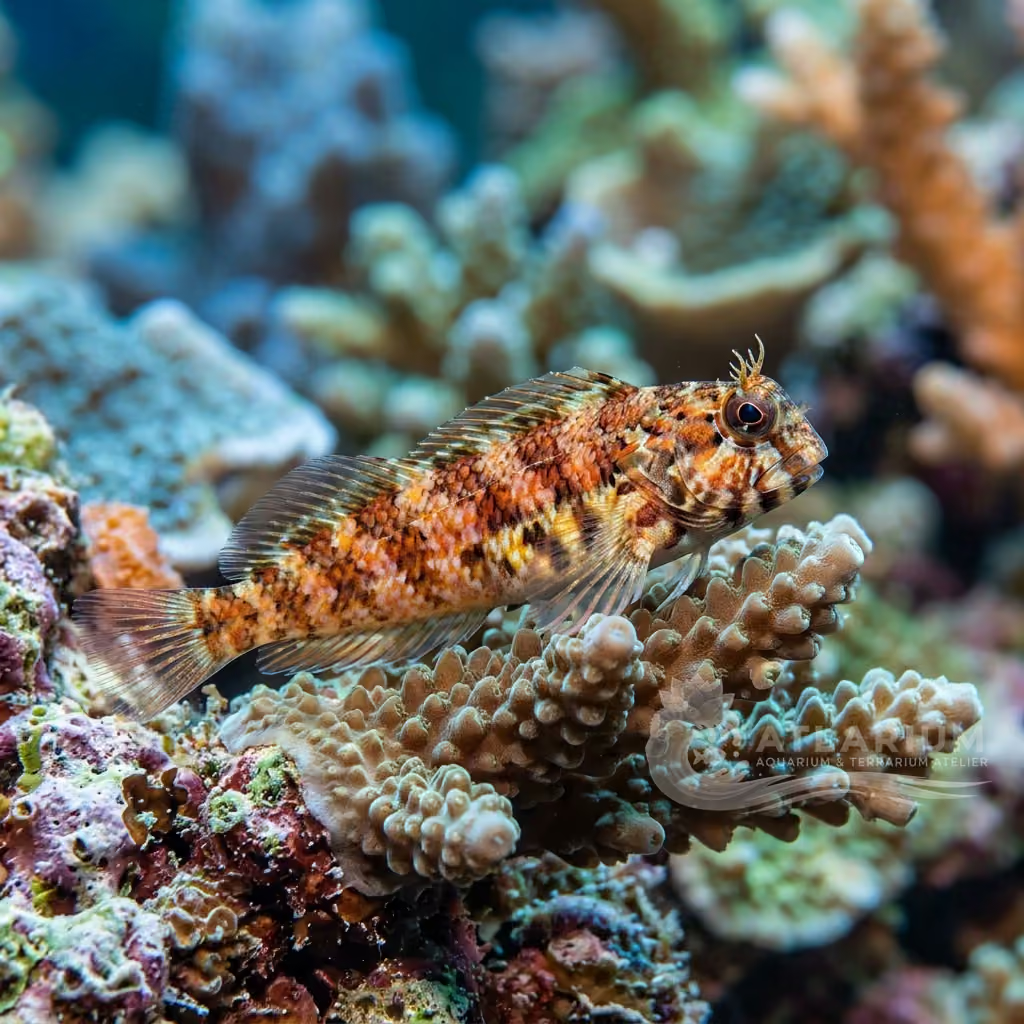
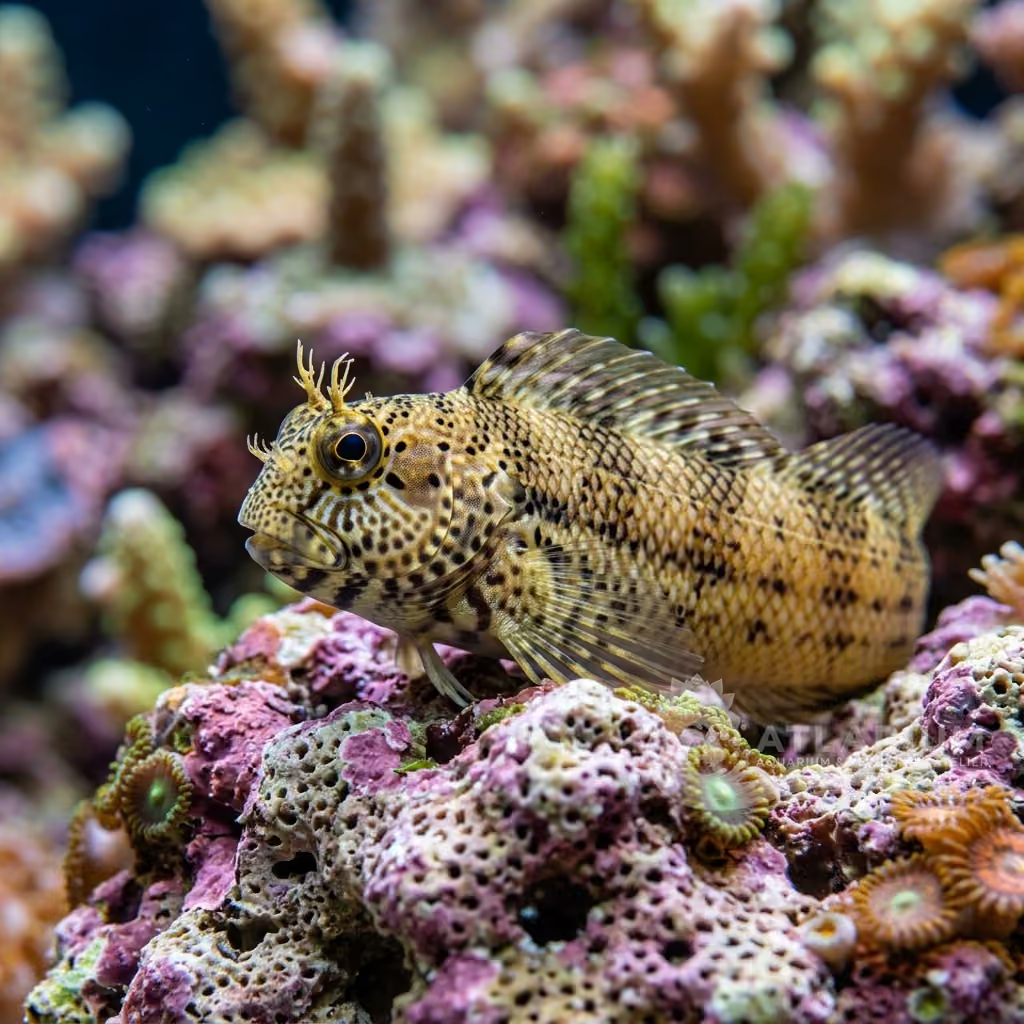
Taxonomy and Morphology: Midas Blenny (Ecsenius midas). Extremely popular marine blenny (Blenniidae). It differs from its algae-grazing congeners because it has developed a mouth capable of catching zooplankton and has an "eel-like" swimming style.
Social Behavior: Incredibly curious, lively but tolerant. Spends its time "hovering" (floating mid-tank with undulating tail strokes) and instantly backs into a den (always with its head facing outwards) if frightened.
Coloration and Sexual Dimorphism: Breathtaking deep gold or golden-peach livery (hence the name "King Midas") when healthy, with a hint of blue under the chin or eye. Becomes mottled or dark if highly stressed or scared. No visible sexual dimorphism.

Pflege, Zucht und Mitbewohner
Aquarium Setup: Marine Tank (Reef). Essential to have abundant live rock rich in finger-sized holes (barnacles or empty tubes) where it will spend the nights and make its base. Stable salinity and aquarium strictly provided with an anti-jump net!
Diet and Feeding: In nature it is an omnivore/planktivore. Often ignores algae on the rocks (unlike the bicolor blenny) but hunts zooplankton. Feed with mysis, brine shrimp, fish eggs and flake or pellet preparations.
Water Quality: Robust if the water is of excellent quality. Sensitive to high ammonia levels and temperature fluctuations.
Compatibility and Cohabitation: Superb Reef fish (100% Reef Safe). Cohabits wonderfully with clownfish, placid damselfish and tangs. Avoid housing other blennies of the same genus, as it will kill them fighting for the best den.
Aquarium Breeding: Females lay adhesive demersal eggs inside holes/shells, then fertilized by the male. Rare and difficult to conclude successfully due to the pelagic larval stage that dies in the skimmers.
Risks and Diseases: Olympic champion of jumping out of the tank. Susceptible to initial wasting (hides and does not eat) if it is bullied by surgeonfish or large wrasses at the time of introduction.

Geografische Herkunft und Verbreitung
Indo-Pacific (Red Sea to the Marquesas Islands). Inhabits rich coral reefs and shallow reefs kissed by currents, finding refuge in tiny holes.
Ursprung
Tropische Ozeane und RiffeAfrika und Madagaskar

Fischprofil
- Temperament
- Peaceful
- Overall, the Ecsenius midas boasts a peaceful, comical, and highly engaging temperament. They are extremely curious fish that will often observe the aquarist through the glass. While peaceful with dissimilar species, they will fiercely defend their chosen perch against similar blennies or gobies. Providing ample rockwork and line-of-sight breaks easily mitigates any mild territorial disputes.
- Diät
- Omnivore
- The Ecsenius midas is primarily an omnivore with a strong preference for marine microalgae. They will actively graze on rocks, keeping nuisance algae growth under control. Their diet must be heavily supplemented with high-quality spirulina flakes, algae wafers, and occasional meaty items like mysis shrimp. A varied diet ensures they receive the necessary vitamins for vibrant coloration and long-term health.
- Lebenserwartung
- 5-8 years
- Erwachsenengröße
- 13 cm
- Geschlechterverhältnis
- Group
- It is generally best to keep them individually unless you can acquire a confirmed mated pair. Housing two males or two females of the same species in a standard-sized tank will usually result in intense territorial aggression. Visual sexing can be challenging, though males sometimes exhibit slightly larger bodies or elongated fin rays. A solitary individual will comfortably establish its own territory without stress.
- Fütterungsfrequenz
- Twice daily
- Because they have small stomachs and are constant grazers, they benefit from being fed one to two times daily. Providing small, frequent meals mimics their natural foraging behavior on the reef. An established aquarium with plenty of live rock will allow them to snack on algae between scheduled feedings. Ensuring they have a continuous food source prevents undesirable nipping at corals.
- Bioload
- Medium
- The Ecsenius midas adds a very low bioload to the aquarium system, making it an excellent choice for smaller tanks. Their small size and efficient metabolism ensure that they do not heavily pollute the water. Routine maintenance and a standard protein skimmer are more than adequate to handle their waste. This makes them highly suitable for delicate reef environments where water purity is paramount.
- Fluss
- Strong
- They thrive in environments with moderate to strong water flow that replicates the dynamic currents of a natural reef. Good circulation helps keep their favored resting spots clear of detritus and promotes healthy oxygenation. They will often be seen perched on rocks right in the path of the current, watching for passing food. Adequate flow is essential for their overall well-being and active behavior.
- Sprungrisiko
- No
- Reproduktion
- Oviparous
- The Ecsenius midas is a demersal spawner, laying their eggs in small crevices or empty shells. The male will diligently guard and fan the nest until the eggs hatch into pelagic larvae. While spawning is frequently observed in home aquariums, successfully raising the tiny fry is incredibly difficult. It requires specialized microscopic live foods and dedicated rearing systems.
- Kompatibilität & Tankkameraden
- Territorial
- This species is considered reef safe and is generally a fantastic community fish. They get along well with most peaceful tank mates and will not actively bother corals or mobile invertebrates. However, they may occasionally nip at the mantles of clams or large-polyp stony corals if underfed. They can display territorial behavior towards other blennies or fish with a similar body shape.
- Tankfüllstand
- Middle
- This fish is predominantly a bottom to mid-level dweller, spending most of its time perched on live rock. They find a favorite crevice or barnacle shell and reverse into it, leaving only their curious head exposed. While they occasionally dart into the water column to catch food, they quickly return to their rocky perches. Their comical perching behavior is a defining characteristic of the species.

Wissenschaftliche Modelle & Parameter
FishBase
Zugang zu den offiziellen wissenschaftlichen Daten der Art
FishBase Catalog curation 2026-05-09Daten synchronisiert am: 15.06.2026
- Trophäenniveau
- 2,6 ± 0,29 se
- Belastbarkeit
- Hoch (weniger als 15 Monate)
- Phylogenetische Einzigartigkeit (PD50)
- 0.5
- Bayessche Längen-Gewichts-Beziehung
- a = 0.00776, b = 3
- AnfälligkeitGeringe Anfälligkeit (10 / 100)

Bildergalerie
Lizenzierte Bilder, die mit der Art oder, wenn markiert, mit dem nächstgelegenen repräsentativen Taxon verknüpft sind.

Verwandte Arten
Empfehlungen gruppiert nach nahen Verwandten, Auswahl von Begleitern und ähnlicher Betreuung.