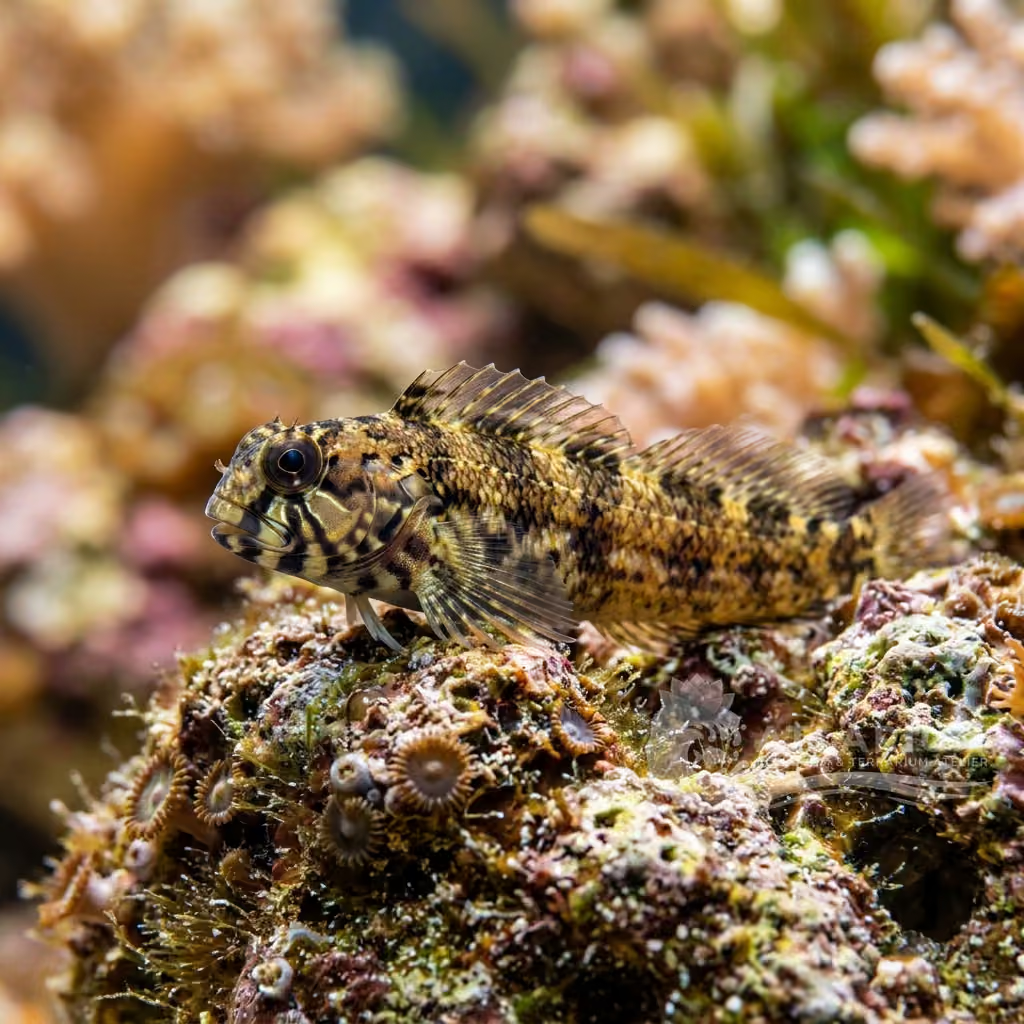
Bluebelly blenny
Ecsenius caeruliventris
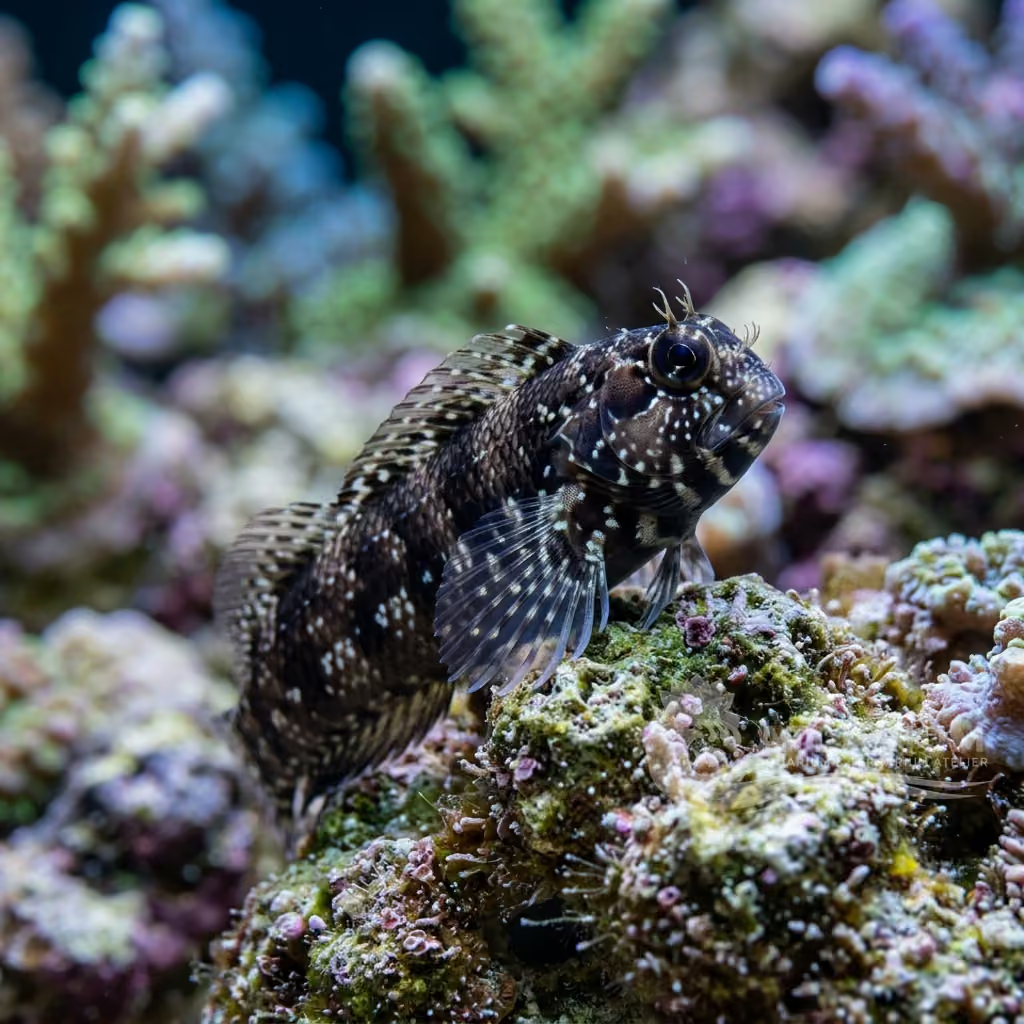
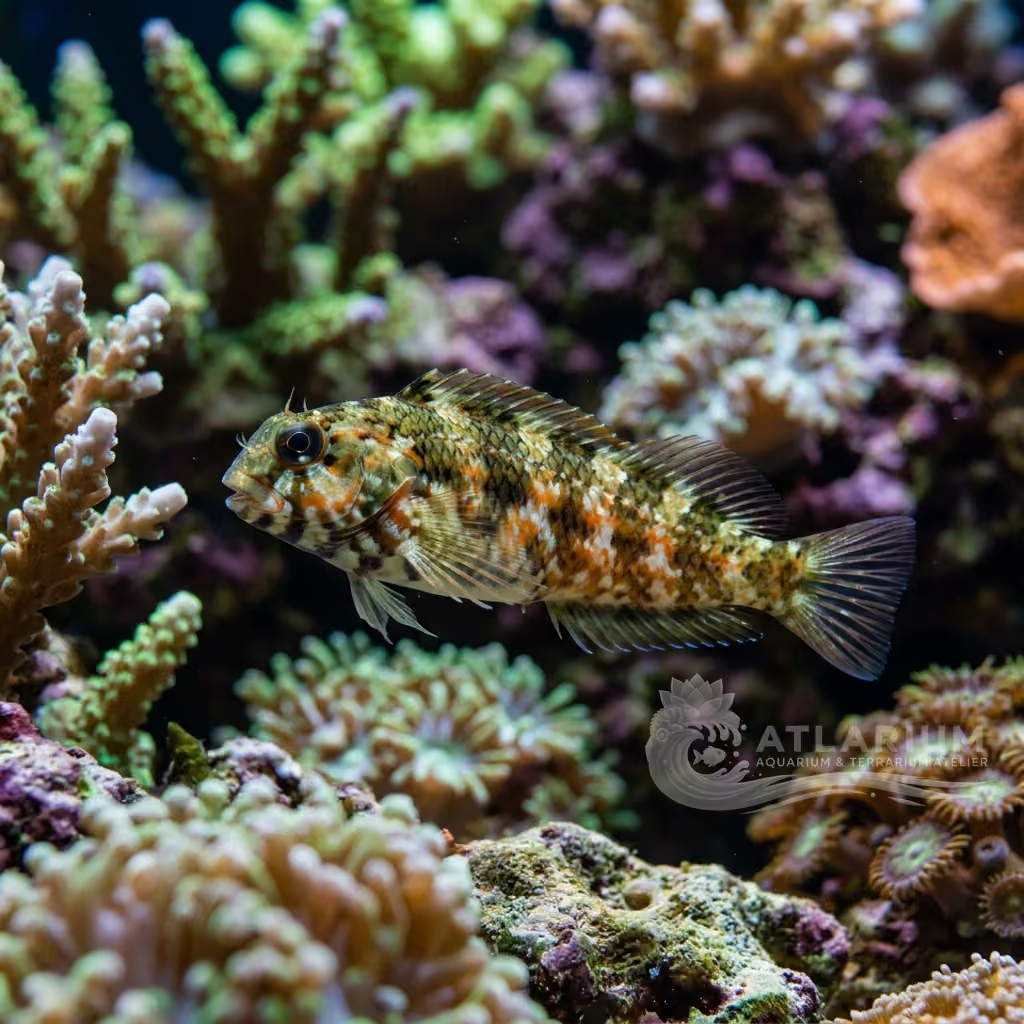
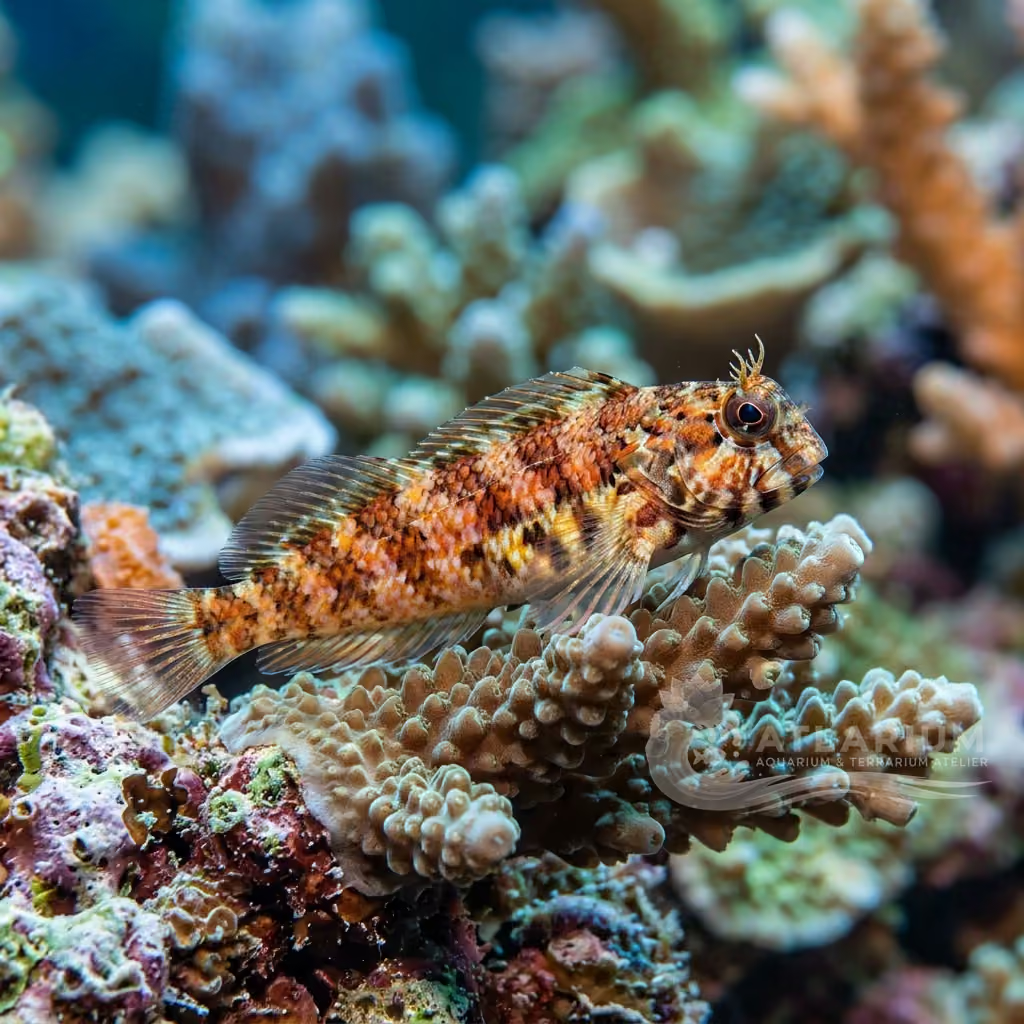
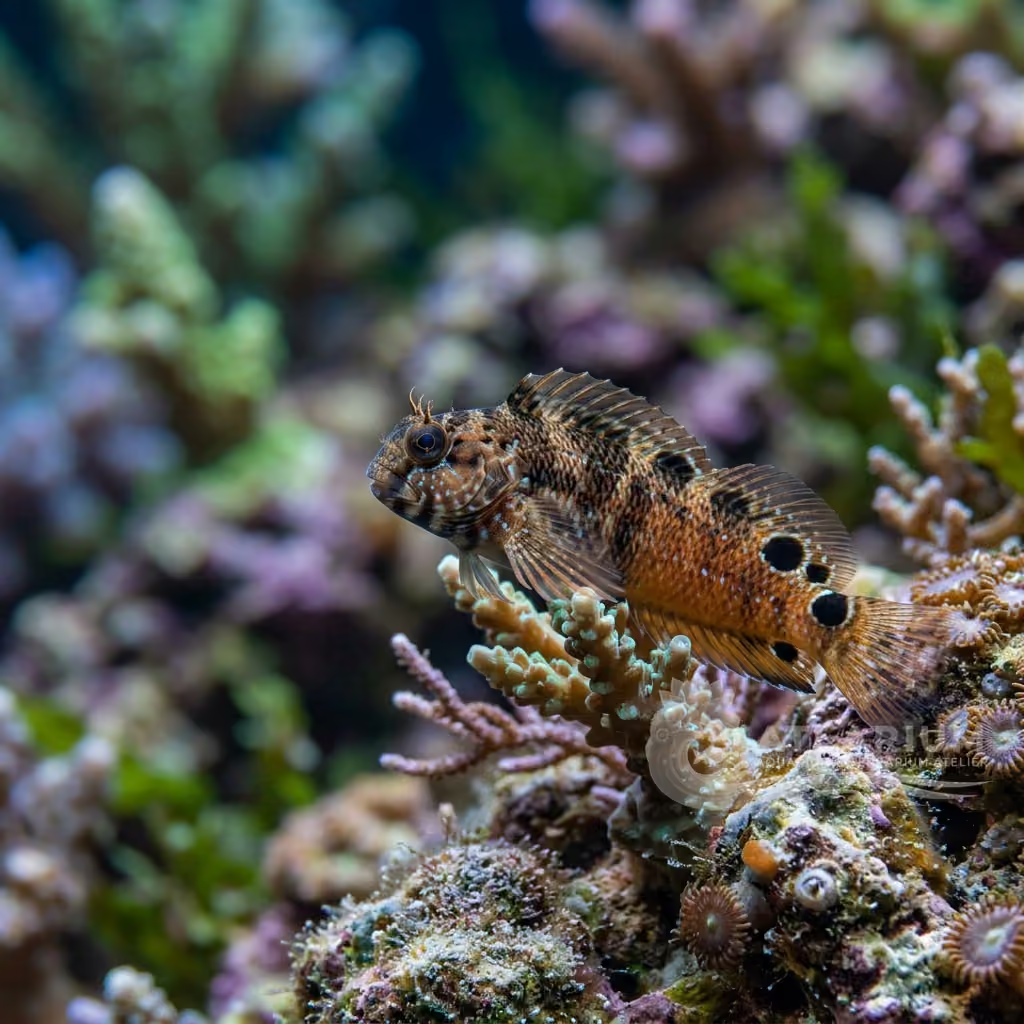
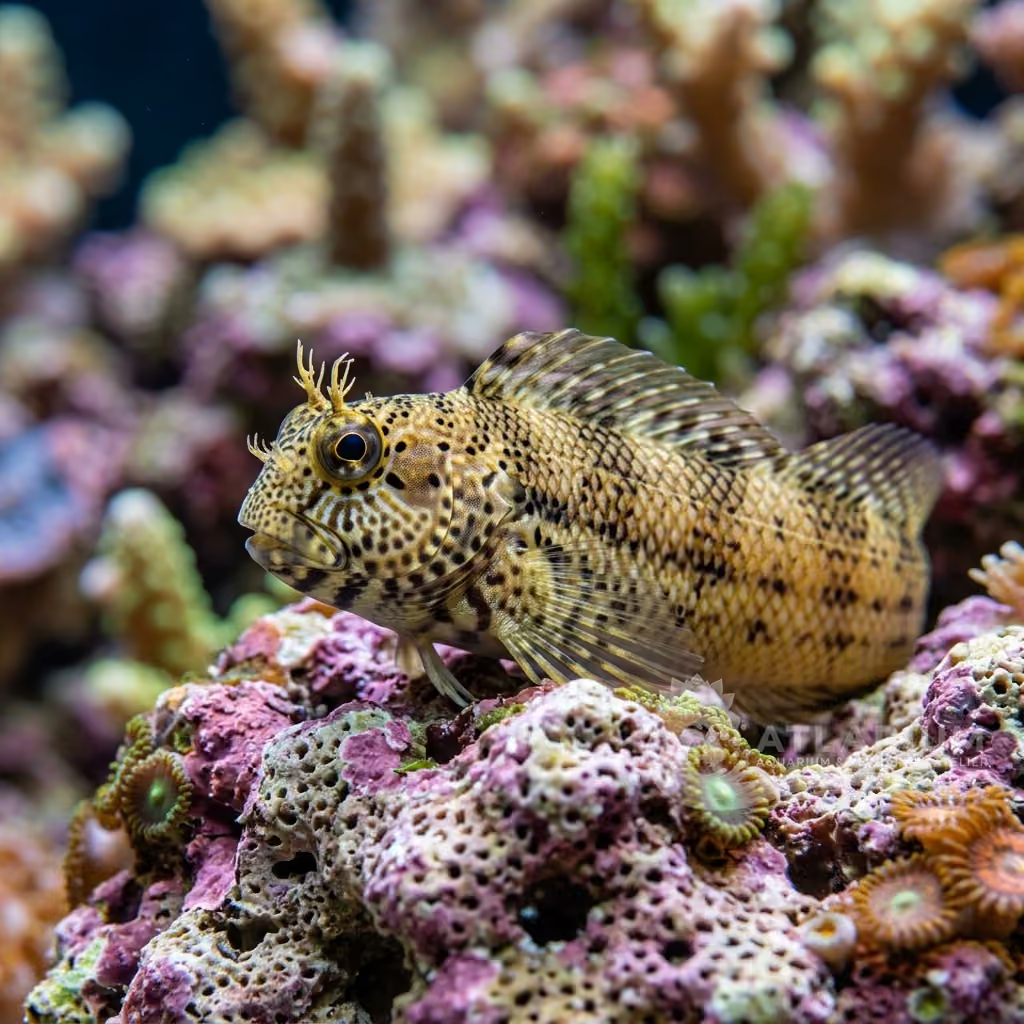
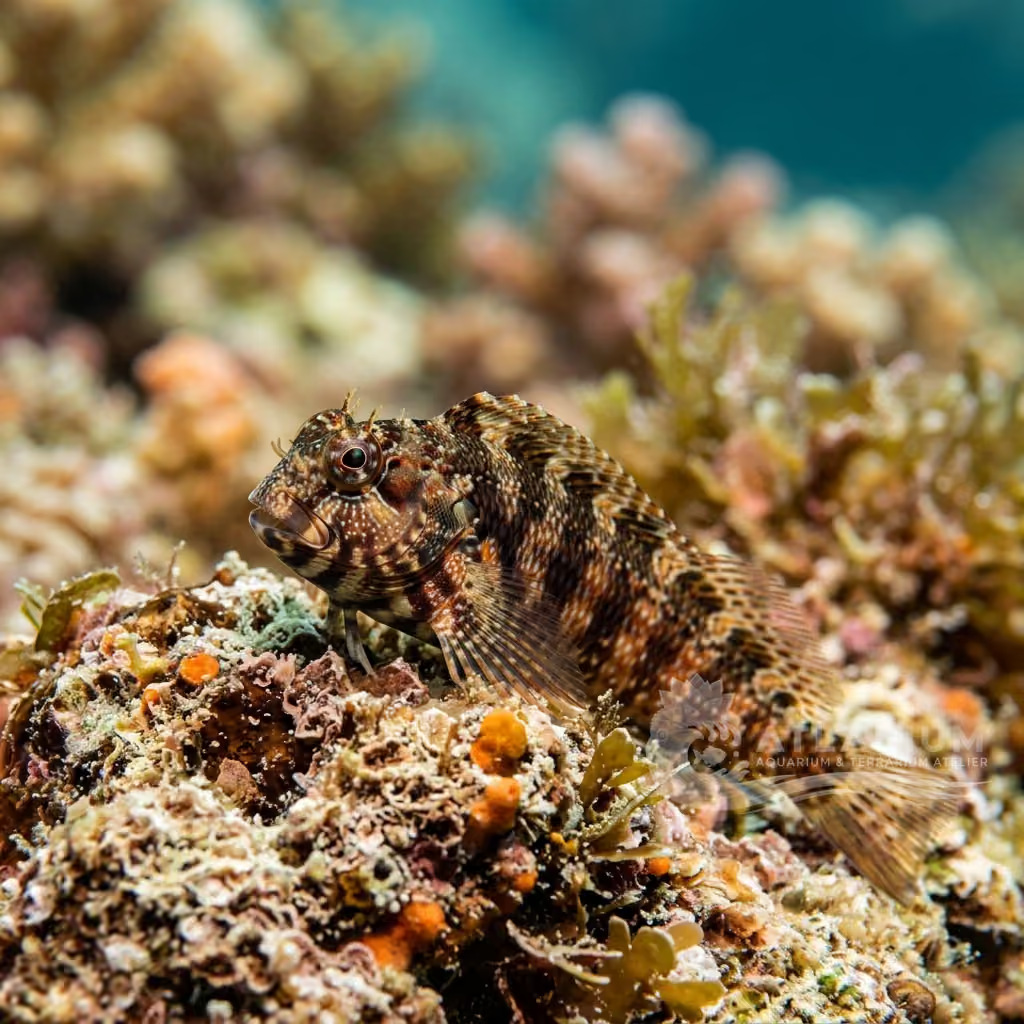
Hailing from the Western Indo-Pacific, this active marine blenny features a striking blue underbelly and provides excellent grazing on troublesome filamentous algae.
Wassertemperatur
23 - 27 °C
pH-Wert
8.1 - 8.4
Wassertyp
Meerwasser
Tankfüllstand
Unten
Erwachsenengröße
4,5 cm
Mindesttankvolumen
>= 60 L
Mindestgruppe
>= 1

Artbeschreibung
Geographical Origin and Habitat:
Ecsenius caeruliventris is native to the Central-Western Pacific, with a distribution primarily centered around Indonesia, particularly within the Flores Sea, Komodo, and the Sunda Islands. This species inhabits biodiverse coral reefs, shallow rocky zones, and slopes exposed to moderate currents at depths of 1 to 15 meters, where stony corals and algal cover are abundant.
Taxonomy and Morphology:
Belonging to the family Blenniidae (blennies), the genus Ecsenius contains fishes characterized by their small size, comb-like teeth used for scraping algae, and the absence of a lateral line. Ecsenius caeruliventris is a small species, reaching a maximum length of 4 to 5 centimeters when fully mature.
Social Behavior:
This is an active and curious fish that spends its day perched on rocks or stony corals, observing its environment. It exhibits mild territoriality toward other blennies or species with similar diets, defending its preferred grazing spots. However, it remains peaceful and harmless toward unrelated tankmates.
Coloration and Sexual Dimorphism:
The coloration is distinct: the upper portion of the body and head are a warm yellow-orange hue, while the lower half and abdomen are a bright electric blue. The eyes feature colored stripes. Sexual dimorphism is not highly visible, though mature males may be slightly larger and possess modified anal fin rays.

Pflege, Zucht und Mitbewohner
Aquarium Setup:
Requires an established marine aquarium of at least 60-80 liters (approx. 16-21 gallons) rich in live rock with small cracks and holes that the fish uses as refuges. Natural algae growth on the rocks is highly beneficial. A tight-fitting lid is essential, as this blenny can easily jump out of the aquarium when startled.
Diet and Feeding:
It is a specialized herbivore that feeds on microalgae and organic detritus scraped from rocks. In an aquarium, it grazes on filamentous green algae and diatoms. Its diet must be supplemented with spirulina-based pellets, dried nori sheets, and frozen foods formulated for herbivores. It will occasionally consume small meaty foods like brine shrimp.
Water Quality:
Requires clean water and stable parameters: temperature between 23°C and 27°C (73°F to 81°F), pH between 8.1 and 8.4, and specific gravity between 1.021 and 1.025. To support the blenny's health, maintain low phosphate and nitrate levels while allowing controlled algae growth on live rocks. Regular water changes are advised.
Compatibility and Cohabitation:
An excellent fish for nano community reef aquariums. It is reef-safe and peaceful toward clownfish, small wrasses, gobies, and marine invertebrates. Avoid keeping it with large or aggressive predators that might see it as prey. It may show aggression toward other blennies, especially in smaller tanks.
Aquarium Breeding:
Breeding in captivity is rare but possible. They lay adhesive eggs inside small crevices or empty shells. The male guards the nest and fans the eggs. Rearing the larvae is difficult due to their microscopic size, requiring live cultures of rotifers and specialized larval setups to succeed.
Risks and Diseases:
This blenny is hardy if provided a stable habitat and proper nutrition. The primary risk is starvation in sterile tanks lacking natural algae. They can contract marine ich or Oodinium under stress. A quarantine period after purchase and enriching food with vitamin supplements are recommended.

Geografische Herkunft und Verbreitung
Ecsenius caeruliventris is native to the Central-Western Pacific, with a distribution primarily centered around Indonesia, particularly within the Flores Sea, Komodo, and the Sunda Islands. This species inhabits biodiverse coral reefs, shallow rocky zones, and slopes exposed to moderate currents at depths of 1 to 15 meters, where stony corals and algal cover are abundant.
Ursprung
Tropische Ozeane und RiffeSüd- und Südostasien

Fischprofil
- Temperament
- Peaceful
- They are peaceful, highly inquisitive, and boast an array of comical behaviors. They often sit on a preferred rock ledge and survey their surroundings with independently moving eyes. Once they establish their territory, they become quite bold and visible throughout the day.
- Diät
- Herbivore
- This species primarily grazes on microalgae and diatom films found on live rock and tank glass. A diet rich in vegetable matter is essential, including spirulina flakes, dried seaweed, and herbivore-specific pellets. They will sometimes accept small meaty foods like mysis, but these should be fed sparingly.
- Lebenserwartung
- 3-5 years
- Erwachsenengröße
- 4.5 cm
- Geschlechterverhältnis
- Solitary
- It is best practice to keep a single Bluebelly blenny per aquarium to prevent severe conspecific aggression. Males are highly territorial and will combat each other fiercely for dominant rockwork positions. A bonded pair can be kept together, but establishing one is difficult.
- Fütterungsfrequenz
- Twice daily
- Because they constantly pick at algae all day, direct feedings of supplemental foods should occur once or twice daily. Providing a constant grazing source, such as a nori clip, helps satisfy their continuous metabolic needs. Frequent small meals ensure they remain plump and brightly colored.
- Bioload
- Low
- The Bluebelly blenny introduces a very minimal bioload, making it a great addition to almost any reef aquarium. Its waste production is easily mitigated by standard filtration and a regular maintenance schedule. It is highly suitable for nano aquariums due to its small adult size.
- Fluss
- Moderate
- They enjoy moderate water flow, which encourages the natural growth of their preferred microalgae. Good flow mimics the natural reef surge zones where they are commonly found. They will typically find a small crevice to retreat into if the current becomes overwhelming.
- Sprungrisiko
- Yes
- Like most blennies, they possess a strong flight response and will readily jump from an open aquarium. A tight-fitting lid or mesh screen is absolutely vital for their safety. Care must be taken not to spook them during tank cleaning or rapid lighting changes.
- Reproduktion
- Oviparous
- They are demersal cave spawners; the female deposits eggs in a secure crevice which the male then guards aggressively. The male will fan the eggs to provide oxygen and keep them free of debris until they hatch. The resulting fry are extremely small and notoriously difficult to raise in captivity.
- Kompatibilität & Tankkameraden
- Reef safe
- It is exceptionally peaceful and poses no threat to corals, clams, or ornamental invertebrates. It is an ideal resident for community tanks housing other small, docile species. Caution is only required when keeping it with other bottom-dwelling gobies or blennies that might compete for territory.
- Tankfüllstand
- Bottom
- They are strictly benthic fish that perch on live rock and hop along the substrate. Lacking a swim bladder, they do not swim in the open water column. They require a complex rockwork structure with many small holes to provide ample hiding spots.

Wissenschaftliche Modelle & Parameter
FishBase
Zugang zu den offiziellen wissenschaftlichen Daten der Art
FishBase v25.04Daten synchronisiert am: 15.06.2026
- Belastbarkeit
- Hoch (weniger als 15 Monate)
- Phylogenetische Einzigartigkeit (PD50)
- 0.5
- Bayessche Längen-Gewichts-Beziehung
- a = 0.01047, b = 2.98
- AnfälligkeitGeringe Anfälligkeit (10 / 100)

Verwandte Arten
Empfehlungen gruppiert nach nahen Verwandten, Auswahl von Begleitern und ähnlicher Betreuung.