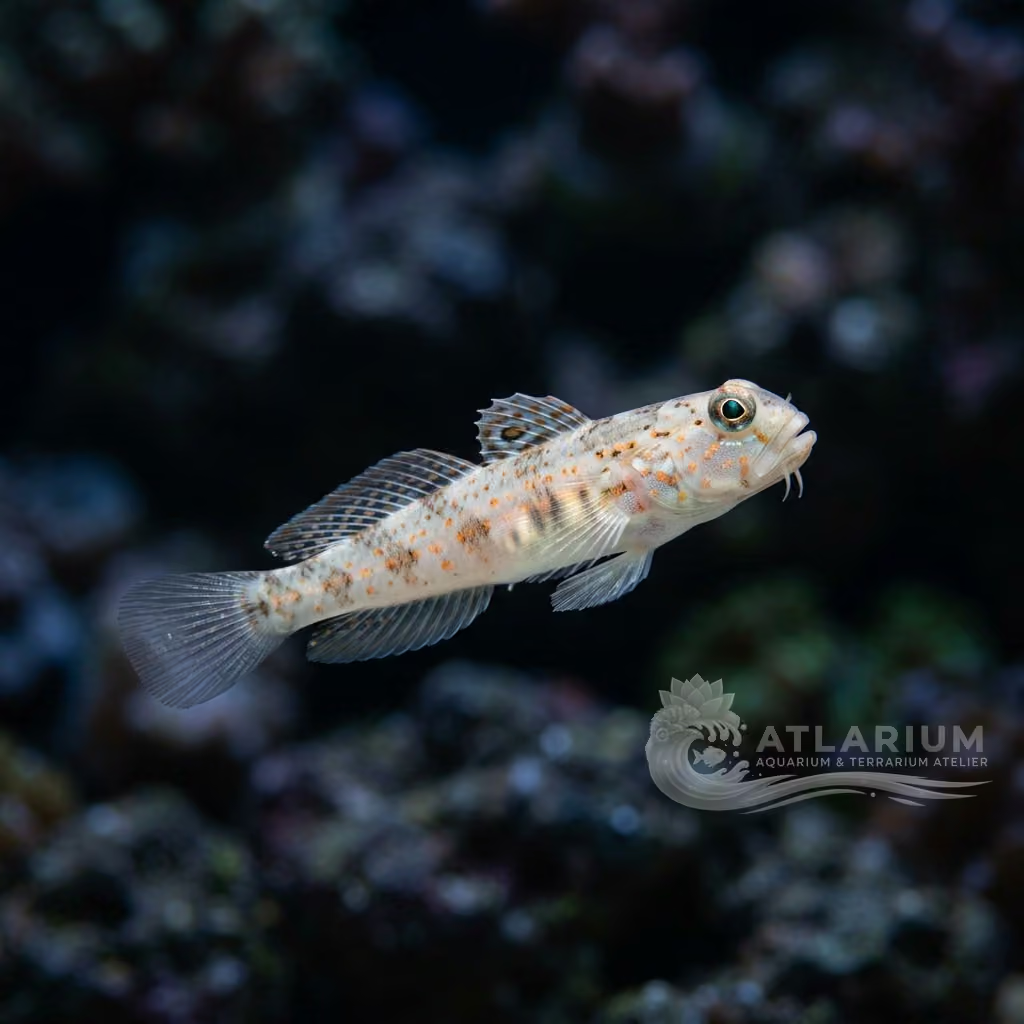
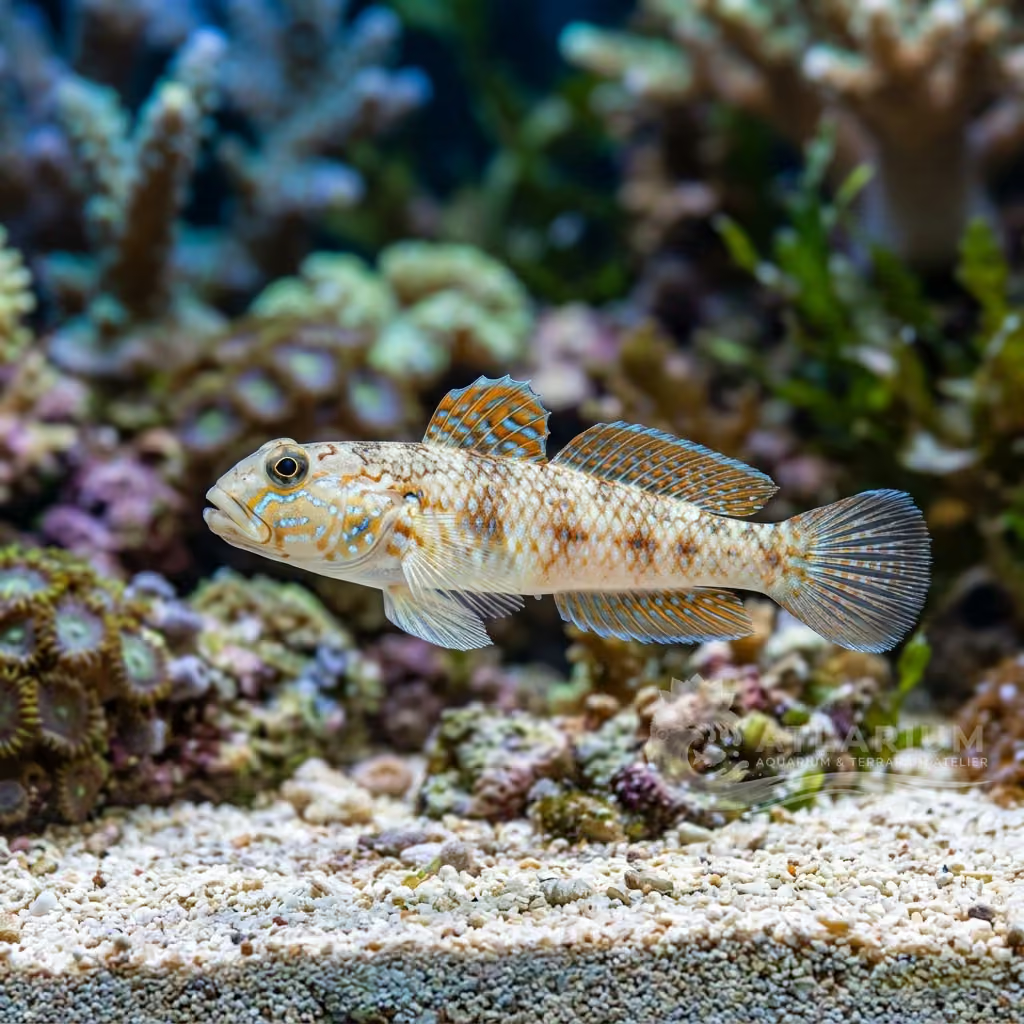
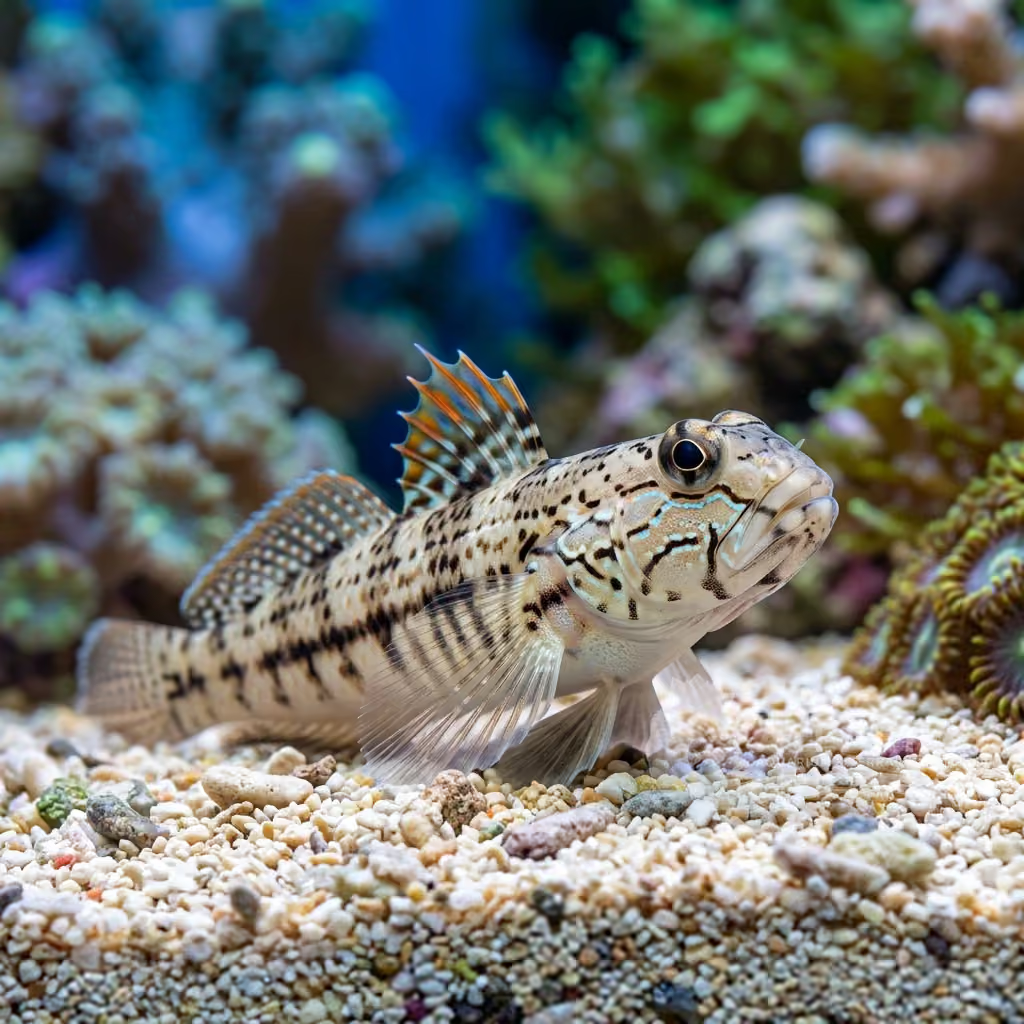
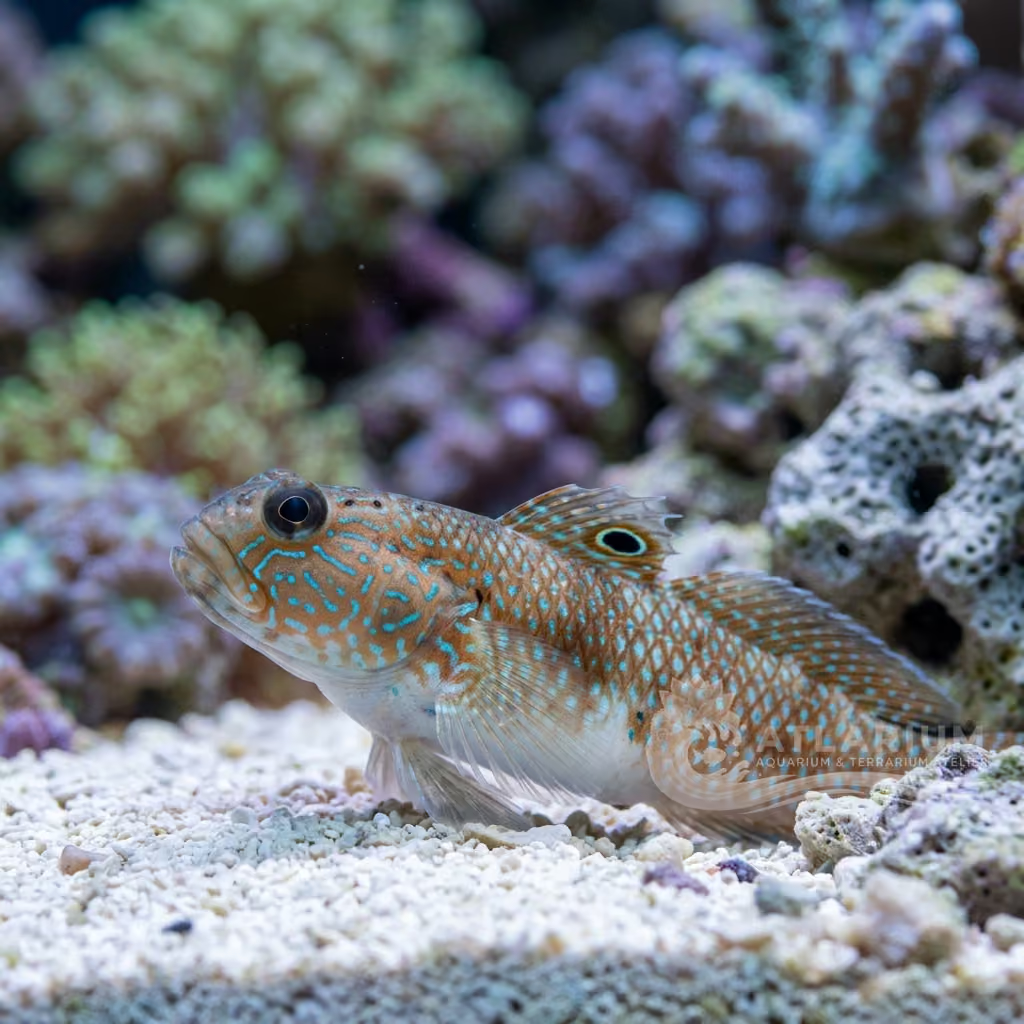
Banded sleeper goby
Amblygobius phalaena
The Banded Sleeper Goby is a hardworking sand-sifter that keeps the aquarium substrate clean. This robust fish filters sand through its gills to extract microfauna and algae.
Wassertemperatur
23 - 27 °C
pH-Wert
8.1 - 8.4
Wassertyp
Meerwasser
Tankfüllstand
Unten
Erwachsenengröße
15 cm
Mindesttankvolumen
>= 250 L
Mindestgruppe
>= 1

Artbeschreibung
Geographical Origin and Habitat: Marine species widely distributed in the shallow coastal waters of the tropical Indo-Pacific. Prefers quiet sandy bottoms around rocky reefs and silty lagoon areas.
Taxonomy and Morphology: Medium-sized Sifting Goby (Banded Goby, Gobiidae family). Reaches 15 cm (6 inches). Cylindrical body, stocky head equipped with a large mouth suitable for filtering the substrate. Possesses fins shaped to "rest" on the bottom.
Social Behavior: Hardworking and placid fish. Spends almost the entire day taking mouthfuls of sand and filtering it through the gills to extract microfauna and debris, keeping the seabed stirred and very white. Can be aggressive towards conspecifics.
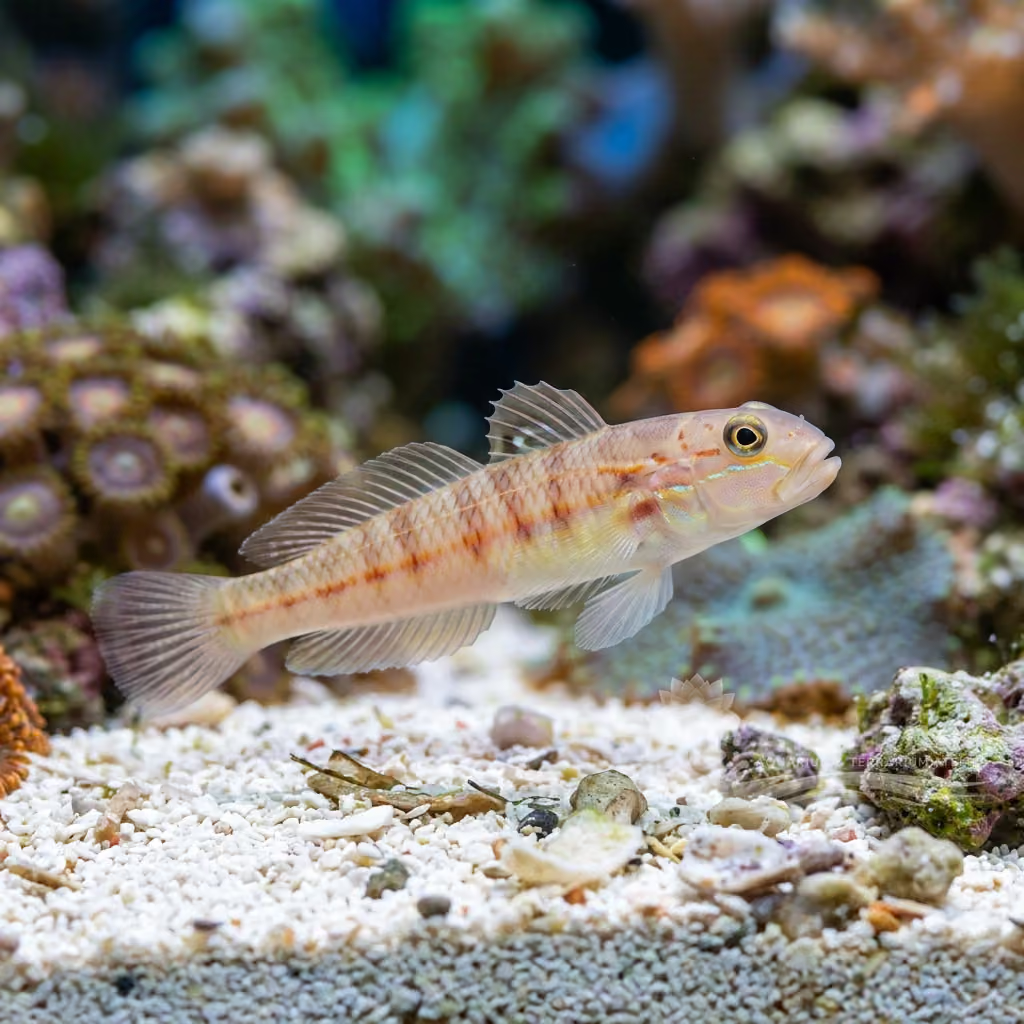
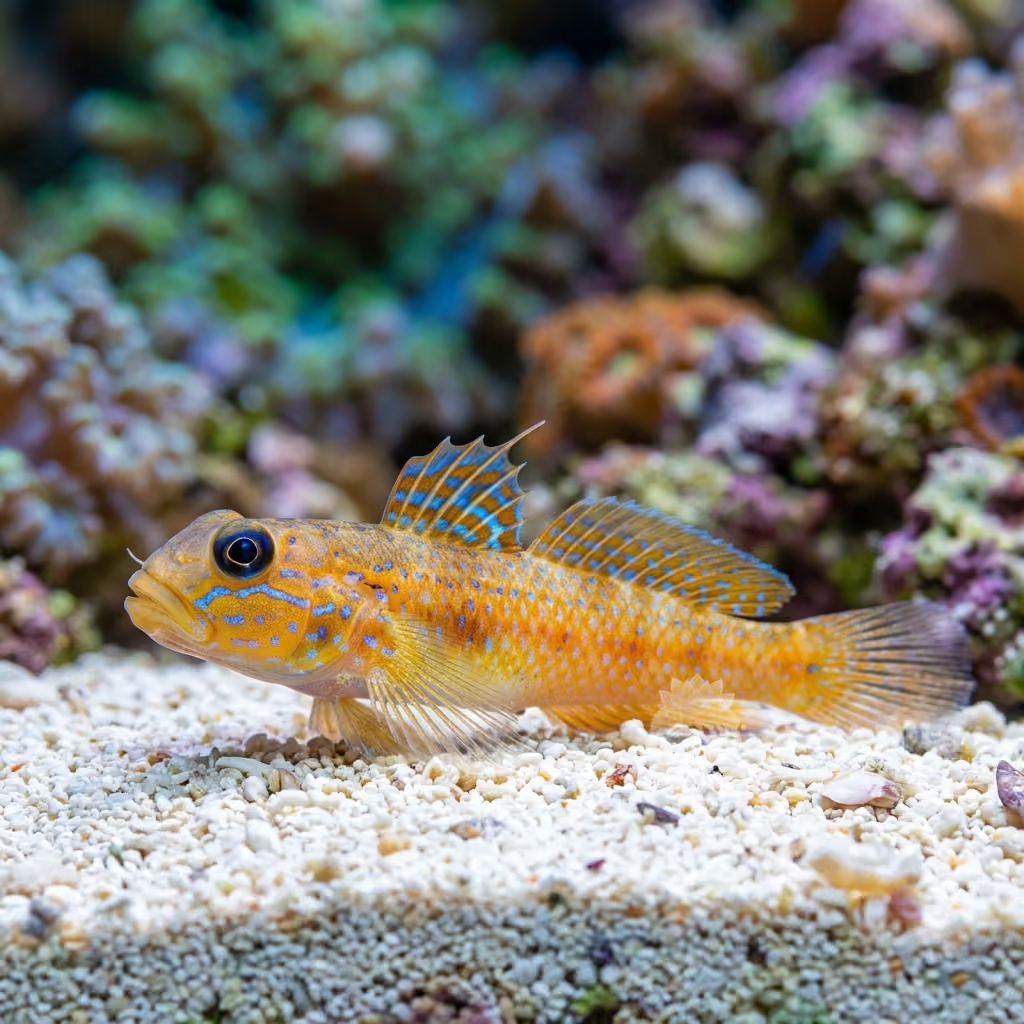
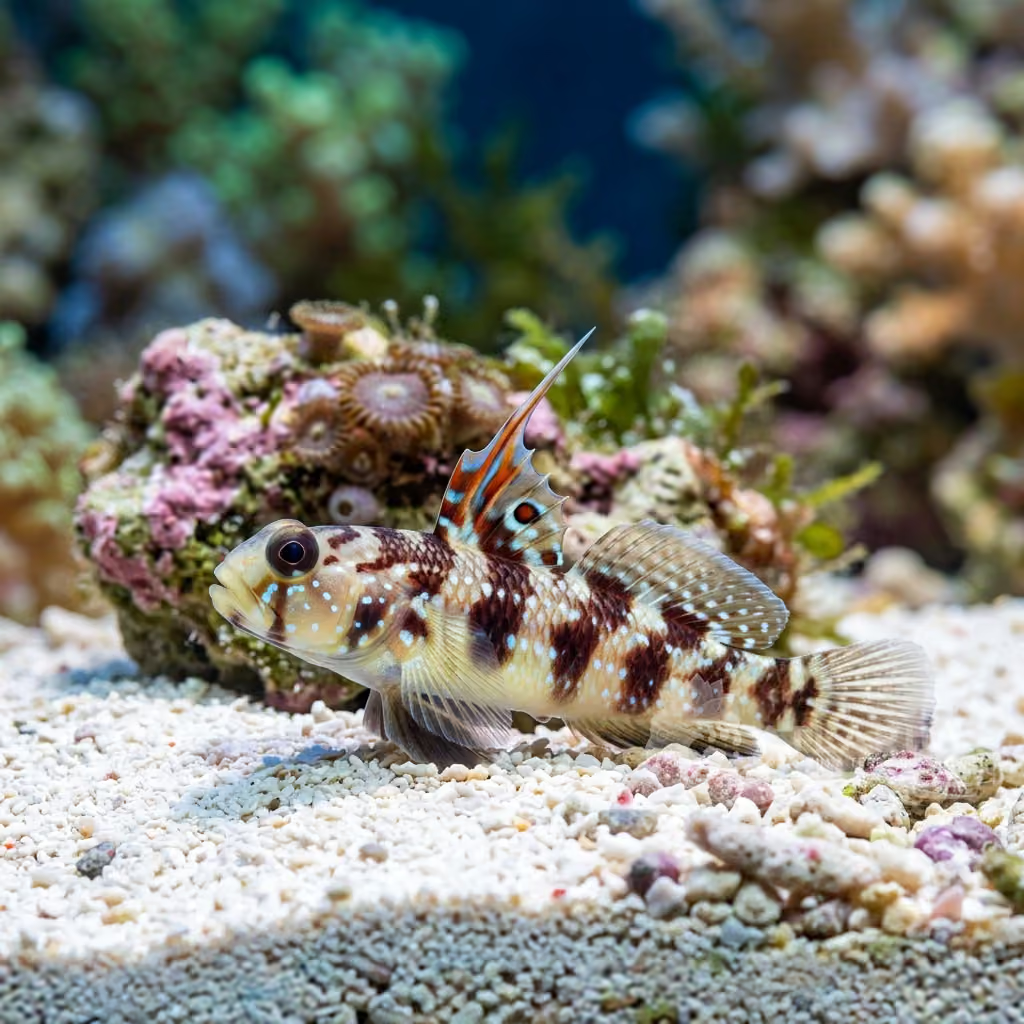
Coloration and Sexual Dimorphism: Light livery crossed by characteristic and thick reddish-brown or greenish vertical bands. Has flashy black spots (ocelli) bordered in yellow on the dorsal fins and, in some specimens, on the tail, to disorient predators. Monomorphic.

Pflege, Zucht und Mitbewohner
Aquarium Setup: Fundamental requirement: mature tank (minimum 200 liters / 50 gallons) with at least 5 cm of fine or medium coral sand (sugar-sized). Thick granulometries will wound the gills leading to death. Arrange flat rocks under which it will dig its own safe den.
Diet and Feeding: Omnivorous benthic, formidable eater of algae (including cyanobacteria) and interstitial fauna of the sand. Must be abundantly supplemented with live food, frozen mysis, enriched brine shrimp and tablets for bottom fish.
Water Quality: Reef-safe and very robust. Standard marine water: SG 1.023-1.025, pH 8.1-8.4. Fears the lack of oxygen near the seabed. Moderate current, as it hates being dragged away by the strong jets of the pumps.
Compatibility and Cohabitation: Ideal for reef tanks in the company of docile fish and free swimmers. Fights furiously and territorially only with other sifting Gobies (e.g. Valenciennea) for the dominion of the sand. Ignores corals but its digging work can cover them with sand if positioned too low.
Aquarium Breeding: Spawning in the aquarium is rare and occurs in the dark of the dens, where the male takes care of the adhesive eggs. Rearing the larvae in a community tank is impossible due to the strong predatory instinct of other fish and skimmers.
Risks and Diseases: The main risk is wasting and death from starvation in sterile tanks, too young or lacking the correct sandy substrate to filter. Famous jumpers: always cover the aquarium meticulously.

Geografische Herkunft und Verbreitung
Marine species widely distributed in the shallow coastal waters of the tropical Indo-Pacific. Prefers quiet sandy bottoms around rocky reefs and silty lagoon areas.
Ursprung
Tropische Ozeane und RiffeAfrika und Madagaskar

Fischprofil
- Temperament
- Peaceful
- The Banded Goby is a peaceful and somewhat shy species that is entirely reef-safe. It spends most of its day sift-feeding through the sand, ignoring other peaceful tank mates. However, they can show territorial aggression toward similar sand-sifting gobies or conspecifics unless they are a mated pair. They are generally non-aggressive toward other families of fish and will retreat into their burrows if they feel threatened.
- Diät
- Omnivore
- This species is an omnivorous sand-sifter that feeds by taking mouthfuls of sand and filtering out microfauna, small invertebrates, and algae. In the aquarium, they must be provided with a varied diet, as they can quickly deplete the natural food supply in the sand bed. They should be offered small meaty foods like vitamin-enriched brine shrimp, mysis, and high-quality pellet foods that sink to the bottom. They are also known to consume green filamentous algae and nuisance cyanobacteria, making them helpful for tank maintenance.
- Lebenserwartung
- 2-4 years
- Erwachsenengröße
- 15 cm
- Geschlechterverhältnis
- 1:1 ratio
- These gobies are monogamous and tend to be territorial toward members of their own species or closely related sand-sifters. It is best to keep them as a single specimen or as a confirmed, bonded male-female pair. Attempting to keep multiple individuals of the same sex in a small tank will lead to aggressive territorial disputes. In larger systems with ample floor space, multiple pairs can sometimes coexist if distinct territories can be established.
- Fütterungsfrequenz
- Twice daily
- Because of their high metabolism and active lifestyle, they require multiple feedings per day. It is recommended to feed them at least two to three times daily, especially in tanks without a mature, food-rich sand bed. Target feeding using a pipette or baster near their burrow is an excellent way to ensure they get enough food before more active fish consume it. Watching their belly shape is a good indicator of whether they are receiving sufficient nutrition.
- Bioload
- Low to Medium
- The Banded Goby has a low to medium biological footprint, but its sand-sifting behavior can significantly affect water clarity. As it continuously processes the substrate, it stirs up detritus and fine particulate matter, which requires efficient mechanical filtration to export. A high-quality protein skimmer and regular filter sock changes are highly recommended to manage the suspended particles. Ensuring a well-established sand bed also helps natural biological filtration process any waste they produce.
- Fluss
- Strong
- The Banded Goby prefers moderate water flow that mimics their natural lagoon and shallow reef habitat. Extremely strong flow can make it difficult for them to hover near the bottom and may blow away the fine sand they need for sifting. Conversely, very weak flow can cause detritus to settle excessively, leading to poor water quality in their immediate zone. A balanced, laminar, or gentle turbulent flow across the substrate is ideal to keep the sand bed oxygenated without disturbing the fish.
- Sprungrisiko
- Yes
- Like many gobies, this species has a high tendency to jump when startled or during acclimation. A tight-fitting lid or a secure mesh cover is absolutely essential to prevent them from leaping out of the aquarium. Even small openings around pipes or cables should be covered, as they can fit through surprisingly narrow gaps. Providing ample hiding spots like rocky caves and deep sand to burrow can help reduce their stress levels and lower the urge to jump.
- Reproduktion
- Oviparous
- Breeding this species in captivity is challenging but has been successfully achieved in dedicated setups. They are monogamous spawners that lay adhesive eggs on the roof of their burrows or on hard surfaces near the sand. The male aggressively guards the nest, fanning the eggs to provide oxygen until they hatch, which takes about 3 to 4 days. Raising the tiny, primitive larvae is the most difficult stage, requiring specialized rotifer cultures and meticulous water quality management.
- Kompatibilität & Tankkameraden
- Territorial
- The Banded Goby is highly compatible with most peaceful community fish, including clownfish, firefish, and peaceful wrasses. They should not be kept with aggressive predators, large groupers, or highly territorial bottom-dwellers like certain hawkfish that might bully them. While reef-safe, their sand-sifting activity can sometimes smother low-lying corals or clams with sand, so placement of delicate sessile invertebrates should be planned carefully. They should also not be housed with other sand-sifting gobies unless the tank is very large.
- Tankfüllstand
- Bottom
- The Banded Goby is primarily a bottom-dwelling fish that stays closely associated with the sandy substrate. It spends the majority of its time hovering just above the sand or resting directly on it while searching for food. They will occasionally retreat into caves or burrows dug under rockwork when threatened or during the night. They rarely venture into the middle or upper levels of the water column except during feeding times or when startled.

Wissenschaftliche Modelle & Parameter
FishBase
Zugang zu den offiziellen wissenschaftlichen Daten der Art
FishBase Catalog curation 2026-05-09Daten synchronisiert am: 15.06.2026
- Trophäenniveau
- 3,6 ± 0,4 se
- Belastbarkeit
- Hoch (weniger als 15 Monate)
- Generierungszeit
- 0,4 Jahre
- Phylogenetische Einzigartigkeit (PD50)
- 0.5
- Bayessche Längen-Gewichts-Beziehung
- a = 0.00794, b = 3.03
- AnfälligkeitGeringe Anfälligkeit (10 / 100)

Bildergalerie
Lizenzierte Bilder, die mit der Art oder, wenn markiert, mit dem nächstgelegenen repräsentativen Taxon verknüpft sind.

Verwandte Arten
Empfehlungen gruppiert nach nahen Verwandten, Auswahl von Begleitern und ähnlicher Betreuung.