Vallisneria australis 'Marmor'
Vallisneria australis
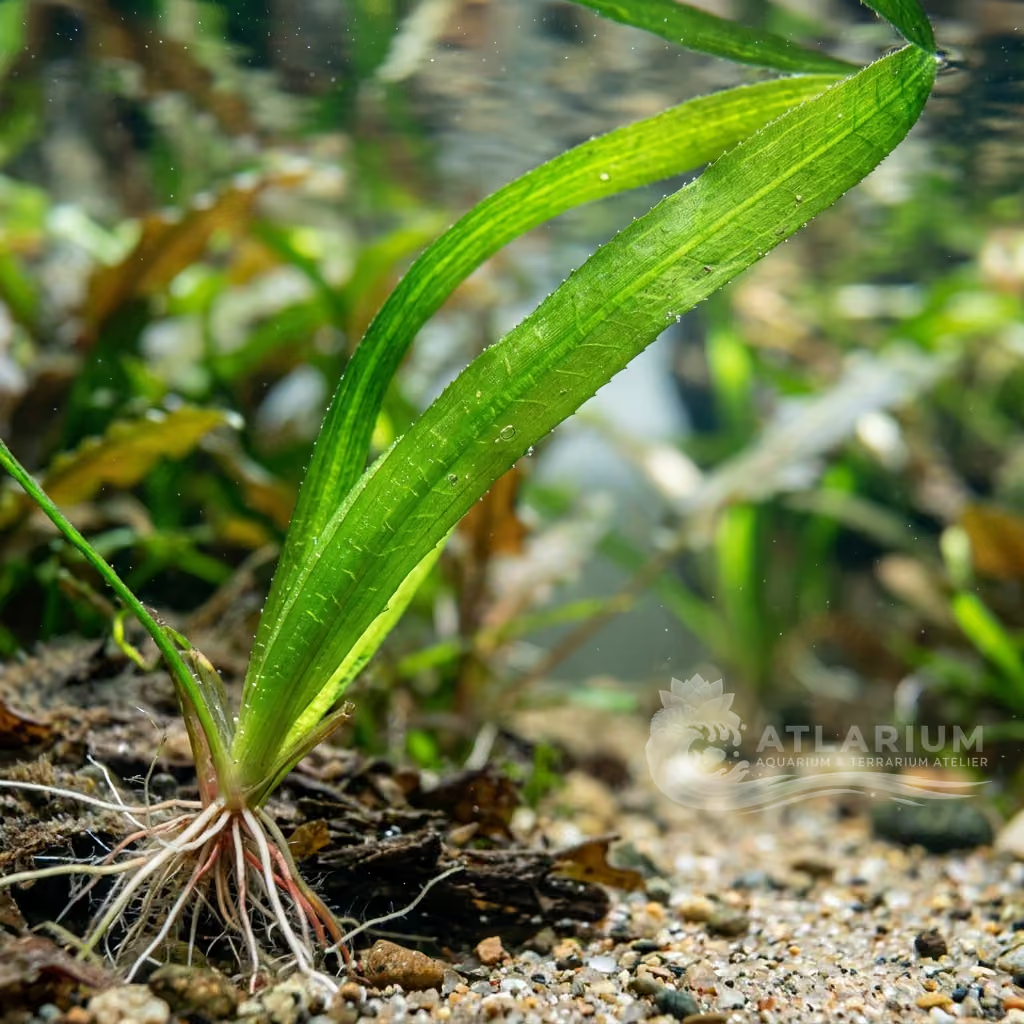
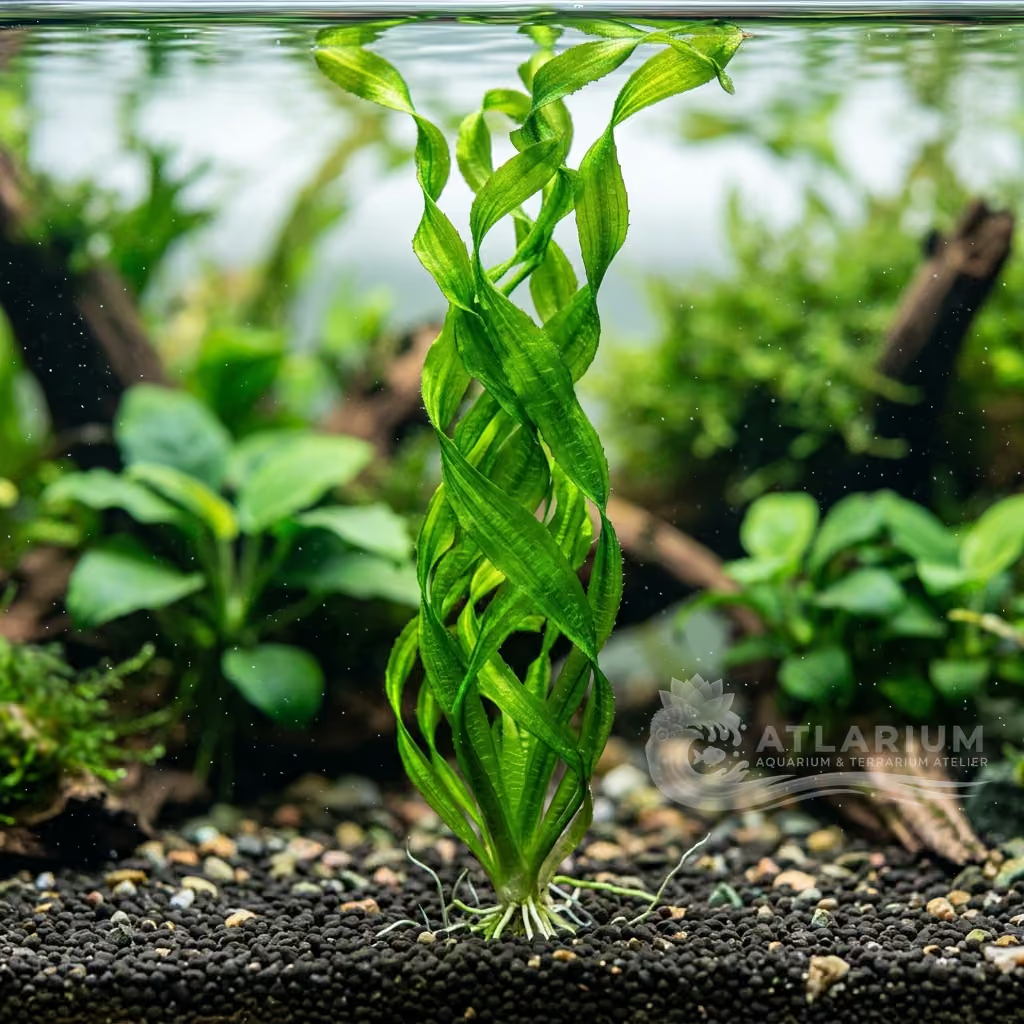
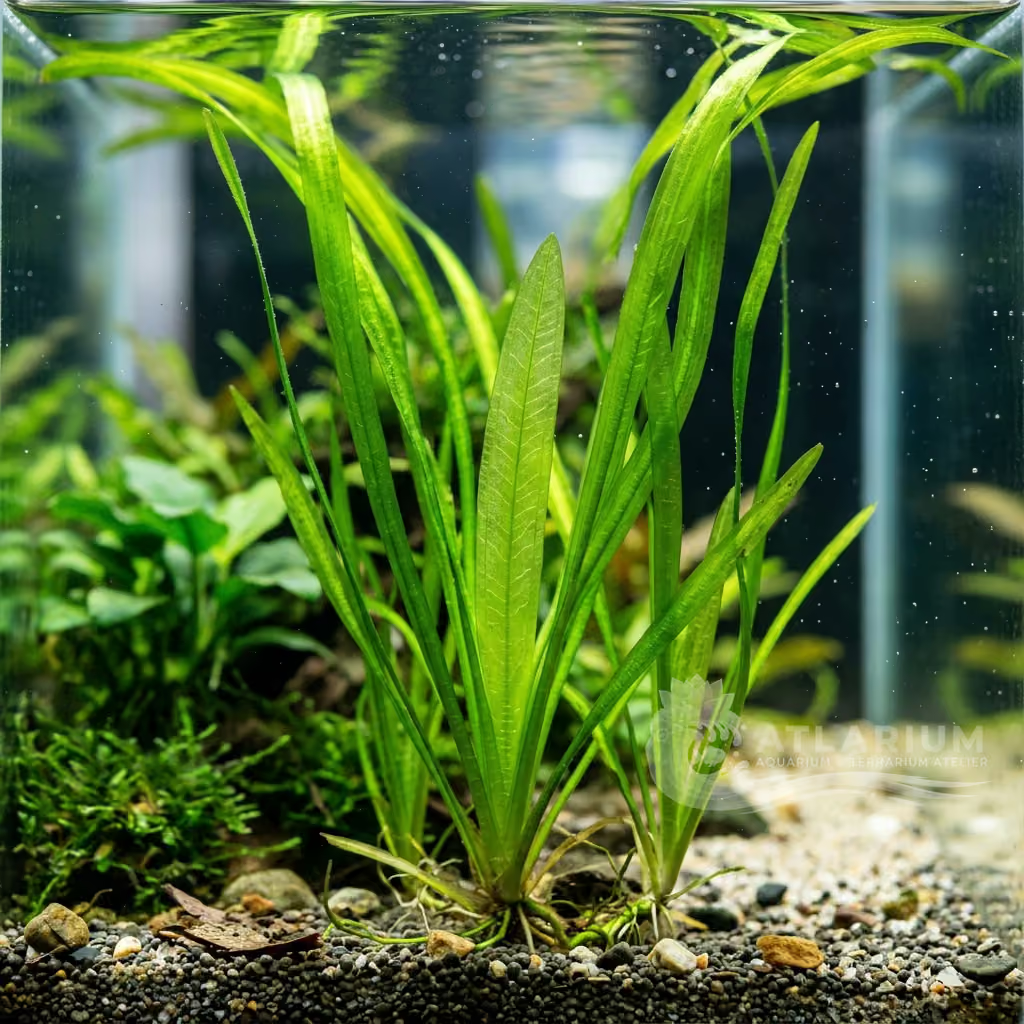
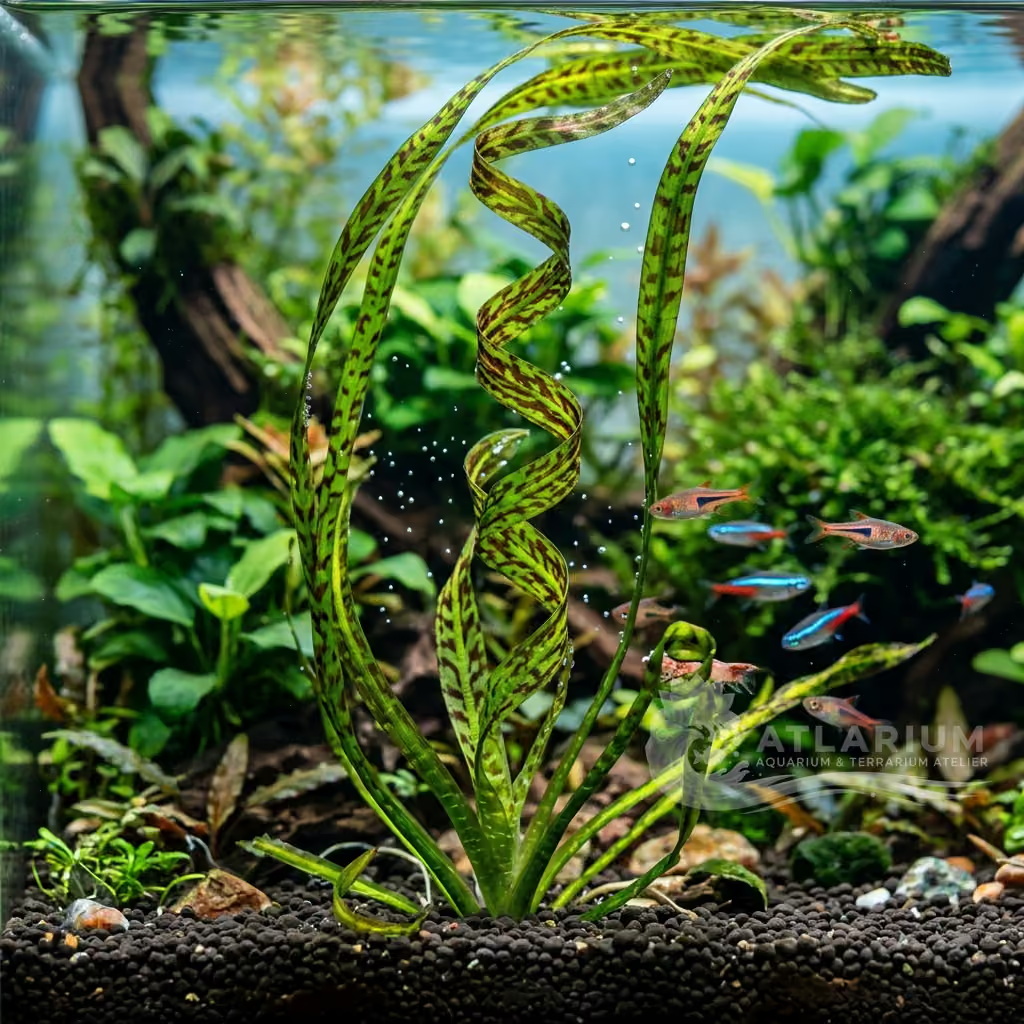
Vallisneria australis 'Marmor' is a medium-growing aquarium plant ideal for midground placement, featuring attractive variegated foliage. It readily propagates via runners, creating a dense wall or bush effect.
Temperatura da água
4 - 32 °C
Valor de pH
6 - 8
Tipo de água
Água doce
Luz
Média - Alta
CO2
Baixa - Alta
KH
2 - 21 dKH

Descrição da espécie
Geographical Origin and Habitat: Vallisneria australis, the species from which the 'Marmor' cultivar originates, is native to the aquatic regions of Australia and New Zealand, thriving in slow-moving streams, rivers, and lakes with rich substrates. This variegated variety retains the adaptability of its parent species, demonstrating remarkable resilience across various environmental conditions. In its natural habitat, it often forms dense submerged meadows, providing shelter and sustenance for diverse aquatic life. Its robustness makes it an excellent choice for aquarists seeking a reliable and visually interesting freshwater plant.
Taxonomy & Genetics: Vallisneria australis 'Marmor' belongs to the Hydrocharitaceae family, a group of aquatic plants known for their predominantly vegetative reproduction through runners. The designation 'Marmor' indicates a specific cultivar, artificially selected for its unique aesthetic characteristics, particularly its variegated leaf pattern resembling marble. This genetic selection has resulted in a plant with a distinctive appearance while retaining the robust growth characteristics of the australis species. While not a genetically modified species in the modern sense, it is the product of careful observation and selective propagation.
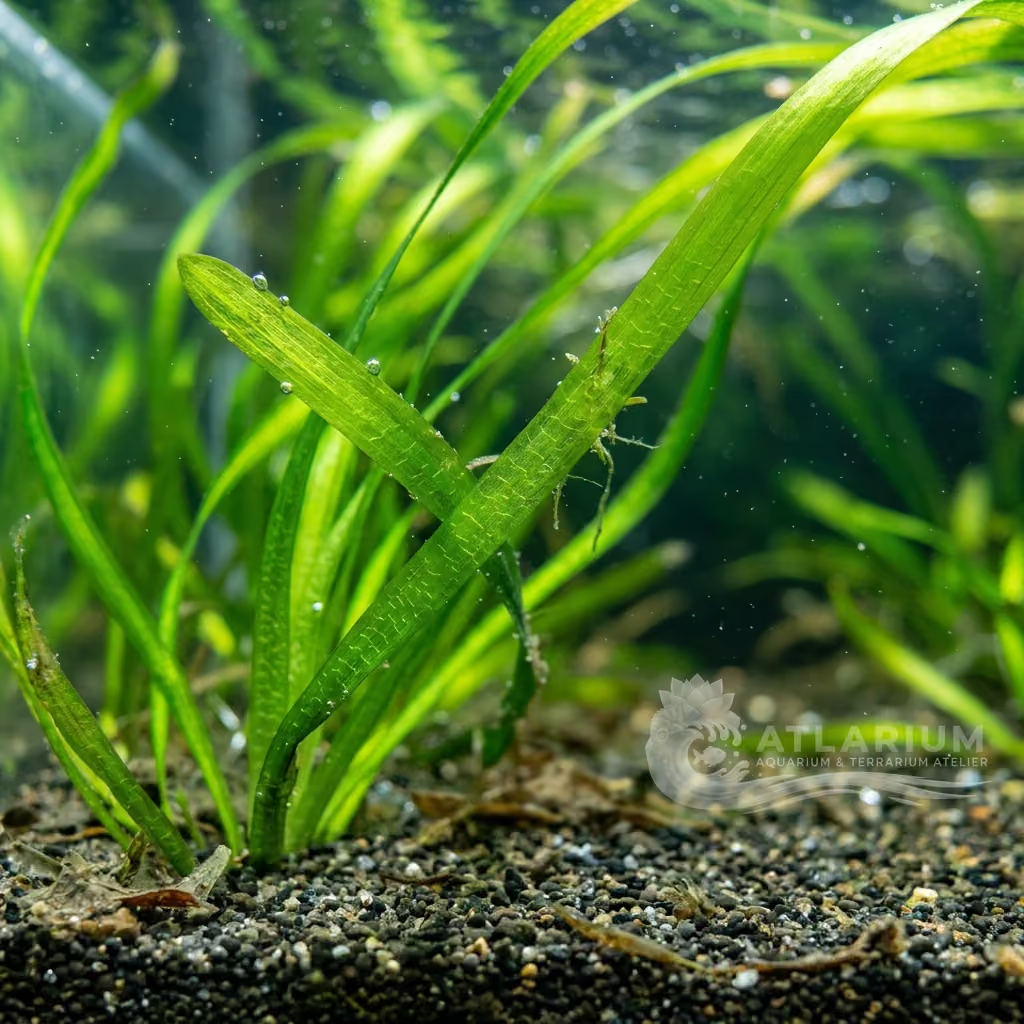
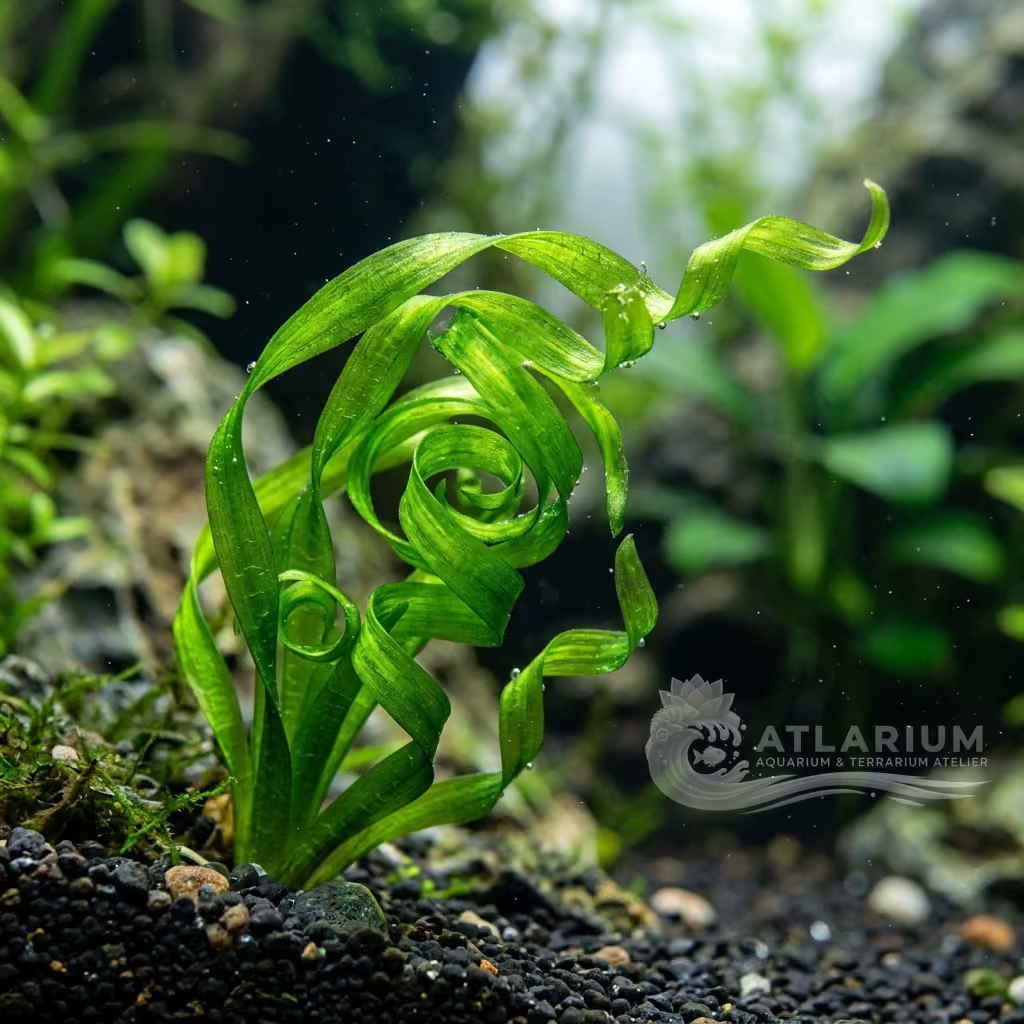
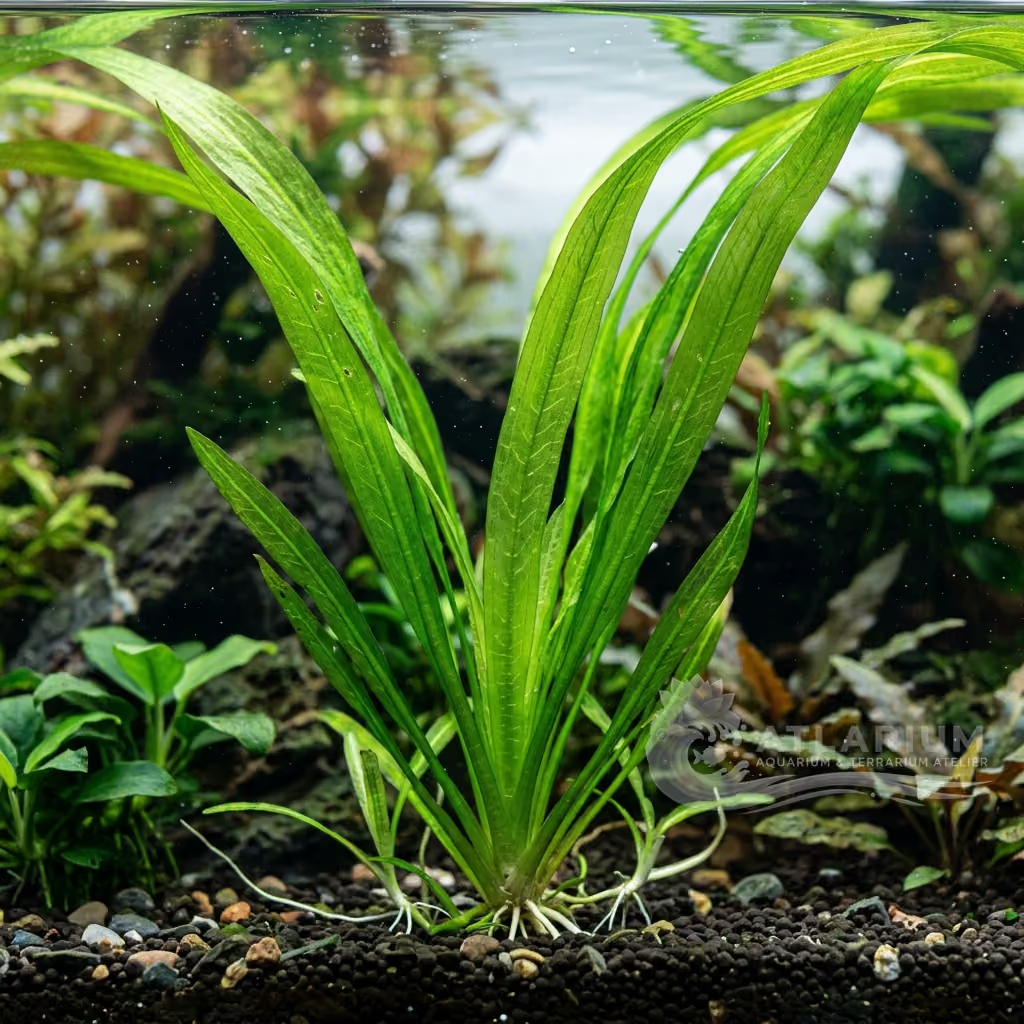
Physical Structure: This cultivar features long, narrow, ribbon-like leaves that emerge from a basal rosette, capable of reaching considerable lengths in suitable aquariums. The root system is well-developed and rhizomatous, allowing the plant to anchor itself firmly to the substrate and expand its territory. Its growth primarily occurs through horizontal runners that produce new daughter plants a short distance from the mother plant. These new plantlets, once developed, can be separated or allowed to grow to form a dense clump.
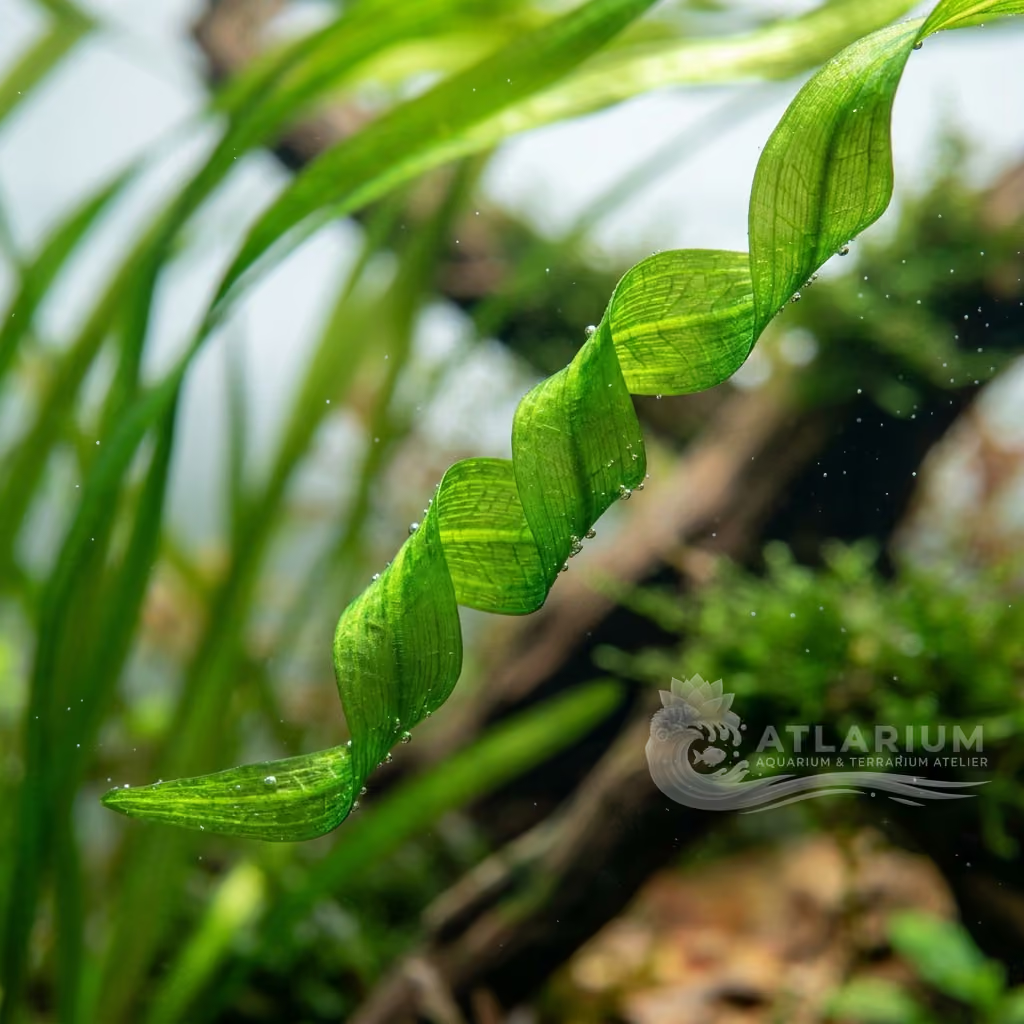
Color & Texture: The distinguishing feature of 'Marmor' is its variegated foliage, which displays a captivating mix of dark green and lighter patches or stripes, often trending towards cream or pale green, giving it a marbled appearance. This variegation is particularly prominent under adequate lighting, where the color contrasts are more pronounced. The texture of the leaves is smooth and slightly leathery, typical of Vallisneria, offering a silky feel to the touch. The overall aesthetic is elegant and adds an element of visual interest and depth to the aquarium setup.

Cuidado, criação e companheiros de tanque
Lighting & CO2: Vallisneria australis 'Marmor' thrives under medium intensity lighting, which is sufficient to support its growth and enhance the variegation of its leaves. Too intense light might encourage algal growth on its leaves, whereas insufficient light could diminish the variegated coloration and slow down growth. CO2 supplementation, while not strictly essential for the species' survival, is highly recommended to promote more vigorous growth and a more vibrant coloration. With added carbon dioxide, the plant metabolizes nutrients more effectively, resulting in increased resilience and aesthetic beauty.
Nutrition & Substrate: This Vallisneria is primarily a root feeder, thus a fertile, nutrient-rich substrate is crucial for its optimal development. The regular use of root tabs positioned at the base of the plants can effectively supplement nutritional needs, especially in inert substrates. It also benefits from a balanced liquid fertilization that provides essential trace elements such as iron, potassium, and magnesium, which are critical for overall health and foliage brilliance. Ensuring a good supply of these elements prevents deficiencies that could manifest as yellowing or deterioration of the leaves.
Water Chemistry: Vallisneria australis 'Marmor' is remarkably adaptable to a wide range of water parameters, tolerating temperatures from 4.0 to 32.0 C, KH values between 2.0 and 21.0, and pH between 6.0 and 8.0. This flexibility makes it compatible with most community aquariums and specific biotopes. However, as with all aquatic plants, parameter stability is more crucial than absolute values, and sudden fluctuations should be avoided. Slightly harder and more alkaline waters are often well-tolerated and can promote robust growth.
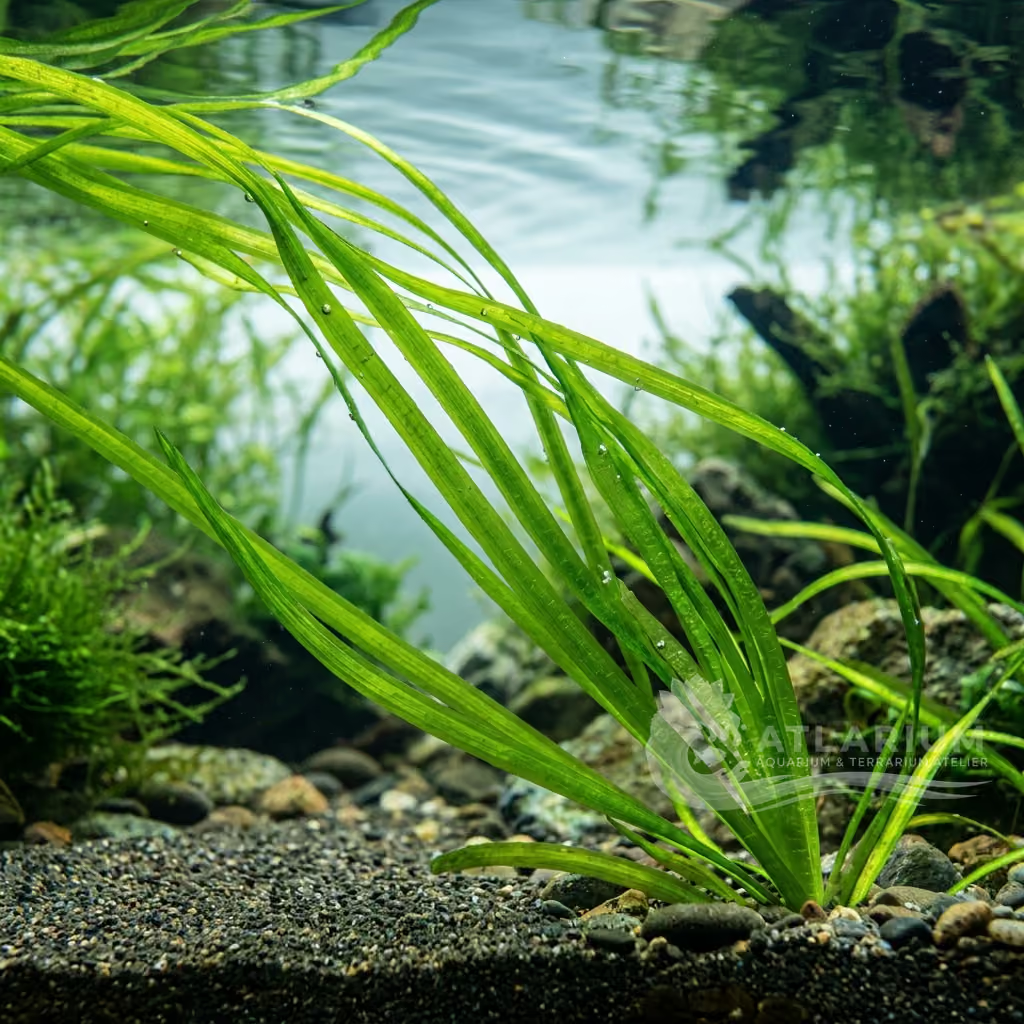
Space Management & Placement: Due to its potential height and upright growth habit, Vallisneria australis 'Marmor' is ideal for midground placement in an aquarium, where it can serve as a natural background or divider. Its tendency to propagate via runners means it can quickly form a dense vegetative barrier, creating hiding spots for fish and contributing to a sense of depth. It is important to consider the space it will require, as it can expand significantly, necessitating regular management of runners to prevent over-colonization of the aquarium. This control helps maintain the aesthetic and biological balance of the environment.
Pruning: Pruning Vallisneria 'Marmor' is generally straightforward and aims to control its spread and remove old or damaged foliage. The outermost, yellowing leaves should be removed by cutting them at the base with sharp scissors to encourage the growth of new, healthier leaves. To control height, leaf tips can be trimmed, although this may lead to browning edges and a less natural appearance. It is often preferable, if possible, to entirely remove overly long leaves from the base to maintain a cleaner, healthier look. Managing the runners that produce new plantlets is crucial for containing the plant and preventing excessive growth.
Risks & Diseases: Vallisneria australis 'Marmor' is generally hardy but can be susceptible to some common aquarium plant risks and diseases. Nutrient deficiencies, particularly iron and potassium, can manifest as yellowing and necrosis of the leaves. "Melting" is a common issue after transplanting or due to sudden changes in water conditions, requiring patience for recovery. Finally, herbivorous snail attacks can cause aesthetic damage to the foliage, while algal proliferation can suffocate the leaves if the light/nutrient balance is not optimal.

Origem e distribuição geográfica
Vallisneria australis, the species from which the 'Marmor' cultivar originates, is native to the aquatic regions of Australia and New Zealand, thriving in slow-moving streams, rivers, and lakes with rich substrates. This variegated variety retains the adaptability of its parent species, demonstrating remarkable resilience across various environmental conditions. In its natural habitat, it often forms dense submerged meadows, providing shelter and sustenance for diverse aquatic life. Its robustness makes it an excellent choice for aquarists seeking a reliable and visually interesting freshwater plant.
Origem
Austrália, Nova Guiné e Oceania

Perfil da planta
- Posicionamento
- Plano intermediário
- Due to its substantial size and long leaves, this species is strictly suited for the background of an aquarium. The leaves will often reach the surface and trail along the water flow. It should be placed where its trailing leaves will not shade out more demanding foreground plants.
- Forma botânica
- Roseta
- It features long, ribbon-like leaves that are characteristic of the genus. What sets the 'Marmor' variety apart is the attractive dark marbling or mottling pattern on its foliage. The leaves are generally wide and possess a slightly rough texture.
- Crescimento
- Média
- This species exhibits a very rapid growth rate when provided with optimal conditions. It can quickly cover the water surface if not kept in check. Even in low-tech setups, it grows reliably and steadily over time.
- Substrato
- Alta
- As a heavy root feeder, *Vallisneria australis* 'Marmor' thrives best in a nutrient-rich substrate like aqua soil or a sand/gravel mix supplemented with root tabs. Its robust root system requires a substrate depth of at least 2 to 3 inches (5-8 cm) to properly anchor the plant and accommodate its extensive network of runners. A nutrient-dense bottom layer is essential, as the plant relies heavily on its roots to absorb minerals necessary for producing its large, marbled foliage.
- Fertilização de coluna
- Recomendada
- While it is primarily a root feeder, it still benefits from regular liquid fertilization. Supplying potassium and iron into the water column helps maintain the striking marbled coloration. A comprehensive liquid fertilizer ensures no micronutrient deficiencies occur.
- Fertilização radicular
- Recomendada
- Root fertilization is highly recommended for this large species. Providing nutrient-rich root tabs or a quality soil substrate will significantly boost its vitality. Strong root feeding prevents the lower leaves from melting and supports robust runner production.
- Corte
- Ocasional
- Trimming should be done by cutting the oldest or longest leaves near the base of the plant. Avoid cutting the leaves in the middle, as the cut ends will turn brown and eventually die back. Regular thinning of the runners is also necessary to prevent it from overtaking the tank.
- Propagação
- Estolões
- Propagation is entirely vegetative and happens naturally via side shoots. The mother plant will send out runners through the substrate, producing daughter plants at regular intervals. These can be easily snipped and replanted once they have developed a few roots of their own.
- Sensibilidade
- Moderada
- This plant is notoriously sensitive to liquid carbon supplements, such as glutaraldehyde. Exposure to these chemicals can cause rapid melting of the foliage. It is generally hardy otherwise, but prefers harder water and may struggle in extremely soft conditions.
- Função de layout
- Plano intermediário, Fundo
- It serves as a classic background curtain, providing a natural, flowing aesthetic. The marbled pattern adds a subtle visual texture that breaks up solid green backgrounds. It is exceptionally useful for hiding aquarium equipment and providing shelter for shy fish.

Espécies relacionadas
Recomendações agrupadas por parentes próximos, escolhas de acompanhantes e cuidados semelhantes.