Dwarf Hairgrass
Eleocharis parvula
One of the most popular carpeting plants. It forms a low, dense lawn of needle-like green blades, spreading rapidly via runners. Requires decent light and benefits from CO2 injection.
Temperatura da água
15 - 28 °C
Valor de pH
6 - 7.5
Tipo de água
Água doce
Luz
Alta
CO2
Média
Altura esperada
6 cm
Largura esperada
5 cm
GH
4 - 20 dGH
KH
2 - 15 dKH

Descrição da espécie
Geographical Origin and Habitat: Eleocharis parvula is widely distributed across the temperate and tropical regions of Europe, Asia, North America, and South America. It is a marsh plant that grows along the sandy or muddy shores of lakes, rivers, and marshes, often in brackish waters and estuaries. In the wild, it adapts to periods of total submersion and emersion on wet mud, exposed to direct sunlight.
Taxonomy & Genetics: Belonging to the Cyperaceae family, it is commonly known as "Dwarf Hairgrass." Genetically, it is an extremely robust plant adapted to expand rapidly horizontally via underground runners to colonize floodplains devoid of other vegetation.
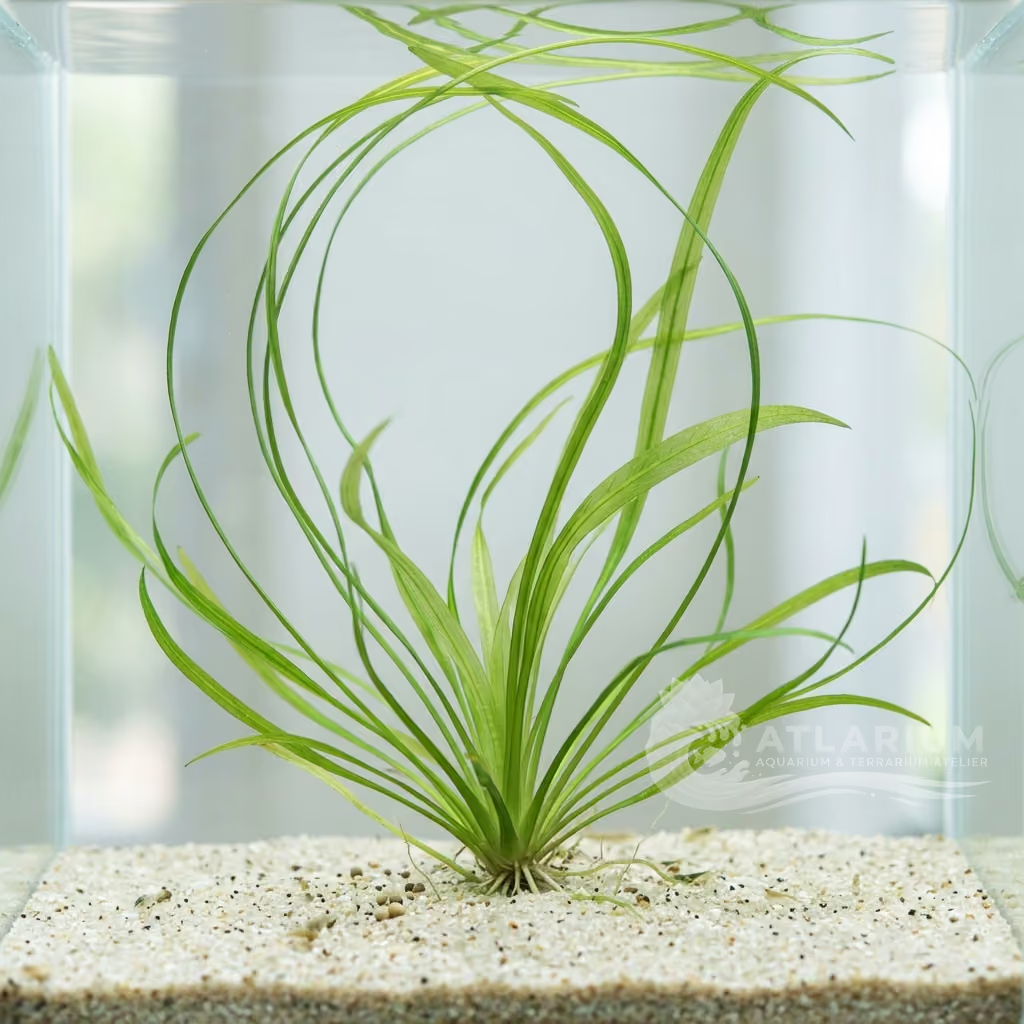
Physical Structure: The plant has a slender, grass-like appearance, formed by small clumps of thin, needle-like stems without true leaves (photosynthesis occurs in the stems). The height typically ranges from 3 to 10 cm. It develops a fine, fibrous root system that spreads like a net through the substrate.
Color & Texture: The stems exhibit a bright, vibrant, and uniform green color. The texture is extremely fine and dense, resembling an English lawn or a golf green, creating a soft, natural visual contrast against rough rocks and driftwood.

Cuidado, criação e companheiros de tanque
Lighting & CO2: Requires moderate to high lighting to grow compactly and avoid stretching. CO2 injection is highly recommended to stimulate horizontal propagation and achieve a dense, uniform carpet quickly.
Nutrition & Substrate: Requires a fine-grained, fertile substrate (fine sand or active soil) to allow the delicate roots to spread easily. It benefits from regular liquid fertilization containing iron and nitrogen.
Water Chemistry: Thrives in temperatures between 18 and 26°C (64-79°F), with an optimal pH range of 5.5 to 7.5. It adapts well to various water hardness levels and can tolerate low levels of salinity (mildly brackish waters).
Space Management & Placement: Placed exclusively in the foreground to create submerged lawns. It should be planted by dividing the pot into small tufts of a few stems each, inserted into the substrate in a grid pattern a few centimeters apart.
Pruning: Regular pruning with curved scissors is essential: trimming the carpet to a height of 2-3 cm stimulates the plant to send out new lateral runners, making the lawn much denser. Always net out trimmed stems to prevent them from rotting.
Risks & Diseases: The greatest risk is the invasion of filamentous algae, which easily entangle in the fine stems, choking the plant. Inadequate lighting or a lack of nutrients will cause the grass to yellow and thin out.

Origem e distribuição geográfica
Eleocharis parvula is widely distributed across the temperate and tropical regions of Europe, Asia, North America, and South America. It is a marsh plant that grows along the sandy or muddy shores of lakes, rivers, and marshes, often in brackish waters and estuaries. In the wild, it adapts to periods of total submersion and emersion on wet mud, exposed to direct sunlight.
Origem
América do NorteExtra-Amazônica América do SulEuropa, Mediterrâneo e Ásia OcidentalSul e Sudeste AsiáticoLeste AsiáticoCosmopolita ou apresentado

Perfil da planta
- Posicionamento
- Primeiro plano
- This plant is universally utilized in the foreground of the aquarium to create lush, grass-like carpets. It can also be planted strategically between rocks or hardscape to soften transitions. Due to its short stature, it should not be shaded by larger background plants. It works exceptionally well in nano tanks and large aquascapes alike.
- Forma botânica
- runner
- Eleocharis parvula forms fine, hair-like blades that grow from a central basal rosette. It propagates via lateral runners beneath the substrate surface, creating interconnected networks. The blades are bright green, highly flexible, and wave gently in the water current. Its root system is delicate but dense, anchoring the plant firmly into fine-grained substrates.
- Crescimento
- Rápida
- The growth rate is generally moderate to fast, provided optimal conditions with high light and CO2 are met. Once the plant acclimates to the aquarium environment, it sends out numerous runners. Under lower light, the growth can slow down significantly, and the blades might grow taller as they reach for light. Consistent conditions will ensure a steady and even spread.
- Substrato
- Alta
- Eleocharis parvula, commonly known as Dwarf Hairgrass, requires a high-quality, nutrient-rich substrate to form a dense and healthy carpet. A fine-grained aquatic soil or sand is essential, as its delicate, shallow root system struggles to anchor or spread in coarse gravel. An ideal substrate depth of at least 3-5 centimeters allows its runners to propagate effectively across the aquarium floor. While it can draw some nutrients from the water column, a fertile base heavily promotes vigorous, lush lateral growth.
- Fertilização de coluna
- Recomendada
- While heavily reliant on substrate nutrients, column fertilization still plays a crucial role in its development. Dosing liquid fertilizers containing potassium and micronutrients ensures the blades remain bright green. If the water column lacks iron, new growth may appear pale or yellowish. A comprehensive liquid fertilization routine is necessary for the best visual results.
- Fertilização radicular
- Necessária
- Root feeding is the primary method Eleocharis parvula uses to gather nutrients, making a specialized soil or root tabs highly beneficial. The fine roots easily penetrate active aquasoils, which supply long-term nutrients. If grown in inert sand or gravel, root capsules must be added to prevent nutrient deficiencies. A rich substrate promotes much faster runner development.
- Corte
- Ocasional
- Trimming is essential to maintain a neat, compact carpet and prevent the lower layers from dying off due to lack of light. Use curved spring scissors to trim the blades down to about 1-2 cm above the substrate. The plant responds very well to aggressive trimming and will grow back thicker. Be sure to net out the floating clippings, as they can quickly mess up the filter.
- Propagação
- Estolões
- Propagation occurs naturally through runners that branch out from the parent plant. To speed up the carpeting process, you can carefully uproot a small patch, separate it into smaller plugs, and replant them a few centimeters apart. Over time, these plugs will grow together. Healthy plants will constantly push new runners as long as space and nutrients are available.
- Sensibilidade
- Moderada
- This plant is relatively hardy but can be sensitive to aggressive chemical treatments, particularly algaecides containing copper. It also struggles if detritus accumulates heavily within its dense blades, leading to suffocation and algae. Good water circulation is necessary to keep the carpet clean. It is generally resistant to most common water parameter fluctuations if kept within standard planted tank ranges.
- Função de layout
- Primeiro plano, group
- Its primary role is as a foreground carpeting plant, providing a scale-enhancing, meadow-like appearance. It contrasts beautifully with larger-leaved midground plants or dark hardscape materials like dragon stone. By planting it on sloped substrates, aquascapers can create an illusion of depth. It is a staple choice for Iwagumi style layouts.

Espécies relacionadas
Recomendações agrupadas por parentes próximos, escolhas de acompanhantes e cuidados semelhantes.