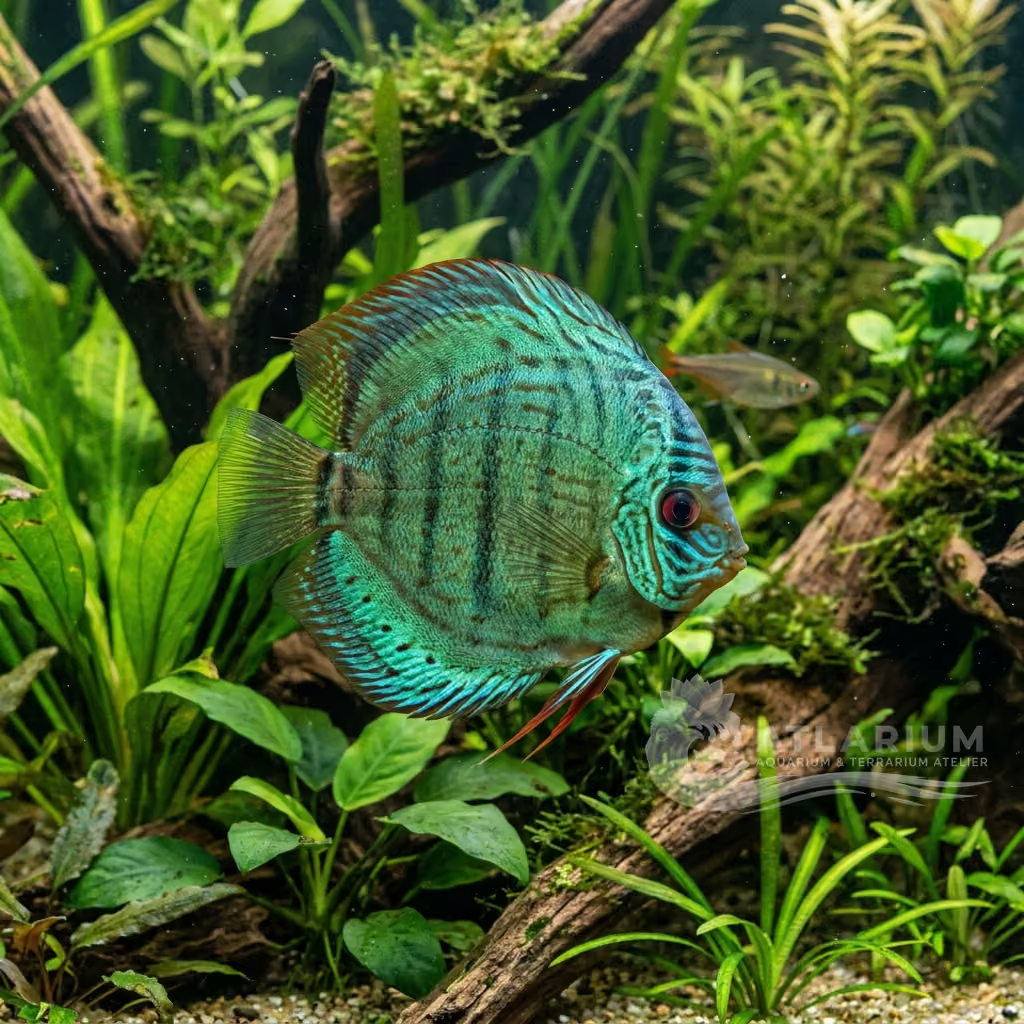
Fire Rasbora / Pearly Rasbora
Rasboroides vaterifloris
Endemic to Sri Lanka, this shy and radiant fire-orange or pear-yellow jewel thrives in undisturbed, dimly lit blackwater environments.
Temperatura da água
23 - 28 °C
Valor de pH
5.5 - 6.5
Tipo de água
Água doce
Nível do tanque
Meio
Tamanho adulto
4 cm
Volume mínimo do tanque
>= 30 L
Grupo mínimo
>= 1
GH
1 - 5 dGH
KH
1 - 2 dKH
TDS
25 - 95 ppm
Condutividade
39 - 148 uS/cm

Descrição da espécie
Geographical Origin and Habitat: Endemic to the Kalu, Kelani, Gin, and Nilwala river basins in southwestern Sri Lanka. Inhabits small, pristine rainforest streams and pools shaded by dense canopies, loaded with decaying leaves and tangled branches.
Taxonomy and Morphology: Cyprinidae. Formerly known as Rasbora vaterifloris, moved to its own genus Rasboroides. Has a curious body shape for a rasbora: not torpedo-like, but short, very stocky, and diamond-shaped (deep-bodied), resembling a small tetra. Reaches barely 4 cm (1.5 inches).
Social Behavior: Extremely placid and reserved, if not nervous. If placed in tanks that are too bright or with dynamic fish, it will fade to a transparent gray and hide permanently. In a school of 10+ specimens, in a proper environment, males will display fascinating submission/dominance dances with fully extended fins.
Coloration and Sexual Dimorphism: Several natural color variants exist in Sri Lanka. The most famous is the 'Fire' variant, with a rust, bright orange, or matte red body, and fins of the same color. There is also a lemon/pear yellow variant ('Pearly'). Males have vastly more saturated colors and pointed fins; females are chubby and pale yellow.

Cuidado, criação e companheiros de tanque
Aquarium Setup: Demands a Blackwater aquarium of at least 60-80 cm (24-32 inches). The filter must be set to the absolute minimum: they loathe currents. The perfect layout consists of fine inert sand, knotty driftwood reaching the surface, an abundance of Ketapang leaves on the bottom, and Cryptocoryne wendtii. Light must be almost totally shielded by floaters.
Diet and Feeding: Finicky micro-predators/insectivores. Because of their tiny, upward-facing mouth, they struggle to feed on the bottom or with hard pellets. It is essential to provide tiny live food: drosophila (fruit flies), baby brine shrimp, and daphnia. They adapt slowly to crushed dry flakes.
Water Quality: Intolerant of hard, calcareous water. Categorically require GH between 1 and 5 and strongly acidic pH (5.5 - 6.5). A biologically mature and intact environment (with spontaneous microfauna) prevents immune crashes. Ideal temperature 23-28°C (73-82°F).
Compatibility and Cohabitation: MUST be housed EXCLUSIVELY in species-only tanks or with extremely slow and mild companions, like Sri Lankan micro-Puntius (Cherry Barbs), Kuhli Loaches, or Otocinclus. Never pair with Tiger Barbs, Zebra Danios, or Cichlids: the Fire Rasbora would literally die of fright.
Aquarium Breeding: Egg-scatterer among fine plant filaments. Quite delicate. Eggs and fry are light-sensitive and easily succumb to fungus in waters lacking sufficient tannins.
Risks and Diseases: They quickly succumb to cutaneous bacterial infections and instantly lose their orange color if forced to live in clear, hard waters or with tankmates that are too aggressive at feeding time.

Origem e distribuição geográfica
Endemic to the Kalu, Kelani, Gin, and Nilwala river basins in southwestern Sri Lanka. Inhabits small, pristine rainforest streams and pools shaded by dense canopies, loaded with decaying leaves and tangled branches.
Origem
Sul e Sudeste AsiáticoLeste Asiático

Perfil de peixe
- Temperamento
- Semi-aggressive
- They have a very shy and peaceful temperament. They rely heavily on the security of their school and the presence of hiding spots. They are charming but require a dedicated setup to truly thrive.
- Dieta
- Omnivore
- They are micro-predators that require very small-sized foods. Crushed flakes and specialized micro-pellets are accepted but should not be the only food. Live or frozen baby brine shrimp and daphnia are critical for their long-term health and vibrant color.
- Expectativa de vida
- 3-5 years
- Tamanho adulto
- 4 cm
- Proporção sexual
- Group
- Keeping them in a group of at least eight to ten individuals is crucial. A mix of males and females encourages natural behaviors and vibrant displays from the males. Females are generally rounder and slightly less colorful.
- Frequência de alimentação
- Twice daily
- Feed them tiny amounts two to three times a day. Their small digestive tracts process food rapidly. Ensure the food particles are small enough for their tiny mouths to ingest easily.
- Carga biológica
- Low
- The Fire Rasbora produces a very small bioload due to its tiny size. They are highly sensitive to water parameter fluctuations and poor water quality. Excellent biological filtration and frequent small water changes are absolutely necessary.
- Fluxo
- Stagnant
- They originate from sluggish forest streams and strongly prefer gentle water flow. Excessive current will quickly exhaust them and cause stress. Sponge filters or heavily baffled canister outputs are highly recommended.
- Risco de salto
- Yes
- While not the most notorious jumpers, they can leap if frightened. A standard, well-fitting aquarium lid is sufficient to keep them safe. Floating plants will also make them feel secure and reduce jumpiness.
- Reprodução
- Oviparous
- Breeding is challenging and requires very soft, acidic water and dim lighting. They are egg-scatterers that will consume their own eggs if left in the breeding tank. The fry are microscopic and require infusoria as their first food.
- Compatibilidade e companheiros de tanque
- Peaceful
- They are timid and extremely peaceful, suitable only for very tranquil setups. Tiny rasboras, dwarf corydoras, and small shrimp make ideal tank mates. Fast-moving or large fish will outcompete them for food and cause severe stress.
- Nível do tanque
- Middle
- They prefer to inhabit the middle to lower levels of the aquarium. They appreciate dense planting and shaded areas to retreat to. They rarely swim in the completely open upper water column.

Modelos e parâmetros científicos
FishBase
Acesso aos dados científicos oficiais da espécie
FishBase v25.04Dados sincronizados em: 15/06/2026
- Nível trófico
- 2,8 ± 0,32 se
- Resiliência
- Alta (menos de 15 meses)
- Unicidade filogenética (PD50)
- 0.5625
- Relação bayesiana comprimento-peso
- a = 0.00891, b = 3.02
- VulnerabilidadeVulnerabilidade baixa (10 / 100)

Espécies relacionadas
Recomendações agrupadas por parentes próximos, escolhas de acompanhantes e cuidados semelhantes.