Pinktail Triggerfish
Melichthys vidua
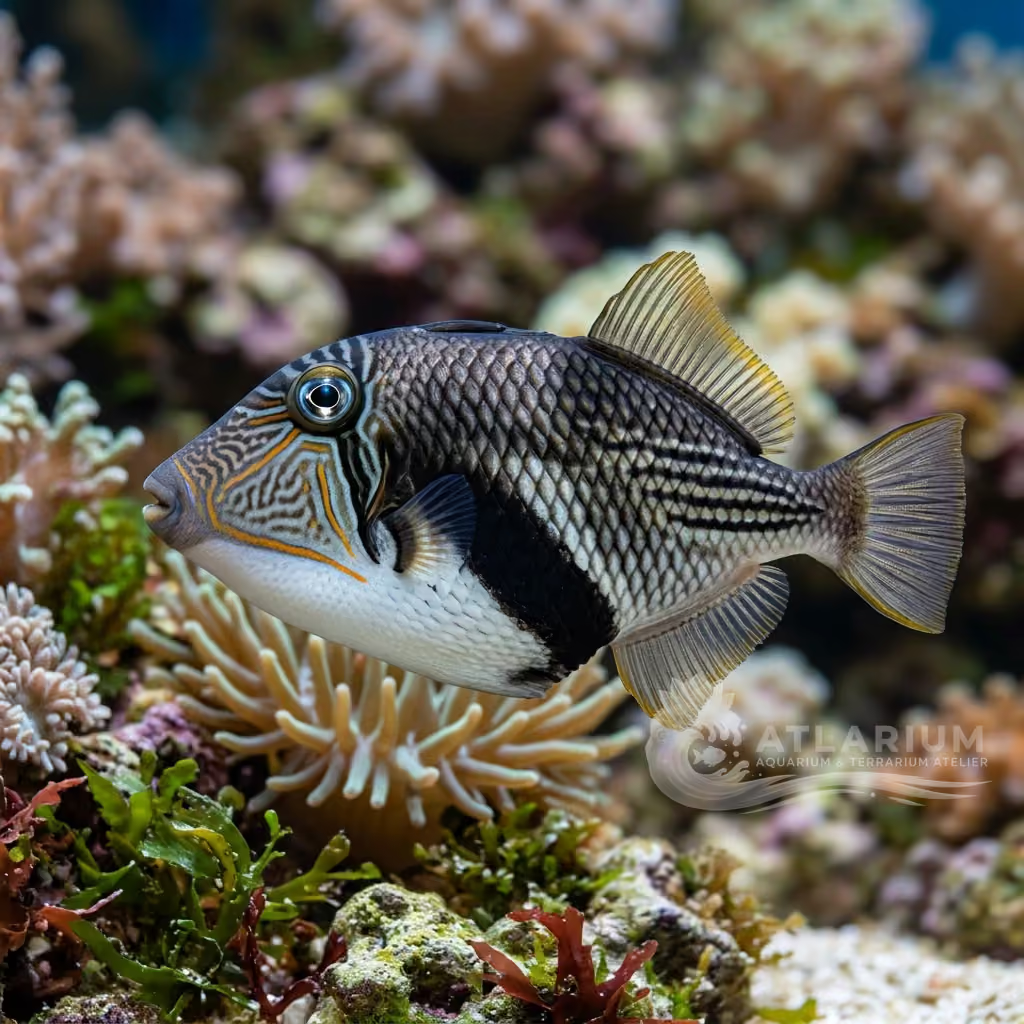
The Pinktail Triggerfish is a dark-bodied marine beauty featuring a striking pink tail. Known for its territorial nature, it requires large tanks with ample caves.
Temperatura da água
22 - 27 °C
Valor de pH
7.9 - 8.5
Tipo de água
Marinho
Nível do tanque
Todos os níveis
Tamanho adulto
40 cm
Volume mínimo do tanque
>= 500 L
Grupo mínimo
>= 1
KH
8 - 12 dKH

Descrição da espécie
Geographical Origin and Habitat: Tropical Indo-Pacific, from East Africa to Hawaii and French Polynesia, north to southern Japan. Inhabits seaward reefs and outer reef slopes subject to strong currents.
Taxonomy and Morphology: Belongs to the family Balistidae. Reaches a maximum size of 40 cm. It features the typical triggerfish morphology with an oval, compressed body, high-set eyes, and a lockable first dorsal spine used to anchor itself in crevices.
Social Behavior: Solitary and territorial fish. Although considered one of the least aggressive triggerfish, it shows territorial behavior as it matures and may bully slower or smaller tankmates.
Coloration and Sexual Dimorphism: Dark brown to black body contrasted by a spectacular bright pink to translucent caudal fin. The soft dorsal and anal fins are whitish to pale pink with black margins. No external sexual dimorphism.

Cuidado, criação e companheiros de tanque
Aquarium Setup: Requires a tank of at least 500 liters (130 gallons) with plenty of live rock arranged to form deep caves. Needs ample swimming space and strong water movement.
Diet and Feeding: Omnivorous diet, heavily carnivorous. Offer fresh or frozen foods: mysis, krill, whole shrimp, squid, and mussels, supplemented with nori and spirulina.
Water Quality: Demands powerful filtration and an efficient skimmer due to high waste output. Temperature 22-27°C (72-81°F), pH 7.9-8.5, specific gravity 1.020-1.026.
Compatibility and Cohabitation: Reef-safe with caution. It generally ignores stony corals but will devour ornamental shrimp, crabs, snails, and small fish.
Aquarium Breeding: Reproduction has not been recorded in home aquariums. In the wild, they lay eggs in sandy pits, guarding the nest aggressively.
Risks and Diseases: Susceptible to ectoparasites like Marine Ich (Cryptocaryon) under high stress. Watch your fingers during maintenance: it can bite painfully.

Origem e distribuição geográfica
Tropical Indo-Pacific, from East Africa to Hawaii and French Polynesia, north to southern Japan. Inhabits seaward reefs and outer reef slopes subject to strong currents.
Origem
Oceanos tropicais e recifesÁfrica e MadagascarLeste Asiático

Perfil de peixe
- Temperamento
- Semi-aggressive
- Their temperament is highly aggressive. They can become fiercely territorial over caves. Care is needed when placing hands inside.
- Dieta
- Omnivore
- They are primarily carnivorous. Feed them hard-shelled invertebrates and meaty foods. Crunchy foods wear down their growing teeth.
- Expectativa de vida
- 10-15 years
- Tamanho adulto
- 40 cm
- Proporção sexual
- Solitary
- They are usually kept singularly. They exhibit high aggression toward conspecifics. Avoid mixing multiple individuals to prevent fights.
- Frequência de alimentação
- Twice daily
- Feed substantial portions twice a day. They are voracious and aggressive eaters. Ensure all tank mates get adequate food.
- Carga biológica
- High
- They produce a remarkably large bioload. Powerful skimmers and robust filtration are critical. Frequent water changes control nitrate levels.
- Fluxo
- Strong
- They require strong water flow. This replicates the dynamic currents of reefs. Rapid water turnover is necessary.
- Risco de salto
- Yes
- They present a moderate jump risk. A secure and heavy lid is needed. They spook easily at outside movements.
- Reprodução
- Oviparous
- They are extremely difficult to breed. They are pelagic spawners in the wild. Tank breeding is virtually undocumented.
- Compatibilidade e companheiros de tanque
- Peaceful
- They are generally aggressive and not reef safe. Keep with large, robust tank mates. Small invertebrates will be eaten.
- Nível do tanque
- All levels
- They swim actively at all levels. They constantly explore rocks for hidden food. They require extremely large swimming spaces.

Modelos e parâmetros científicos
FishBase
Acesso aos dados científicos oficiais da espécie
FishBase v25.04Dados sincronizados em: 15/06/2026
- Nível trófico
- 3,4 ± 0,39 se
- Resiliência
- Média (1,4 - 4,4 anos)
- Unicidade filogenética (PD50)
- 0.625
- Relação bayesiana comprimento-peso
- a = 0.02754, b = 3.02
- VulnerabilidadeVulnerabilidade de baixa a moderada (30 / 100)

Espécies relacionadas
Recomendações agrupadas por parentes próximos, escolhas de acompanhantes e cuidados semelhantes.