Clown Triggerfish
Balistoides conspicillum
The Clown Triggerfish is an unmistakable marine predator with dramatic spots. Armed with crushing jaws, it needs an enormous fish-only aquarium and a diet of hard-shelled invertebrates.
Temperatura da água
24 - 28 °C
Valor de pH
8.1 - 8.4
Tipo de água
Marinho
Nível do tanque
Todos os níveis
Tamanho adulto
50 cm
Volume mínimo do tanque
1.000 L
Grupo mínimo
>= 1
KH
10 - 15 dKH

Descrição da espécie
Geographical Origin and Habitat: MARINE species widely distributed in the tropical Indo-Pacific (from East Africa to Japan and New Caledonia). Inhabits the outer portions of coral reefs and steep drop-offs, often solitary and close to caves where it takes refuge.
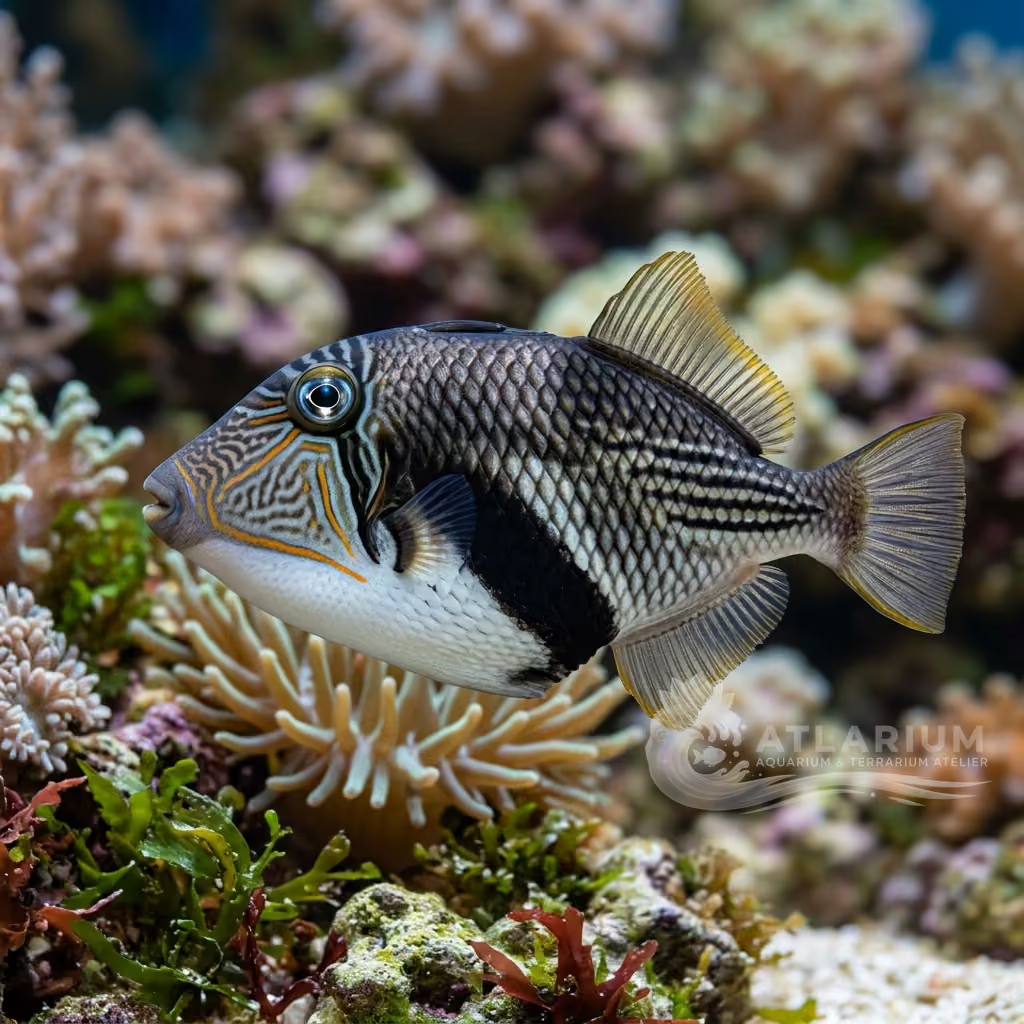
Taxonomy and Morphology: Clown Triggerfish (Balistoides conspicillum). Unmistakable "Triggerfish". Possesses a robust, laterally compressed body, a mouth equipped with formidable teeth capable of crushing corals and a retractable dorsal spine that "locks" (trigger) to anchor itself in the rocks.
Social Behavior: Extremely aggressive, territorial and destructive. Juveniles may seem peaceful, but as they grow they become "the bullies of the reef", attacking with powerful bites any tankmate, the aquarist's fingers, and even breaking plastic pipes and cables.
Coloration and Sexual Dimorphism: One of the most spectacular marine liveries: deep black background with huge white round spots on the belly, a golden yellow "network" on the back and lips painted in a bright orange-yellow ("Clown"). No evident sexual dimorphism.

Cuidado, criação e companheiros de tanque
Aquarium Setup: Only for enormous FOWLR (Fish Only With Live Rock) marine aquariums (minimum 1000 liters / 250 gallons for adults). Will destroy any reef aquarium by eating corals, crustaceans, snails and sponges. Rocks must be massive and well glued.
Diet and Feeding: Crushing carnivore. In nature it crushes echinoderms (urchins), crustaceans and mollusks. In the tank it requires a robust menu: whole mussels with shells, clams, squid, whole shrimp and giant pellets for marine carnivores. Hard shells are essential to file the continuously growing teeth.
Water Quality: Produces a colossal organic load. Oversized protein skimmers and titanic mechanical filtration are necessary. Standard marine specific gravity (1.020-1.025) and stable alkaline pH (8.1-8.4).
Compatibility and Cohabitation: Totally incompatible with marine invertebrates (they will be pulverized). Must be introduced last in FOWLR tanks with other marine "tough guys": large Groupers, Moray eels, enormous Surgeonfish or large Angelfish. Two triggerfish in the same tank will fight to the death.
Aquarium Breeding: Never achieved in captivity. In nature they form crater nests on the sand or among coral rubble; the mother fiercely guards the eggs, brutally attacking even divers who approach too closely.
Risks and Diseases: Watch your hands! A bite from an adult specimen slices flesh. Very robust to diseases if kept in clean water, but small specimens (often sold through negligence) easily die if they cannot acclimatize or due to a lack of crunchy food.

Origem e distribuição geográfica
MARINE species widely distributed in the tropical Indo-Pacific (from East Africa to Japan and New Caledonia). Inhabits the outer portions of coral reefs and steep drop-offs, often solitary and close to caves where it takes refuge.
Origem
Oceanos tropicais e recifesÁfrica e MadagascarLeste AsiáticoAustrália, Nova Guiné e Oceania

Perfil de peixe
- Temperamento
- Semi-aggressive
- This species is renowned for its highly aggressive, territorial, and unpredictable temperament. As they mature, they become increasingly dominant and can pose a danger to almost any tank mate. They possess extremely strong jaws and teeth that can crush shells or cause severe injury to other fish and even aquarists. For these reasons, they are best suited for experienced keepers who understand how to manage aggressive marine predators.
- Dieta
- Omnivore
- The Clown Triggerfish is a strict carnivore that requires a varied diet of meaty marine foods. In captivity, they should be fed items like shrimp, krill, clams, squid, mussels, and chopped fish fillets. Offering hard-shelled foods such as unshelled shrimp or small crabs is vital to help wear down their continuously growing teeth. High-quality marine pellets can also be included to ensure they receive a complete balance of essential vitamins and minerals.
- Expectativa de vida
- 10-20 years
- Tamanho adulto
- 50 cm
- Proporção sexual
- Solitary
- In captivity, Clown Triggerfish are strictly solitary and should generally be housed individually. They are highly territorial and attempts to keep multiple individuals together in the same aquarium will almost certainly lead to fatal fights. Established pairs can occasionally coexist, but this is extremely rare and only feasible in public or monumental display aquariums. For the home aquarist, a ratio of a single specimen per tank is the only safe and recommended stocking method.
- Frequência de alimentação
- Twice daily
- Juvenile Clown Triggerfish should be fed two to three times a day to support their rapid growth and development. For adult specimens, once or twice daily feedings are sufficient to maintain their health and energy levels. It is important to feed them only what they can consume within a few minutes to prevent excess food from rotting. Establishing a consistent schedule helps reduce their natural territorial aggression and keeps them active.
- Carga biológica
- High
- The Clown Triggerfish is a large, predatory species that produces a substantial amount of biological waste. Because of their hearty appetite for meaty foods and their active nature, they require a highly efficient filtration system. Heavy protein skimming and regular water changes are absolutely essential to maintain low nitrate and phosphate levels. A strong mechanical and biological filtration setup is highly recommended to handle their significant impact on water quality.
- Fluxo
- Moderate
- Balistoides conspicillum needs steady, moderate circulation distributed across the aquarium rather than a narrow, forceful jet. Only for enormous FOWLR (Fish Only With Live Rock) marine aquariums (minimum 1000 liters / 250 gallons for adults). Will destroy any reef aquarium by eating corals, crustaceans, snails and sponges. This preserves useful water exchange while retaining calmer shelter for rest and feeding.
- Risco de salto
- Yes
- The Clown Triggerfish is a powerful swimmer that poses a significant jumping risk, especially when startled or stressed. Their strength allows them to easily leap out of open-topped aquariums during maintenance or feeding. To prevent accidental escapes, a heavy and tightly fitted lid or canopy is mandatory. Ensuring that all gaps around equipment are securely sealed will keep these active fish safe inside their habitat.
- Reprodução
- Oviparous
- Breeding the Clown Triggerfish in captivity is exceptionally difficult and has not been achieved in home aquariums. In the wild, they are egg-layers that construct nests in sandy substrates and guard them fiercely. Spawning requires massive water volume, highly specific environmental cues, and specialized pairing zones that hobbyists cannot replicate. Successful captive breeding has only occurred in advanced, commercial aquaculture facilities using complex hormone treatments and larval rearing techniques.
- Compatibilidade e companheiros de tanque
- Species only
- This species has very poor compatibility with other fish and is completely unsafe for reef aquariums. They will eat any small fish, shrimp, crabs, snails, and corals present in the tank. If kept in a community setting, their tank mates must be large, robust, and equally aggressive species like groupers or large tangs. For safety, many aquarists choose to keep them in a dedicated species-only aquarium to avoid conflicts.
- Nível do tanque
- All levels
- This active marine fish utilizes all vertical zones of the aquarium, but spends most of its time in the middle and bottom levels. They frequently cruise around rock formations and caves searching for potential prey or investigating their surroundings. While they are often seen swimming actively through open waters in the middle zone, they will also visit the surface during feeding times. Providing ample open swimming space along with plenty of bottom structures is crucial for their well-being.

Modelos e parâmetros científicos
FishBase
Acesso aos dados científicos oficiais da espécie
FishBase v25.04Dados sincronizados em: 15/06/2026
- Nível trófico
- 3,3 ± 0,39 se
- Resiliência
- Média (1,4 - 4,4 anos)
- Unicidade filogenética (PD50)
- 0.75
- Relação bayesiana comprimento-peso
- a = 0.02754, b = 2.91
- VulnerabilidadeVulnerabilidade moderada (40 / 100)

Espécies relacionadas
Recomendações agrupadas por parentes próximos, escolhas de acompanhantes e cuidados semelhantes.