Raccoon Butterflyfish
Chaetodon lunula
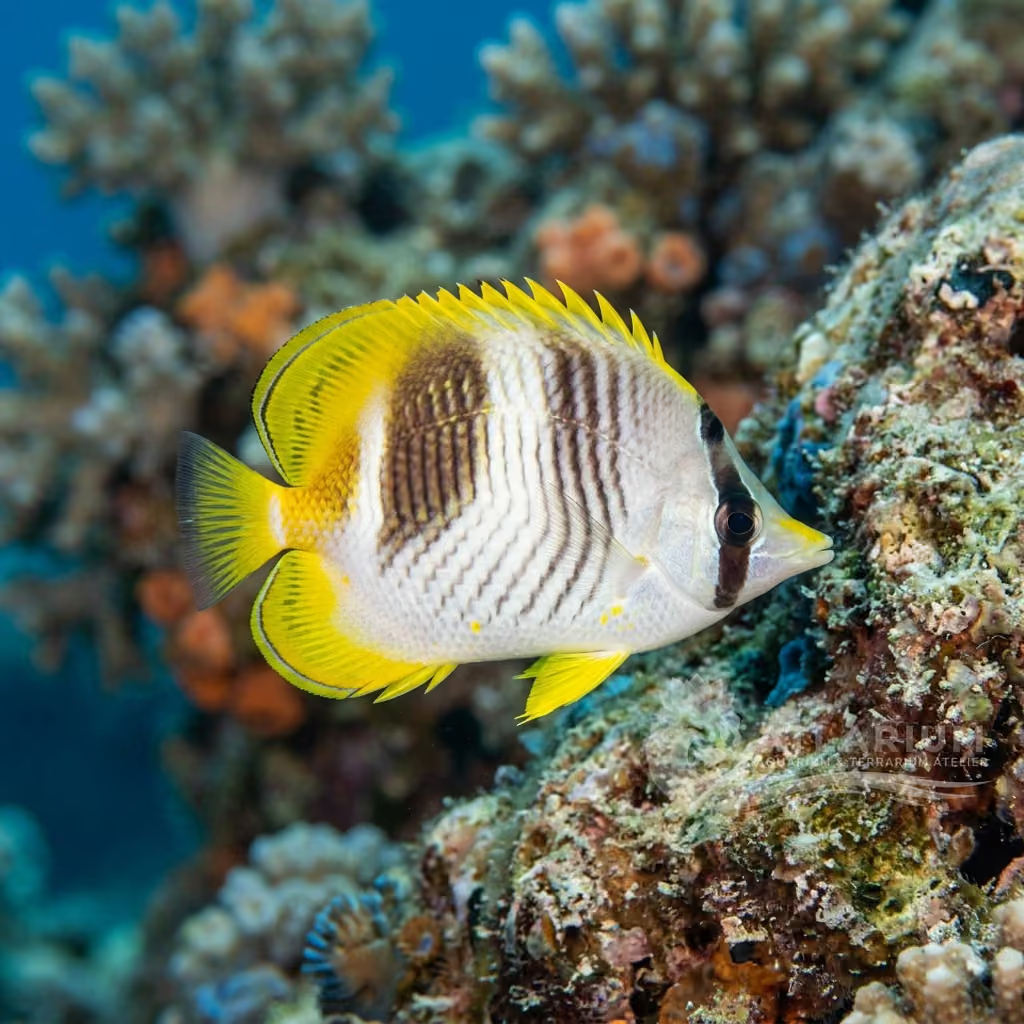
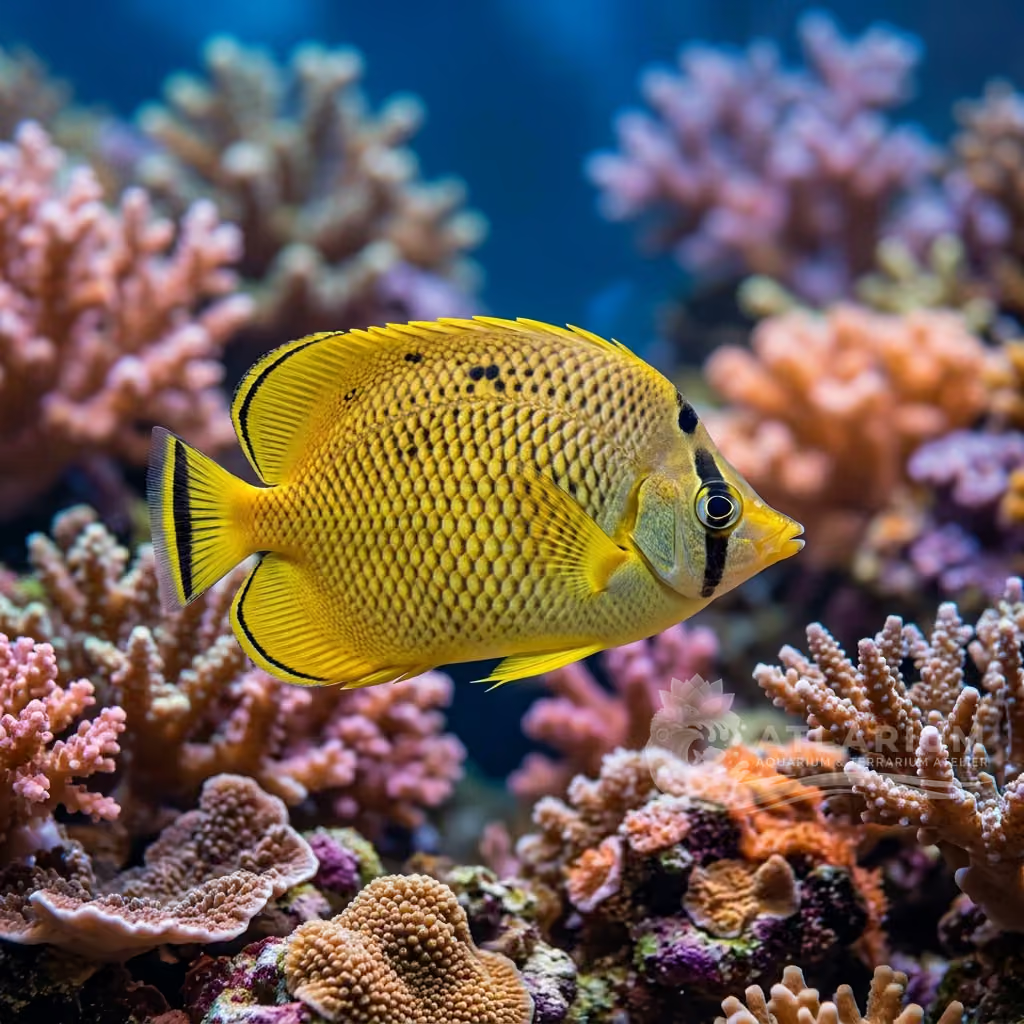
The Aiptasia Nuke (8 inches / 20 cm). A gorgeous, highly active yellow butterflyfish with a black bandit mask. Used heavily to eradicate pest anemones.
Temperatura da água
24 - 28 °C
Valor de pH
8.1 - 8.4
Tipo de água
Marinho
Nível do tanque
Parte inferior e intermediária
Tamanho adulto
20 cm
Volume mínimo do tanque
400 L
Grupo mínimo
>= 1
KH
4 - 6 dKH

Descrição da espécie
Geographical Origin and Habitat: Widely distributed in the Indo-Pacific Ocean: from the coasts of East Africa and Madagascar, up to Hawaii and Polynesia. Inhabits shallow lagoons, coral reef flats, and seaward reef slopes, often swimming close to large rock formations (0-30 meters).
Taxonomy and Morphology: Known as the Raccoon Butterflyfish. Presents the typical morphology of the Chaetodontidae family: oval, laterally compressed disc-shaped body. The snout is prominent but not overly tubular as in Chelmon. Reaches about 20 cm (8 inches) in length in the wild and in large tanks.
Social Behavior: An animal with predominantly nocturnal habits in the wild, where it gathers in dormant schools by day to disperse and hunt at night. In the aquarium, it easily reverses its sleep-wake rhythm. Peaceful and calm, it prefers to slowly patrol the perimeter of the tank. Fears hyperactive fish.
Coloration and Sexual Dimorphism: The "raccoon" moniker comes from the thick and conspicuous white-bordered black mask covering its eyes, and a broad black saddle on the nape. The body fades from golden yellow on the lower half to a dark brownish-yellow dorsally, with a reddish crossed-stripe pattern. Black spot at the base of the tail. No dimorphism.

Cuidado, criação e companheiros de tanque
Aquarium Setup: Requires a tank of at least 400 liters (105 gallons), structured with plenty of Live Rock to form wide vaults and shaded passages, essential to accommodate its shy and nocturnal nature. Free swimming space must be abundant. Lighting should not be harsh, at least during the first weeks of introduction.
Diet and Feeding: Nocturnal micropredator specialized in hard coral polyps, nudibranchs, and benthic algae. Excellent biological exterminator of the dreaded Aiptasia and even fireworms (if not too large). In the aquarium, it is highly adaptable: devours brine shrimp, mysis, opened clams, and soon accepts dry flake feeds.
Water Quality: Hardier than many other butterflyfish, it tolerates slight chemical fluctuations. Specific gravity 1.021-1.025, pH 8.1-8.4, Temperature 24-28 °C (75-82 °F). Filtration must be excellent, as the residues of chopped frozen foods heavily pollute the water.
Compatibility and Cohabitation: Completely and totally incompatible with Reef tanks (Reef Safe: NO). It destroys any soft coral, SPS, LPS, ornamental anemones, and feather dusters. Excellent for peaceful community FOWLR aquariums. Coexists well with clownfish, calm tangs, and small wrasses. Avoid pairing with fierce triggerfish.
Aquarium Breeding: As with all butterflyfish, it has never been achieved in an aquarium. In the open sea, they lay hundreds of thousands of pelagic eggs that float to the surface. The larvae (Tholichthys) possess a curious cephalic armor that is reabsorbed before their descent to the reef.
Risks and Diseases: Subject to Ich if thermally stressed. Its partly nocturnal nature makes it an easy target for parasites and bites from other fish during the day if it does not have dark caves to take refuge in. Sensitive to high concentrations of copper.

Origem e distribuição geográfica
Widely distributed in the Indo-Pacific Ocean: from the coasts of East Africa and Madagascar, up to Hawaii and Polynesia. Inhabits shallow lagoons, coral reef flats, and seaward reef slopes, often swimming close to large rock formations (0-30 meters).
Origem
Oceanos tropicais e recifesÁfrica e Madagascar

Perfil de peixe
- Temperamento
- Semi-aggressive
- The Raccoon Butterflyfish is generally a peaceful and social species towards non-related tank mates, making it a great addition to a large fish-only marine aquarium. However, they can exhibit significant territorial aggression toward members of their own species or other butterflyfishes with similar shapes or colors. They are semi-aggressive when it comes to defending their feeding territories or shelter, but they will coexist peacefully with other active, moderately sized marine fish.
- Dieta
- Omnivore
- In the wild, the Raccoon Butterflyfish is a generalist omnivore, feeding on coral polyps, polychaete worms, nudibranchs, algae, and other small invertebrates. In the home aquarium, they should be offered a diverse diet that includes high-quality frozen foods like mysis shrimp, brine shrimp, chopped clams, and krill. They also benefit from marine algae sheets (nori) and prepared pellets or flakes containing spirulina to ensure they receive proper vegetable matter.
- Expectativa de vida
- 5-10 years
- Tamanho adulto
- 20 cm
- Proporção sexual
- 1:1 ratio
- In the home aquarium, the Raccoon Butterflyfish is typically kept singly, as they can become highly territorial and aggressive toward members of their own species or closely related butterflyfishes. However, they can be successfully maintained in bonded, male-female pairs if they are introduced to the aquarium simultaneously or purchased as an established pair. When attempting to keep them in a group, a very large aquarium with numerous hiding places is required to minimize territorial disputes.
- Frequência de alimentação
- Twice daily
- Due to their high activity levels and constant foraging habits, Raccoon Butterflyfish should be fed at least two to three times per day. Offering smaller portions multiple times throughout the day helps replicate their natural grazing behavior and prevents digestive issues. It is important to feed them only what they can consume within a few minutes to maintain water quality and prevent excess nutrients from polluting the tank.
- Carga biológica
- Medium
- The Raccoon Butterflyfish is a medium-sized, active marine species that produces a moderate amount of waste, classifying its bioload as medium. It requires efficient biological, chemical, and mechanical filtration systems to maintain stable, pristine water quality. A strong protein skimmer is highly recommended, alongside regular water changes, to prevent the accumulation of nitrates and phosphates, to which butterflyfishes are sensitive.
- Fluxo
- Moderate
- Chaetodon lunula needs steady, moderate circulation distributed across the aquarium rather than a narrow, forceful jet. Requires a tank of at least 400 liters (105 gallons), structured with plenty of Live Rock to form wide vaults and shaded passages, essential to accommodate its shy and nocturnal nature. Free swimming space must be abundant. This preserves useful water exchange while retaining calmer shelter for rest and feeding.
- Risco de salto
- Yes
- Although they are not classified as habitual or obligate jumpers, the Raccoon Butterflyfish can easily jump out of the aquarium if they are startled, stressed, or chased by territorial tank mates. To prevent fatal accidents, it is highly recommended to equip the aquarium with a secure, tight-fitting lid or a fine mesh screen. Introducing a new fish during the acclimatization period and minimizing sudden lighting changes or physical disturbances near the tank will also reduce the risk of startle-induced jumping.
- Reprodução
- Oviparous
- Breeding the Raccoon Butterflyfish in captivity is extremely difficult and rarely achieved by home aquarists. They are pelagic spawners that release their eggs and sperm into the open water column, after which the buoyant eggs drift with the currents. In the wild, the larvae undergo a unique "tholichthys" stage, where bony plates protect their heads, which is exceptionally difficult to replicate in closed aquarium systems due to specialized planktonic feeding requirements.
- Compatibilidade e companheiros de tanque
- Not reef safe
- The Raccoon Butterflyfish is compatible with a wide variety of active marine fish, including tangs, wrasses, damselfish, and larger clownfish. However, they should not be housed with aggressive territorial species or other butterflyfish unless the tank is very large. Crucially, they are not reef-safe, as they will readily eat coral polyps, clams, nudibranchs, and ornamental anemones, although they are sometimes introduced to control pest Aiptasia.
- Nível do tanque
- Middle/Bottom
- The Raccoon Butterflyfish is an active and energetic swimmer that primarily occupies the middle to bottom zones of the aquarium. They spend most of their time actively patrolling the rockwork, searching for food and grazing on algae or small invertebrates. Providing plenty of open swimming space in the middle of the tank, combined with structured rock arrangements at the bottom, will allow them to exhibit their natural swimming and foraging behaviors.

Modelos e parâmetros científicos
FishBase
Acesso aos dados científicos oficiais da espécie
FishBase v25.04Dados sincronizados em: 15/06/2026
- Nível trófico
- 3,7 ± 0,1 se
- Resiliência
- Alta (menos de 15 meses)
- Unicidade filogenética (PD50)
- 0.5
- Relação bayesiana comprimento-peso
- a = 0.02291, b = 3
- VulnerabilidadeVulnerabilidade baixa (10 / 100)

Espécies relacionadas
Recomendações agrupadas por parentes próximos, escolhas de acompanhantes e cuidados semelhantes.