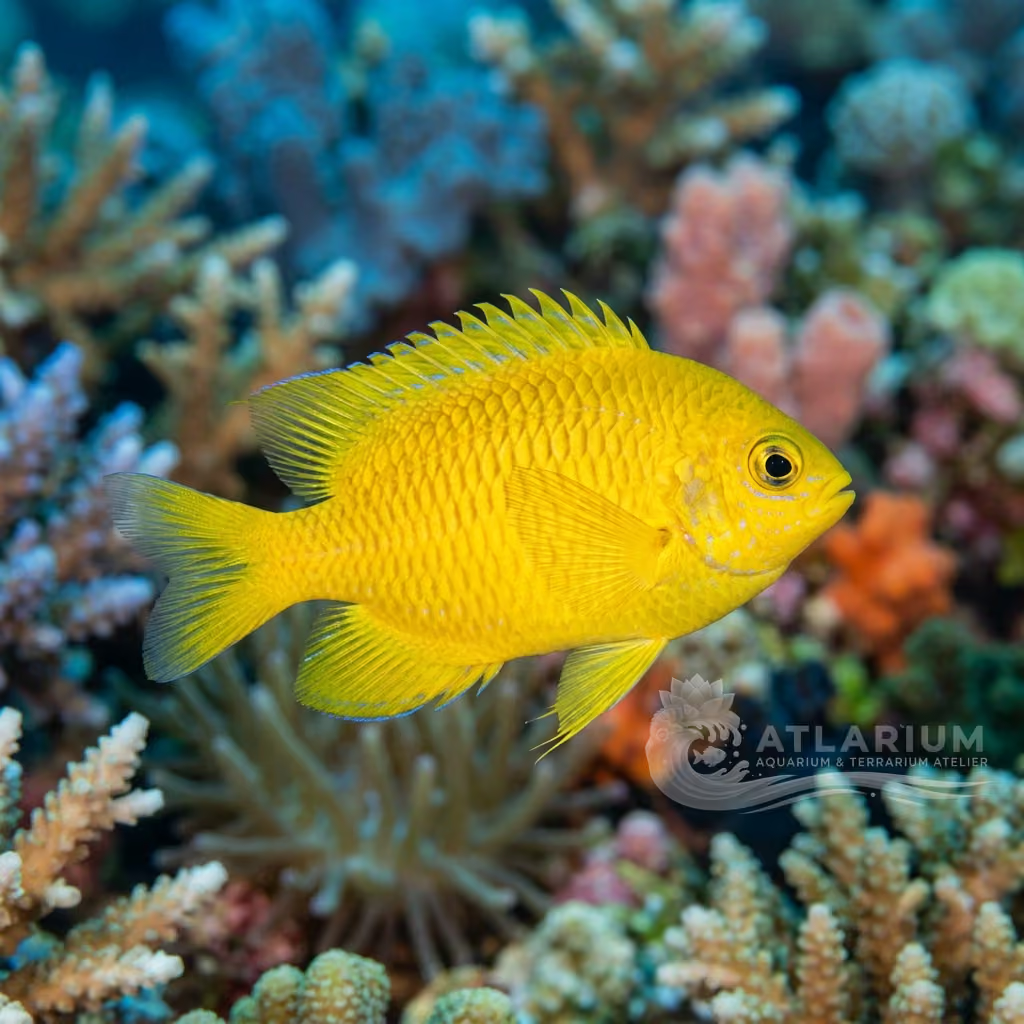
Hawaiian dascyllus
Dascyllus albisella
Endemic to Hawaii, this hardy marine damselfish features a distinctive white spot. While highly resilient and adaptable, adults become aggressively territorial and require large, robust tankmates.
Temperatura da água
23 - 27 °C
Valor de pH
8 - 8.4
Tipo de água
Marinho
Nível do tanque
Todos os níveis
Tamanho adulto
12 cm
Volume mínimo do tanque
>= 150 L
Grupo mínimo
>= 1
KH
8 - 12 dKH

Descrição da espécie
Geographical Origin and Habitat: Dascyllus albisella is a tropical marine fish endemic to the Hawaiian Islands and Johnston Atoll. It inhabits coral reefs, protected lagoons, and shallow tidal flats at depths ranging from 1 to 20 meters. Juveniles are almost always found associated with colonies of branching stony corals like Pocillopora meandrina and Porites compressa, or sometimes within the tentacles of sea anemones for shelter. As they mature into adults, they move to outer reef slopes and open rocky formations.
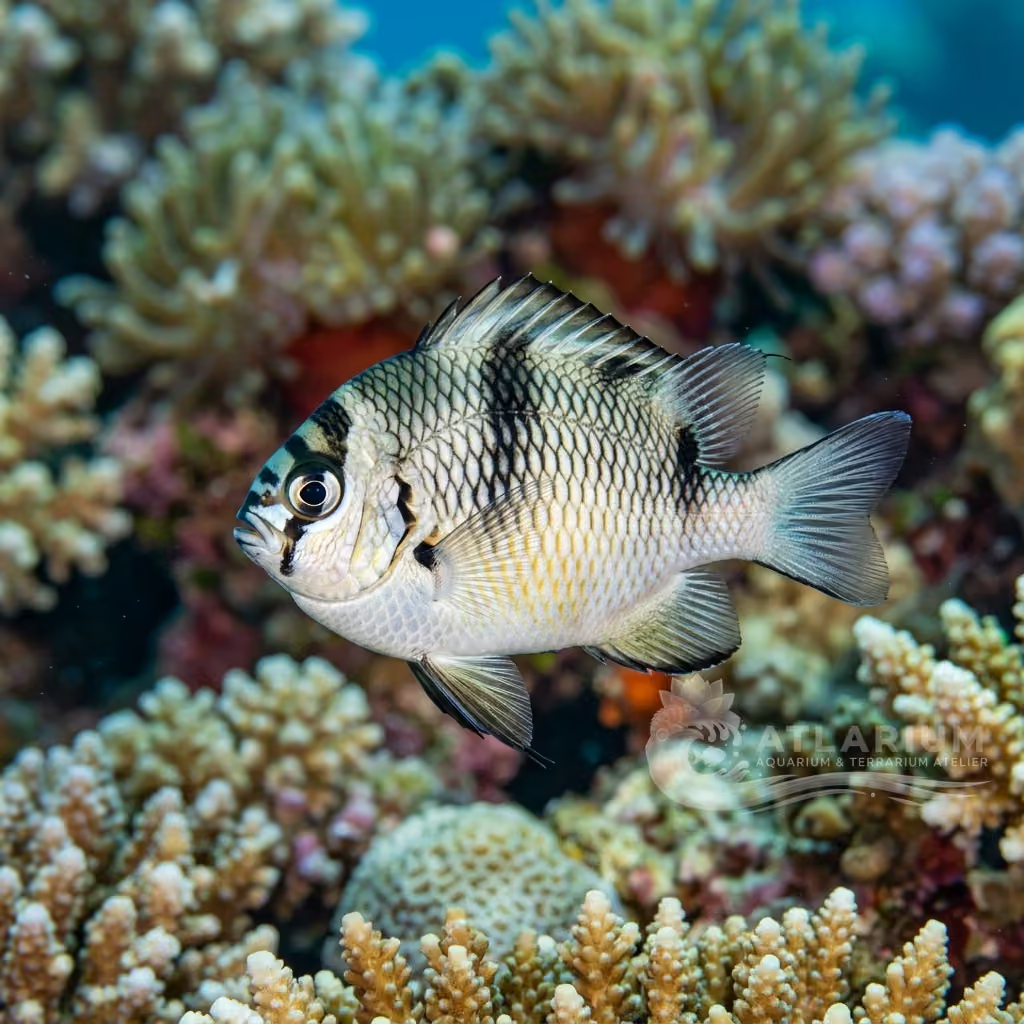
Taxonomy and Morphology: Belonging to the family Pomacentridae, subfamily Chrominae, genus Dascyllus. It features a deep, circular, and strongly laterally compressed body. The eyes are large and positioned anteriorly, with a terminal mouth equipped with small conical teeth. It reaches a maximum length notable for the genus, up to about 12-13 centimeters in adulthood. The body structure is robust, and the fins are broad and strong.
Social Behavior: This species exhibits a distinct behavioral transition as it grows. As juveniles, they are gregarious and live in small groups associated with individual coral colonies. However, once they reach sexual maturity, they become extremely territorial, solitary, and aggressive. They fiercely defend an area around their shelter against any intruder, including much larger fish, divers, and even the aquarist's hand.
Coloration and Sexual Dimorphism: The coloration consists of a uniform grayish-black or very dark brown body. The distinguishing feature is a prominent round white spot located at the center of each flank and a similar white spot on the forehead between the eyes, which tends to fade with age. The scales have dark margins, creating a net-like pattern. There is no visible sexual dimorphism to the naked eye, but males are slightly larger than females.

Cuidado, criação e companheiros de tanque
Aquarium Setup: Requires an aquarium with a minimum capacity of 200 liters (approx. 50 gallons) for a single specimen. The setup must include a large amount of live rock to create visual barriers and spacious caves. Since it is an extremely territorial species, defining territories with rockwork helps limit aggression toward other fish. It is compatible with stable hard and soft corals.
Diet and Feeding: An extremely adaptable and voracious omnivore. In the aquarium, it immediately accepts any type of commercial food: pellets, flakes, frozen foods like mysis, brine shrimp, krill, and plant-based preparations like algae or spirulina. Feeding twice a day is recommended. Due to their voracity, they always secure the largest share of food at the expense of slower fish.
Water Quality: Being an incredibly hardy species, it tolerates less-than-perfect parameters, but ideal conditions are: temperature 23-26°C (73-79°F), pH 8.1-8.4, specific gravity 1.021-1.025, and controlled nitrates. A standard filtration system with a protein skimmer is sufficient. It tolerates adaptation to new tanks and handles parameter shifts better than most other marine fish.
Compatibility and Cohabitation: The high aggression of adults is the limiting factor. It should not be housed with shy, slow, or small fish such as pipefish, gobies, or clownfish. Ideal tankmates are large and robust fish like surgeonfish, triggerfish, groupers, or large wrasses. Avoid introducing other damselfishes in the same tank unless it is larger than 500 liters.
Aquarium Breeding: Breeding in the aquarium is possible. They are demersal spawners: the male carefully cleans a portion of rock to attract the female. After the adhesive eggs are laid, the male fertilizes and guards them with extreme aggression, attacking any intruder and fanning them with his fins. Eggs hatch in about 3-4 days, and larvae require rotifers for growth.
Risks and Diseases: It is an exceptionally resilient fish that rarely falls ill, often surviving infections that would be fatal to other species. The main risk is the injury it can inflict on other fish due to its temperament. It is recommended to introduce this fish as the absolute last inhabitant in the tank to prevent it from claiming the entire available space.

Origem e distribuição geográfica
Dascyllus albisella is a tropical marine fish endemic to the Hawaiian Islands and Johnston Atoll. It inhabits coral reefs, protected lagoons, and shallow tidal flats at depths ranging from 1 to 20 meters. Juveniles are almost always found associated with colonies of branching stony corals like Pocillopora meandrina and Porites compressa, or sometimes within the tentacles of sea anemones for shelter. As they mature into adults, they move to outer reef slopes and open rocky formations.
Origem
Oceanos tropicais e recifesAmérica do Norte

Perfil de peixe
- Temperamento
- Territorial
- The temperament of Dascyllus albisella is notoriously bold, highly territorial, and frequently pugnacious toward tank mates. While juveniles might seem cute and docile, they quickly develop an aggressive disposition as they grow into maturity. They will relentlessly defend their chosen territory, even challenging fish much larger than themselves or the aquarist's hand during maintenance. Because of this feisty nature, they are generally considered unsuitable for peaceful community tanks with delicate species. They should only be kept with robust companions capable of ignoring or withstanding their constant posturing.
- Dieta
- Omnivore
- As an omnivore, Dascyllus albisella accepts a wide variety of foods in the home aquarium with tremendous enthusiasm. In the wild, they naturally forage on zooplankton, benthic algae, and small benthic invertebrates. A well-rounded captive diet should include high-quality marine flakes, pellets, and frozen offerings like mysis shrimp or enriched brine shrimp. Supplementing their diet with occasional herbivore preparations will help maintain their overall health and vibrant coloration. Providing variety ensures they receive the necessary vitamins and minerals for long-term vitality.
- Expectativa de vida
- 10-15 years
- Tamanho adulto
- 12 cm
- Proporção sexual
- Flexible
- In the wild, Dascyllus albisella forms complex social hierarchies typically consisting of a dominant male and a harem of several females. When introducing them to a home aquarium, it is usually best to keep a single individual or a known mated pair, unless the tank is exceptionally large. Attempting to keep multiple adult males in the same enclosure will almost inevitably result in severe territorial disputes and lethal aggression. If a group must be kept, purchasing a small odd-numbered group of juveniles and allowing them to establish their own pecking order is the safest approach. The dominant individual will likely transition into the male role within the group.
- Frequência de alimentação
- Twice daily
- To keep their energy levels up and reduce territorial aggression, this active damselfish should be fed two to three times per day. Small, frequent feedings are much preferred over a single large meal, as it mimics their natural continuous foraging behavior on the reef. Ensure that the food offered is consumed within a few minutes to prevent excess decay and water quality degradation. If kept in a community tank with slower eaters, scatter the food across the surface to ensure everyone gets a fair share. Consistent feeding schedules also help to establish a harmonious environment among tank mates.
- Carga biológica
- Medium to High
- Dascyllus albisella generates a moderate bioload for its size, largely due to its high activity level and hearty appetite. In a well-established aquarium, the filtration system can usually handle their waste output without significant difficulty. However, keeping them in groups or pairs will compound their biological impact, necessitating regular water changes. Robust protein skimming and mechanical filtration are highly recommended to maintain pristine water conditions. Monitoring nitrate levels is important if keeping a sizable shoal in a confined space.
- Fluxo
- Moderate
- The Hawaiian Dascyllus thrives in aquariums that provide moderate to strong water flow, closely replicating the dynamic currents of its native reef habitats. Vigorous water movement ensures excellent oxygenation and keeps the fish physically active as they swim against the current. It also helps to suspend food particles in the water column, stimulating their natural planktivorous feeding response. Providing areas of both high flow and somewhat calmer flow behind live rock structures gives them options to rest. Stagnant water should be strictly avoided to prevent lethargy and health issues.
- Risco de salto
- No
- Reprodução
- Oviparous
- Breeding this species in captivity is certainly possible and frequently occurs in well-maintained home aquariums. They are demersal spawners, where the male actively cleans a patch of substrate or a flat rock to entice the female. Once the eggs are deposited and fertilized, the male will rigorously guard the nest against any intruders and aerate the eggs by fanning them. Hatching typically happens after several days, releasing tiny pelagic larvae into the water column. However, successfully rearing the microscopic fry demands specialized feeding protocols with rotifers and greenwater cultures.
- Compatibilidade e companheiros de tanque
- Species only
- This species can be quite territorial and aggressive, especially as it matures and establishes its domain. It is best housed with larger or equally assertive tank mates like moderately aggressive wrasses, angelfish, or tangs. Small, timid, or slow-moving fish may be constantly harassed or bullied by adult individuals. When keeping them with invertebrates, they are generally reef safe and will not bother corals, though they might occasionally annoy small crustaceans. Careful observation is required when introducing new additions to an established tank containing this fish.
- Nível do tanque
- All levels
- These damselfish predominantly occupy the middle to lower levels of the water column in an aquarium setting. They strongly associate with coral heads, branching structures, or elaborate rock formations, using them as safe havens to retreat into when feeling threatened. While they will venture higher up during feeding time, their natural inclination is to stay relatively close to the safety of the reef structure. Providing abundant hiding spots and caves will encourage them to display more natural and confident behaviors. An aquascape with a mix of open swimming space and dense rockwork is ideal for their psychological comfort.

Modelos e parâmetros científicos
FishBase
Acesso aos dados científicos oficiais da espécie
FishBase v25.04Dados sincronizados em: 15/06/2026
- Nível trófico
- 3,1 ± 0,3 se
- Resiliência
- Alta (menos de 15 meses)
- Unicidade filogenética (PD50)
- 0.5005
- Relação bayesiana comprimento-peso
- a = 0.02089, b = 2.98
- VulnerabilidadeVulnerabilidade baixa (10 / 100)

Espécies relacionadas
Recomendações agrupadas por parentes próximos, escolhas de acompanhantes e cuidados semelhantes.