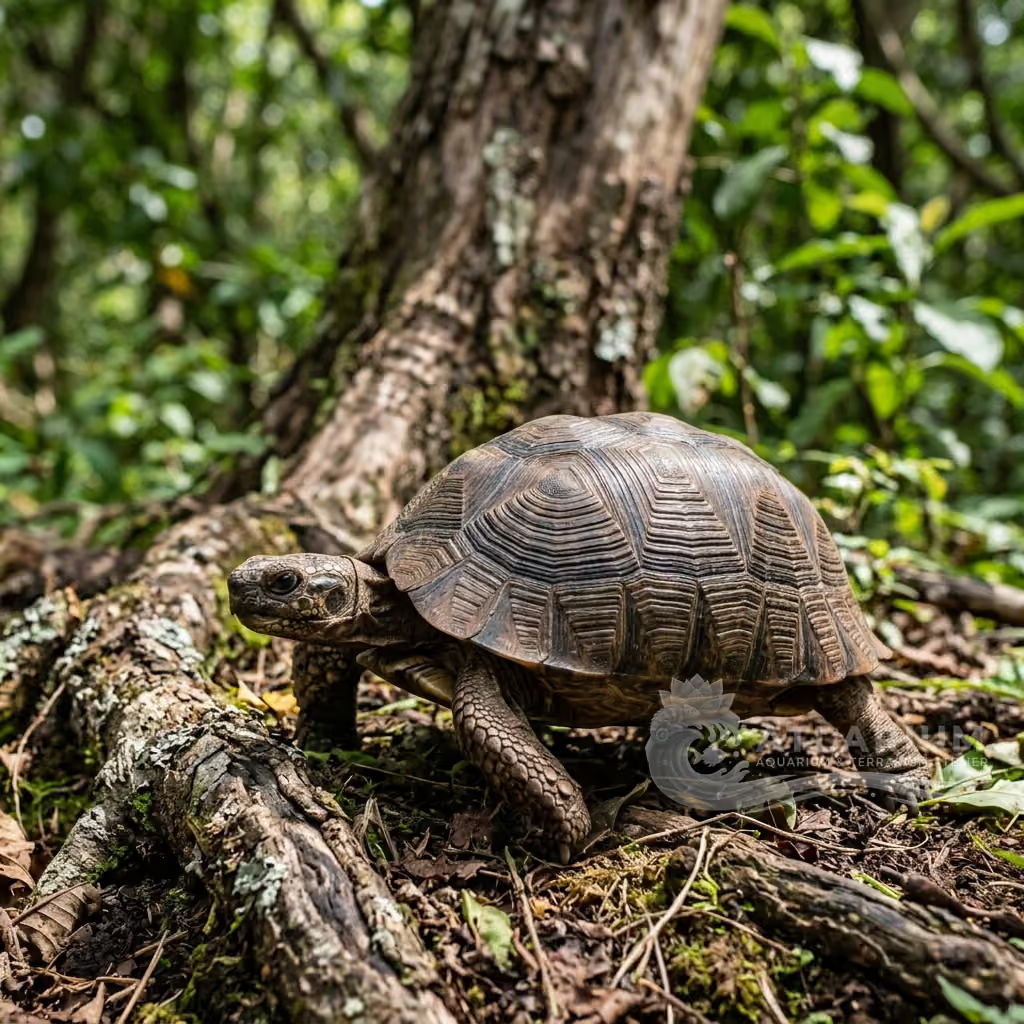
Leopard tortoise
Stigmochelys pardalis
The leopard tortoise is a large terrestrial species native to African savannas. Highly tolerant of daytime heat, it needs a spacious, dry grazing habitat and high fiber.
Environnement
Terrestre
Humidité
40 - 60 %
Température diurne
15 - 32 °C
Température ambiante
15 - 32 °C
Température nocturne
21 - 23 °C
Point de repos chauffant
32 °C
Taille adulte
50 cm
Enclos minimal
>= 1 200 L

Description de l'espèce
Geographical Origin and Habitat: Stigmochelys pardalis is native to the eastern and southern regions of Africa, ranging from Sudan southward to South Africa. It primarily inhabits semi-arid savannas, grasslands, dry brushlands, and rocky hillsides. It is a strictly terrestrial species that covers large distances to graze, tolerating high daytime temperatures and seeking refuge in abandoned burrows or under thorny shrubs at night.
Taxonomy and Genetics: Belongs to the family Testudinidae and is the sole member of the genus Stigmochelys (historically placed in the genus Geochelone). Genetic studies identify two primary subspecies: Stigmochelys pardalis pardalis and Stigmochelys pardalis babcocki, with the latter being the most common in captivity, characterized by a slightly smaller average size and distinct juvenile patterns.
Behavior and Habits: A diurnal, solitary, and herbivorous animal. It spends the early hours basking in the sun to thermoregulate before foraging. It does not undergo true winter hibernation; however, during cold winter months or extreme dry seasons, it may experience a state of aestivation or significantly reduced activity. Males can display territorial dominance, attempting to flip rivals.
Morphology: One of the largest tortoise species in the world. The carapace is high and domed, with adult shell lengths typically reaching 40 to 60 centimeters and weights ranging from 15 to 40 kilograms. The defining feature is the leopard-like shell pattern, consisting of a cream-yellow background decorated with highly irregular black spots, dashes, and streaks.

Soins, reproduction et cohabitation
Terrarium Setup: Given their large adult size, secure outdoor pens (in warm climates) are the best housing method. For indoor housing of juveniles or during cold winters, an exceptionally large enclosure is required (minimum 150x80 cm for young tortoises). The substrate must be dry and well-draining, such as a mix of topsoil, sand, and orchid bark. Provide robust, large hiding boxes.
Lighting and Heating: Requires high-output UVB lighting (10.0 UVB bulbs or metal halide lamps) active for 12 hours daily to facilitate calcium absorption. Establish a localized basking spot of 35-38 °C using a heating bulb, while maintaining ambient daytime temperatures of 26-29 °C and night temperatures not dropping below 18-20 °C.
Humidity and Hydration: Prefers dry ambient conditions (30-50% humidity). However, hatchlings and juveniles require access to a humid hide (60-70% humidity) to prevent carapace pyramiding. Provide a very shallow water dish for drinking and soaking, ensuring the water level is shallow enough to prevent drowning and is changed daily.
Feeding and Supplementation: Strictly herbivorous, high-fiber, calcium-rich, and low-protein diet. Feeding should consist of fresh grasses, weeds, dandelion, clover, plantain, grass hay, hibiscus leaves, and spineless opuntia cactus pads. Avoid fruits, watery vegetables, and dog/cat foods. Supplement with pure calcium powder 3 times weekly and calcium with D3 once weekly.
Compatibility: Generally solitary. Multiple individuals can be kept together in massive outdoor enclosures, but adult males will fight and try to flip each other, so it is best to keep only one male per group of females or house them individually. Never allow contact with dogs, cats, or other household pets.
Health and Common Diseases: Common health issues include shell pyramiding (caused by low humidity or high protein diets), Metabolic Bone Disease (MBD) due to lack of calcium or UVB, and respiratory infections triggered by cold, damp drafts. Regular health checkups with an experienced reptile veterinarian are essential.

Origine et répartition géographiques
Stigmochelys pardalis is native to the eastern and southern regions of Africa, ranging from Sudan southward to South Africa. It primarily inhabits semi-arid savannas, grasslands, dry brushlands, and rocky hillsides. It is a strictly terrestrial species that covers large distances to graze, tolerating high daytime temperatures and seeking refuge in abandoned burrows or under thorny shrubs at night.
Origine
Afrique et Madagascar

Profil de reptile
- Régime alimentaire
- Herbivore
- The Leopard tortoise is a large, grazing herbivore perfectly suited to the arid savannas and semi-deserts of Eastern and Southern Africa. Their diet revolves almost completely around mixed grasses, thistles, prickly pear cacti, and broadleaf weeds. They require a massive amount of roughage and calcium to support the rapid growth of their heavy, domed shells. Offering a high-protein diet or excessive sugary fruits can lead to severe metabolic diseases and shell pyramiding.
- Taille adulte
- 50 cm
- Mode de vie/microhabitat
- Terrestrial
- A completely terrestrial and large-growing species that requires massive amounts of space. They are native to the savannas and semi-deserts of Eastern and Southern Africa. They do not dig extensively but need a highly fibrous diet of grasses and broadleaf weeds.
- Cycle d'activité
- Diurnal
- Leopard tortoises are strictly diurnal, grazing extensively throughout the day. They bask in the morning sun to raise their body temperature before foraging for grasses and weeds. During extreme heat, they will shelter under large bushes or in abandoned burrows.
- Sociabilité
- Solitary
- Ranking among the largest tortoise species on the African continent, they roam vast distances across grasslands in search of food and water. They do not burrow but instead rely on their substantial size and heavy, heavily patterned carapace for protection against predators. They are primarily active during daylight hours, preferring to rest under thick brush or thorny acacia bushes when temperatures peak. Though generally placid and slow-moving, they exhibit impressive strength and determination when traversing rocky or steep terrain.
- Reproduction
- Oviparous
- Courtship involves the male relentlessly tracking the female, occasionally ramming her shell to coax her into mating. A large, healthy female can lay several clutches per season, each containing 5 to 30 roughly spherical eggs. She digs an unusually deep, flask-shaped nest to ensure the eggs are insulated from extreme surface temperatures. Incubation takes an exceptionally long time, sometimes spanning 9 to 14 months, depending entirely on seasonal rainfall and heat.
- Tolérance aux manipulations
- Tolerant
- They are generally very docile and placid tortoises. Due to their large size as adults, they cannot be picked up easily, but they tolerate gentle human presence well. They seldom bite and usually retreat into their shell if frightened.
- Brumation
- Non requise
- Leopard tortoises do not hibernate or brumate. They originate from regions where temperatures remain relatively warm year-round. In captivity, they must be provided with continuous heat and a basking spot, even during the winter months.
- Mue
- Regular
- Adults thrive in low to moderate humidity, shedding their skin in very fine, imperceptible flakes. However, hatchlings and juveniles require access to a humid hide to ensure smooth shell growth and prevent a condition known as 'pyramiding'.

Galerie d'images
Images sous licence liées à l'espèce ou, lorsqu'elles sont indiquées, au taxon représentatif le plus proche.

Espèces associées
Recommandations regroupées par proches parents, compagnons et soins similaires.