Travancore Tortoise
Indotestudo travancorica
A rare tropical tortoise endemic to southern India, highly sensitive to stress and requiring a humid, shaded forest terrarium with an omnivorous diet.
Environnement
Terrestre
Humidité
70 - 85 %
Température diurne
20 - 32 °C
Température ambiante
20 - 32 °C
Température nocturne
21,5 - 23,5 °C
Point de repos chauffant
32 °C
Taille adulte
32 cm
Enclos minimal
>= 600 L

Description de l'espèce
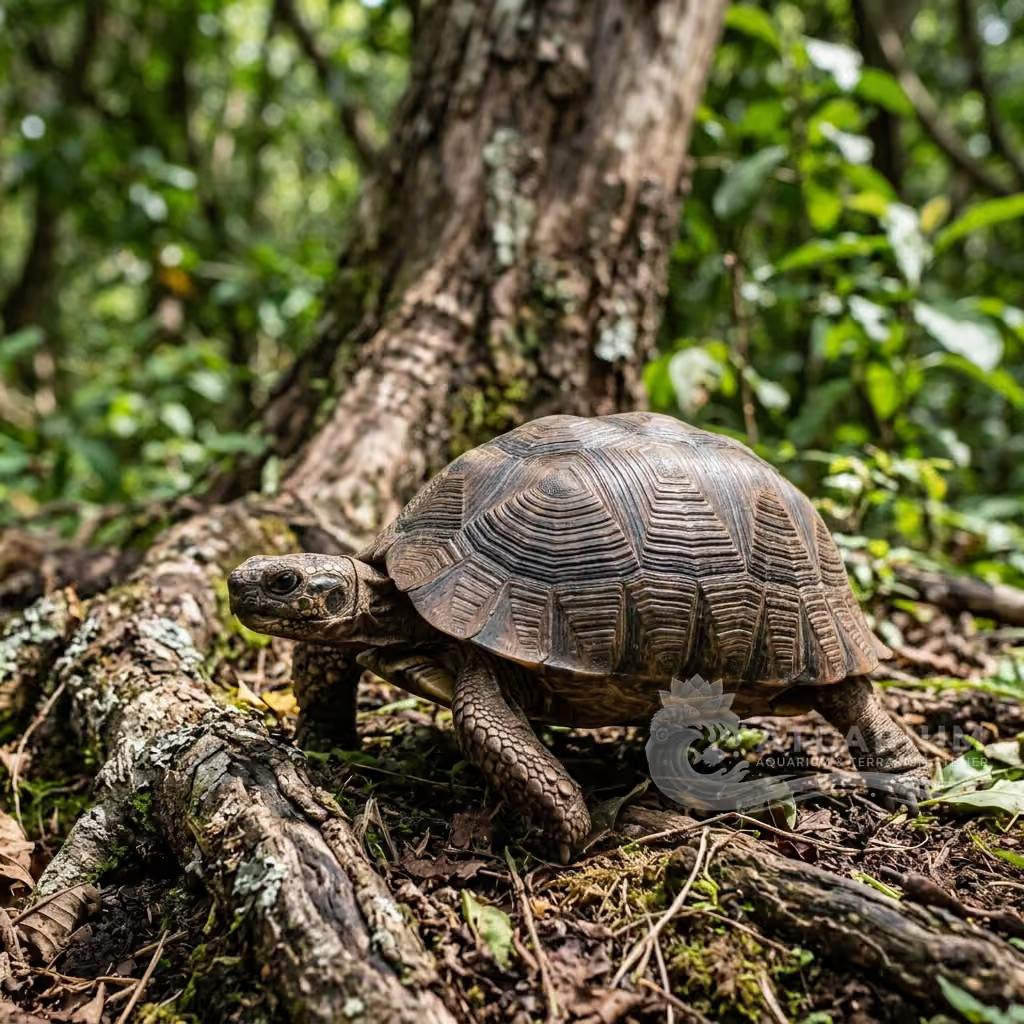
Geographical Origin and Habitat: The Travancore tortoise (Indotestudo travancorica) is a forest-dwelling species endemic to the moist deciduous and evergreen forests of the Western Ghats in southwestern India (states of Kerala, Karnataka, and Tamil Nadu). It inhabits the leaf litter of primary and secondary rainforests at altitudes between 100 and 1000 meters, preferring shaded rocky areas, forest streams, and undergrowth.
Taxonomy and Genetics: Formally described by Boulenger in 1907, it belongs to the Testudinidae family, genus Indotestudo. It is genetically and morphologically closely related to Indotestudo forstenii and Indotestudo elongata. Modern genetic studies have confirmed its status as a distinct species with no recognized subspecies, resolving previous debates about its taxonomy.
Behavior and Habits: It is primarily a crepuscular and nocturnal species, exhibiting peak activity during the monsoon season. During the heat of the day, it remains hidden under leaf litter, inside hollow logs, or in rocky crevices to prevent water loss. It possesses a shy and solitary temperament, retreating into its shell immediately when threatened.
Morphology: The carapace is elongated and moderately domed, dark brown to blackish in color with irregular yellow markings on each scute. Adults reach a carapace length of 25 to 33 cm. A key distinguishing morphological feature is the absence of a nuchal scute and the coloration of the head skin, which turns bright pink or reddish during the breeding season.

Soins, reproduction et cohabitation
Terrarium Setup: Requires an exceptionally large indoor enclosure or a dedicated room, with minimum dimensions of 200x100 cm for a single adult. The substrate must be at least 15-20 cm deep, consisting of a moist mix of organic soil, coconut coir, and cypress mulch, covered with dry leaf litter and sphagnum moss. Provide multiple hiding spots and visual barriers like non-toxic plants and large logs.
Lighting and Heating: As a forest floor dweller, it dislikes bright glare. Maintain ambient daytime temperatures of 26-28°C with a localized warm basking spot of 32°C using a ceramic heat emitter or a shaded spot lamp. Night temperatures should drop to 20-22°C. A low-intensity linear UVB lamp (5%) must be provided on a 10-12 hour daily cycle.
Humidity and Hydration: Requires high, stable humidity levels between 70% and 85%. Mist the enclosure thoroughly once or twice daily and keep the substrate damp but not waterlogged. A large, shallow water dish is mandatory, allowing the tortoise to soak fully but shallow enough to prevent drowning. Regular warm water soaks are highly beneficial.
Feeding and Supplementation: Offers a varied diet reflecting its omnivorous natural habits. Feed primarily leafy greens, dandelion, hibiscus leaves, endive, and mushrooms, supplemented with occasional fruits (mango, papaya). Once every two weeks, offer small amounts of low-fat animal protein such as earthworms, snails, or high-quality tortoise pellets. Dust food with calcium and D3 twice weekly.
Compatibility: Strictly solitary. Males are territorial and can exhibit severe aggression toward other males or stress females with constant mating attempts. Cohabitation is only possible in huge, well-structured outdoor pens or massive indoor setups with multiple feeding and basking stations to prevent bullying.
Health and Common Diseases: Highly susceptible to respiratory infections and dehydration if kept in dry conditions. Lack of sufficient calcium and UVB leads to metabolic bone disease (MBD) and severe shell pyramiding. Wild-caught or newly imported specimens frequently harbor heavy parasite loads, requiring prompt veterinary screening and deworming.

Origine et répartition géographiques
The Travancore tortoise (Indotestudo travancorica) is a forest-dwelling species endemic to the moist deciduous and evergreen forests of the Western Ghats in southwestern India (states of Kerala, Karnataka, and Tamil Nadu). It inhabits the leaf litter of primary and secondary rainforests at altitudes between 100 and 1000 meters, preferring shaded rocky areas, forest streams, and undergrowth.
Origine
Asie du Sud et du Sud-Est

Profil de reptile
- Régime alimentaire
- Herbivore
- The Travancore Tortoise is primarily an omnivorous species, though its diet consists heavily of plant matter in its natural habitat. It readily feeds on a variety of grasses, fallen fruits, leaves, and fungi found on the forest floor. Occasionally, it may also consume small invertebrates, carrion, and insects to supplement its protein intake. In captivity, a balanced mix of dark leafy greens, weeds, and occasional fruit pieces ensures optimal health.
- Taille adulte
- 32 cm
- Mode de vie/microhabitat
- Terrestrial
- A completely terrestrial forest species endemic to the Western Ghats, it relies heavily on a damp, densely vegetated forest floor environment for food, moisture, and camouflage.
- Cycle d'activité
- Crepuscular
- Most active during the dim light of dusk and dawn, it spends the bulk of the day resting beneath leaf litter or dense foliage to escape the intense heat and sunlight.
- Sociabilité
- Solitary
- This species is predominantly terrestrial and prefers the dense, moist undergrowth of evergreen forests. It is most active during the early morning and late afternoon, seeking shelter under logs or deep leaf litter during the hottest parts of the day. They are relatively solitary creatures, mostly interacting with others only during the breeding season. Their dark coloration provides excellent camouflage against the shaded forest floor, protecting them from potential predators.
- Reproduction
- Oviparous
- Breeding typically occurs during the wetter months when humidity and temperatures are optimal. Females lay relatively small clutches of 1 to 5 eggs in a shallow nest dug into soft soil or leaf litter. Incubation can take several months, heavily dependent on the ambient environmental temperature and moisture levels. The hatchlings are entirely independent from birth and must navigate the forest floor to find their first meals.
- Tolérance aux manipulations
- Tolerant
- It is generally docile but naturally shy. Frequent handling can lead to chronic stress, so interaction is best limited to visual appreciation and necessary health checks.
- Brumation
- Non requise
- This tropical forest tortoise does not undergo brumation. It requires consistently warm temperatures and stable conditions throughout the year.
- Mue
- Periodic
- It sheds the skin on its limbs and neck continuously in small flakes. A high-humidity environment is absolutely essential to prevent severe dehydration and to support proper scute and skin health.

Espèces associées
Recommandations regroupées par proches parents, compagnons et soins similaires.