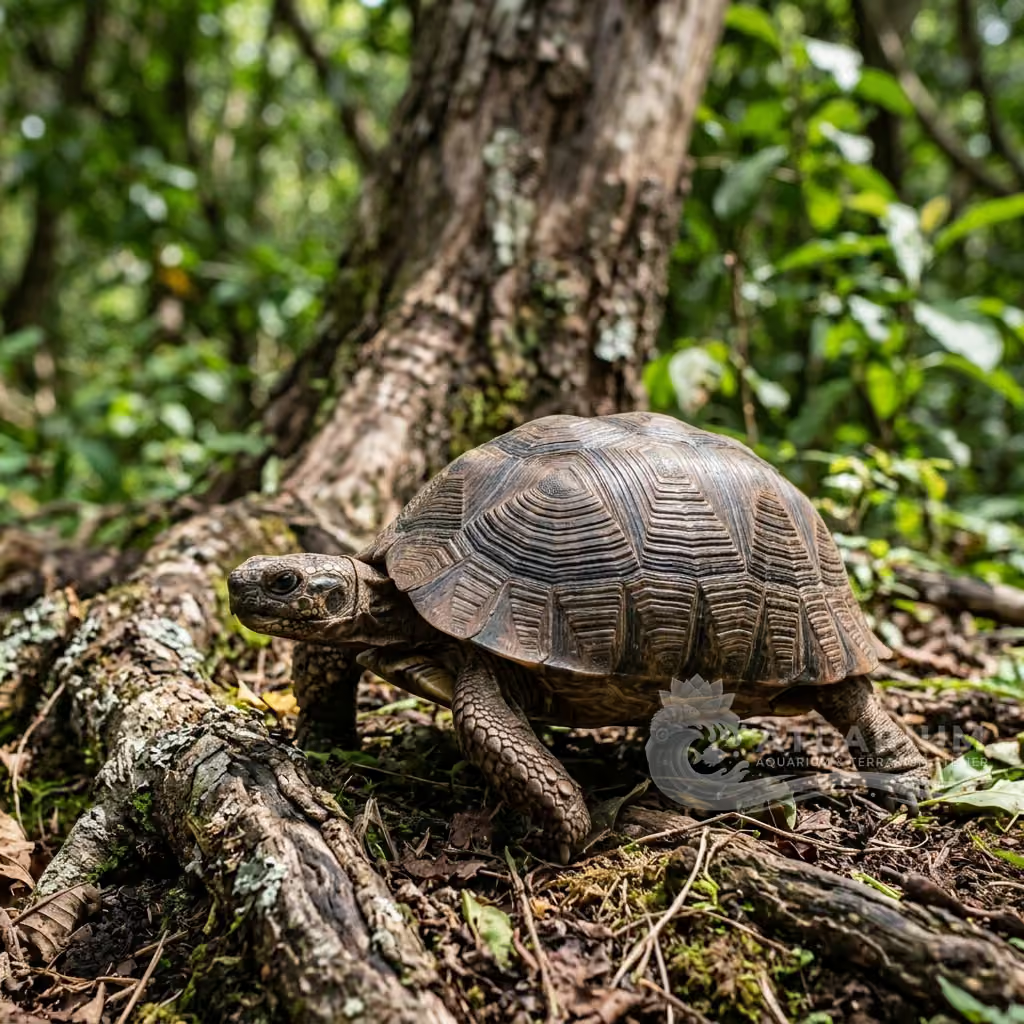
Natal hinge-back tortoise
Kinixys natalensis
A primitive hinge-back tortoise from southeastern Africa, favoring rocky hillsides and dry savannas. Requires an indoor enclosure with rock hides and moderate UVB lighting.
Environnement
Terrestre
Humidité
50 - 70 %
Température diurne
15 - 30 °C
Température ambiante
15 - 30 °C
Température nocturne
19 - 21 °C
Point de repos chauffant
30 - 32 °C
Taille adulte
14 cm
Enclos minimal
>= 200 L

Description de l'espèce
Geographical Origin and Habitat: This species is native to southeastern Africa, with a distribution range encompassing eastern South Africa (KwaZulu-Natal, Mpumalanga), Eswatini, and southern Mozambique. It inhabits rocky hillsides, dry thorny savannas, and semi-arid scrublands, preferring areas with abundant rocky crevices and low scrub for shelter.
Taxonomy and Genetics: Belonging to the family Testudinidae and the genus Kinixys, which is characterized by a hinge on the rear of the carapace. *Kinixys natalensis* is considered one of the most primitive species within the genus, exhibiting a less flexible hinge compared to its relatives. No subspecies are currently recognized.
Behavior and Habits: Diurnal and crepuscular, this tortoise is highly active during the warm rainy season when food is abundant. During the dry, cold winter months, it undergoes aestivation or brumation, retreating deep into rocky crevices or burrowing under leaf litter to protect itself from temperature extremes.
Morphology: It is a small tortoise, with adults rarely exceeding 15 centimeters in straight carapace length. The carapace is somewhat flattened and coloration ranges from yellow-brown to olive, with concentric black or dark brown markings on each scute. The characteristic rear hinge allows the tortoise to close the back of its shell.

Soins, reproduction et cohabitation
Terrarium Setup: Requires a spacious indoor enclosure (minimum 48x24 inches for an adult) or a secure outdoor enclosure during warm weather. The substrate should be a mix of topsoil, peat moss, and sand, kept slightly damp underneath. Provide plenty of secure rock piles, hollow logs, and artificial caves to simulate rocky terrain.
Lighting and Heating: Provide a temperature gradient with a cool end of 22-24°C and a warm basking zone of 30-32°C. Nighttime temperatures can drop to 18°C. A high-quality 10.0 UVB light source is mandatory, kept on for 10-12 hours daily to facilitate vitamin D3 synthesis and prevent skeletal abnormalities.
Humidity and Hydration: Maintain relative humidity between 50% and 70%, misting the enclosure daily to replicate morning dew. A shallow, sturdy water dish must be provided at all times, allowing the tortoise to drink and soak without risk of drowning, which also helps stimulate defecation.
Feeding and Supplementation: Omnivorous diet. Feed about 80% leafy greens and weeds (dandelion, clover, plantain, endive) and 20% animal protein (earthworms, snails, dubia roaches, gutloaded crickets). Dust the food with calcium powder three times a week and a multivitamin with D3 once a week.
Compatibility: Can be housed individually or in small groups consisting of one male and multiple females in a large enclosure. Avoid housing males together, as they will fight for dominance and territory, leading to stress, physical trauma, and potential injuries.
Health and Common Diseases: Susceptible to respiratory infections if exposed to cold drafts or excessive dampness. Metabolic Bone Disease (MBD) is a concern if calcium intake or UVB exposure is insufficient. Regular fecal checks should be performed to monitor for intestinal parasites.

Origine et répartition géographiques
This species is native to southeastern Africa, with a distribution range encompassing eastern South Africa (KwaZulu-Natal, Mpumalanga), Eswatini, and southern Mozambique. It inhabits rocky hillsides, dry thorny savannas, and semi-arid scrublands, preferring areas with abundant rocky crevices and low scrub for shelter.
Origine
Afrique et Madagascar

Profil de reptile
- Régime alimentaire
- Herbivore
- The Natal hinge-back tortoise is an omnivore, leaning heavily towards a varied diet of vegetation, fallen fruits, and invertebrates found in its rocky habitat. In the wild, they actively hunt for snails, millipedes, and insects, which supply necessary protein and calcium. They also browse on succulents and native weeds. Providing a proper balance of plant matter and animal protein is necessary for their sustained health in captivity.
- Taille adulte
- 14 cm
- Mode de vie/microhabitat
- Terrestrial
- A robust, terrestrial tortoise endemic to rocky escarpments and dry bushlands. It uniquely possesses a 'hinge' at the back of its carapace that allows it to pull down and protect its rear legs.
- Cycle d'activité
- Diurnal
- This tortoise is diurnal, choosing to forage and bask during the day, though it favors overcast conditions over bright, blazing sun, typical of its mountainous rocky habitat.
- Sociabilité
- Solitary
- Endemic to rocky, thorny scrublands, this species utilizes a unique hinged carapace to protect its hind legs and tail from predators. They are highly secretive and shy, preferring to remain hidden amongst rocks and dense vegetation for most of the day. They display highest activity levels during the early morning or immediately following heavy rain showers. If disturbed, their primary defense mechanism is to snap the rear of their shell tightly shut and remain motionless.
- Reproduction
- Oviparous
- Breeding occurs typically during the southern hemisphere's summer, associated with increased rainfall and humidity. Females lay small clutches, generally numbering 2 to 4 elongated eggs, buried safely in secluded sandy or loamy spots. The eggs undergo a relatively long incubation period, heavily influenced by seasonal temperature shifts. Hatchlings are cryptic and instinctively hide under leaf litter to evade predators immediately after emerging.
- Tolérance aux manipulations
- Tolerant
- Generally docile but inherently shy. If handled roughly, they will clamp shut their hinged shell. They should be picked up minimally and with great care.
- Brumation
- Non requise
- Originating from eastern South Africa where winters can be cold, this species undergoes a distinct brumation period, burying itself in debris until warmer spring weather arrives.
- Mue
- Regular
- Shedding is standard for tortoises, occurring constantly in tiny flakes. A moderate ambient humidity level is sufficient, although regular access to clean soaking water is beneficial.

Espèces associées
Recommandations regroupées par proches parents, compagnons et soins similaires.