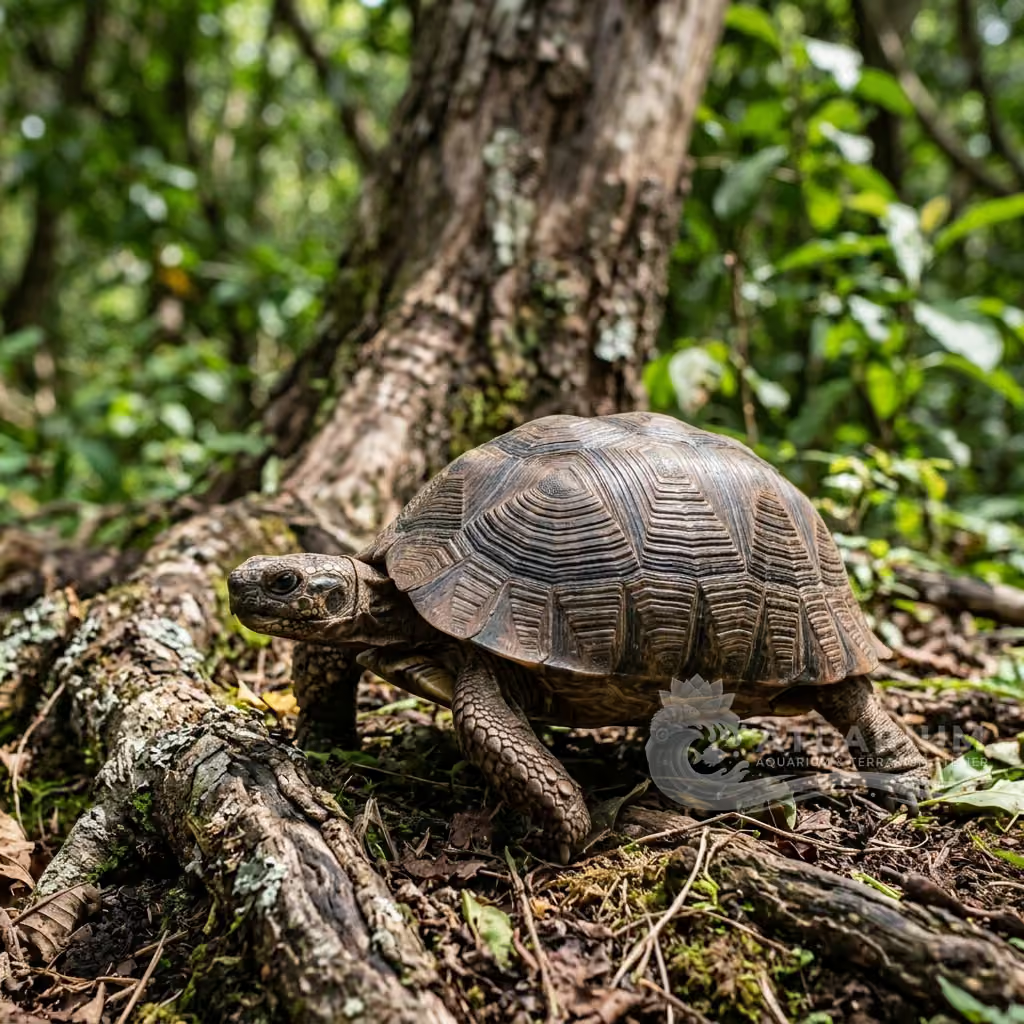
African Spurred Tortoise
Centrochelys sulcata
The third-largest tortoise species in the world, native to the African Sahel. It grows rapidly and requires massive, secure outdoor enclosures and a strictly high-fiber herbivorous diet.
Environnement
Terrestre
Humidité
30 - 50 %
Température diurne
28 - 35 °C
Température ambiante
28 °C
Température nocturne
20 - 25 °C
Point de repos chauffant
38 - 40 °C
Taille adulte
80 cm
Enclos minimal
>= 5 000 L

Description de l'espèce
Geographical Origin and Habitat: Native to the semi-arid Sahel region of sub-Saharan Africa, stretching from Senegal and Mauritania eastward through Mali, Niger, Chad, Sudan, to Eritrea and Ethiopia. It inhabits dry savannas, thorn scrublands, and desert fringes characterized by extreme temperature fluctuations. They excavate deep burrows up to 4 meters deep to escape daytime heat and nighttime cold.
Taxonomy and Genetics: Belongs to the class Reptilia, order Testudines, family Testudinidae, and genus Centrochelys (historically placed in the genus Geochelone). Described by Miller in 1779. Genetic research indicates a highly uniform genetic structure across its vast range, with no recognized subspecies, though wild populations are threatened by habitat loss and overexploitation.
Behavior and Habits: Diurnal, highly active, and exceptionally strong. They are powerful burrowers, spending hours digging extensive tunnel systems. Males are territorial and aggressive, using their enlarged gular scutes to ram and attempt to flip rivals over. They do not hibernate, but will aestivate during the hottest, driest months in their deep burrows.
Morphology: The largest continental tortoise and the third-largest overall. Adult males can reach carapace lengths of 80-85 cm (31-33 inches) and weigh over 80-100 kg (170-220 lbs). The carapace is sandy-yellow to brownish-tan, with highly defined growth rings. The forelimbs are covered in heavy, overlapping scales, and the hind legs feature prominent spurs.

Soins, reproduction et cohabitation
Terrarium Setup: While hatchlings can start in large indoor tortoise tables (minimum 150x80 cm), they grow rapidly. Adults require large, highly secure outdoor yards with fencing sunk at least 40-50 cm (18 inches) into the ground to prevent them from digging out. A heated indoor shed or greenhouse is mandatory for colder winter months.
Lighting and Heating: Requires high temperatures and intense lighting. In the winter enclosure, keep ambient temperatures at 24-28°C (75-82°F) with a basking area of 35-38°C (95-100°F). Nighttime temperatures should not drop below 18°C (64°F). Outdoor tortoises need access to direct sunlight; indoor setups must utilize high-output UVB lamps.
Humidity and Hydration: Prefers dry air (40-50% humidity). However, hatchlings are prone to dehydration and should be soaked in shallow warm water 2-3 times weekly. Provide a sturdy, shallow water tray that the tortoise can easily walk into to drink and soak, ensuring it cannot tip over.
Feeding and Supplementation: Strictly herbivorous, high-fiber, and low-protein diet. The diet should consist of 75-80% grasses and hays (Timothy hay, orchard grass), weeds, dandelion, clover, hibiscus leaves, and spineless Opuntia cactus pads. Absolutely avoid fruits, grains, and animal proteins. Supplement with calcium powder regularly.
Compatibility: Adult males are highly aggressive and cannot be housed together. They will fight incessantly, leading to severe stress or injury. A single male can be kept with several females in a very large outdoor area, or females can be housed together if adequate space and sightline blocks are provided.
Health and Common Diseases: Pyramiding of the shell is a major issue caused by high-protein diets, lack of calcium/UVB, or lack of humidity during growth. Respiratory infections occur if exposed to damp, cold drafts. Metabolic Bone Disease (MBD) and bladder stones are common if hydration and calcium-to-phosphorus ratios are neglected.

Origine et répartition géographiques
Native to the semi-arid Sahel region of sub-Saharan Africa, stretching from Senegal and Mauritania eastward through Mali, Niger, Chad, Sudan, to Eritrea and Ethiopia. It inhabits dry savannas, thorn scrublands, and desert fringes characterized by extreme temperature fluctuations. They excavate deep burrows up to 4 meters deep to escape daytime heat and nighttime cold.
Origine
Afrique et Madagascar

Profil de reptile
- Régime alimentaire
- Herbivore
- The African Spurred Tortoise is a massive, grazing herbivore adapted to harsh Sahelian environments. Its diet must consist almost entirely of coarse, dry grasses, hays (such as Timothy or orchard grass), and broadleaf weeds. Because of their incredibly rapid growth rate, providing excessive proteins, commercial pellets, or fruits can quickly lead to devastating metabolic bone disease and severe shell pyramiding.
- Taille adulte
- 80 cm
- Mode de vie/microhabitat
- Terrestrial
- This animal leads a terrestrial lifestyle, predominantly dwelling on the ground rather than climbing trees or spending time in the water. It traverses the forest floor, grasslands, or desert terrain in search of food, mates, and secure hiding spots beneath rocks, logs, or dense underbrush. In a terrarium setting, providing a large horizontal footprint is essential, along with a deep, appropriate substrate that allows for natural foraging and resting behaviors. While they may occasionally climb low-lying obstacles, their enclosure should be designed to maximize usable floor space.
- Cycle d'activité
- Diurnal
- This species exhibits a predominantly diurnal activity pattern, meaning it is most active during the daylight hours. Throughout the day, it is frequently observed exploring its enclosure, foraging for food, and actively seeking out basking spots to thermoregulate its body temperature. Providing appropriate full-spectrum lighting and adequate heat gradients during the day is critical to simulate its natural solar cycle. As evening approaches and temperatures drop, the animal will typically retreat to a secure hide or burrow to rest and conserve energy until the next morning.
- Sociabilité
- Solitary
- Despite their appealing demeanor as juveniles, these tortoises are solitary and highly territorial giants. Adult males are exceptionally combative, utilizing their gular scutes to flip rival males, which can be fatal in the hot sun. Due to their immense size and destructive strength, housing multiple adults together requires acreage, and males must be strictly separated.
- Reproduction
- Oviparous
- As an oviparous species adapted to extreme environments, the African Spurred Tortoise is a prolific breeder. Following aggressive courtship that involves severe shell ramming by the massive males, a female can lay extremely large clutches. She will excavate a deep nest cavity and deposit anywhere from 15 to 30 large, spherical eggs, occasionally producing multiple clutches throughout the breeding season.
- Tolérance aux manipulations
- Display only
- This animal is considered a display-only species, meaning it strongly dislikes being handled and becomes heavily stressed by human contact. They are either far too delicate to be handled safely or possess highly defensive traits that make interactions stressful and potentially harmful for both the animal and the keeper. Interaction should be strictly limited to visual observation through the enclosure glass, and physical handling should only occur during absolute emergencies or unavoidable health checkups. Appreciating their natural behaviors from a distance is the best approach to ensuring their well-being.
- Brumation
- Non requise
- Originating from tropical or sub-tropical climates with stable year-round conditions, this species does not undergo brumation. It requires consistently warm temperatures and proper lighting schedules regardless of the external season. Subjecting this animal to a significant temperature drop in an attempt to induce a winter cooling period can severely compromise its immune system, leading to dangerous respiratory infections, digestive failures, and potentially fatal consequences. Heat sources and environmental parameters must be rigorously monitored and maintained consistently throughout the entire year.
- Mue
- Regular
- Shedding (or molting) occurs regularly as the animal grows, with frequency decreasing as it reaches adulthood. Under normal enclosure conditions, providing a standard, moderate humidity level alongside a designated humid hide—a small, enclosed space filled with damp sphagnum moss—is entirely sufficient to facilitate a clean, complete shed. Prior to shedding, the animal's colors will appear dull, and its eyes may turn a cloudy, opaque blue. During this phase, it is crucial not to handle or feed the animal, allowing it to rest and shed its skin naturally in one uninterrupted piece.

Galerie d'images
Images sous licence liées à l'espèce ou, lorsqu'elles sont indiquées, au taxon représentatif le plus proche.

Espèces associées
Recommandations regroupées par proches parents, compagnons et soins similaires.