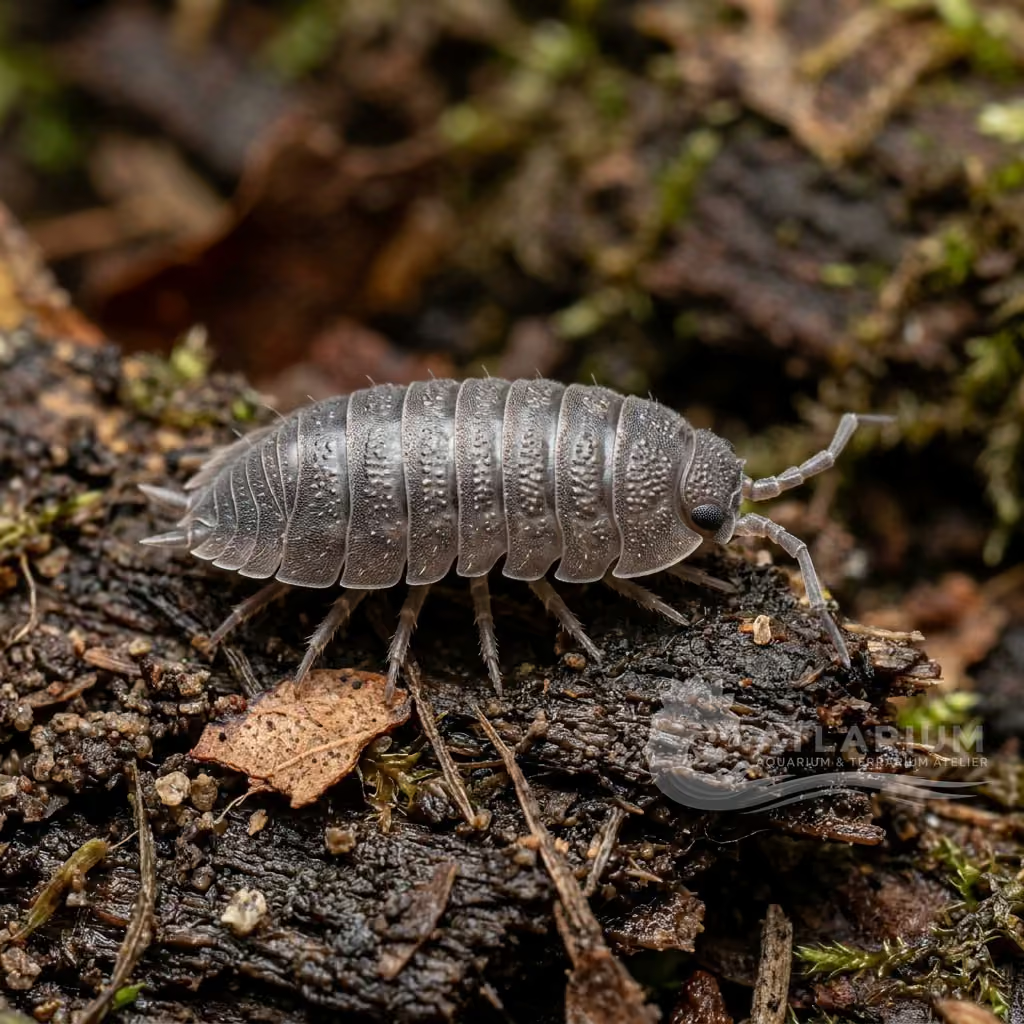
Giant Spanish Isopod (Expansus)
Porcellio expansus
The Giant Spanish Isopod (Porcellio expansus). The Holy Grail of Isopod keepers. A gigantic prehistoric creature (up to 1.5 inches), famous for its enormous, flattened and disproportionately wide carapace (Expansus = expanded). It boasts kilometric antennae and a faded chalk white color bordered with flame orange, and lateral 'skirts' so wide as to make it resemble a battle shield. A display animal, incredibly expensive, vulnerable to stagnant humidity and difficult to breed.
Environnement
Terrestre
Humidité
40 - 60 %
Température diurne
20 - 26 °C
Température nocturne
18 - 22 °C

Description de l'espèce
Geographic Origin and Habitat: No additional source-verified editorial notes are available about geographic origin and habitat for Porcellio expansus. Consult this record's parameters and sources.
Taxonomy and Genetics: No additional source-verified editorial notes are available about taxonomy and genetics for Porcellio expansus. Consult this record's parameters and sources.
Behaviour and Habits: No additional source-verified editorial notes are available about behaviour and habits for Porcellio expansus. Consult this record's parameters and sources.
Morphology and Sexual Dimorphism: No additional source-verified editorial notes are available about morphology and sexual dimorphism for Porcellio expansus. Consult this record's parameters and sources.

Soins, reproduction et cohabitation
Terrarium Setup: GIANT BINS, SUPER-VENTILATED (Dedicated dry terrariums). Spanish giants DEMAND MASSIVE AIRFLOW: lids cut to 70% and replaced with very fine wire mesh. Substrate of sandy soil 90% dry, mixed with massive calcareous powder calcium and pristine whole dry oak leaves. Cork bark forests for flat hiding places.
Lighting and Heating: ABSENCE OF DIRECT LIGHT. But COOL MEDIUM-LOW temperatures: 68-75°F (20-24°C). They suffer atrociously from tropical humid heat. Never heat the tank from below. They are very delicate to rapid thermal changes.
Humidity and Hydration: EXTREME AND ARID VENTILATION (40-60% MAX). ABSOLUTE CRITICAL: the bin MUST BE 80% BONE DRY. Stagnant humidity, stale air from a tropical terrarium and condensation will literally melt them in two days. They only need ONE TINY ball of wet sphagnum moss in a corner of the tank to be able to moisten their ventral gills when they decide to. NEVER spray over them.
Feeding and Supplementation: Elite Calcareous Detritivores. They consume huge quantities of immaculate very dry leaves (not decomposed), dry moss (Oak lichen is a MUST), carrots and hard pumpkin. VERY IMPORTANT: Whole cuttlefish bone always available. Without tons of calcium, the giants will not be able to slide off the old hard shell during molting and will suffocate halfway.
Compatibility: Hyper-Delicate, Single Species Keeping. Handle as little as possible with bare hands: human skin fat can glue their pleopods (gills). They stress mortally if disturbed. Reproduction is very slow (up to 1 year to mature, and tiny broods of 15 babies).
Health and Common Diseases: Decay from lethal fungal asphyxia (Wet-Rot and Failed Molt ). Beginner keepers buy them for their weight in gold and put them in the mud of frog terrariums: they all die in 48 hours covered in a fulminating white mold because the very wide 'Skirt' traps the wet air under the belly, putrefying them.

Origine et répartition géographiques
Cette espèce provient de : Spagna (Endemico delle zone montuose e aride).
Origine
Sélection et cultivarsEurope, Méditerranée et Asie occidentaleOcéans tropicaux et récifs

Profil d'invertébré terrestre
- Régime alimentaire
- Detritivore
- The diet of Porcellio expansus consists of specific nutrients. It forages for a variety of food sources. A well-balanced feeding regimen is essential.
- Taille adulte
- 3.2 cm
- Mode de vie/microhabitat
- Terrestrial
- Porcellio expansus leads a lifestyle adapted to its niche. It utilizes various elements of its habitat. Providing a complex enclosure is crucial for its enrichment.
- Cycle d'activité
- Nocturnal
- The activity pattern of Porcellio expansus dictates when it is most active. It exhibits periods of rest aligned with light cycles. Understanding these rhythms helps create a suitable schedule.
- Sociabilité
- Solitary
- They are social detritivores that do well when kept in groups. Maintaining a colony allows for natural interactions and helps establish a stable micro-ecosystem, although overcrowding should be avoided to reduce stress.
- Reproduction
- Marsupial
- Reproduction for Porcellio expansus involves specific mating behaviors. Females seek out appropriate nesting sites. Successful breeding requires mimicking natural conditions.
- Venimeux
- No
- Tolérance aux manipulations
- Tolerant
- Handling Porcellio expansus should be done with care. It is recommended to allow the animal to adjust first. Gentle movements are key when handling is necessary.
- Brumation
- Non requise
- Brumation for Porcellio expansus is triggered by temperature changes. During this period, its metabolism slows down. Proper preparation is essential to ensure a healthy emergence.
- Mue
- Periodic
- The molting process of Porcellio expansus allows it to shed old layers. Adequate humidity is vital for facilitating a smooth shed. Caretakers must regularly check for retained pieces.

Espèces associées
Recommandations regroupées par proches parents, compagnons et soins similaires.