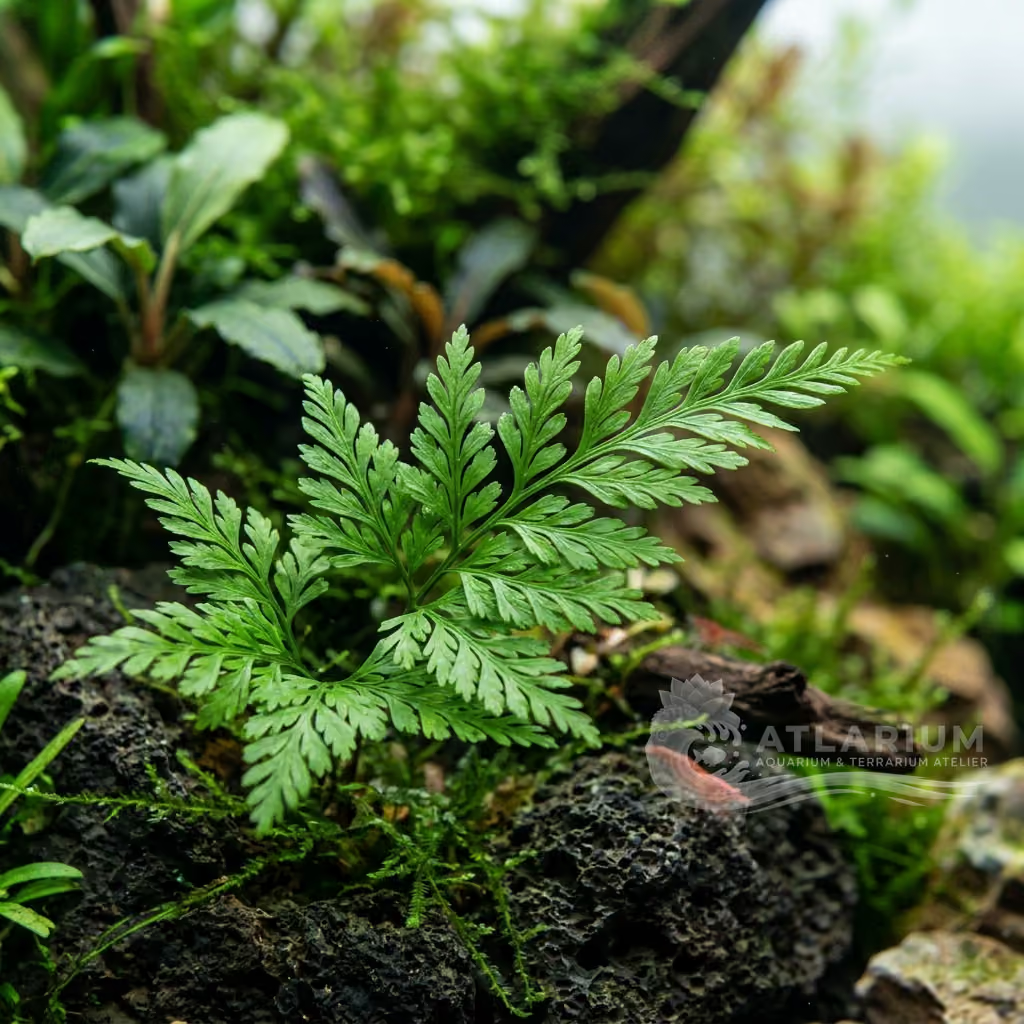
Bolbitis sp. "Sungai Kabo"
Bolbitis sp. "Sungai Kabo"
Rare epiphytic fern from the Sungai Kabo river in Borneo. Ideal for midground or foreground placement, featuring slow growth and highly decorative fronds.
Température de l’eau
18 - 28 °C
Valeur du pH
5 - 7.5
Type d'eau
Eau douce
Lumière
Moyenne - Élevée
CO2
Faible
GH
4 - 15 dGH
KH
0 - 14 dKH

Description de l'espèce
Geographical Origin and Habitat: This undescribed Bolbitis variant comes from the Sungai Kabo river area in Borneo, Indonesia. In its native habitat, it grows as a riparian plant along shaded jungle streams and damp rock faces near waterfalls. It is a rheophyte adapted to cling to wet stones or decaying tree roots in moving waters, surviving seasonal flooding from tropical rains.
Taxonomy & Genetics: Belonging to the family Dryopteridaceae and the genus Bolbitis, it has not yet received a formal species classification, hence the placeholder Bolbitis sp. "Sungai Kabo". Genetically, it maintains a stable dwarf habit and is closely related to Bolbitis heteroclita. Propagation is done vegetatively via rhizome division.
Physical Structure: Features a creeping, tough, yet flexible rhizome that produces alternate fronds. The rhizome grows dark rootlets that anchor tightly to hardscape elements. The fronds are small, lobed, with elongated tips, presenting a compact and delicate growth form.
Color & Texture: Leaves are a deep, glossy, semi-translucent forest green. The leaf texture is leathery and firm, offering resistance to fast water currents. The leaf surface has a clean, waxy look, providing a natural appearance to the aquascape.

Soins, reproduction et cohabitation
Lighting & CO2: Tolerant of low light levels, preferring shaded areas or moderate lighting. High light should be avoided as it can cause algae growth on the slow-growing leaves. CO2 injection is recommended to stimulate new fronds and maintain compact growth.
Nutrition & Substrate: Must not be planted in the substrate. As an epiphyte, the rhizome must remain exposed and tied to rocks or wood to prevent rot. It absorbs nutrients from the
Water Chemistry: Prefers soft to medium-hard water (KH 0-14 dKH) and a neutral to slightly acidic pH (5.0 - 7.5). It requires clean, well-filtered water to prevent debris accumulation. The recommended temperature range is 18°C to 28°C.
Space Management & Placement: Ideal for foreground or midground placement, attached to hardscape elements. Its slow growth makes it perfect for nano tanks, paludariums, nature-style aquascapes, and Wabi-Kusa setups.
Pruning: Prune older, damaged, or decaying leaves close to the rhizome using sharp scissors. Propagated by cutting the creeping rhizome into sections containing at least 3-4 leaves and a few roots.
Risks & Diseases: The primary threat is rhizome rot due to burial in the substrate. Algae infestations (like BBA) are common on the leaf edges under unbalanced conditions. Sudden changes in water chemistry can also cause stress.

Origine et répartition géographiques
This undescribed Bolbitis variant comes from the Sungai Kabo river area in Borneo, Indonesia. In its native habitat, it grows as a riparian plant along shaded jungle streams and damp rock faces near waterfalls. It is a rheophyte adapted to cling to wet stones or decaying tree roots in moving waters, surviving seasonal flooding from tropical rains.
Origine
Asie du Sud et du Sud-Est

Profil de plante
- Emplacement
- Premier plan
- It must be attached to rocks or driftwood, ideally in shaded or semi-shaded areas of the midground or background. The rhizome should remain fully exposed to the water current to prevent rotting. Its placement should be permanent, as it dislikes being disturbed once established.
- Forme botanique
- Rhizome
- Originating from the Sungai Kabo region in Borneo, this fern features uniquely shaped, highly translucent, and deeply pinnate leaves. The fronds are relatively small and delicate, spreading from a creeping, wiry rhizome. Its elegant, almost fragile appearance makes it a prized collector's plant.
- Croissance
- Lente
- This species has an exceptionally slow growth rate, taking months to develop a substantial number of fronds. Injecting CO2 and providing a gentle water current can marginally improve the speed and health of its growth. Patience is essential when cultivating this rare fern.
- Substrat
- Aucun
- Bolbitis sp. "Sungai Kabo" follows the typical epiphytic growth habit of its genus, requiring hardscape rather than a traditional aquarium substrate. The creeping rhizome should be secured to wood or stones using thread or specialized plant glue to prevent suffocation and rot. Its root system is designed for mechanical gripping rather than nutrient absorption, meaning the plant relies entirely on liquid fertilizers present in the water column.
- Fertilisation de la colonne d'eau
- Recommandée
- Liquid fertilization should be dosed sparingly, focusing primarily on trace elements to keep the fronds vibrant. High concentrations of nitrates and phosphates are unnecessary and often counterproductive. A clean water column with stable parameters is more important than heavy fertilization.
- Fertilisation racinaire
- Aucune
- Being a true epiphyte, it derives no nutrients from the substrate and therefore does not require root tabs or aquasoils. It relies solely on the water column for its nutritional needs. Planting it in soil will quickly lead to rhizome decay and plant death.
- Taille
- Occasionnelle
- Trimming is rarely needed due to its slow growth, but dead or algae-infested leaves should be carefully removed. Always snip the leaf stalk as close to the rhizome as possible using fine-tipped scissors. Avoid damaging the main rhizome, as recovery from injury is extremely slow.
- Propagation
- Rhizome division
- Propagation is achieved by carefully dividing the rhizome, ensuring each piece has a healthy growing tip and several fronds. The cut sections should be firmly but gently tied to a new piece of hardscape. Cyanoacrylate glue can be used, but use it sparingly to avoid burning the delicate tissue.
- Sensibilité
- Modérée
- It is highly sensitive to fluctuating water parameters, high temperatures, and excessive light. Algae is its primary threat, as it easily smothers the slow-growing leaves if water quality declines. It strongly prefers soft, slightly acidic water mimicking its natural Bornean habitat.
- Rôle dans le décor
- Plan intermédiaire, Premier plan, group, Épiphyte
- It is an exquisite focal point or detail plant for high-end aquascapes and biotope aquariums. Its transparent, elegant fronds add a sense of refined age and mystery to shaded hardscape crevices. It contrasts beautifully with darker mosses and broad-leaved Anubias species.

Espèces associées
Recommandations regroupées par proches parents, compagnons et soins similaires.