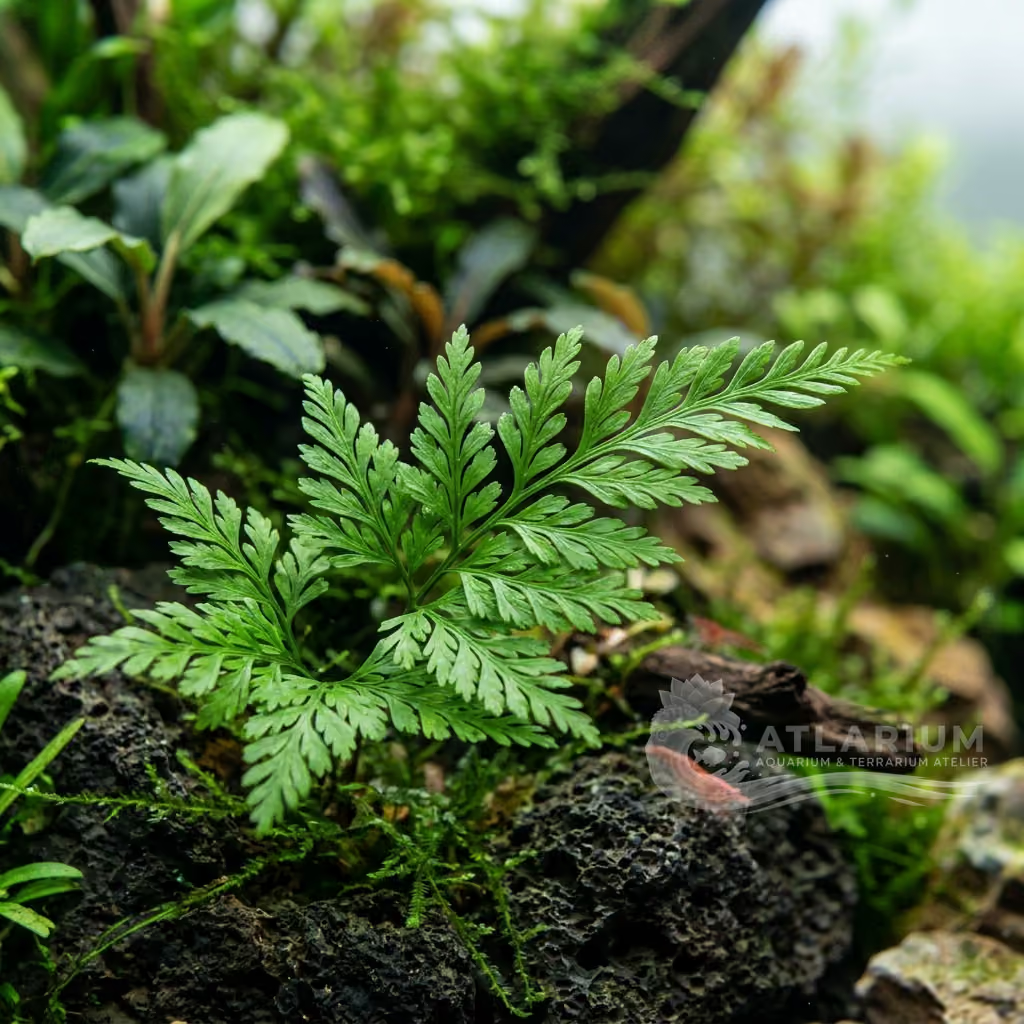
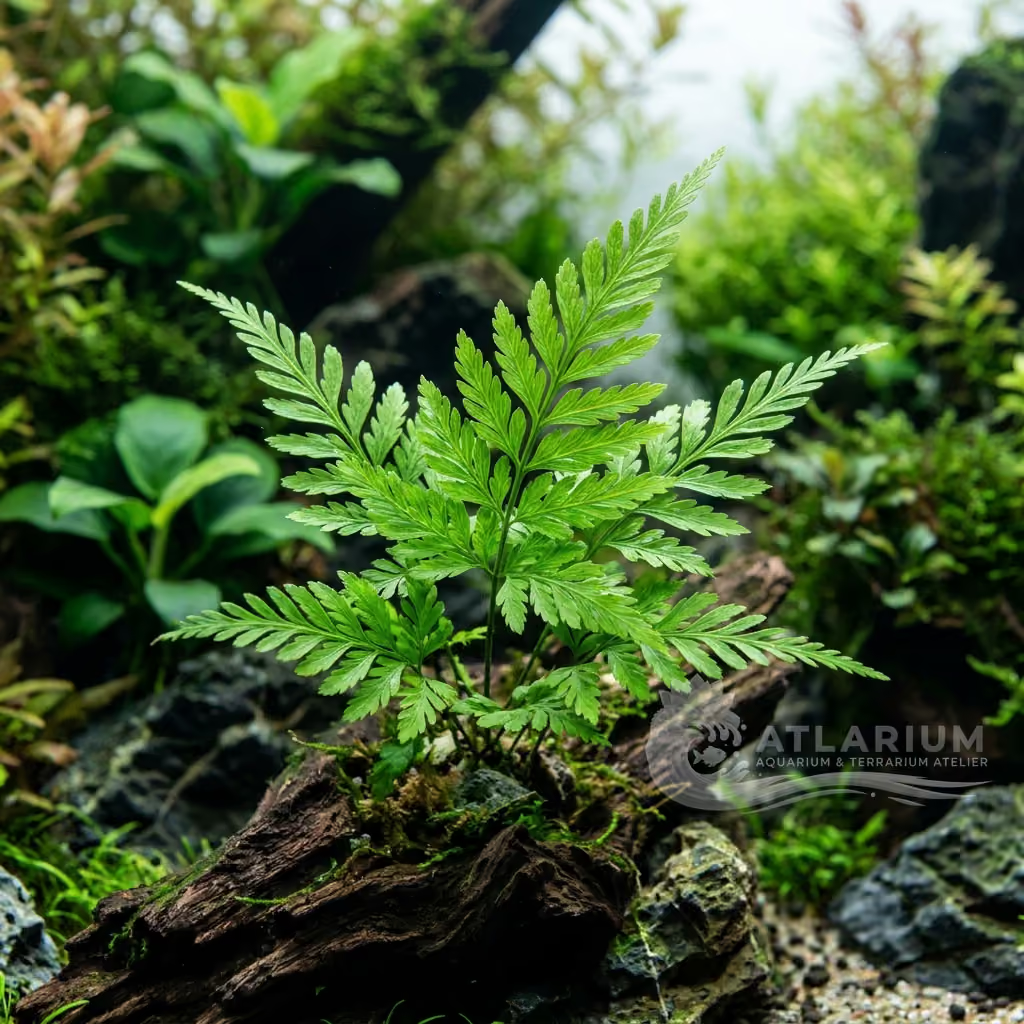
Bolbitis heteroclita "cuspidata"
Bolbitis heteroclita
A rare cuspidata variety of Bolbitis heteroclita featuring sharp, pointed leaves. An incredibly slow-growing epiphyte ideal for foreground hardscapes.
Température de l’eau
18 - 28 °C
Valeur du pH
5 - 7.5
Type d'eau
Eau douce
Lumière
Moyenne - Élevée
CO2
Faible
Hauteur attendue
10 cm
GH
4 - 15 dGH
KH
0 - 14 dKH

Description de l'espèce
Geographical Origin and Habitat: This variant of Bolbitis heteroclita is native to the tropical rainforests of Southern and Southeast Asia, particularly the Philippines, Indonesia, and Malaysia. It typically grows in very humid, shaded riparian zones, attached to wet rocks near waterfalls or on decaying logs close to pristine streams. It tolerates seasonal inundations and adapts easily to both emerged terrarium conditions and submerged aquarium setups.
Taxonomy & Genetics: Belonging to the family Dryopteridaceae and the genus Bolbitis, the cultivar name "cuspidata" refers to the sharply pointed (cuspidate) tips of its fronds. Genetically, it is a stable, slow-growing form. Commercial nurseries propagate this fern vegetatively via rhizome division to maintain the cultivar's distinct pointed leaf morphology.
Physical Structure: The plant develops a thin, resilient, creeping rhizome that produces alternate fronds. The rhizome grows dark rootlets that anchor tightly to hard, porous surfaces. The fronds are small (usually between 3 and 10 cm) and feature elongated, pointed leaf segments that distinguish it from the wild type and the highly divided "difformis" cultivar.
Color & Texture: Leaves are a deep olive or forest green, glossy and semi-translucent. The leaf texture is rigid and leathery, providing excellent durability against currents and physical wear. Underwater, the fine texture and pronounced leaf tips create a detailed, natural aesthetic on the hardscape.

Soins, reproduction et cohabitation
Lighting & CO2: Adapts to a wide range of lighting but prefers shaded zones or moderate light. High light levels can stunt growth and promote algae colonization on the slow-growing leaves. CO2 injection is recommended to stimulate new fronds and support overall plant health, though it is not mandatory.
Nutrition & Substrate: Must never be planted in the soil. As an epiphytic fern, its rhizome must remain exposed and tied to rocks or wood to prevent rot. It absorbs nutrients directly from the
Water Chemistry: Prefers soft to medium-hard water (KH 0-14 dKH) and a neutral to slightly acidic pH (5.0 - 7.5). It requires clean, well-filtered water to prevent debris from settling on the leaves and blocking light. The optimal temperature range is 18°C to 28°C.
Space Management & Placement: Best positioned attached to rocks or driftwood in the foreground or midground. Its small scale makes it ideal for nano aquariums, natural layouts, paludariums, and Wabi-Kusa displays.
Pruning: Pruning involves cutting away older, yellowing, or damaged fronds close to the rhizome using sharp scissors. This improves light penetration and water flow through the clump, encouraging new growth from the rhizome's growing tip.
Risks & Diseases: The main threat is rhizome rot due to burial in the substrate. Algae infestations (particularly Black Beard Algae) are common on the leaf edges in tanks with poor nutrient balance. Inadequate water flow can lead to debris accumulation, which smothers the plant.

Origine et répartition géographiques
This variant of Bolbitis heteroclita is native to the tropical rainforests of Southern and Southeast Asia, particularly the Philippines, Indonesia, and Malaysia. It typically grows in very humid, shaded riparian zones, attached to wet rocks near waterfalls or on decaying logs close to pristine streams. It tolerates seasonal inundations and adapts easily to both emerged terrarium conditions and submerged aquarium setups.
Origine
Asie du Sud et du Sud-Est

Profil de plante
- Emplacement
- Premier plan
- Ideal for the foreground or midground in nano aquariums, where it should be securely attached to small rocks or twigs. Its creeping rhizome must remain completely exposed above the substrate to prevent rot. Placing it in areas with gentle but steady water flow helps keep its delicate leaves clean.
- Forme botanique
- Rhizome
- It is a dwarf cultivar characterized by tiny, delicately lobed leaves that closely resemble miniature parsley or parsley fern. The rhizome is very thin and creeping, spreading slowly over its attachment surface. The plant maintains a very compact and low profile, rarely exceeding a few inches in height.
- Croissance
- Lente
- This variety exhibits a notoriously slow growth rate, producing new leaves at a glacial pace when fully submerged. Emersed growth in a humid terrarium is significantly faster and often more successful. Even with high light and CO2 injection, aquatic growth remains extremely subdued.
- Substrat
- Aucun
- As a miniature epiphytic fern, Bolbitis heteroclita "cuspidata" naturally thrives when attached to wood or stones rather than planted in the substrate. The creeping rhizome must remain fully exposed to the water flow to prevent decay, using its dark, wiry roots solely for grip. Because it derives its nutrition entirely from the water column, it benefits greatly from liquid fertilization rather than nutrient-rich soils.
- Fertilisation de la colonne d'eau
- Recommandée
- Requires only minimal water column fertilization. A sparse dosing regimen of a comprehensive micronutrient fertilizer will keep the leaves vibrant green. High levels of nitrates and phosphates are unnecessary and generally detrimental due to algae risk.
- Fertilisation racinaire
- Aucune
- It does not interact with the substrate and derives no benefit from root tabs or aquasoils. All nourishment is absorbed epiphytically through its leaves and fine anchoring roots. Focus strictly on maintaining water quality rather than substrate nutrition.
- Taille
- Occasionnelle
- Trimming is rarely needed due to its slow growth, save for the occasional removal of dying or algae-infested fronds. Use fine-tipped aquascaping scissors to cleanly snip individual leaf stalks at the rhizome. This precision prevents accidental damage to the fragile rhizome itself.
- Propagation
- Rhizome division
- Propagation is done by carefully dividing the delicate rhizome into smaller sections. Each division must possess a healthy growth tip, a few leaves, and anchoring roots. These small cuttings should be gently superglued or tied with a very fine thread to their new mounting location.
- Sensibilité
- Modérée
- Extremely susceptible to rhizome rot if buried or buried under deep detritus. It is also quite sensitive to changes in water chemistry and can melt or stall completely if conditions fluctuate. Algae is its biggest enemy, as it easily smothers the tiny leaves.
- Rôle dans le décor
- Nano, Premier plan, group, Épiphyte, Plan intermédiaire
- An exquisite detail plant for nano aquascapes, perfect for adding intricate texture to small hardscapes. It shines when tucked into crevices of wood or stone, creating a sense of ancient, undisturbed growth. It is also highly prized for miniature paludariums and Wabi-Kusa setups.

Espèces associées
Recommandations regroupées par proches parents, compagnons et soins similaires.