Ectropothecium zollingeri
Ectropothecium zollingeri
A lush aquatic moss from Southeast Asia that grows beautifully on rocks and driftwood. Prefers low to moderate lighting and benefits significantly from stable water.
Température de l’eau
15 - 28 °C
Valeur du pH
5 - 7.5
Type d'eau
Eau douce
Lumière
Faible
CO2
Faible
GH
0 - 20 dGH
KH
0 - 14 dKH

Description de l'espèce
Geographical Origin and Habitat: This aquatic plant, scientifically known as Ectropothecium zollingeri, has its geographical origins established mainly in the tropical areas of East and Southeast Asia, where it grows in humid environments clinging to rocks, wet logs, and along the banks of streams. In its native lands, it faces periods of heavy seasonal variations, adapting perfectly to both submerged growth during wet months and emersed growth in dry periods. This natural behavior makes it extremely resilient and versatile when introduced into controlled environments such as home aquariums.
Taxonomy & Genetics: From a systematic point of view, it is a true moss belonging to the family Hypnaceae, valued for its ease of adaptation to submerged life in the aquarium. As a representative of this group, it shares many common biological traits but exhibits specific genetic peculiarities that influence its growth rate and fertilization needs. The genetic stability of cultivated strains is ensured in commercial nurseries through rigorous selection and vegetative propagation procedures to keep aesthetic qualities intact.
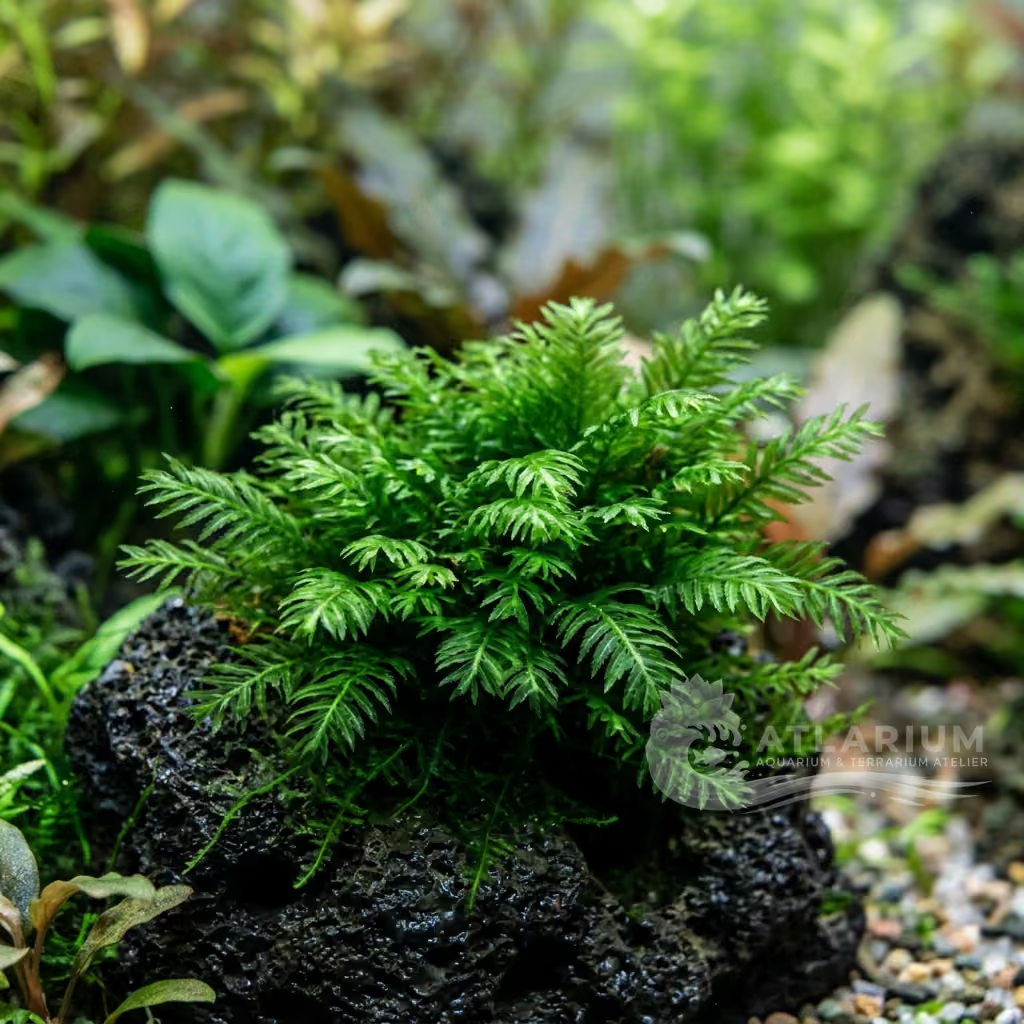
Physical Structure: Morphologically, the species features finely branched and feathery creeping stems that form dense carpets or cushions, clinging firmly to wood and rocks via rhizoids. This type of conformation allows it to occupy three-dimensional space efficiently, while offering natural shelter for small fish and invertebrates. The root system is proportional to the aerial development and plays a key role not only for anchorage but also for nutrient uptake.
Color & Texture: The chromatic aspect is characterized by a very vibrant bright green or emerald green, which can take on yellowish or light green shades at the tips during active growth. This visual combination creates an excellent aesthetic impact under aquarium lights, allowing interesting contrast plays with surrounding plants. The leaf texture is designed to withstand the mechanical stress of running water.

Soins, reproduction et cohabitation
Lighting & CO2: For optimal growth, the plant requires low to moderate light; the addition of CO2 is not essential but significantly accelerates growth and promotes dense cushions. Adequate lighting stimulates photosynthesis and prevents the loss of lower leaves, while carbon dioxide supports faster and more vigorous development of the leaf blade.
Nutrition & Substrate: Nutrition must be curated by providing liquid
Water Chemistry: Regarding water chemistry, the plant prefers temperatures between 18°C and 28°C, a pH between 6.0 and 7.5, and soft to moderately hard water. It is important to keep the parameters stable and carry out regular water changes to avoid sudden osmotic shifts that could damage plant tissues.
Space Management & Placement: Layout planning should foresee the foreground or midground of the aquarium, anchored to rocks, roots, or driftwood to create a natural look and evoke submerged forests. Correct positioning allows the plant to receive uniform light over the entire surface and ensures good water circulation between the leaves.
Pruning: Routine maintenance requires trimming the cushions with aquascaping scissors when they become too thick, which also helps prevent the lower parts from rotting due to lack of light. This practice prevents decaying old leaves from compromising water quality and constantly stimulates the rejuvenation of the specimen.
Risks & Diseases: Among the main risks is the accumulation of dirt and detritus which favors the appearance of filamentous algae difficult to remove, and sensitivity to high levels of glutaraldehyde. Constantly monitoring the plant allows timely intervention with adjustments to fertilization or lighting management before damage becomes irreversible.

Origine et répartition géographiques
This aquatic plant, scientifically known as Ectropothecium zollingeri, has its geographical origins established mainly in the tropical areas of East and Southeast Asia, where it grows in humid environments clinging to rocks, wet logs, and along the banks of streams. In its native lands, it faces periods of heavy seasonal variations, adapting perfectly to both submerged growth during wet months and emersed growth in dry periods. This natural behavior makes it extremely resilient and versatile when introduced into controlled environments such as home aquariums.
Origine
Asie de l'EstAsie du Sud et du Sud-Est

Profil de plante
- Emplacement
- Plan intermédiaire
- This moss is perfectly suited for attaching to hardscape elements such as wood branches, rocks, or background meshes. It works beautifully in the foreground or midground to soften harsh edges and create a natural, aged look. Over time, it creeps along surfaces to form dense, lush green cushions.
- Forme botanique
- Mousse
- It exhibits a creeping, prostrate growth habit, characterized by fine, densely branching fronds that lay relatively flat. The fronds have an overlapping, slightly weeping appearance, making it resemble a miniature terrestrial fern. Its bright green coloration provides a beautiful contrast against dark wood and stones.
- Croissance
- Moyenne
- Its growth rate is generally slow to moderate, depending heavily on light intensity, water flow, and CO2 availability. In high-tech environments with CO2, it will spread more rapidly and grow denser. Regular trimming is necessary once it establishes to keep the underlying layers from dying off.
- Substrat
- Aucun
- It is an epiphyte and does not require a traditional soil or gravel substrate to grow. It uses tiny rhizoids to anchor itself to hard surfaces like driftwood or rocks. Planting it directly into sand or soil can cause the lower portions of the moss to rot.
- Fertilisation de la colonne d'eau
- Recommandée
- Because it lacks true roots, water column fertilization is the only way it receives nourishment. A regular, light dosing of liquid micro and macronutrients ensures healthy, vibrant green growth. Care must be taken not to overdose, as mosses are prone to becoming choked by hair algae in nutrient-heavy water.
- Fertilisation racinaire
- Aucune
- Root fertilization is completely unnecessary and ineffective for this plant, as it is an epiphyte without a true root system. It draws absolutely nothing from the substrate. All fertilizers must be applied to the water column.
- Taille
- Occasionnelle
- Trimming is essential to maintain its shape and ensure the underlying layers remain healthy. If left untrimmed, the moss can become too thick, causing the layers attached to the hardscape to die off from lack of light. Regular, careful pruning with curved scissors encourages denser, more attractive growth.
- Propagation
- Division
- Propagation is extremely straightforward and is achieved through manual division. Simply pull or cut a clump of the moss apart and reattach the new portion to a piece of hardscape using thread or safe cyanoacrylate glue. The newly attached piece will eventually anchor itself and continue to grow.
- Sensibilité
- Modérée
- It is highly susceptible to algae growth, particularly hair algae and cyanobacteria, if the aquarium water is not kept pristine. It is also sensitive to chemical treatments, such as liquid carbon or certain medications, which can cause it to melt. Good water circulation is critical to prevent debris from settling in its tight structure.
- Rôle dans le décor
- Premier plan, Plan intermédiaire, Épiphyte
- It is primarily used for detailing and adding a sense of age and natural maturity to the aquascape. By covering bare wood or stone, it softens the hardscape and creates a more cohesive, weathered look. Its creeping habit makes it excellent for creating natural-looking transitions between hardscape and substrate.

Galerie d'images
Images sous licence liées à l'espèce ou, lorsqu'elles sont indiquées, au taxon représentatif le plus proche.

Espèces associées
Recommandations regroupées par proches parents, compagnons et soins similaires.