Lemna trisulca
Lemna trisulca
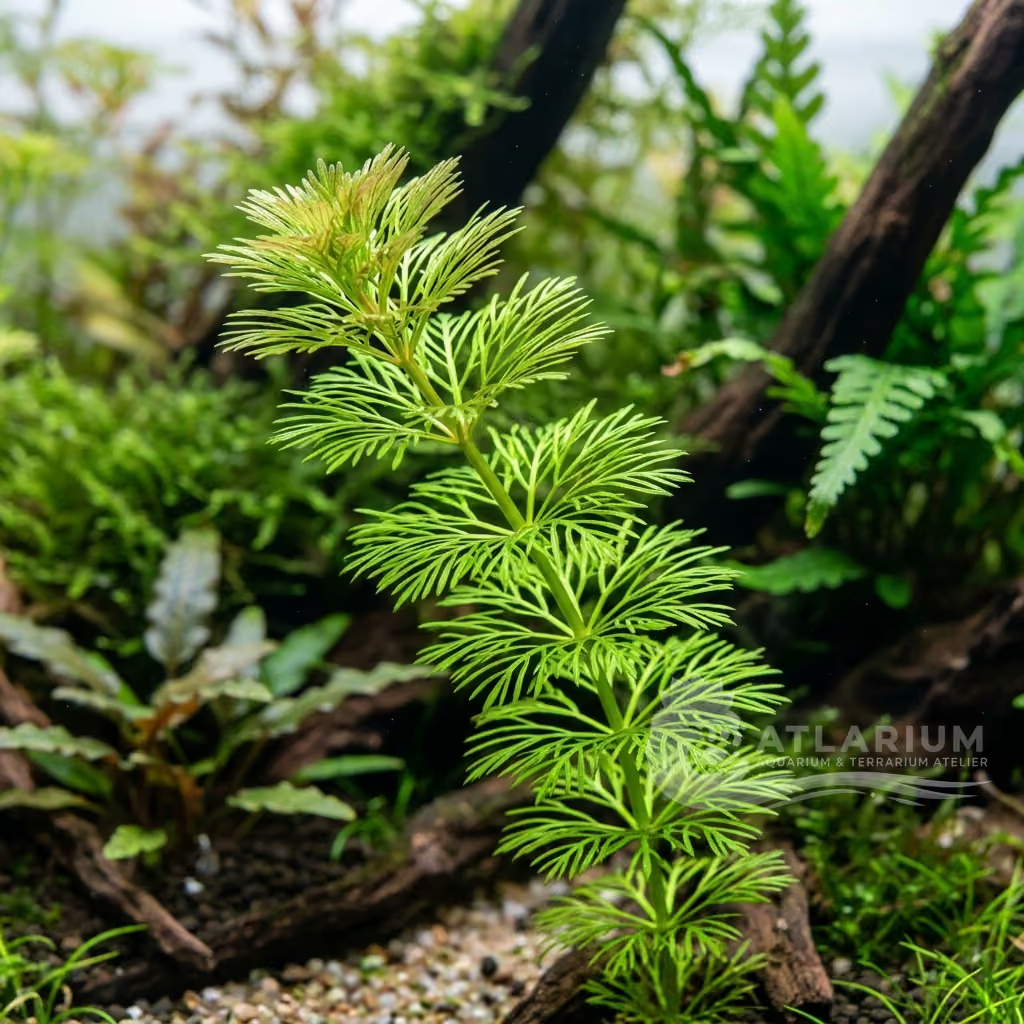
Also known as Star Duckweed, this species uniquely grows suspended just below the surface in interlocking, star-like chains. It prefers cooler, clean water and is less invasive than common duckweed.
Température de l’eau
4 - 30 °C
Valeur du pH
5 - 8
Type d'eau
Eau douce
Lumière
Low to High
CO2
Faible - Élevée
Hauteur attendue
1 cm
Largeur attendue
1 cm
GH
4 - 20 dGH
KH
2 - 21 dKH

Description de l'espèce
Geographical Origin and Habitat: Lemna trisulca is widely distributed in the cold and temperate zones of the Northern Hemisphere, including Europe, Asia, and North America. Unlike almost all other duckweeds, it grows submerged just below the water surface, floating in calm waters, forest ditches, and sheltered ponds.
Taxonomy & Genetics: It belongs to the family Araceae, subfamily Lemnoideae. This species features a unique genome adapted to submerged photosynthesis at low light levels, lacking the thick waxy cuticle that characterizes surface floating species. Vegetative propagation occurs with daughter fronds remaining connected to the mother frond via a persistent petiole.
Physical Structure: It features elongated, lanceolate, or almost ivy-shaped fronds, 5 to 15 millimeters long. The fronds are connected to each other by small petioles, forming large three-dimensional star-like or chain-like branched structures. Each frond has a single short, transparent, unbranched root.
Color & Texture: The fronds show a transparent and very delicate light green color. The texture is thin, translucent, and membranous. The absence of dark protective pigments gives it a glassy appearance that contrasts pleasantly with the darker, leathery foliage of other submerged plants.

Soins, reproduction et cohabitation
Lighting & CO2: Requires low to moderate lighting. It prefers shaded positions as direct sunlight or overly close lights can promote the appearance of filamentous algae on its delicate fronds. CO2 promotes faster growth but is not essential.
Nutrition & Substrate: Does not require any substrate, as it floats freely in mid
Water Chemistry: Tolerates water temperatures between 4°C and 30°C, pH from 5.0 to 8.0, and carbon hardness (KH) between 2 and 21 dKH. It prefers stable, slow-flowing, or stationary waters; overly strong currents tend to disperse or accumulate the plant in filters.
Space Management & Placement: Positioned in the midground or central area of the tank (the JSON profile correctly indicates 'midground'). It can be left to float freely or partially anchored between branches of wood or rocks to create a suspended bush effect.
Pruning: Maintenance consists of regularly removing excess clumps that tend to form overly large masses. This manual thinning prevents the accumulation of organic debris within the frond chains.
Risks & Diseases: The main risk is the development of filamentous algae or suspended organic debris that can suffocate the plant if mechanical filtration is poor. Large herbivorous fish can quickly consume its tender fronds.

Origine et répartition géographiques
Lemna trisulca is widely distributed in the cold and temperate zones of the Northern Hemisphere, including Europe, Asia, and North America. Unlike almost all other duckweeds, it grows submerged just below the water surface, floating in calm waters, forest ditches, and sheltered ponds.
Origine
Europe, Méditerranée et Asie occidentaleAmérique du NordAsie de l'Est

Profil de plante
- Emplacement
- Plan intermédiaire
- This plant is strictly a floating plant that covers the water surface. It naturally spreads across the top, providing shade for the aquarium below. It can be corralled using floating rings to prevent it from covering the entire surface.
- Forme botanique
- Flottante
- It features small, simple fronds that float flat on the water surface. Thin, trailing roots hang down into the water column to absorb nutrients. The plant reproduces primarily through vegetative budding.
- Croissance
- Rapide
- The growth rate of Lemna trisulca is extremely fast and often explosive under good lighting. It doubles its biomass in just a few days if nutrients are abundant. Its rapid multiplication requires frequent culling to avoid light blockage.
- Substrat
- Aucun
- Unlike standard floating duckweeds, Lemna trisulca often grows submerged just below the water's surface in intertwined masses, but it still does not require any substrate. The plant derives all of its nutritional needs directly from the water column through its delicate roots and thallus structures. It can sometimes become loosely entangled in other plants, driftwood, or decor. Any substrate choice in the aquarium is perfectly suitable, as this species functions entirely independently of the bottom layer.
- Fertilisation de la colonne d'eau
- Recommandée
- Liquid column fertilization is highly beneficial as it has no substrate roots. It responds quickly to added macronutrients and micronutrients in the water. Over-fertilization can lead to uncontrollable and rapid surface overgrowth.
- Fertilisation racinaire
- Aucune
- Root tabs or substrate fertilizers are completely unnecessary for this plant. All of its nutritional needs are met through its floating roots. It has no connection to the aquarium substrate.
- Taille
- Régulière
- Trimming involves simply netting out excess portions from the surface. It is important to remove a significant amount weekly to maintain light penetration. Ensure no tiny pieces are left if you wish to eradicate it completely.
- Propagation
- Boutures
- Propagation occurs naturally and rapidly through continuous division. A single small frond will split into multiple new plants. You simply need to leave a few pieces in the tank to maintain the population.
- Sensibilité
- Modérée
- It is relatively tough but sensitive to strong surface agitation. High water flow can push the plant underwater and cause it to rot. It also dislikes condensation dripping from tight aquarium lids.
- Rôle dans le décor
- Plan intermédiaire
- Its primary role is as a floating shade plant and nutrient exporter. It helps calm skittish fish by providing overhead cover and dimming bright lights. However, it can obscure lower plants if not carefully managed.

Espèces associées
Recommandations regroupées par proches parents, compagnons et soins similaires.