Eichhornia natans
Pontederia natans
Eichhornia natans is an aquarium plant belonging to the Pontederiaceae family, characterized by a medium growth rate and ideal for placement in the midground.
Température de l’eau
18 - 35 °C
Valeur du pH
5 - 7
Type d'eau
Eau douce
Lumière
Moyenne - Élevée
CO2
Moyenne - Élevée
GH
0 - 20 dGH
KH
0 - 10 dKH

Description de l'espèce
Geographical Origin and Habitat: This fascinating aquatic species has its geographical origin in the warm tropical regions of Asia and South America, where it inhabits clear river systems with weak to moderate current. It is commonly found both submerged and partially emersed along sandy or muddy banks. Additionally, its occurrence is highly associated with shaded banks and shallow water basins.
Taxonomy & Genetics: From a taxonomic point of view, it belongs to the Pontederiaceae family and is assigned to the Eichhornia genus. Its genetics reflect a high degree of adaptation to seasonal variations in water and chemical parameters of its native waters, assuring its resilience.
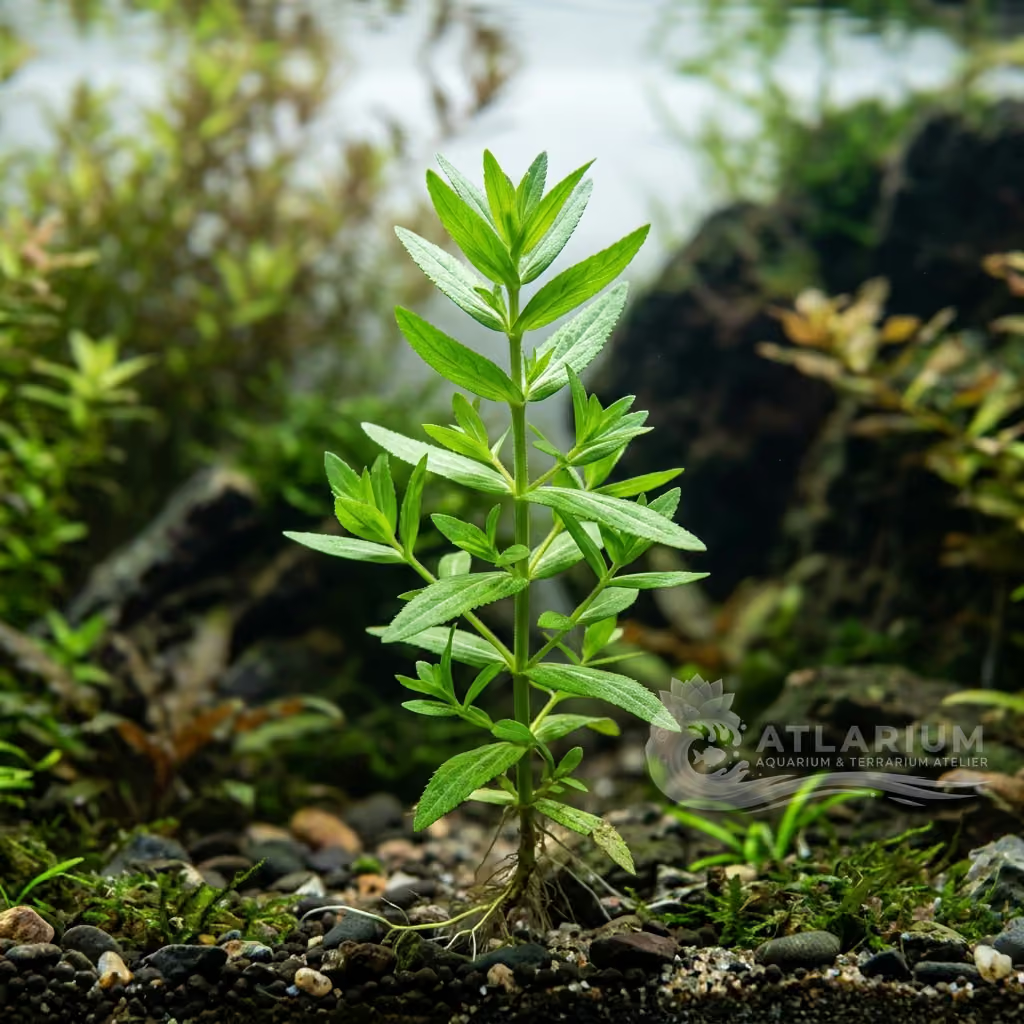
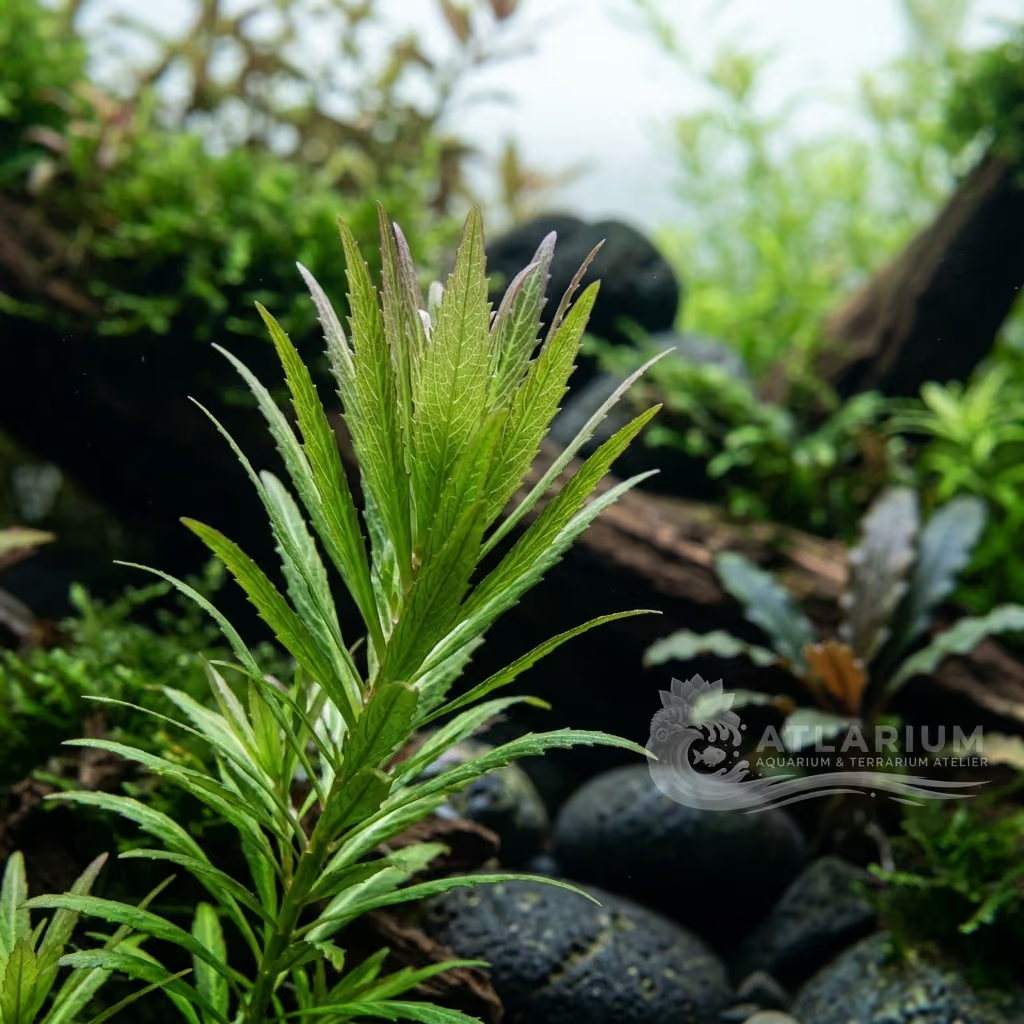
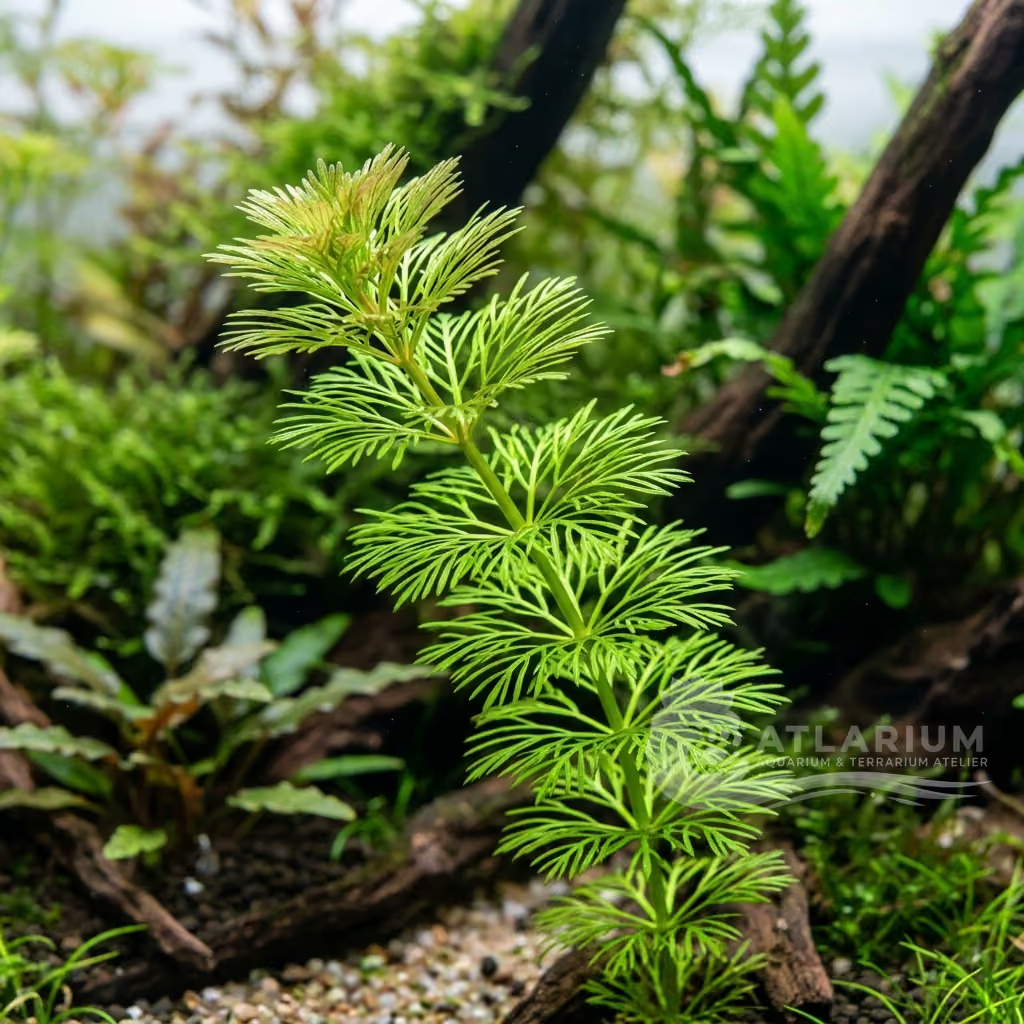
Physical Structure: The physical structure of the plant is characterized by a stem botanical form with well-proportioned and elastic stems or rosettes. Under proper lighting conditions, it develops a stable root system capable of anchoring firmly into the riverbed.
Color & Texture: The color of the leaves presents as a bright and natural green, with translucent shades and fine textures that increase the perception of visual depth. The leaf texture is smooth or slightly wrinkled depending on aquarium conditions.

Soins, reproduction et cohabitation
Lighting & CO2: Optimal lighting to support the plant's development ranges from medium to high, depending on the desired leaf density. Constant CO2 injection is recommended to support effective photosynthesis and prevent tissue decay.
Nutrition & Substrate: The plant benefits from a rich, porous substrate coupled with a balanced liquid fertilization in the
Water Chemistry: The ideal water chemistry includes a slightly acidic or neutral pH (5.0 - 7.0) and a moderate carbonate hardness KH (0.0 - 10.0). The optimal water temperature must be kept stable between 18.0 and 35.0 °C.
Space Management & Placement: Regarding space management, the plant should be positioned in the midground, spacing the stems adequately to avoid shaded areas. It is ideal for creating dynamic layouts in natural aquascaping.
Pruning: Pruning must be performed regularly by topping the upper part or thinning the densest clumps with suitable scissors. Propagation is successfully achieved through cuttings replanted directly into the soil.
Risks & Diseases: The main risks are related to the development of parasitic algae on old leaves and tissue necrosis if essential nutrients are lacking. Good filtration and regular water changes prevent most diseases.

Origine et répartition géographiques
This fascinating aquatic species has its geographical origin in the warm tropical regions of Asia and South America, where it inhabits clear river systems with weak to moderate current. It is commonly found both submerged and partially emersed along sandy or muddy banks. Additionally, its occurrence is highly associated with shaded banks and shallow water basins.
Origine
Asie du Sud et du Sud-EstAmazonie, Orénoque et GuyanesAmérique du Sud hors Amazonie

Profil de plante
- Emplacement
- Plan intermédiaire
- Due to its relentless drive to reach the surface, this plant is best positioned in the background of the aquarium. It requires significant vertical space to display its submerged leaves properly. It should be planted in small groupings, but space must be maintained between stems to prevent the lower portions from being completely shaded out. It is not recommended for shallow tanks.
- Forme botanique
- Tige
- Submerged, Eichhornia natans develops alternate, very narrow, linear green leaves along a somewhat fragile stem. The leaves are generally longer and narrower than other submerged Eichhornia species. When it breaches the surface, its morphology changes drastically, producing broader, rounded floating leaves typical of the genus, completely losing its submerged aesthetic.
- Croissance
- Moyenne
- This is an exceptionally fast-growing plant under high light and CO2 conditions. It will aggressively grow upwards, attempting to transition into its floating form. Because of this rapid vertical growth, it requires constant trimming to maintain a submerged presence. Its high metabolic rate makes it an excellent nutrient exporter.
- Substrat
- Élevé
- Eichhornia natans is a delicate floating or trailing plant that may sometimes send roots down to loosely anchor in the substrate if grown in shallow water. In most aquarium setups, it primarily relies on its trailing roots in the water column for nutrient absorption rather than deep substrate rooting. When planted, a soft, fine-grained substrate like aqua soil can help anchor any bottom-dwelling stems. However, its primary requirement is water column nutrition rather than a demanding soil bed.
- Fertilisation de la colonne d'eau
- Recommandée
- Liquid fertilization is absolutely mandatory for this species. It absorbs the vast majority of its required nutrients directly through its submerged leaves from the water column. A daily dosing regimen of a high-quality, comprehensive liquid fertilizer is often necessary to keep up with its aggressive growth rate. Deficiencies will manifest quickly in the new growth.
- Fertilisation racinaire
- Aucune
- While primarily reliant on the water column, planting E. natans in a nutrient-rich substrate like aquasoil is beneficial. A strong root system helps anchor the long, buoyant stems securely against the water flow. However, root feeding is secondary, and the plant will perish if column fertilization is neglected.
- Taille
- Régulière
- To maintain it as a submerged stem plant, aggressive and frequent topping is required. The best practice is to uproot the entire stem, cut off and discard the leafless or unsightly lower portion, and replant the vibrant top cutting. Allowing it to reach the surface will cause the lower submerged leaves to die off as the plant transitions to its floating state.
- Propagation
- Boutures
- Propagation is easily achieved by taking top cuttings from healthy stems and replanting them. It may also occasionally produce lateral shoots, which can be separated and planted. Ensure that all new cuttings have unhindered access to strong light to promote rapid rooting and acclimatization. Strong initial growth is essential.
- Sensibilité
- Modérée
- Eichhornia natans is exceptionally sensitive to shading and will rapidly lose its lower leaves if they do not receive direct light. It is also completely intolerant of low CO2 levels, which will cause immediate stunted growth and melting. The stems are quite brittle and must be handled carefully. It does not respond well to abrupt changes in water chemistry.
- Rôle dans le décor
- Plan intermédiaire
- In aquascaping, it is used primarily as a background stem plant to provide a unique, fine-leaved texture that contrasts beautifully with broader foliage. Its rapid growth and vertical lines make it suitable for large nature aquariums or Dutch-style setups. However, its demanding nature and need for constant trimming mean it is best left to experienced aquascapers.

Espèces associées
Recommandations regroupées par proches parents, compagnons et soins similaires.