Eriocaulon setaceum
Eriocaulon setaceum
An exquisite, needle-leaved plant native to the pristine marshes of Asia and Australia. Demands extremely intense lighting and generous CO2 to survive and flourish.
Température de l’eau
20 - 30 °C
Valeur du pH
4.5 - 7
Type d'eau
Eau douce
Lumière
Élevée
CO2
Élevée
GH
0 - 10 dGH
KH
0 - 7 dKH

Description de l'espèce
Geographical Origin and Habitat: Widespread in the tropical regions of Asia and Australia. It grows primarily in stagnant and clear waters of oligotrophic marshes and ponds under high light, often on very acidic peaty substrates.
Taxonomy & Genetics: It belongs to the Eriocaulaceae family, genus Eriocaulon. It is one of the few species in this genus to develop a climbing or erect stem habit rather than a classic basal rosette.
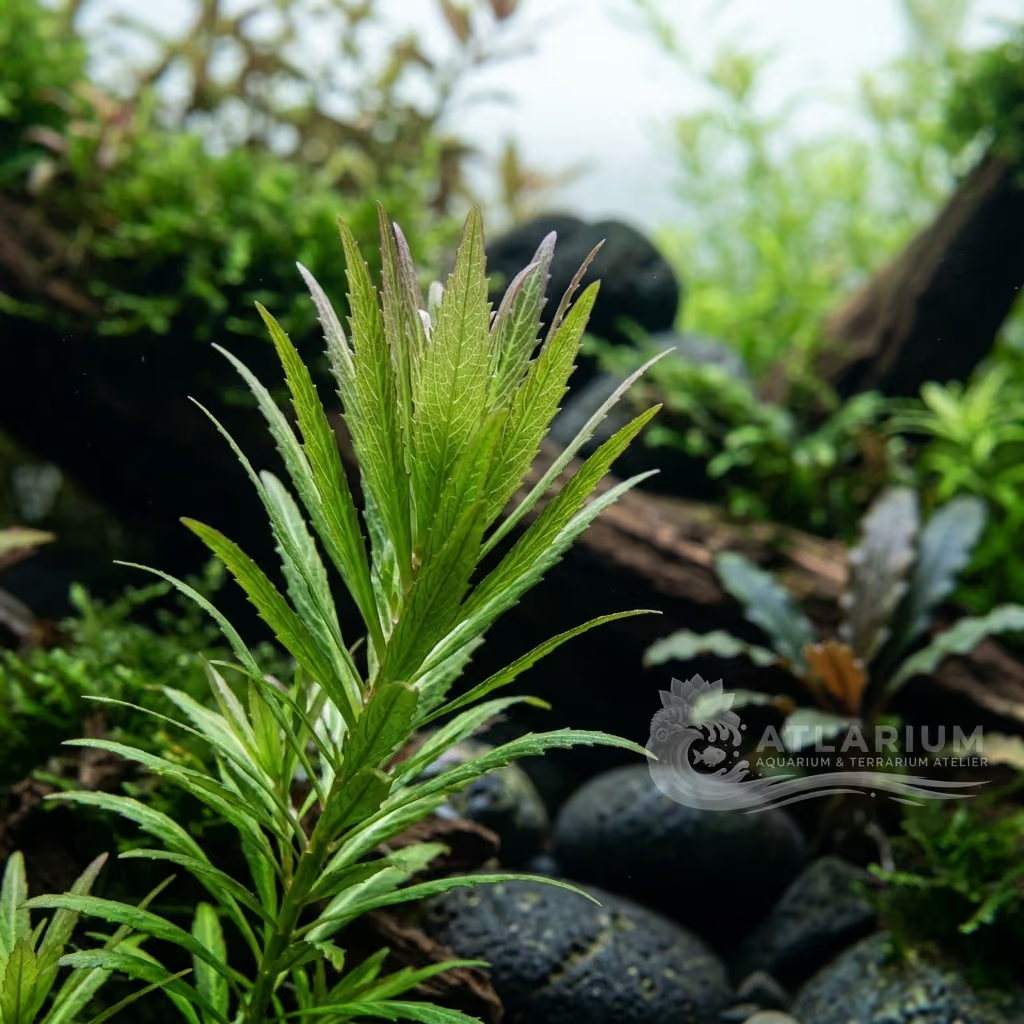
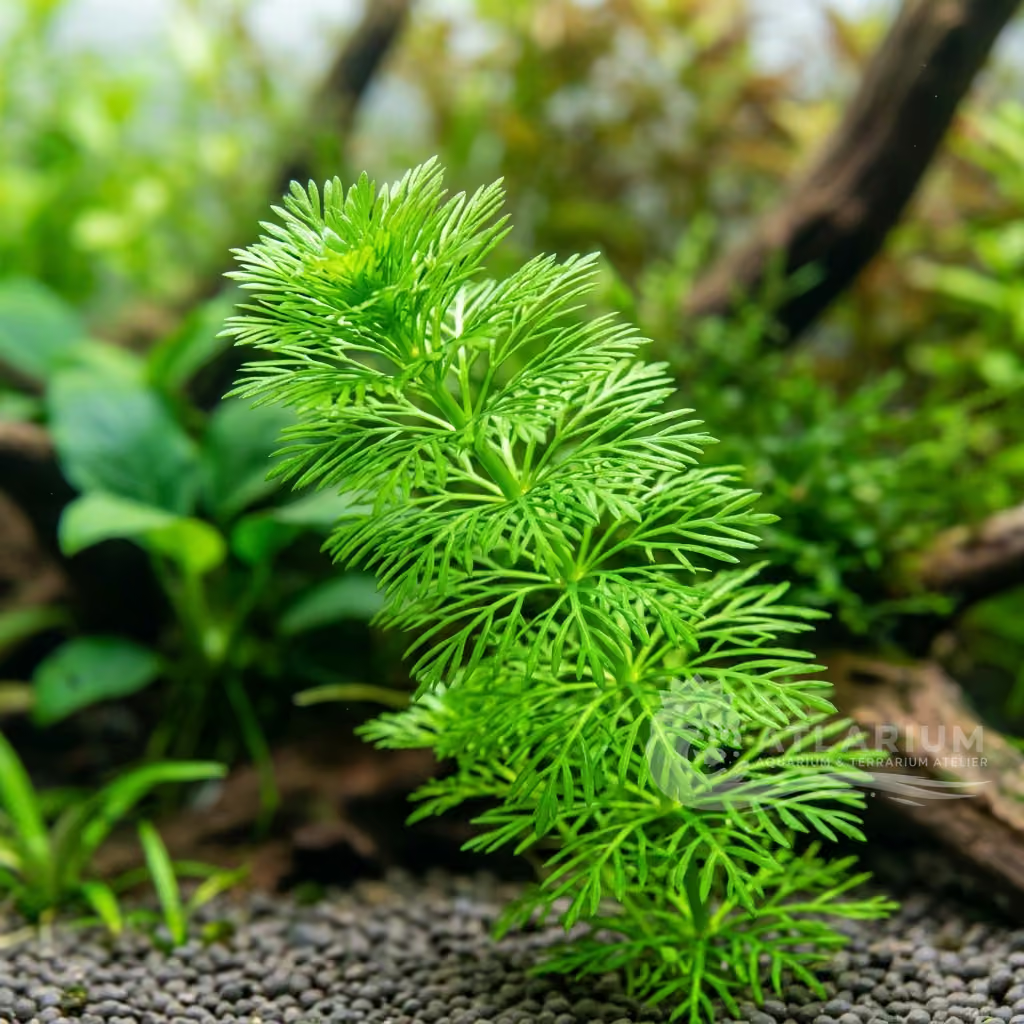
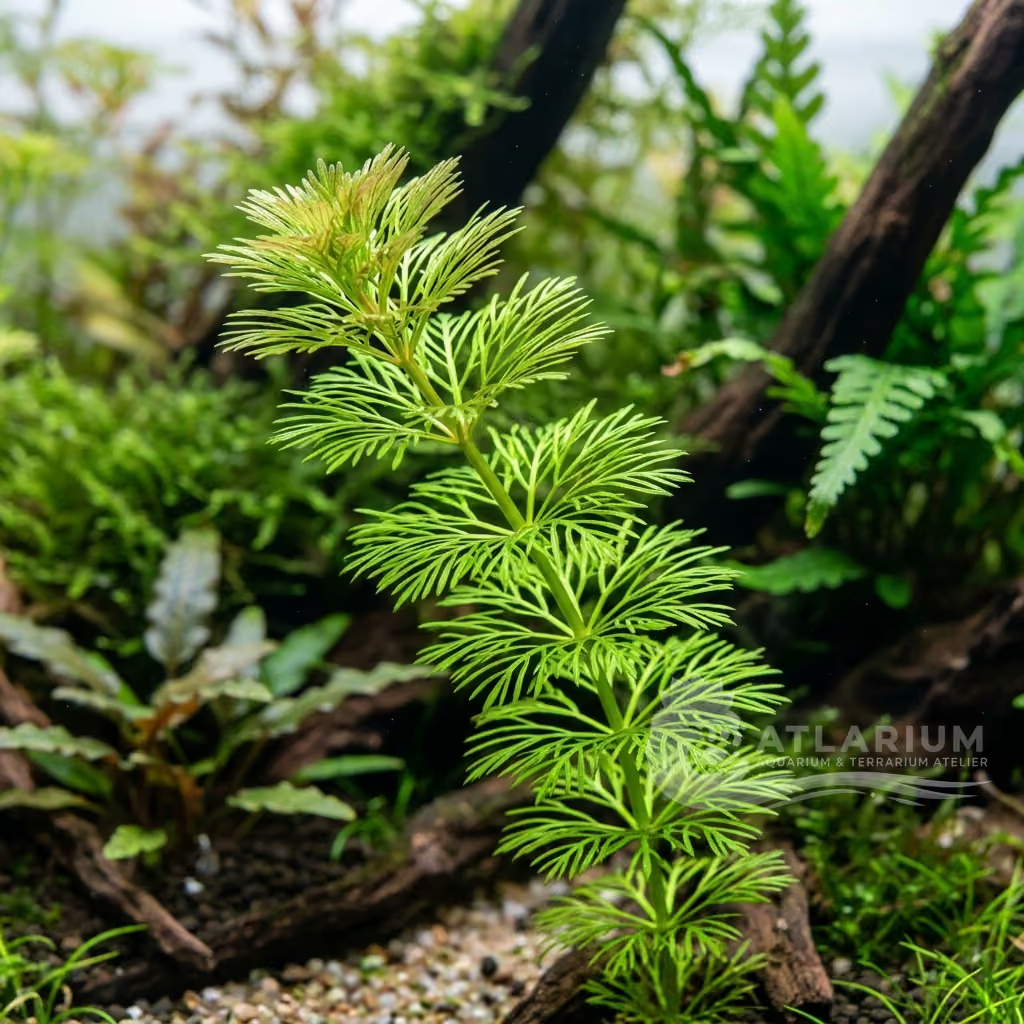
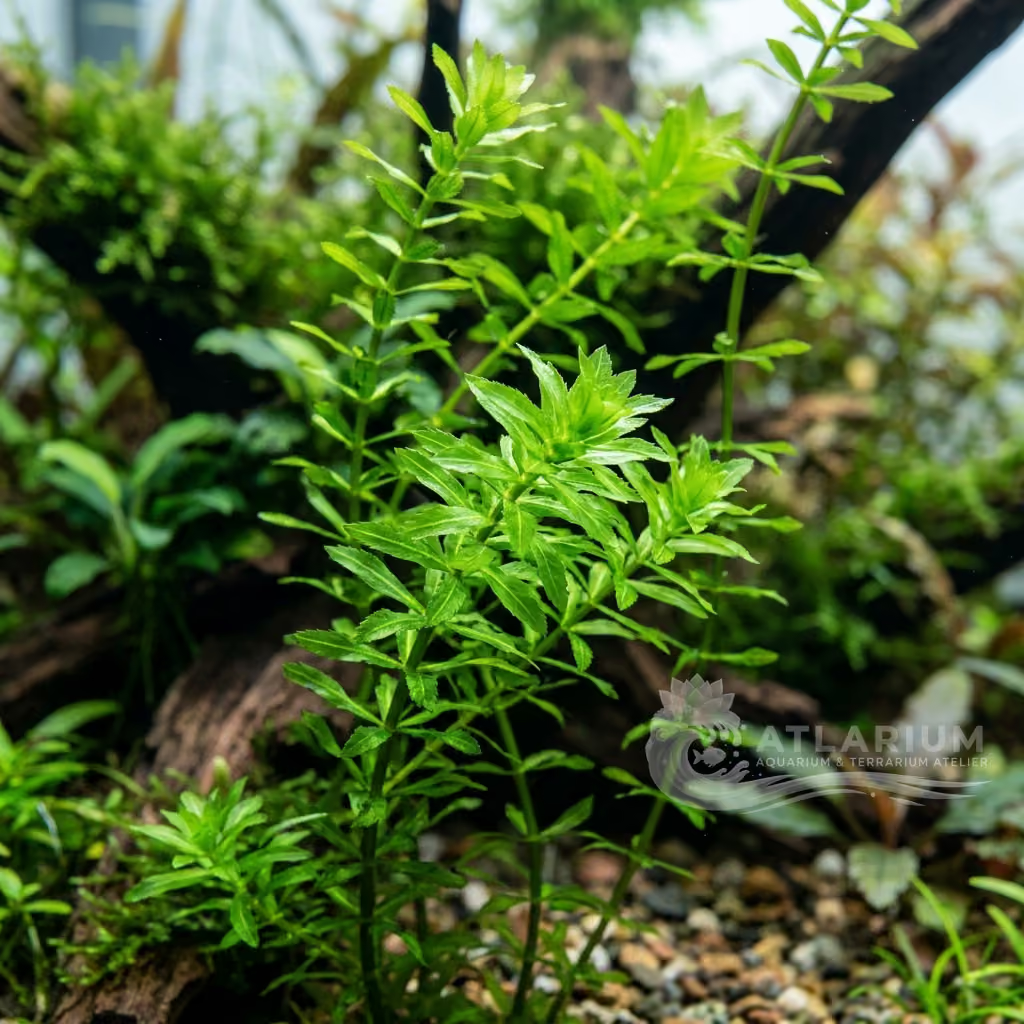
Physical Structure: Erect stem densely covered by very fine needle-like leaves radiating 360 degrees. On the top, it develops a compact tuft reminiscent of a soft plant brush.
Color & Texture: Bright light green color, sometimes with whitish hues in the apical growth point. The texture is incredibly fine and delicate, offering an extraordinary contrast with broad-leaved plants.

Soins, reproduction et cohabitation
Lighting & CO2: Requires extremely intense lighting. Constant and generous CO2 supply is an absolute limiting factor for the survival of this plant.
Nutrition & Substrate: Needs an acidic and fertilized substrate (aquasoil). Liquid fertilization must be regular, with special attention to iron and potassium.
Water Chemistry: Requires extremely soft (KH 0-2) and highly acidic water (pH 4.5-6.5). Sensitive to any accumulation of carbonate hardness. Optimal temperature between 20 and 30 °C.
Space Management & Placement: Place in the midground or background. Needs good water circulation around it to prevent dirt accumulation between the leaves.
Pruning: Pruning is done by cutting the apical part and replanting it. It is advisable to handle the stems with extreme gentleness to avoid damaging them.
Risks & Diseases: It is considered one of the most difficult plants in the aquarium hobby. Any deviation from the described chemical parameters can lead to immediate decay and melting of the stems.

Origine et répartition géographiques
Widespread in the tropical regions of Asia and Australia. It grows primarily in stagnant and clear waters of oligotrophic marshes and ponds under high light, often on very acidic peaty substrates.
Origine
Asie du Sud et du Sud-EstAustralie, Nouvelle-Guinée et Océanie

Profil de plante
- Emplacement
- Plan intermédiaire
- It is best planted in the background or midground in small, tight clusters. It needs unobstructed light, so ensure taller plants do not shade it. Its striking top profile makes it ideal for areas visible from above.
- Forme botanique
- Tige
- It is a stem plant with extremely fine, needle-like leaves radiating around the stem. When viewed from above, the shoot tips resemble delicate, green stars. The overall texture is incredibly soft and feathery.
- Croissance
- Moyenne
- Under optimal high-tech conditions, it exhibits a moderate to fast growth rate. It will steadily reach for the surface, necessitating regular maintenance. In suboptimal conditions, its growth will stall completely.
- Substrat
- Élevé
- Eriocaulon setaceum is a delicate and demanding species that relies heavily on a nutrient-dense substrate for optimal health. It develops an intricate and deeply penetrating root system, making a thick layer of high-quality, acidic aqua soil absolutely essential. The substrate depth should be at least 5-8 cm to allow the roots to anchor securely and absorb vital nutrients effectively. Because this plant absorbs a significant portion of its sustenance through its roots, a porous and fertile soil environment is critical to support its stunning, needle-like foliage.
- Fertilisation de la colonne d'eau
- Recommandée
- It is a heavy water column feeder that demands strict adherence to comprehensive liquid fertilization. High CO2 levels and soft water are absolute requirements for survival. Trace element dosing enhances its pale green hue.
- Fertilisation racinaire
- Aucune
- While it absorbs primarily via its finely divided leaves, root tabs in a nutrient-rich substrate help support the plant. A good aquasoil provides a buffer and steady nutrient supply to its delicate roots.
- Taille
- Occasionnelle
- Trim carefully by topping the stems and replanting the upper portions. The lower rooted portion often struggles to sprout new side shoots and is usually discarded. Regular topping keeps the stand looking fresh and bushy.
- Propagation
- Boutures
- Propagation is typically done by topping the plant and replanting the upper shoot. Occasionally, under very strong light, it may form side shoots naturally. These side shoots can be snipped and planted.
- Sensibilité
- Modérée
- This is an extremely demanding species that melts rapidly in hard water or low light. It is unforgiving of CO2 or nutrient fluctuations. It does not tolerate being shaded by other plants or heavy algae growth.
- Rôle dans le décor
- Plan intermédiaire, Arrière-plan
- It provides an elegant textural contrast in the midground to background. Its unique star-shaped tops create a stunning focal area. It is typically used as a delicate accent rather than a dense bush.

Espèces associées
Recommandations regroupées par proches parents, compagnons et soins similaires.