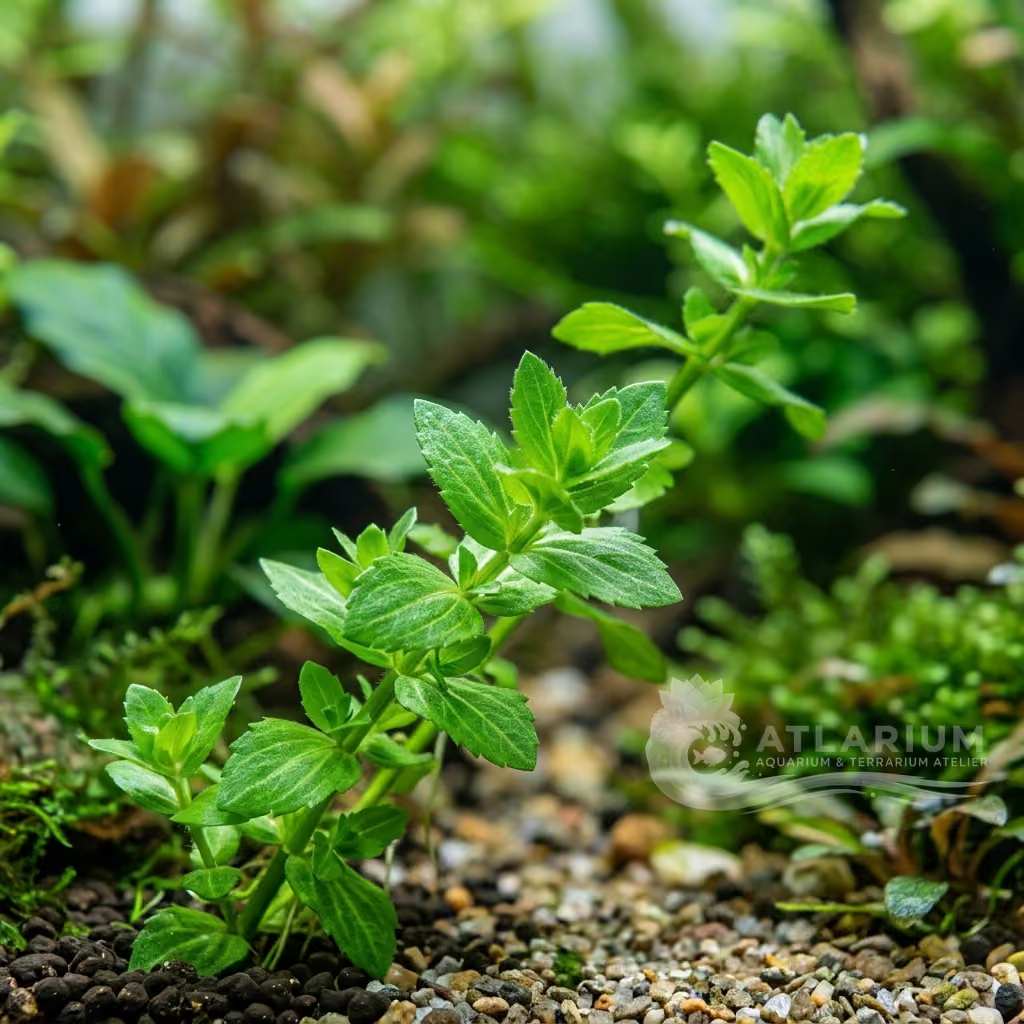
Alternanthera reineckii "Rosaefolia"
Alternanthera reineckii "Rosaefolia"
Classic red cultivar with brilliant fuchsia undersides. High light and CO2 are strongly recommended to encourage robust, vibrant growth and prevent leaf loss.
Température de l’eau
4 - 30 °C
Valeur du pH
5 - 7
Type d'eau
Eau douce
Lumière
Moyenne - Élevée
CO2
Faible - Élevée
Hauteur attendue
40 cm
Largeur attendue
15 cm
KH
0 - 14 dKH

Description de l'espèce
Geographical Origin and Habitat: Alternanthera reineckii 'Rosaefolia' (also spelled 'Roseafolia') is native to the floodplain areas, marshes, and riverbanks of tropical South America, with a strong presence in Brazil, Paraguay, and northern Argentina. In its natural habitat, it grows both emersed and submerged, colonizing wet, muddy soils that are periodically flooded by seasonal rains. In these areas, it receives significant direct sunlight and humid tropical warmth.
Taxonomy & Genetics: Taxonomically, it is classified within the Amaranthaceae family, genus Alternanthera. 'Rosaefolia' is one of the most famous and widespread cultivars in the aquarium hobby, selected for the distinct fuchsia and pinkish-red
Color & Texture: ation on the underside of its leaves. Genetically, it shares the resilience of the wild type but exhibits a strong capacity to accumulate anthocyanins, protective pigments that filter excess light radiation and give it its signature reddish tones.
Physical Structure: It features an erect stem structure that is vigorous and becomes slightly woody at the base over time. The leaves are opposite, decussate, and lanceolate-ovate with slightly wavy margins, measuring between 4 and 8 cm in length. The plant develops a dense system of adventitious roots both in the substrate and along the lower nodes of the submerged stem, optimizing nutrient uptake directly from the water column.
Color & Texture: Color is the true strength of this cultivar: while the upper side of the leaves ranges from dark olive green to bronze-red or golden brown, the underside shines with an extremely bright and saturated fuchsia-pink or purple. The leaf texture is silky yet robust, with well-defined main veins that stand out on the surface, creating a dynamic color contrast under aquarium lighting.

Soins, reproduction et cohabitation
Lighting & CO2: It requires moderate to high lighting to maintain its red color and stimulate compact growth with short internodes. CO2 injection is highly recommended at levels of 15-25 mg/L; without CO2, growth slows down significantly, and the plant
Risks & Diseases: shedding its lower leaves.
Nutrition & Substrate: It prefers a fertile substrate rich in iron and clay, which supports root development.
Water Chemistry: Highly flexible temperature-wise, it tolerates temperatures from 4°C to 30°C, though it performs best between 22°C and 26°C. It adapts to acidic or neutral pH (5.0-7.0) and carbonate hardness from very low to medium (KH 0-14 dKH). It is important to keep water parameters stable to avoid stress.
Space Management & Placement: The ideal placement is in the midground or background of the aquarium, preferably in groups composed of individual stems planted 2-3 cm apart. This placement allows light to reach the lower parts of the plant, preventing premature leaf loss.
Pruning: Pruning is done by cutting the stem above a leaf node. The cut apical portion can be replanted directly into the substrate to start a new plant, while the pruned stem will respond by developing two or more lateral shoots, making the original bush much denser.
Risks & Diseases: If grown in sub-optimal conditions (poor light or lack of CO2), it tends to decline, losing leaves and becoming an easy target for green spot or hair algae. Its tender leaves can be damaged by herbivorous fish or large shrimp if they are not adequately fed.

Origine et répartition géographiques
Alternanthera reineckii 'Rosaefolia' (also spelled 'Roseafolia') is native to the floodplain areas, marshes, and riverbanks of tropical South America, with a strong presence in Brazil, Paraguay, and northern Argentina. In its natural habitat, it grows both emersed and submerged, colonizing wet, muddy soils that are periodically flooded by seasonal rains. In these areas, it receives significant direct sunlight and humid tropical warmth.
Origine
Amazonie, Orénoque et GuyanesAmérique du Sud hors AmazonieSélection et cultivars

Profil de plante
- Emplacement
- Plan intermédiaire
- It is best positioned in the midground or foreground of the aquarium, depending on the tank size. Its compact nature allows it to create beautiful, dense bushes that do not overshadow other plants. When planted in groups, it forms a striking focal point that draws the eye. Ensure it is placed in an area that receives unobstructed light for optimal development.
- Forme botanique
- Tige
- This plant features sturdy, upright stems adorned with decussate leaves that exhibit a striking red to magenta hue on the underside. The leaves are typically lanceolate and somewhat smaller than the standard species, giving it a more compact appearance. Its structure is quite robust, allowing it to withstand moderate water flow. The dense foliage creates a beautifully textured visual element in the aquascape.
- Croissance
- Moyenne
- The growth rate is generally moderate when provided with optimal lighting and CO2 injection. Under lower light conditions, growth slows down significantly and the plant may struggle. Regular fertilization will encourage a steady and manageable upward progression. Overall, it requires less frequent maintenance compared to faster-growing stem plants.
- Substrat
- Élevé
- This classic red stem plant relies heavily on substrate nutrition, thriving best in a dedicated aqua soil environment. Its substantial root system anchors firmly into the substrate bed, actively drawing up macro and micronutrients required for healthy stem and leaf formation. A minimum substrate depth of 5 centimeters is necessary to prevent the tall stems from uprooting and to secure long-term nutrient availability.
- Fertilisation de la colonne d'eau
- Recommandée
- Liquid column fertilization is highly recommended to supply readily available nutrients to the leaves. A comprehensive liquid fertilizer containing both macro and micronutrients should be dosed regularly. Iron supplements are particularly beneficial to enhance the red pigmentation. Consistent dosing schedules help prevent deficiencies and promote vigorous foliage development.
- Fertilisation racinaire
- Aucune
- While it can absorb nutrients from the water column, it benefits significantly from a nutrient-rich substrate. Root tabs placed near the base can provide a steady supply of essential elements, promoting stronger root development. A fertile soil base encourages thicker stems and more robust overall growth. This dual feeding approach maximizes the plant's health and coloration.
- Taille
- Occasionnelle
- Trimming should be done by cutting the stem just above a healthy node using sharp scissors. This encourages the plant to develop side shoots, resulting in a bushier appearance over time. The replanted tops will quickly root and form new plants, allowing for easy expansion. Regular pruning is necessary to maintain its compact shape and prevent lower leaves from being shaded out.
- Propagation
- Boutures
- Propagation is straightforward and is achieved primarily through stem cuttings. Simply cut a healthy top portion of the stem and plant it directly into the substrate. Ensure the cutting has at least a few leaves and a healthy node to promote rapid root growth. With optimal conditions, the new cuttings will establish themselves within a few days.
- Sensibilité
- Modérée
- This species is somewhat sensitive to sudden fluctuations in water parameters, particularly pH and temperature. It does not tolerate prolonged periods of shading, which will cause it to quickly drop its lower leaves. Algae growth on its leaves can be a problem if nutrients and light are not properly balanced. Extreme care should be taken when using chemical treatments, as it can be delicate.
- Rôle dans le décor
- accent, Plan intermédiaire, Arrière-plan
- It plays an excellent role as a colorful midground accent, adding depth and contrast to green aquatic landscapes. Its smaller leaf size makes it suitable for both large and small aquariums without overwhelming the layout. It pairs beautifully with light green foreground carpets or dark hardscape materials. Its striking coloration draws attention and serves as a natural focal point.

Espèces associées
Recommandations regroupées par proches parents, compagnons et soins similaires.