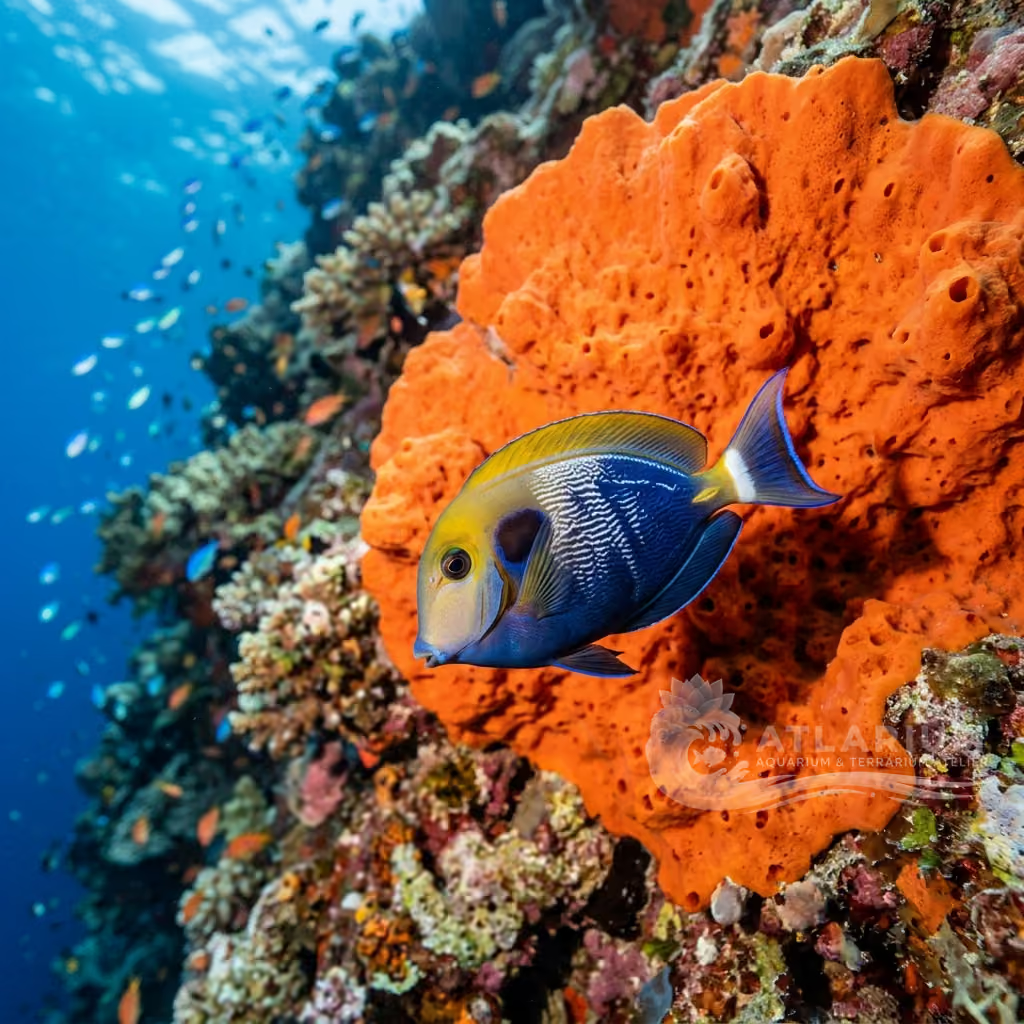
Giant Carpet Anemone
Stichodactyla gigantea
An immense tropical marine anemone boasting highly adhesive, carpet-like tentacles. It is immensely popular for successfully hosting symbiotic clownfish.
Température de l’eau
22 - 27 °C
Valeur du pH
8.1 - 8.4
Type d'eau
Marin
Type d'invertébré
Anemone
Taille adulte
50 cm
Groupe minimal
>= 1
KH
8 - 12 dKH
Rôle écologique
Symbiont
Sensibilité au cuivre
High

Description de l'espèce
Geographical Origin and Habitat: This giant carpet anemone is widely distributed throughout the warm, shallow tropical waters of the Indo-Pacific region. Its range extends from the Red Sea and East African coast to Micronesia, southern Japan, and northern Australia. It primarily inhabits coral reef flats, shallow lagoons, and sandy margins, where it anchors its foot deeply into the sand or attaches to buried rocks at depths ranging from 1 to 20 meters, enjoying high-intensity sunlight and moderate water currents.
Taxonomy: Stichodactyla gigantea belongs to the phylum Cnidaria, class Anthozoa, order Actiniaria, suborder Enthemonae, and family Stichodactylidae. It is commonly referred to as the giant carpet anemone due to its expansive, undulating oral disc which can grow over 50 centimeters in diameter, covered densely with short, sticky, conical tentacles that give the animal a distinct carpet-like or velvety appearance.
Social Behavior: While it is a solitary, sessile invertebrate, it plays a key ecological role by hosting mutualistic symbiotic relationships. It is the preferred natural host for several clownfish species, including Amphiprion ocellaris, Amphiprion percula, and Amphiprion bicinctus, as well as commensal shrimp like Periclimenes species. The host fish receive protection from predators within the stinging tentacles, while providing the anemone with defense and supplemental nutrients.
Coloration and Sexual Dimorphism: It exhibits a vast array of colors, ranging from common shades of brown and olive green to brilliant hues of blue, purple, deep pink, neon green, and occasionally bright yellow or red. These colors are produced by the density of symbiotic zooxanthellae and protective fluorescent proteins. There is no visible morphological or chromatic sexual dimorphism between male and female individuals.

Soins, reproduction et cohabitation
Tank Setup: It requires a mature marine reef aquarium, established for at least 9 to 12 months, with a minimum capacity of 300 liters to accommodate its potential adult size. A deep sand bed of at least 8-10 cm combined with secure, flat base rocks is essential for the anemone to bury and anchor its pedal disc. All powerheads and overflow intakes must be thoroughly screened with foam covers, as this species is prone to wandering when stressed, placing it at high risk of being shredded by impellers.
Diet and Feeding: The majority of its nutritional needs are met through photosynthesis by its symbiotic zooxanthellae, requiring very high-output aquarium lighting (LEDs or T5s designed for reef tanks). However, weekly feedings of small, meaty marine foods such as minced shrimp, mysis, krill, or fresh silversides placed gently near the oral disc will greatly enhance growth rates, overall tissue health, and color retention.
Water Quality: It demands pristine and exceptionally stable water parameters. Water temperature must be maintained strictly between 24°C and 26°C, specific gravity at 1.024 to 1.026, pH at 8.1 to 8.4, and alkalinity between 8 and 11 dKH. Nitrate and phosphate levels should be kept as close to zero as possible (nitrates under 5 ppm, phosphates under 0.03 ppm). Rapid fluctuations in salinity, temperature, or chemical levels are highly detrimental and can cause rapid tissue decline.
Compatibility and Tankmates: While it is an excellent host for compatible anemonefish, its nematocysts are exceptionally strong and sticky. It poses a significant danger to small, slow-moving, or bottom-dwelling fish species, which may easily become prey. It must also be positioned far away from any sessile corals, as it will wage chemical warfare and cause severe contact stings that can destroy coral colonies.
Aquarium Breeding: Sexual reproduction in the home aquarium is an extremely rare event, characterized by broadcast spawning which typically leads to severe water quality deterioration in closed filtration systems. Asexual reproduction via longitudinal fission occurs rarely in captivity, and intentional propagation by cutting the animal is highly discouraged due to the extreme risk of causing fatal bacterial infections.
Risks and Diseases: The primary risk is bleaching, which is the loss of symbiotic zooxanthellae caused by thermal shock or inadequate lighting, leaving the anemone white and vulnerable to starvation. It is also susceptible to internal bacterial infections, characterized by a gaping, flaccid mouth, discharge of brown waste matter, and deflated tentacles. Any copper-based medications in the water are highly toxic and will quickly kill the anemone.

Origine et répartition géographiques
This giant carpet anemone is widely distributed throughout the warm, shallow tropical waters of the Indo-Pacific region. Its range extends from the Red Sea and East African coast to Micronesia, southern Japan, and northern Australia. It primarily inhabits coral reef flats, shallow lagoons, and sandy margins, where it anchors its foot deeply into the sand or attaches to buried rocks at depths ranging from 1 to 20 meters, enjoying high-intensity sunlight and moderate water currents.
Origine
Océans tropicaux et récifsAmérique du NordAfrique et MadagascarAsie de l'EstAustralie, Nouvelle-Guinée et Océanie

Profil d'invertébré
- Régime alimentaire
- Photosynthetic
- Carnivorous and photosynthetic. Requires intense lighting for its zooxanthellae, plus meaty feedings of silversides, shrimp, or mussel meat.
- Rôle écologique
- Symbiont
- Serves as a natural host for many clownfish species, providing shelter while benefiting from the food the fish bring.
- Taille adulte
- 50 cm
- Risque de saut
- No
- Sensibilité aux chocs
- High
- Notoriously delicate. Requires a mature tank, extremely stable parameters, and a slow, careful acclimation.
- Calcium et minéraux
- Low
- Does not use calcium for a skeleton, but requires high water quality with standard marine levels of trace elements.
- Mue
- Yes
- Does not molt. Will completely deflate to expel waste or if highly stressed.
- Reproduction
- Oviparous
- Can occasionally split in captivity, though this is rare. Usually grows quite large and is collected from the wild.
- Compatibilité et compagnons
- Verify
- Has a highly potent sting. It will eat unwary fish and can sting and kill neighboring corals. Keep with caution.

Espèces associées
Recommandations regroupées par proches parents, compagnons et soins similaires.