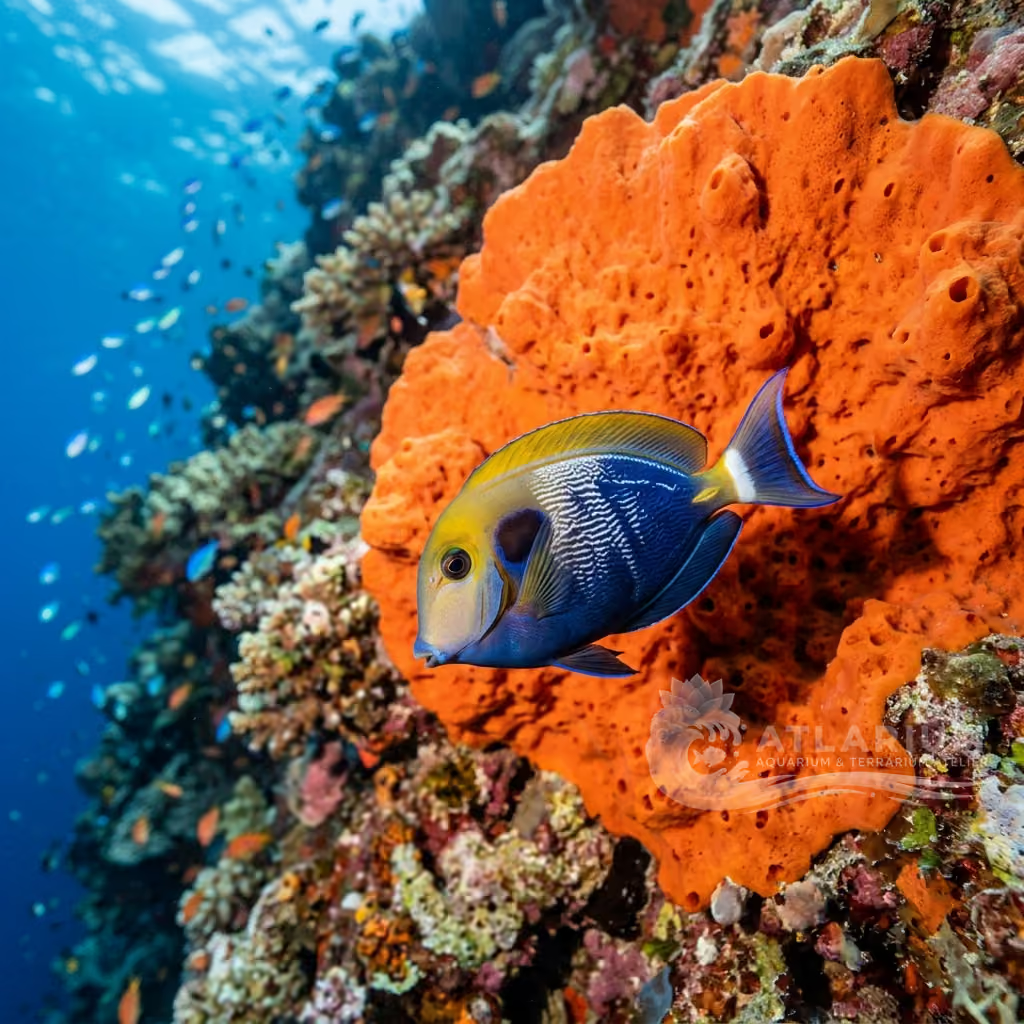
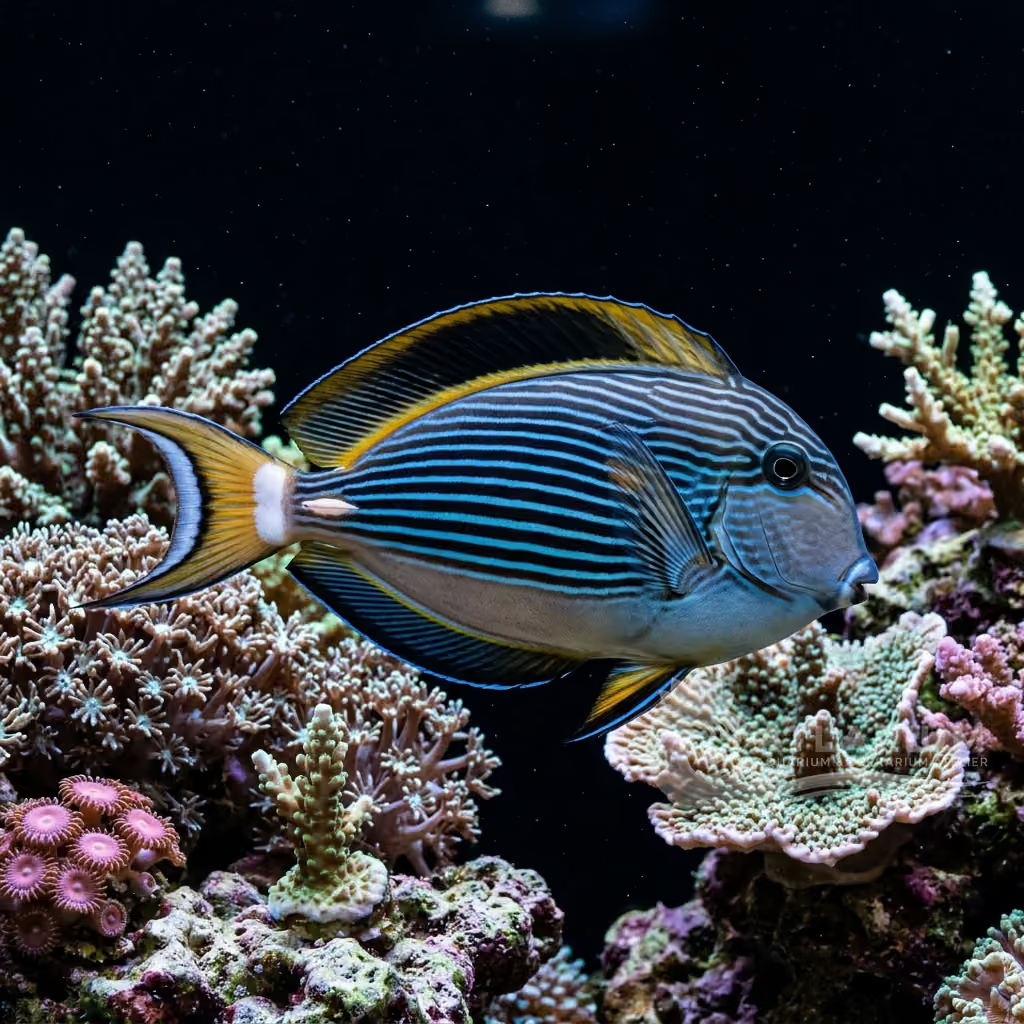
Achilles Tang
Acanthurus achilles
A territorial surgeonfish from the Pacific Ocean, featuring a sharp caudal spine. It inhabits highly oxygenated surge zones and requires ample swimming space and currents.
Température de l’eau
22 - 26 °C
Valeur du pH
8.1 - 8.4
Type d'eau
Marin
Niveau dans le bac
Tous les niveaux
Taille adulte
24 cm
Volume minimal du bac
>= 680 L
Groupe minimal
>= 1
KH
8 - 12 dKH

Description de l'espèce
Geographical Origin and Habitat: Central-Eastern Pacific. Inhabits outer reef zones characterized by strong surge and highly oxygenated waters down to 10 meters. This surgeonfish is native to the high-energy surge zones of reefs across the tropical Pacific Ocean.
Taxonomy and Morphology: Member of the family Acanthuridae. Reaches about 24 cm. Oval compressed body with a small mouth and a very pronounced caudal spine. Features a compressed body equipped with a sharp, retractable spine on the caudal peduncle for defense.
Social Behavior: Frantic swimmer and extremely territorial fish. Requires near-turbulent water movement to simulate the natural environment of the exposed reef. A highly active and territorial swimmer, it constantly patrols the reef crest searching for algae beds.
Coloration and Sexual Dimorphism: Stunning coloration: velvety ink-black body with a prominent drop-shaped (or flame-shaped) orange patch on the tail and neon-blue stripes along the fins. The dark brown to black body is contrasted by a striking orange teardrop-shaped patch near the tail.

Soins, reproduction et cohabitation
Aquarium Setup: Tank of at least 680 liters (180 gallons) with powerful wavemakers. Water must be exceptionally oxygenated and free of nitrates or phosphates. A very large aquarium of 600 liters or more with extreme water movement (surge simulation) is critical.
Diet and Feeding: Herbivore. Provide high amounts of dried marine algae (nori), spirulina, and enriched veggie pellets. Feed regularly. Require massive amounts of marine algae, nori, and spirulina, supplemented with occasional frozen foods.
Water Quality: Temperature 22-26°C (72-78°F, prefers cooler water), pH 8.1-8.4, specific gravity 1.020-1.025. Constantly monitor water quality. Pristine water quality with zero ammonia/nitrite, low nitrates, and high oxygen levels is absolutely mandatory.
Compatibility and Cohabitation: 100% reef-safe. Does not harm corals. Shows extreme intolerance toward surgeonfish of the same species or the genus Acanthurus. Reef-safe with corals, but will fight aggressively with other Acanthurus tangs in the same tank.
Aquarium Breeding: Reproduction in the hobby is considered impossible due to the biological requirements of the pelagic larvae. Rearing larvae has not been achieved in private aquaria due to the delicate pelagic nature of their spawns.
Risks and Diseases: Extremely sensitive to skin parasites (Ich and Velvet). A powerful UV sterilizer and quarantine tank are highly recommended. Highly susceptible to marine ich (Cryptocaryon irritans), earned it the reputation of an 'ich magnet' in the hobby.

Origine et répartition géographiques
Central-Eastern Pacific. Inhabits outer reef zones characterized by strong surge and highly oxygenated waters down to 10 meters. This surgeonfish is native to the high-energy surge zones of reefs across the tropical Pacific Ocean.
Origine
Océans tropicaux et récifsAsie de l'EstAustralie, Nouvelle-Guinée et Océanie

Profil de poisson
- Tempérament
- Semi-aggressive
- This fish displays a semi-aggressive and highly territorial temperament, particularly toward conspecifics or other surgeonfishes with similar shapes and coloration. It is generally peaceful toward tank mates from other families, such as clownfish, blennies, or anthias, as long as they do not compete for the same space. Introducing this species as the final addition to the aquarium is recommended to reduce the development of dominant, territorial behavior.
- Régime alimentaire
- Herbivore
- Acanthurus achilles is primarily a herbivore that feeds on filamentous algae growing on coral reefs in the wild. In the aquarium, its diet should be based mainly on dried marine algae (nori), spirulina, and high-quality vegetable-based commercial foods. Although it will accept meaty frozen foods like mysis and brine shrimp, these should only make up a minor fraction of its overall nutrition.
- Espérance de vie
- 10-15 years
- Taille adulte
- 24 cm
- Ratio des sexes
- Solitary
- Due to intense intraspecific aggression, Acanthurus achilles is best kept as a single specimen in most home aquariums. Attempting to house a mated pair or a small group is only feasible in exceptionally large systems, typically exceeding 1000 liters, and all individuals must be introduced simultaneously. For standard home aquariums, stocking a single individual is strongly recommended to prevent lethal territorial combat.
- Fréquence d'alimentation
- Twice daily
- Being a continuous grazer with a short digestive tract, this fish needs to be fed multiple times per day to maintain optimal health and weight. It is recommended to offer small portions of food 2 to 3 times daily, alongside leaving dried nori sheets attached to a clip for constant grazing throughout the day. Insufficient feeding frequency can lead to rapid weight loss and a weakened immune system.
- Charge biologique
- High
- Acanthurus achilles produces a high bioload due to its fast metabolism and continuous grazing habits. It requires a highly efficient filtration system, ideally equipped with an oversized protein skimmer to handle biological waste and ensure pristine water quality. Regular water changes and rigorous maintenance are critical to prevent the accumulation of nitrates and phosphates, to which this species is exceptionally sensitive.
- Courant
- Strong
- This species requires extremely strong and turbulent water flow, mimicking the high-energy surge zones of the tropical coral reefs it inhabits. Strong water movement not only satisfies its need to swim against currents but also ensures high levels of dissolved oxygen, which are vital for its respiration. The use of multiple wavemakers and advanced aeration systems is essential for long-term success.
- Risque de saut
- Yes
- Acanthurus achilles poses a high jump risk, especially when startled, stressed, or during territorial chases. Due to its lightning-fast movements and easily excitable nature, it can leap out of the water with ease. It is absolutely essential to cover the aquarium with a tight-fitting lid or a fine-mesh safety net to prevent fatal escapes.
- Reproduction
- Oviparous
- The reproduction of Acanthurus achilles in aquariums is considered extremely difficult, and there are no reports of successful commercial captive breeding. In the wild, these fish spawn by releasing pelagic eggs into the open water column, a behavior that requires vast vertical space hard to replicate in home environments. Furthermore, the larvae undergo a complex and prolonged planktonic phase requiring specific micro-foods that are nearly impossible for home aquarists to provide.
- Compatibilité et compagnons
- Aggressive
- Acanthurus achilles is compatible with a wide range of peaceful or semi-aggressive reef fish, such as angelfish, wrasses, and damselfish. However, it displays strong incompatibility with other members of the Acanthurus genus and surgeonfishes of similar shape or color, with which it will clash violently. It is also completely reef-safe, being compatible with corals and sessile invertebrates, making it ideal for spacious reef tanks.
- Niveau dans le bac
- All levels
- This species is an extremely active swimmer that utilizes the entire water column, showing no strict preference for any single depth zone in the aquarium. It constantly patrols the tank from top to bottom, moving rapidly through open areas in search of food and swimming against strong currents. The aquascaping layout should be designed to leave wide open swimming lanes in both the middle and upper levels of the tank.

Modèles et paramètres scientifiques
FishBase
Fenêtre sur les données scientifiques officielles de l’espèce
FishBase v25.04Données synchronisées le : 15/06/2026
- Niveau trophique
- 2 ± 0 se
- Résilience
- Élevée (moins de 15 mois)
- Singularité phylogénétique (PD50)
- 0.5
- Relation bayésienne longueur-poids
- a = 0.02291, b = 2.96
- VulnérabilitéVulnérabilité faible (14 / 100)

Espèces associées
Recommandations regroupées par proches parents, compagnons et soins similaires.