Rose Starfish
Nardoa rosea
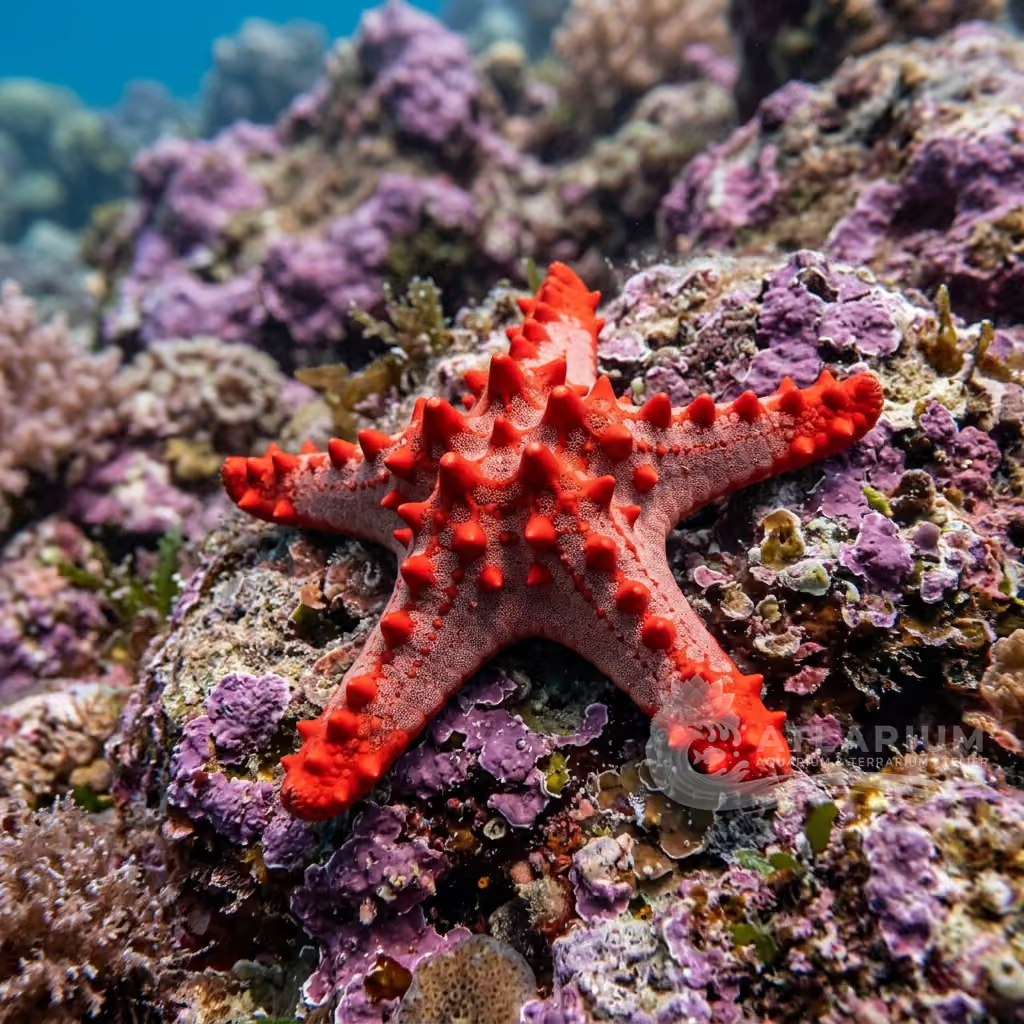
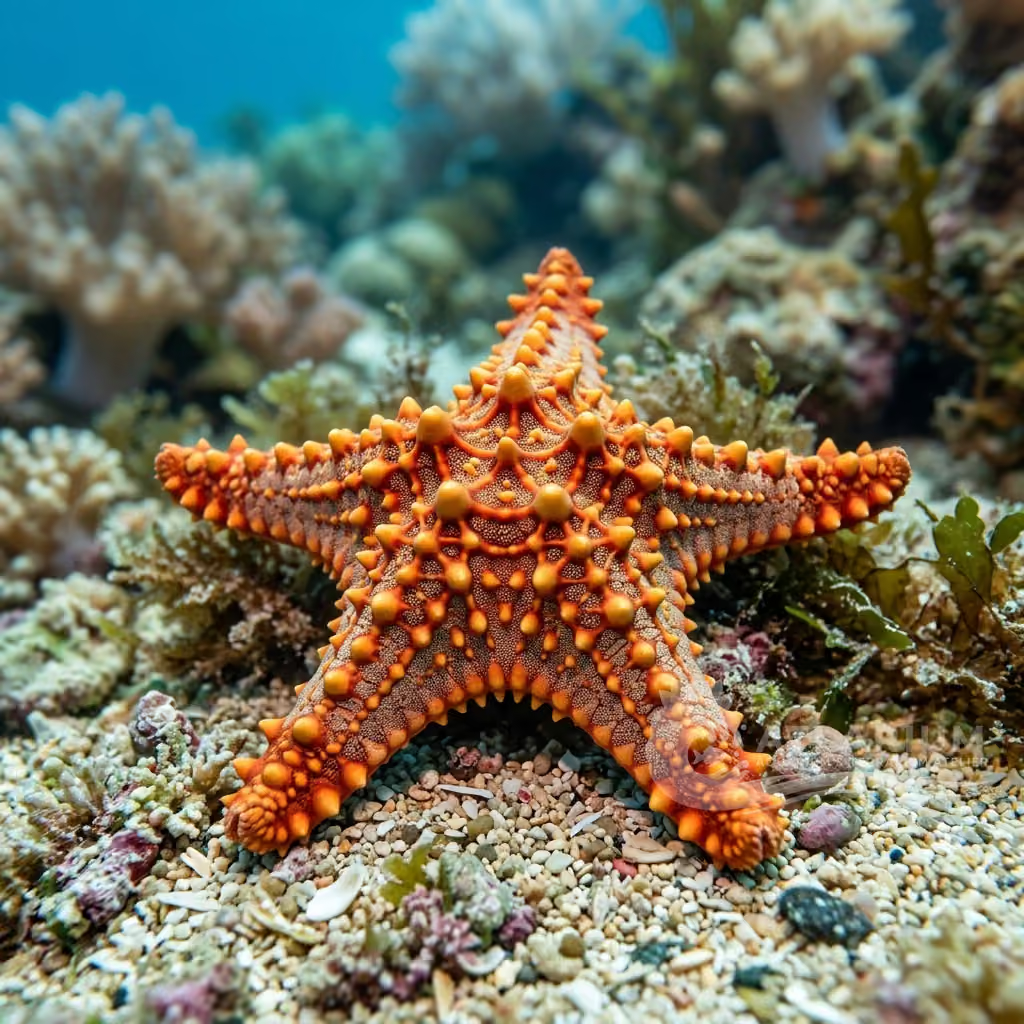
The Rose Starfish is a peaceful marine detritivore originating from the Indo-Pacific, widely appreciated for its beautiful pink body and red-orange nodules.
Température de l’eau
22 - 26 °C
Valeur du pH
8.1 - 8.4
Type d'eau
Marin
Type d'invertébré
Starfish
Taille adulte
15 cm
Groupe minimal
>= 1
KH
8 - 12 dKH
Rôle écologique
Scavenger
Sensibilité au cuivre
High

Description de l'espèce
Geographical Origin and Habitat: Nardoa rosea is widely distributed throughout the tropical reefs and lagoons of the Indo-Pacific region. It lives among coral rubble, sandy bottoms, and rocky crevices, seeking zones with moderate water flow and dense micro-fauna.
Taxonomy: Belongs to the class Asteroidea, order Valvatida, and family Ophidiasteridae. The genus Nardoa is characterized by irregular, bumpy skeletal plates covered in fine granules, distinguishing it from other reef starfish.
Social Behavior: Extremely peaceful and solitary. It is entirely reef-safe, spending its time slowly crawling over rocks and sand. It does not threaten corals, sessile invertebrates, or small fish, acting as a quiet member of the clean-up crew.
Coloration and Sexual Dimorphism: Displays a light pink to cream body base, accented by raised, distinct bumps or nodules colored in dark orange, red, or brown. There is no visible sexual dimorphism, and males and females look identical externally.

Soins, reproduction et cohabitation
Tank Setup: A well-established marine aquarium of at least 200 liters is essential. The tank must have been running for at least 10-12 months to ensure sufficient biological maturity and plenty of live rock for natural foraging.
Diet and Feeding: Omnivorous detritivore. It feeds on bacterial biofilms, detritus, microalgae, and organic waste on live rocks. Targeted feeding with small pieces of clam, shrimp, or squid placed directly underneath the starfish can supplement its diet.
Water Quality: Demands pristine, highly stable water parameters: specific gravity 1.023-1.025, temperature 24-26°C, pH 8.1-8.4, and very low nitrates. It has zero tolerance for copper treatments and is highly sensitive to osmotic fluctuations.
Compatibility and Tankmates: Safe with reef fish, corals, and peaceful invertebrates. Do not keep with starfish predators like pufferfish, triggerfish, large wrasses, or Harlequin Shrimp (Hymenocera picta), which feed exclusively on sea stars.
Aquarium Breeding: Breeding in home aquaria is practically non-existent. Like most Valvatida, they reproduce in nature via broadcast spawning, releasing gametes into the water column where fertilization occurs, followed by planktonic larval phases.
Risks and Diseases: Starvation is the leading cause of death in small or sterile aquariums. Rapid changes in salinity or temperature can cause osmotic shock, leading to bacterial infections, tissue necrosis, and eventual disintegration of the limbs.

Origine et répartition géographiques
Nardoa rosea is widely distributed throughout the tropical reefs and lagoons of the Indo-Pacific region. It lives among coral rubble, sandy bottoms, and rocky crevices, seeking zones with moderate water flow and dense micro-fauna.
Origine
Océans tropicaux et récifsAmérique du NordAsie du Sud et du Sud-Est

Profil d'invertébré
- Régime alimentaire
- Detritivore
- Omnivorous detritivore and scavenger. Feeds on bacterial films, detritus, and small benthic organisms.
- Rôle écologique
- Scavenger
- Helps keep the live rock and substrate clean by slowly moving around and consuming organic waste.
- Taille adulte
- 15 cm
- Risque de saut
- No
- Sensibilité aux chocs
- High
- Highly sensitive to changes in salinity, pH, and exposure to air. Must be carefully drip acclimated and never lifted out of the water.
- Calcium et minéraux
- Medium
- Requires standard marine trace elements, including calcium, to maintain its endoskeleton structure.
- Mue
- Yes
- Does not molt. Can regenerate lost arms if water quality is pristine and food is abundant.
- Reproduction
- Oviparous
- Can sometimes reproduce by fission or broadcast spawning, but rarely successful in typical home aquariums.
- Compatibilité et compagnons
- Reef safe
- Considered reef safe. Will not generally bother corals, but should not be kept with predatory fish like triggers or large puffers.

Espèces associées
Recommandations regroupées par proches parents, compagnons et soins similaires.