West Indian Star Snail
Lithopoma tectum
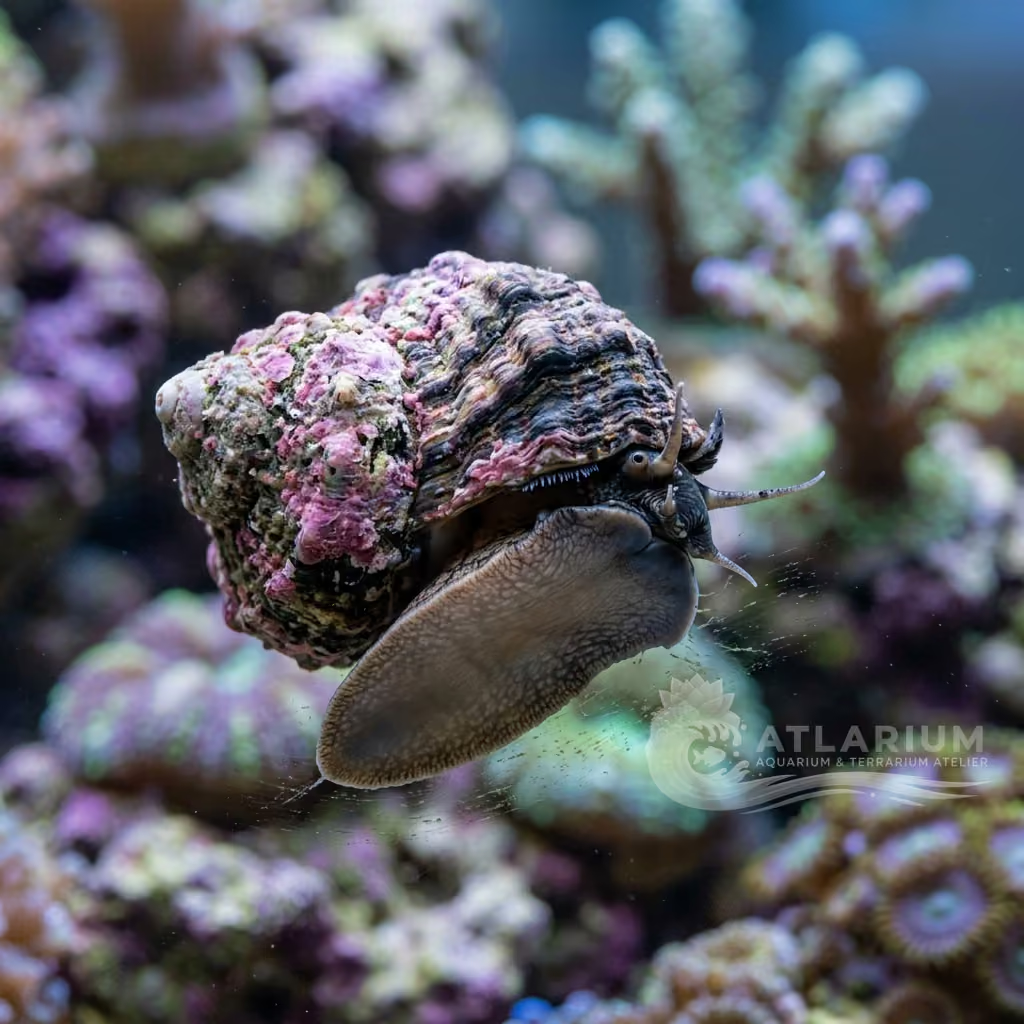
The West Indian Star Snail is a heavy-bodied grazer native to the Caribbean. It aggressively tackles nuisance algae on live rock, necessitating mature aquariums with highly stable rock formations.
Température de l’eau
22 - 28 °C
Valeur du pH
8.1 - 8.4
Type d'eau
Marin
Type d'invertébré
Freshwater snail
Taille adulte
4 cm
Groupe minimal
>= 1
KH
8 - 12 dKH
Rôle écologique
Herbivore
Sensibilité au cuivre
High

Description de l'espèce
Geographical Origin and Habitat: Lithopoma tectum, commonly known as the West Indian Star Snail or Tegula snail, is found throughout the tropical Western Atlantic Ocean. Its distribution spans the Caribbean Sea, Florida, the Bahamas, and South America. It prefers shallow rocky reefs and intertidal zones where sunlight promotes algae growth.
Taxonomy: Belonging to the family Turbinidae and the genus Lithopoma, this gastropod is characterized by a thick, heavy shell. In the aquarium hobby, it is frequently confused with Astraea species, and indeed was previously classified under the genus Astraea by historical marine biologists.
Social Behavior: Completely peaceful and harmless, this snail is an active herbivore that does not show any territorial behavior. It crawls continuously over glass and rockwork, rasping algae. While it is active during the day, its peak foraging activity occurs during the nighttime hours.
Coloration and Sexual Dimorphism: The shell is heavily textured, presenting a conical shape with spiral ridges and small knobs. The base color ranges from off-white, light grey, to dull brown, often obscured by pink coralline algae. There is no visible external sexual dimorphism; males and females are identical.

Soins, reproduction et cohabitation
Tank Setup: A well-established marine tank of at least 15-20 gallons (60-80 liters) is recommended. The aquascape should feature stable, mature live rock with plenty of surface area for grazing. Ensure all rockwork is secure, as these heavy-bodied snails can easily dislodge loosely placed corals.
Diet and Feeding: Excellent herbivorous cleaners. They consume large quantities of microalgae, green hair algae, film algae, and diatoms. They are not known to eat macroalgae or corals. In clean systems, supplemental feeding of dried seaweed (nori) or commercial spirulina-based wafers is necessary to prevent starvation.
Water Quality: Maintain standard reef parameters: temperature 72-78 °F (22-26 °C), pH 8.1-8.4, and specific gravity 1.023-1.025. Ensure adequate calcium (400-450 ppm) and magnesium levels to support shell growth and integrity. Like all marine invertebrates, they are highly sensitive to copper medications.
Compatibility and Tankmates: 100% reef-safe and compatible with almost all peaceful reef fish, corals, and shrimp. Avoid housing them with snail-eating predators such as triggerfish, pufferfish, large wrasses, and aggressive hermit crabs that may kill the snail for its shell.
Aquarium Breeding: Breeding in home aquariums is highly unlikely. They release eggs and sperm directly into the water column, where the resulting planktonic larvae are typically preyed upon by corals or filtered out by mechanical filtration and protein skimmers before they can settle.
Risks and Diseases: The primary risk is the snail falling upside down on sandy substrates. Because of their shell shape, they cannot right themselves and will die if not manually turned over by the keeper. Starvation in clean aquariums and sensitivity to rapid salinity fluctuations are other notable risks.

Origine et répartition géographiques
Lithopoma tectum, commonly known as the West Indian Star Snail or Tegula snail, is found throughout the tropical Western Atlantic Ocean. Its distribution spans the Caribbean Sea, Florida, the Bahamas, and South America. It prefers shallow rocky reefs and intertidal zones where sunlight promotes algae growth.
Origine
Océans tropicaux et récifsAmérique centrale et CaraïbesAmérique du NordAsie du Sud et du Sud-Est

Profil d'invertébré
- Régime alimentaire
- Algae eater
- Herbivorous. Grazes on microalgae and diatoms.
- Rôle écologique
- Herbivore
- Effective at keeping the aquarium free of nuisance algae.
- Taille adulte
- 4 cm
- Risque de saut
- Yes
- No jumping risk.
- Sensibilité aux chocs
- High
- Requires careful acclimation to avoid osmotic shock.
- Calcium et minéraux
- High
- Adequate calcium and trace elements are needed.
- Mue
- Shell growth
- As gastropods, they do not molt their shell. Their growth occurs by continuously adding layers of calcium carbonate to the edge of their shell as they mature and increase in size.
- Reproduction
- Oviparous
- They are gonochoric broadcast spawners, meaning separate males and females release their gametes directly into the water column. Successful captive breeding of this species is extremely difficult and rarely documented.
- Compatibilité et compagnons
- With caution
- They are completely reef safe and peaceful algae grazers. However, a major drawback is that they generally cannot right themselves if turned over, requiring manual assistance to avoid starvation or predation.

Espèces associées
Recommandations regroupées par proches parents, compagnons et soins similaires.