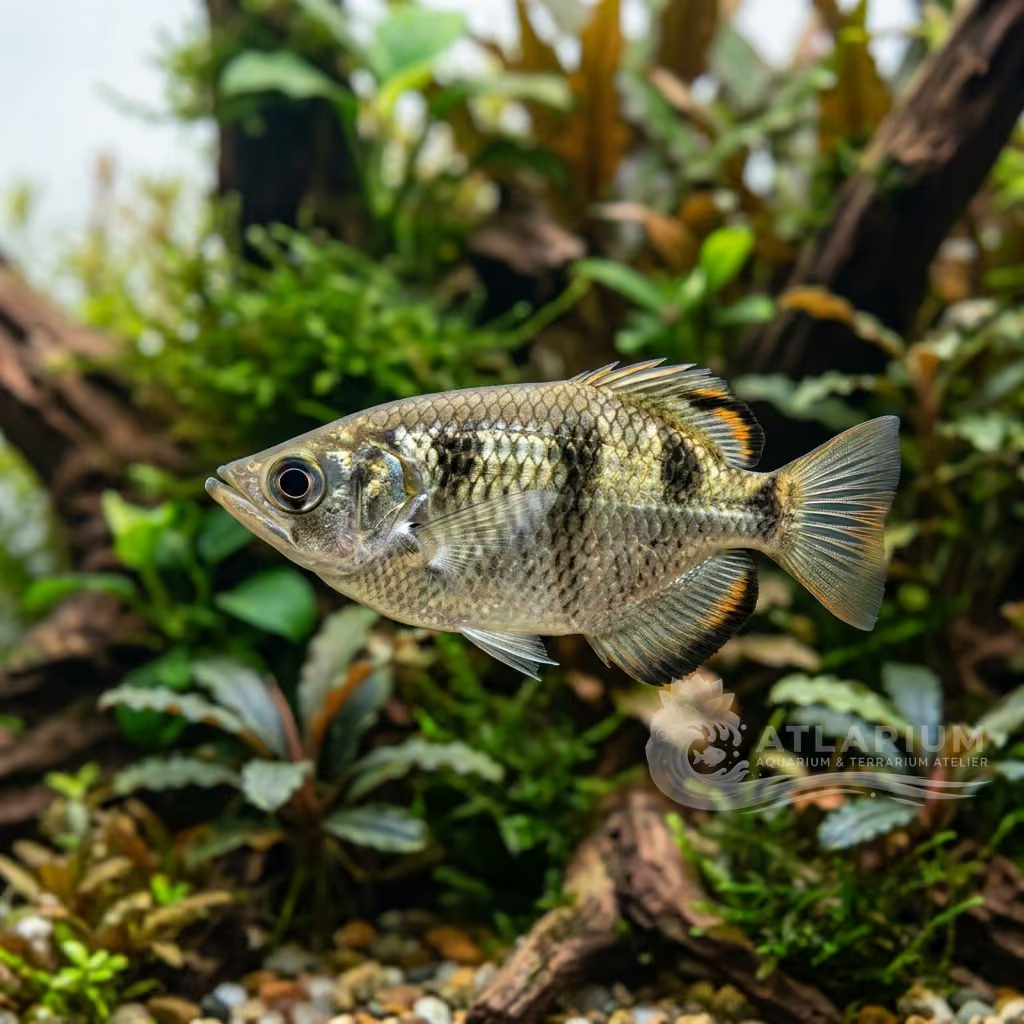
Clouded archerfish
Toxotes blythii
Blyth's Archerfish is a spectacular freshwater marksman featuring bold, tiger-like stripes. It famously shoots down terrestrial insects with perfectly aimed jets of water from below the surface.
Température de l’eau
24 - 28 °C
Valeur du pH
6.5 - 7.5
Type d'eau
Eau douce
Niveau dans le bac
Surface
Taille adulte
15 cm
Volume minimal du bac
>= 180 L
Groupe minimal
>= 1
GH
5 - 15 dGH
KH
2 - 7 dKH
TDS
95 - 295 ppm
Conductivité
148 - 461 uS/cm

Description de l'espèce
Geographical Origin and Habitat: Toxotes blythii is native to Southern Asia, with a geographical range restricted primarily to river basins in Myanmar (Burma), particularly the Tenasserim River system. Unlike most other members of the Toxotes genus that inhabit brackish mangrove estuaries, Toxotes blythii is a strictly freshwater species. It lives in slow-moving inland rivers, shaded forest streams, and tributaries characterized by overhanging riparian vegetation, where insects are abundant.
Taxonomy and Morphology: It belongs to the family Toxotidae and the genus Toxotes. It features a laterally compressed, wedge-shaped body with a straight dorsal profile, which allows it to swim efficiently just below the water surface. Its eyes are large, highly mobile, and capable of binocular vision, allowing it to correct for light refraction when targeting prey. The mouth is large and upturned, with a specialized tongue and palate groove that creates a barrel for projecting high-pressure water drops.
Social Behavior: This species is peaceful but predatory toward small prey. Juveniles form small schools for protection, whereas adults tend to be solitary or live in loose groups. It is an active surface swimmer that constantly scans the overhanging vegetation for insects. It does not show aggression toward similarly sized fish that are too large to be eaten, but food competition can occur during group feeding.
Coloration and Sexual Dimorphism: The coloration is unique within the family, featuring a bright silver-golden body background covered with irregular black spots, patches, and swirls that form a marbled or clouded pattern along the flanks. This distinct pattern differentiates it from the simple vertical bars of other archerfish. There is no visible external sexual dimorphism between males and females.

Soins, reproduction et cohabitation
Aquarium Setup: Requires a large tank of at least 250-300 liters, prioritizing length and width over depth. It is crucial to lower the water level by 15-20 cm and create a terrestrial zone above with branches and live plants (such as Pothos) where insects can land, allowing the fish to display its natural spitting behavior. The tank must be tightly covered with a secure lid to prevent escaping and jumping.
Diet and Feeding: The diet must consist primarily of live insects. It is recommended to feed crickets, flies, mealworms, and small roaches dropped onto the branches above the water surface. They will also accept high-quality floating sticks, and frozen foods like krill, mysis, and bloodworms, but live prey is essential to encourage natural hunting behaviors and keep them healthy.
Water Quality: Prefers clean, well-oxygenated, and slightly alkaline freshwater. Recommended parameters: temperature 24-28 °C, pH 7.0-8.0, and water hardness 10-20 dGH. A high-quality filtration system is necessary to handle the waste from a protein-rich diet, but surface water movement should be kept moderate to not interfere with their targeting vision.
Compatibility and Cohabitation: Can be housed with calm, medium-to-large fish that share similar water requirements. Suitable tankmates include active rainbowfish (Melanotaeniidae), robust tetras, and peaceful medium-sized cichlids. Small fish (such as neon tetras or guppies) and ornamental shrimp must be avoided, as they will be eaten immediately.
Aquarium Breeding: Breeding in home aquariums has not been successfully documented. In the wild, spawning is triggered by seasonal monsoons and rising water levels. They are believed to release pelagic eggs in large numbers with no parental care. The microscopic larvae feed on tiny zooplankton upon hatching.
Risks and Diseases: The main risk is jumping out of the tank if the cover is not secure, as these fish often leap to catch insects they cannot shoot down. They are susceptible to bacterial skin infections and external parasites if water quality is poor. High nitrate levels should be avoided, as they cause stress, lethargy, and loss of appetite.

Origine et répartition géographiques
Toxotes blythii is native to Southern Asia, with a geographical range restricted primarily to river basins in Myanmar (Burma), particularly the Tenasserim River system. Unlike most other members of the Toxotes genus that inhabit brackish mangrove estuaries, Toxotes blythii is a strictly freshwater species. It lives in slow-moving inland rivers, shaded forest streams, and tributaries characterized by overhanging riparian vegetation, where insects are abundant.
Origine
Asie du Sud et du Sud-Est

Profil de poisson
- Tempérament
- Semi-aggressive
- While generally well-behaved, The Clouded archerfish possesses a semi-aggressive streak that requires careful tank mate selection. They will fiercely defend their chosen territory, especially during feeding or breeding times, but usually ignore fish that stay out of their way. Providing a large enough aquarium with distinct visual boundaries helps mitigate most aggressive tendencies.
- Régime alimentaire
- Omnivore
- The Clouded archerfish is a specialized insectivore, naturally feeding on insects that fall onto the water surface or live among aquatic vegetation. Their diet in the aquarium should heavily feature live or frozen insects, such as fruit flies, bloodworms, and mosquito larvae. While they can be trained to accept floating pellets, natural insect prey remains crucial for their digestion and vitality.
- Espérance de vie
- 5-10 years
- Taille adulte
- 15 cm
- Ratio des sexes
- Pair
- Males and females of The Clouded archerfish are nearly identical in appearance, making visual sexing extremely challenging outside of the breeding season. During spawning, females may appear slightly plumper, while males might develop slightly more intense coloration or specific breeding tubes. When keeping a group, a balanced mix is natural, though purchasing a larger group and letting pairs form organically is the best approach.
- Fréquence d'alimentation
- Twice daily
- Since The Clouded archerfish feeds primarily at the surface, offering food in small, frequent amounts throughout the day mimics their natural foraging behavior. They should be fed two to three times daily, focusing on floating items that stay at the surface. Care must be taken to remove any uneaten food quickly to prevent water spoilage.
- Charge biologique
- High
- The Clouded archerfish generates a moderate bioload, requiring a balanced approach to aquarium filtration. Weekly water changes and regular vacuuming of the substrate are recommended to prevent the accumulation of dissolved organics. An appropriately sized canister filter or a well-designed internal filter is often highly beneficial.
- Courant
- Stagnant
- Originating from moderately flowing streams and rivers, The Clouded archerfish appreciates a steady but not overpowering water current. The flow should be sufficient to ensure good oxygenation and even temperature distribution throughout the tank. Providing areas of both moderate flow and resting zones with lower flow will allow the fish to choose their preferred environment.
- Risque de saut
- Yes
- The Clouded archerfish is an excellent jumper and is well known for leaping out of the water to catch prey or escape predators in the wild. Even the smallest gap in the aquarium canopy can be exploited, leading to a tragic outcome. A completely secure, heavy, and tightly fitting lid or mesh screen is an absolute necessity for this species.
- Reproduction
- Oviparous
- Reproduction in The Clouded archerfish involves the scattering of pelagic eggs directly into the water column, usually during the rainy season in their natural habitat. They do not exhibit any parental care, and the eggs are left to drift with the current until they hatch. Breeding them in captivity is incredibly difficult and rarely achieved without specialized hormonal treatments and massive breeding vats.
- Compatibilité et compagnons
- With caution
- This species can be somewhat territorial, especially towards conspecifics or similar-looking fish. They should be kept with robust fish that occupy different water levels to minimize aggressive encounters. Providing plenty of visual barriers like plants and driftwood will help reduce tension within the aquarium.
- Niveau dans le bac
- Top
- The Clouded archerfish spends the vast majority of its time patrolling the upper levels of the water column, often just below the surface. They rely on their upward-facing mouths to snatch food from the water's edge or even above it. Floating plants can provide them with a sense of security while they hunt and rest in this specific zone.

Modèles et paramètres scientifiques
FishBase
Fenêtre sur les données scientifiques officielles de l’espèce
Données synchronisées le : 15/06/2026
- Niveau trophique
- 3,2 ± 0,4 se
- Résilience
- Élevée (moins de 15 mois)
- Singularité phylogénétique (PD50)
- 0.5156
- Relation bayésienne longueur-poids
- a = 0.0166, b = 3
- VulnérabilitéVulnérabilité faible (15 / 100)

Espèces associées
Recommandations regroupées par proches parents, compagnons et soins similaires.