Forktail Blue-eye
Pseudomugil furcatus
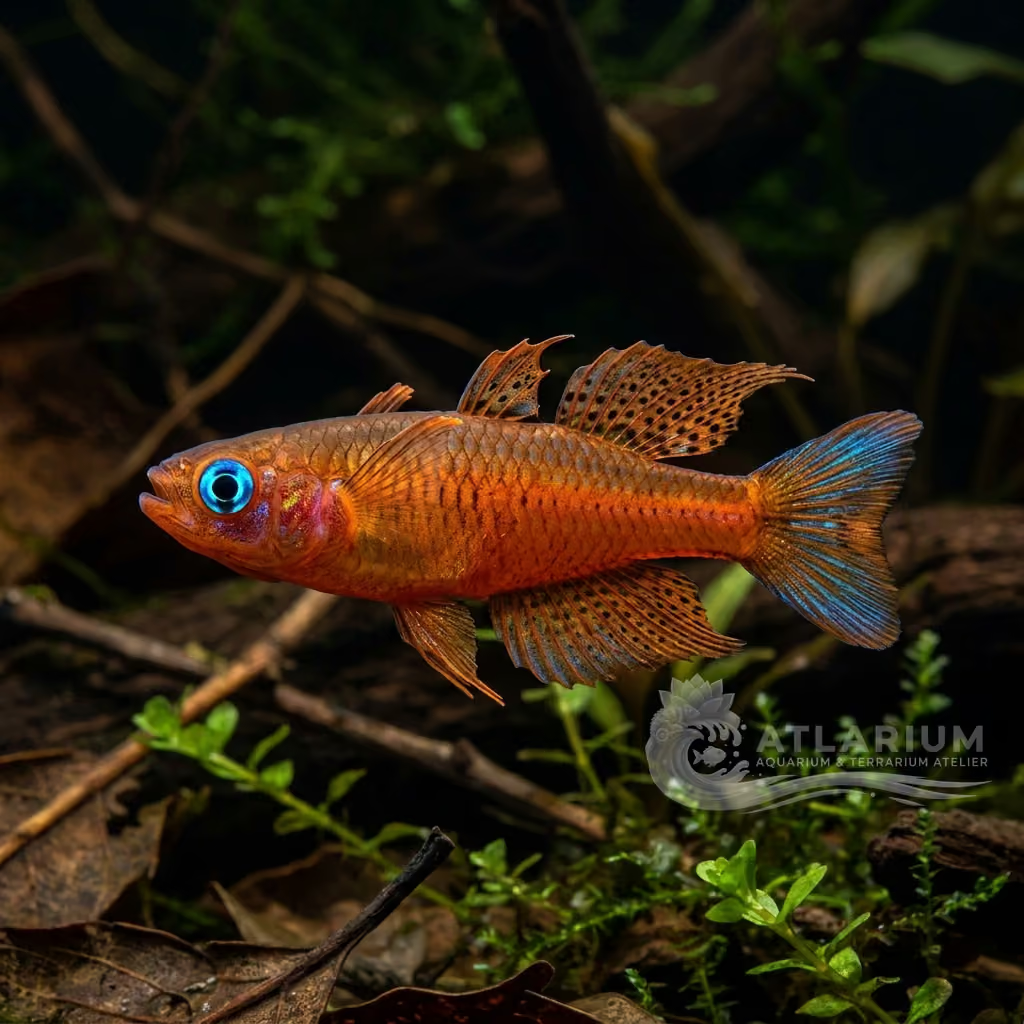
The Forktail Blue-eye (Pseudomugil furcatus) is a spark of pure aquatic joy. This micro-fish (maximum 5-6 cm / 2 inches) is characterized, as the name suggests, by bright neon blue eyes and a conspicuously forked caudal fin with sun-yellow edges. Males engage in continuous and exhausting dance displays, swimming in tight circles (sparring) and showing off their large upward-pointing pectoral fins. Their hyperactivity and dazzling color make them one of the most spectacular choices for heavily planted nano-aquariums.
24 - 28 °C
7 - 8
Eau douce
Surface et milieu
6 cm
>= 60 L
>= 8
5 - 15 dGH
2 - 7 dKH
95 - 295 ppm
148 - 461 uS/cm

Description de l'espèce

Soins, reproduction et cohabitation

Origine et répartition géographiques
Origine

Profil de poisson
- Tempérament
- Active
- This species is highly active, social, and entirely peaceful. Males will spar harmlessly with each other to establish dominance. They bring lively energy to any nano aquarium.
- Régime alimentaire
- Omnivore
- They are omnivorous micro-predators. Their diet should consist of crushed high-quality flakes, microworms, and baby brine shrimp. A varied diet keeps their colors exceptionally bright.
- Espérance de vie
- 2-3 years
- Taille adulte
- 6 cm
- Ratio des sexes
- Specific M:F ratio
- Keep a ratio of one male to two or three females. Males display heavily and can pester females if the ratio is off. Keeping more females diffuses the male's attention.
- Fréquence d'alimentation
- Twice daily
- Feed them small amounts twice a day. They have tiny mouths, so food must be appropriately sized. Ensure they consume everything within a few minutes to avoid pollution.
- Charge biologique
- Low
- The Forktail Blue-eye has a very low bioload. They are small fish that produce minimal waste. Regular maintenance is still required to keep the water pristine.
- Courant
- Moderate
- They enjoy moderate water flow that mimics their natural streams. A gentle current from a sponge filter or small powerhead is ideal. Too much flow can exhaust these small fish.
- Risque de saut
- Yes
- They have a moderate jump risk, especially when startled or breeding. A well-fitting lid is strongly recommended. Floating plants can also deter them from jumping.
- Reproduction
- Oviparous
- They are plant spawners that breed readily in well-maintained aquariums. Females scatter eggs among fine-leaved plants or spawning mops. Eggs hatch in about two weeks and require infusoria.
- Compatibilité et compagnons
- Verify
- They are extremely peaceful and perfect for planted community tanks. Keep them with other nano fish and peaceful invertebrates. Avoid keeping them with large or aggressive species.
- Niveau dans le bac
- Top/Middle
- They predominantly occupy the middle and upper levels of the tank. They are highly active and constantly moving. They appreciate open swimming spaces alongside planted areas.

Modèles et paramètres scientifiques
Fenêtre sur les données scientifiques officielles de l’espèce
- Niveau trophique
- 3,3 ± 0,4 se
- Singularité phylogénétique (PD50)
- 0.5
- Relation bayésienne longueur-poids
- a = 0.01122, b = 3.04
- VulnérabilitéVulnérabilité faible (10 / 100)

Galerie d'images
Images sous licence liées à l'espèce ou, lorsqu'elles sont indiquées, au taxon représentatif le plus proche.

Espèces associées
Recommandations regroupées par proches parents, compagnons et soins similaires.