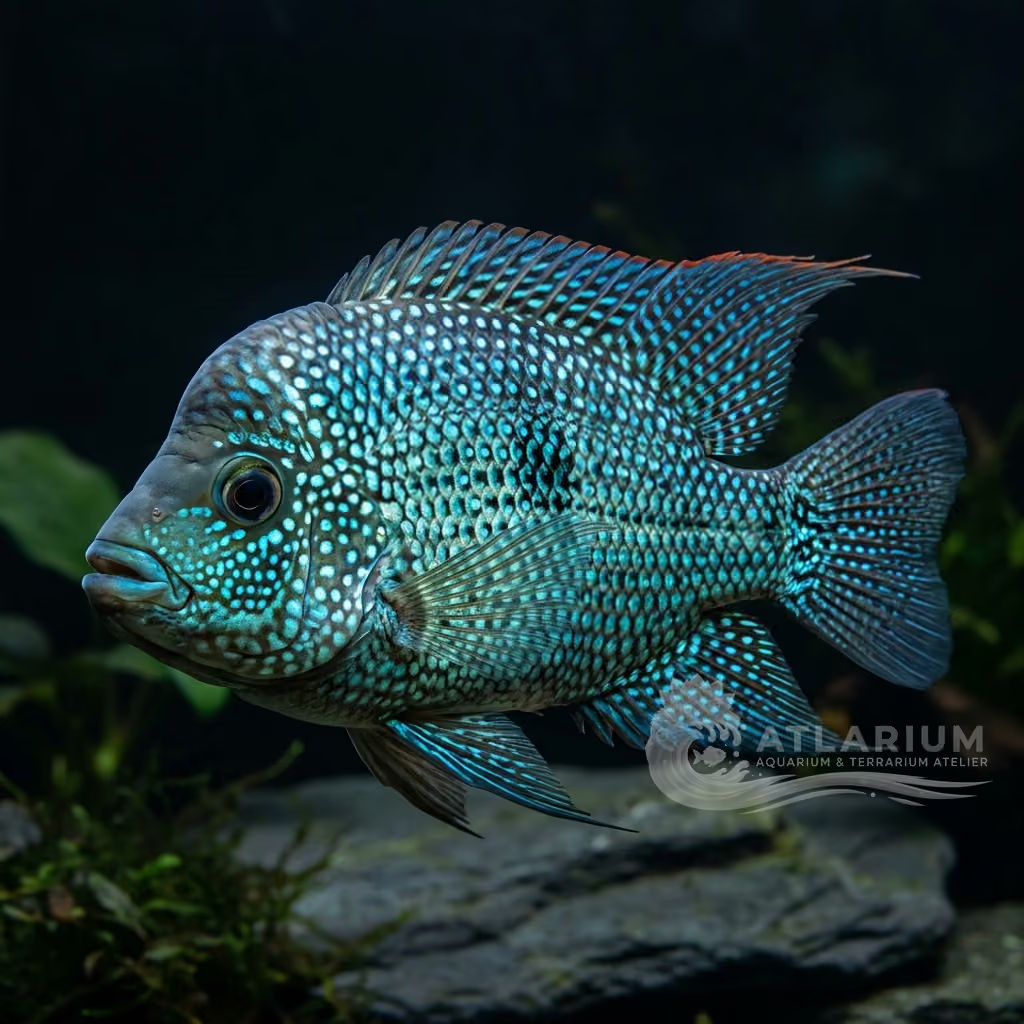
Emerald dwarf rasbora
Danio erythromicron
A micro-fish endemic to Lake Inlé in Myanmar, with vertical emerald green and orange bands on a translucent body — a tiny jewel reaching just 2 cm. Despite its common name containing 'rasbora', it is scientifically a Danio. Requires alkaline, hard water (pH 7.0–8.0), an exception compared to many tropical nano fish. In groups of 8–10+ in densely planted tanks with dim lighting, males display competitive behaviors that enhance coloration. Males may spar in groups that are too small.
20 - 24 °C
7 - 8
Eau douce
Milieu
2,5 cm
>= 40 L
>= 8
10 - 20 dGH
2 - 10 dKH
170 - 400 ppm
266 - 625 uS/cm

Description de l'espèce

Soins, reproduction et cohabitation

Origine et répartition géographiques
Origine

Profil de poisson
- Tempérament
- Peaceful
- The Emerald Dwarf Rasbora is completely peaceful toward other species but can be highly timid and easily stressed. Within their own species, males are quite combative, constantly engaging in harmless, flared-fin sparring matches to establish dominance. Providing a large enough group and dense planting is key to making them feel bold enough to display.
- Régime alimentaire
- Omnivore
- In their natural habitat, they feed on micro-invertebrates and zooplankton. In captivity, they require very small foods such as crushed high-quality flakes, micro-pellets, and finely powdered fry food. Live foods like microworms, newly hatched brine shrimp, and daphnia are highly recommended to encourage them to forage.
- Espérance de vie
- 3-5 years
- Taille adulte
- 2.5 cm
- Ratio des sexes
- Group
- Males are noticeably more colorful, displaying bright emerald bars and reddish-orange fins, while females are duller and plumper. Males will constantly spar and display to one another, so keeping a higher ratio of females to males helps distribute this aggression. A group of at least 8-10 individuals is highly recommended.
- Fréquence d'alimentation
- Twice daily
- Due to their small stomachs and fast metabolism, they should be fed tiny amounts of food twice a day. They are timid feeders that will carefully inspect food before consuming it, often preferring items slowly sinking through the water column. Ensure that food reaches their hiding spots if they are reluctant to come out.
- Charge biologique
- Low
- The Emerald Dwarf Rasbora is a very small fish that produces a minimal bioload, making it ideal for nano aquariums. Even a sizable group will have a negligible impact on a well-cycled tank's filtration system. However, their sensitivity to poor water quality means regular small water changes are still mandatory.
- Courant
- Strong
- They originate from Lake Inle in Myanmar, which has relatively still, calm waters densely packed with vegetation. They prefer low to moderate flow in the aquarium, as strong currents will quickly exhaust these small fish. Gentle filtration from a sponge filter or a baffled hang-on-back filter is ideal.
- Risque de saut
- No
- Reproduction
- Oviparous
- They are egg scatterers that are relatively easy to breed in a dedicated, densely planted breeding tank. Females will deposit a few adhesive eggs daily among fine-leaved plants like Java moss. The parents will eat the eggs and fry, so adult fish should be removed after a few days of spawning.
- Compatibilité et compagnons
- Peaceful
- They are incredibly peaceful but exceptionally shy, making them suitable only for species-only setups or tanks with other timid nano fish. Larger or overly active tank mates will outcompete them for food and force them into constant hiding. Excellent companions include Boraras species, pygmy corydoras, and Neocaridina shrimp.
- Niveau dans le bac
- Middle
- They are reclusive fish that primarily occupy the middle and lower levels of the aquarium, rarely venturing to the very top. They strongly prefer densely planted tanks where they can weave in and out of the vegetation. Without abundant hiding places, they will remain stressed and pale.

Modèles et paramètres scientifiques
Fenêtre sur les données scientifiques officielles de l’espèce
- Niveau trophique
- 3 ± 0,4 se
- Résilience
- Élevée (moins de 15 mois)
- Singularité phylogénétique (PD50)
- 0.5
- Relation bayésienne longueur-poids
- a = 0.00977, b = 3.04
- VulnérabilitéVulnérabilité faible (10 / 100)

Galerie d'images
Images sous licence liées à l'espèce ou, lorsqu'elles sont indiquées, au taxon représentatif le plus proche.

Espèces associées
Recommandations regroupées par proches parents, compagnons et soins similaires.