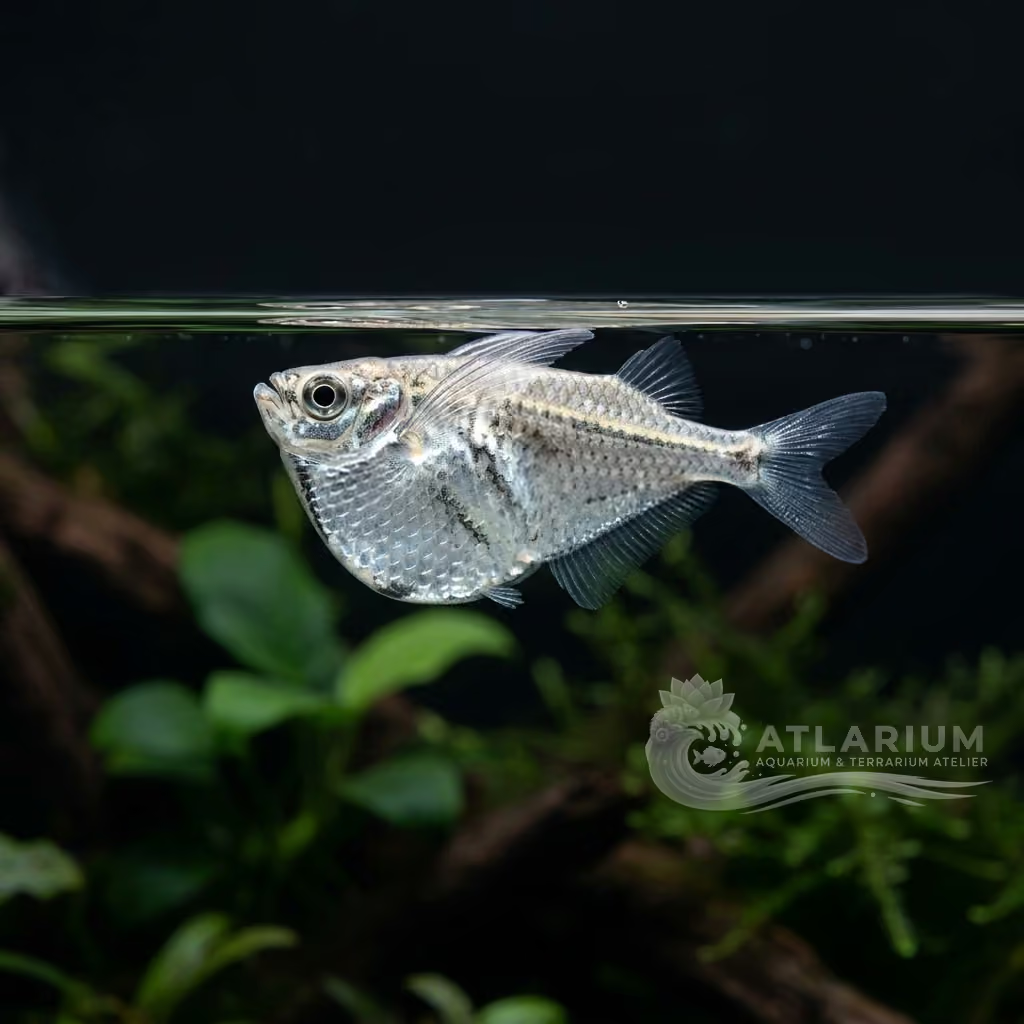
Sailfin Tetra
Crenuchus spilurus
Benthic, prehistoric-looking micro-predator. Males have colossal sail-like fins and exhibit cichlid-like cave brooding. Demands dark, acidic blackwater and live/frozen foods.
Température de l’eau
22 - 28 °C
Valeur du pH
5.5 - 6.5
Type d'eau
Eau douce
Niveau dans le bac
Milieu
Taille adulte
7 cm
Volume minimal du bac
>= 60 L
Groupe minimal
>= 1
GH
1 - 8 dGH
KH
1 - 4 dKH
TDS
25 - 160 ppm
Conductivité
39 - 250 uS/cm

Description de l'espèce
Geographical Origin and Habitat: Amazon River basin (Guyana, Suriname, Brazil). Inhabits small streams in the shade of the dense forest canopy, in flooded areas with exceptional accumulations of dead leaves.
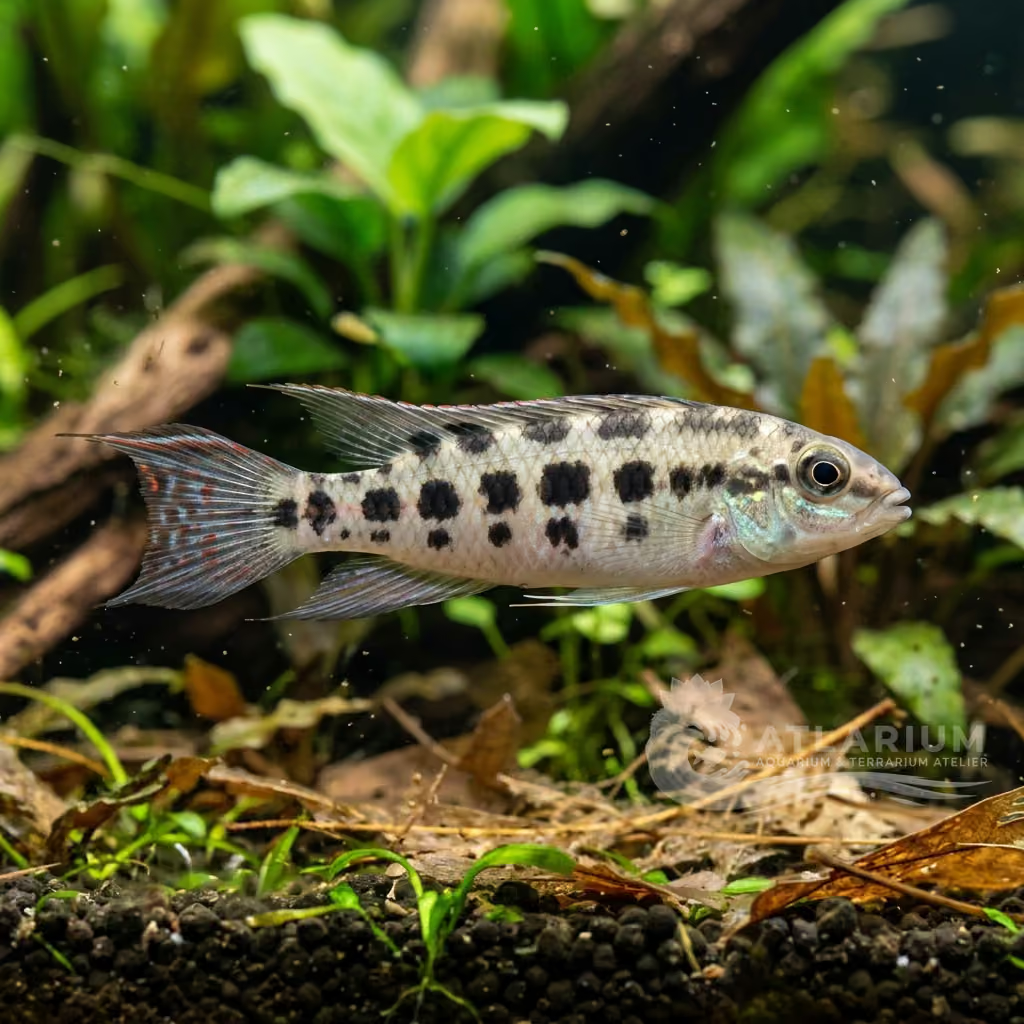
Taxonomy and Morphology: Sailfin Tetra (Crenuchus spilurus). A very rare and archaic characin. Differs from all typical "Tetras" due to its stocky morphology, large mouth and the extreme dimorphism of the males.
Social Behavior: Shy and stationary. Maintains small individual territories. Very static compared to other Characins, it tends to float motionless in the shade or over branches until a morsel passes by.
Coloration and Sexual Dimorphism: Gray/pinkish body with a large black spot framed in gold on the tail ("spilurus"). Adult males develop mastodontic, sail-shaped dorsal and anal fins, spectacular in displays.

Soins, reproduction et cohabitation
Aquarium Setup: Dark aquariums (dim light or thick floating plants). Leaf litter (Indian almond, oak) for tannins and to shield the bottom. Intricate hiding places of branches or small tubes.
Diet and Feeding: Voracious micro-carnivore. Its mouth is disproportionate: it eats large live or frozen prey such as mosquito larvae, bloodworms or adult daphnia. Reluctant towards commercial dry food.
Water Quality: Demands Blackwater environments: very acidic pH (5.5 - 6.0), hardness close to zero and manic cleaning of the substrate. It is very delicate in the face of osmotic shocks.
Compatibility and Cohabitation: Fish under 2 cm / 0.8 inches in size (e.g. micro rasboras or young fry) are swallowed whole. Ideal companions are Dwarf Cichlids, peaceful Corydoras or "high" bodied Tetras like Hyphessobrycon.
Aquarium Breeding: Very rare in captivity, but fascinating: behavior similar to that of Cichlids! The male cleans the roof of a den or leaf, attracts the female there and fiercely guards the brood of eggs until they hatch.
Risks and Diseases: Rapid poisoning in "modern" tanks with neutral pH or high mineral hardness. Death by starvation if fed only with flakes.

Origine et répartition géographiques
Amazon River basin (Guyana, Suriname, Brazil). Inhabits small streams in the shade of the dense forest canopy, in flooded areas with exceptional accumulations of dead leaves.
Origine
Amazonie, Orénoque et Guyanes

Profil de poisson
- Tempérament
- Semi-aggressive
- The Sailfin Tetra is a very peaceful, timid, and unassuming species. They are entirely harmless to other fish and invertebrates, although very tiny fry might be eaten. Males can show mild territorial behavior towards each other, mostly consisting of fin-flaring displays rather than physical harm. Their gentle nature makes them ideal for a carefully planned nano or quiet community tank.
- Régime alimentaire
- Omnivore
- They are micro-predators that feed on tiny worms, crustaceans, and zooplankton in their natural habitat. In the home aquarium, they prefer small live or frozen foods such as daphnia, baby brine shrimp, and micro-worms. They will usually accept crushed high-quality flakes or micro-pellets once acclimated. A varied diet of appropriately sized foods is essential for bringing out their best coloration and ensuring good health.
- Espérance de vie
- 3-5 years
- Taille adulte
- 7 cm
- Ratio des sexes
- Group
- They can be kept in a small group where males will establish small, harmless territories. Having a ratio of one male to two or three females works well and reduces any minor bickering between males. The males display stunningly to each other and the females, which is a fascinating behavior to observe. In a larger, well-planted tank, multiple males can coexist peacefully.
- Fréquence d'alimentation
- Twice daily
- Offer them small amounts of food once or twice a day. Since they are small and sometimes slow eaters, ensure that food reaches them before faster tankmates consume it all. Target feeding might be necessary in a mixed community tank. Uneaten food should be removed to prevent water quality issues.
- Charge biologique
- Low
- The Sailfin Tetra has a very small bioload, making them suitable for smaller setups. They produce minimal waste, but pristine water conditions are still required for their delicate health. A gently matured sponge filter or small hang-on-back filter is usually sufficient. Regular, small water changes help maintain the optimal soft, slightly acidic water conditions they thrive in.
- Courant
- Stagnant
- They strongly prefer slow-moving or almost still water, typical of their natural heavily vegetated, slow-flowing stream habitats. Strong currents will exhaust them and cause significant stress. A gentle sponge filter or a baffled filter output provides the perfect amount of gentle circulation. The environment should feel calm and undisturbed.
- Risque de saut
- Yes
- They have a low to moderate jump risk. While they aren't known for being prolific jumpers, sudden changes in lighting or being startled by tankmates can cause a darting reaction. A standard aquarium lid is usually sufficient to keep them safely contained. Floating plants can also help make them feel secure and reduce the chance of jumping.
- Reproduction
- Oviparous
- They are intriguing because males set up territories, usually under broad leaves or in small caves, to entice females. The male will perform a beautiful display with his extended fins to attract a mate. After the eggs are laid on the ceiling of the chosen site, the male takes on the sole responsibility of guarding them until they hatch. The fry are extremely tiny and require infusoria or other microscopic foods initially.
- Compatibilité et compagnons
- Semi-aggressive
- They are incredibly peaceful and somewhat shy, making excellent additions to a calm community tank. Suitable tankmates include small rasboras, pencilfish, Corydoras, and other small, non-aggressive species. They should never be kept with larger or boisterous fish that might outcompete them for food or stress them. They do very well in heavily planted setups alongside peaceful dwarf cichlids or small gouramis.
- Niveau dans le bac
- Middle
- They spend most of their time in the middle and lower sections of the aquarium. They enjoy hovering near broad-leaved plants or exploring the substrate for food. They often claim a specific small area and stay close to it, especially the males. Providing plenty of plants and hiding spaces in these lower levels is crucial.

Modèles et paramètres scientifiques
FishBase
Fenêtre sur les données scientifiques officielles de l’espèce
FishBase v25.04Données synchronisées le : 15/06/2026
- Niveau trophique
- 3,3 ± 0,42 se
- Résilience
- Faible (4,5 - 14 ans)
- Singularité phylogénétique (PD50)
- 1
- Relation bayésienne longueur-poids
- a = 0.01175, b = 3.08
- VulnérabilitéVulnérabilité faible (10 / 100)

Espèces associées
Recommandations regroupées par proches parents, compagnons et soins similaires.