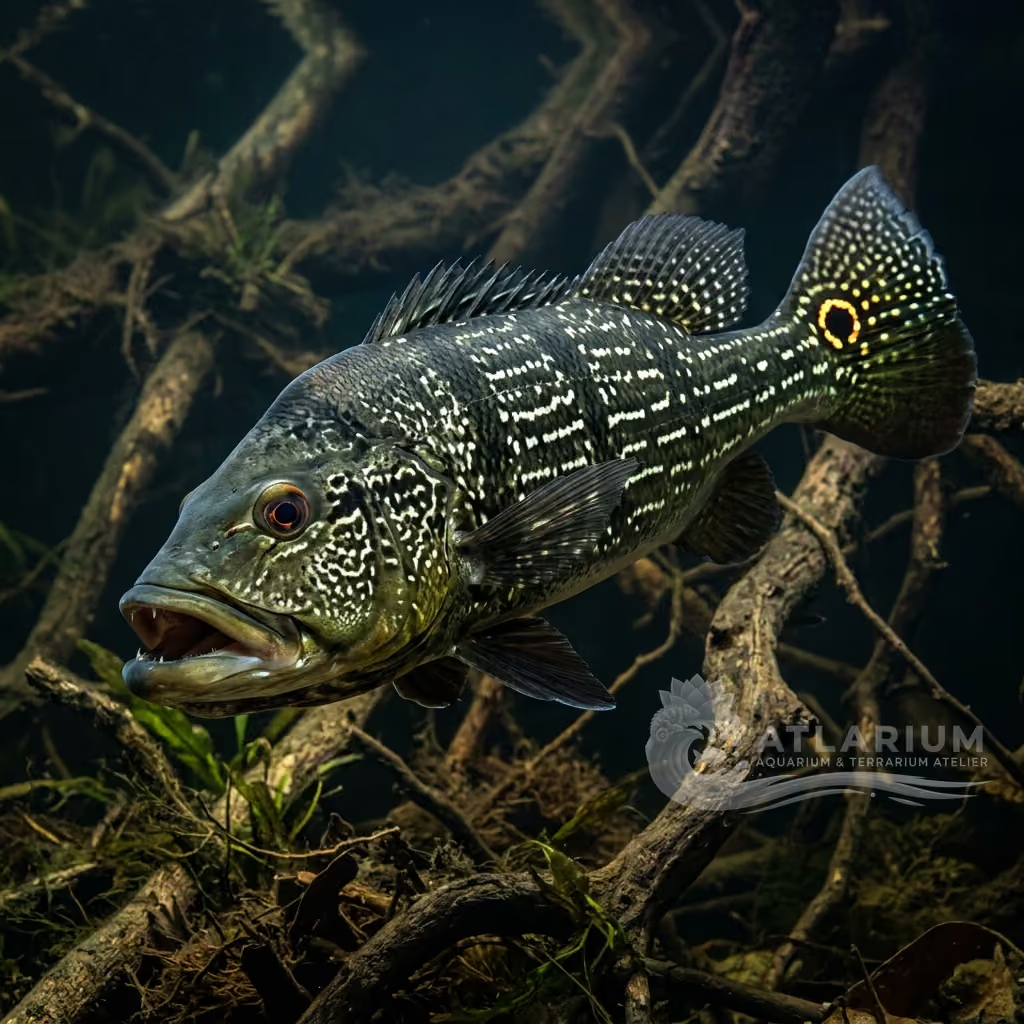
Giant Snakehead
Channa micropeltes
The Ultimate Freshwater Assassin (100-130 cm / 3.5 to 4 feet). Arguably the most aggressive, hostile, and dangerous fish commonly kept in the 'Monster Fish' hobby. It is a massive, heavily armored torpedo packed with rows of razor-sharp, dog-like teeth designed to shear other fish in half. It is a strictly solitary animal, completely unsuitable for 99% of home aquariums. Its legendary aggression makes it an extreme 'Bite Hazard' to owners, frequently launching out of the water to brutally bite the hands of anyone cleaning the tank.
26 - 30 °C
6 - 7.5
Eau douce
Tous les niveaux
100 cm
>= 500 L
>= 1
4 - 15 dGH
2 - 7 dKH
80 - 295 ppm
125 - 461 uS/cm

Description de l'espèce

Soins, reproduction et cohabitation

Origine et répartition géographiques
Origine

Profil de poisson
- Tempérament
- Semi-aggressive
- They are viciously aggressive and entirely fearless predators. They often strike at the glass near humans. Keeping them is like housing a dangerous exotic animal.
- Régime alimentaire
- Omnivore
- They require massive quantities of whole fish. Large floating carnivore sticks are eventually accepted. Extreme caution is needed to avoid severe bites.
- Espérance de vie
- 8-12 years
- Taille adulte
- 100 cm
- Ratio des sexes
- Solitary
- Maintaining a specific sex ratio is essentially impossible in typical home settings, as adult Giant snakeheads are incredibly hostile toward any conspecifics. They are apex predators that will ruthlessly attack, maim, or kill any other snakehead placed within their territory. The only exception is a bonded breeding pair, which naturally form in the wild but are exceedingly difficult and dangerous to attempt coupling in captivity. For almost all keepers, Channa micropeltes should be strictly maintained as a solitary wet pet.
- Fréquence d'alimentation
- Twice daily
- Massive adults eat one large meal every few days. Juveniles need daily food for their explosive growth. Overfeeding adults heavily damages their internal organs.
- Charge biologique
- Extreme
- The Giant snakehead is a massive, voracious apex predator that produces an astronomical bioload in the home aquarium. Their diet requires immense quantities of large, meaty foods like whole fish, heavy insect larvae, and prepared carnivore pellets, leading to staggering amounts of biological waste. Managing this output requires heavy-duty, commercial-grade filtration systems akin to those used in large indoor ponds. Even with immense filtration, frequent, high-volume water changes are absolutely non-negotiable to prevent toxic ammonia and nitrate poisoning.
- Courant
- Stagnant
- They inhabit calm to moderately flowing natural rivers. Strong artificial currents simply waste their swimming space. They enjoy hovering completely motionless in still water.
- Risque de saut
- Yes
- Channa micropeltes possesses extreme jumping capabilities, powered by a heavily muscled, torpedo-like body designed for explosive bursts of speed. An adult can easily smash through glass lids or push aside unweighted canopies with terrifying force. Their instinct to leap is often triggered by the pursuit of prey or an attempt to move between bodies of water. The aquarium must be sealed with heavily reinforced, locked lids to prevent disastrous escapes and potential damage to the surrounding room.
- Reproduction
- Oviparous
- They build massive nests in floating surface vegetation. Both parents become horrifyingly aggressive during fry guarding. Captive breeding is practically impossible for home hobbyists.
- Compatibilité et compagnons
- Peaceful
- They are wildly aggressive and hyper-predatory monsters. They will attack or consume any living tankmate. They must be kept as solitary, isolated specimens.
- Niveau dans le bac
- All levels
- While they are capable of traversing every depth, Giant snakeheads prominently favor the middle and lower depths where they can lurk in ambush. As they require atmospheric oxygen, they will routinely and powerfully drive upward to the surface to breathe. Young specimens are often more active throughout the mid-water column, whereas massive adults tend to rest sluggishly near the substrate until food is introduced. A vast amount of open horizontal swimming space is required across all levels to accommodate their massive size.

Modèles et paramètres scientifiques
Fenêtre sur les données scientifiques officielles de l’espèce
- Niveau trophique
- 3,9 ± 0,55 se
- Résilience
- Faible (4,5 - 14 ans)
- Singularité phylogénétique (PD50)
- 0.5
- Relation bayésienne longueur-poids
- a = 0.00741, b = 2.98
- VulnérabilitéVulnérabilité très élevée (90 / 100)

Espèces associées
Recommandations regroupées par proches parents, compagnons et soins similaires.