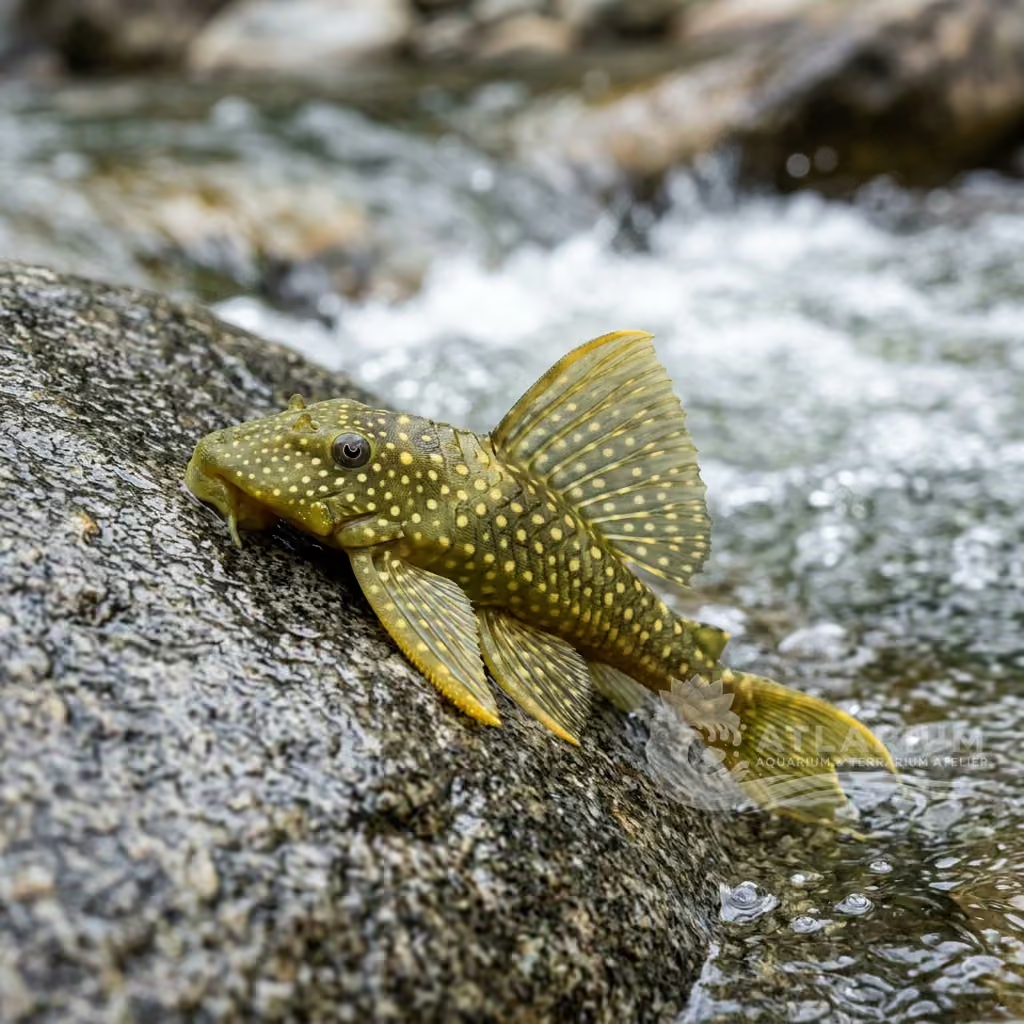
Giraffe Catfish
Auchenoglanis occidentalis
The Giraffe Catfish is a massive, digging siluriform native to African rivers. As an avid excavator, it requires a gigantic tank with deep fine sand and securely placed decorations.
Température de l’eau
22 - 28 °C
Valeur du pH
6.5 - 8
Type d'eau
Eau douce
Niveau dans le bac
Fond
Taille adulte
70 cm
Volume minimal du bac
>= 500 L
Groupe minimal
>= 1
GH
5 - 20 dGH
KH
2 - 10 dKH
TDS
95 - 400 ppm
Conductivité
148 - 625 uS/cm

Description de l'espèce
Geographical Origin and Habitat: Vast range in the river basins of central and western Africa (Nile, Niger, Volta, Senegal, Lake Chad and Rift Lakes). Prefers sandy or muddy bottoms of shallow rivers and lakes.
Taxonomy and Morphology: Giraffe Catfish (Auchenoglanis occidentalis). A gigantic African siluriform. Possesses a very long and pointed snout for digging, fleshy lips and thick sensitive barbels. The stocky and massive body is protected by robust cranial bones.
Social Behavior: Of a very peaceful nature (often a "gentle giant"), but it is a clumsy and blind force of nature (it has tiny eyes). Incessantly sifts the bottom like a bulldozer, moving furnishings and frightening smaller fish.
Coloration and Sexual Dimorphism: Features a spectacular coloration, especially when young: a network of large dark spots on a yellow/cream background, which perfectly resembles the coat of a giraffe. Growing up, the spots tend to fade into olive-gray. No visible dimorphism.

Soins, reproduction et cohabitation
Aquarium Setup: Mega-Aquarium fish (minimum 2 meters / 80 inches, but requires a tropical pond or 1000+ liters / 250+ gallons as an adult). Deep fine sand substrate mandatory for its excavator behavior. Rocks must be placed on the bottom glass, otherwise it will collapse them.
Diet and Feeding: Omnivore / Benthic detritivore. A real "vacuum cleaner". Will swallow massive sinking pellets, spirulina tablets, frozen shrimp, earthworms. Accidentally inhales small fish sleeping on the bottom at night.
Water Quality: Very robust. Tolerant to a wide pH range (from neutral to the alkaline of African lakes) and resists temporary oxygen drops. However, its huge mass requires titanic mechanical filtering systems to dispose of the enormous dirt raised.
Compatibility and Cohabitation: Excellent companion for mega African cichlids (Frontosa, large Haps, West African Cichlids) or huge mid-water fish. Absolutely incompatible with live plants and fish under 15 cm (6 inches), which would be inhaled.
Aquarium Breeding: Not documented in normal domestic aquariums given the enormous size and space requirements, although in nature they migrate to flooded plains to reproduce.
Risks and Diseases: Juveniles, very colorful ("cute"), are unscrupulously sold for 100-liter (25-gallon) tanks. Their lightning growth and brute force will smash unprotected glass heaters.

Origine et répartition géographiques
Vast range in the river basins of central and western Africa (Nile, Niger, Volta, Senegal, Lake Chad and Rift Lakes). Prefers sandy or muddy bottoms of shallow rivers and lakes.
Origine
Afrique et Madagascar

Profil de poisson
- Tempérament
- Semi-aggressive
- Often described as gentle giants, Giraffe Catfish are generally peaceful and docile towards tank mates that are too large to be considered food. They can, however, become territorial towards other large bottom-dwellers or members of their own species as they mature. They are primarily active during the twilight and nighttime hours, though they frequently learn to recognize their keepers and will swim out during the day for feeding. Their calm demeanor makes them a favorite among keepers of large freshwater fish.
- Régime alimentaire
- Omnivore
- In the wild, this species is an opportunistic omnivore, sifting through riverbeds for insect larvae, worms, detritus, and plant matter. In an aquarium setting, they are not picky eaters and will eagerly accept high-quality sinking pellets, earthworms, shrimp, and frozen foods. It is beneficial to supplement their diet with vegetable matter, such as algae wafers or blanched zucchini, to replicate their natural feeding habits. Their constant sifting behavior also helps keep the substrate turned, though they may uproot plants in the process.
- Espérance de vie
- 10-20 years
- Taille adulte
- 70 cm
- Ratio des sexes
- Solitary
- In their natural habitat, these catfish exhibit a roughly equal sex ratio of one male to one female. However, in a captive environment, they are typically kept as single specimens because of their enormous adult size and potential territoriality. Attempting to keep multiple individuals together requires a massive tank with plenty of visual barriers to prevent aggressive encounters. For the vast majority of home aquarists, stocking a single Giraffe Catfish per aquarium is the most practical and recommended approach.
- Fréquence d'alimentation
- Twice daily
- Juvenile Giraffe Catfish grow rapidly and should be fed once or twice daily with high-quality, nutrient-dense foods. Once they reach adulthood, their metabolism slows down, and feeding frequency should be reduced to once daily or even every other day. Overfeeding adult specimens can easily lead to obesity and water quality issues, so portion sizes must be managed carefully. It is best to feed them in the evening or shortly before turning off the aquarium lights to align with their nocturnal nature.
- Charge biologique
- Extreme
- The Giraffe Catfish is a massive species that produces an extreme amount of biological waste due to its voracious appetite and large adult size. Consequently, a high-capacity filtration system, combining robust mechanical and biological media, is absolutely essential to maintain water quality. Regular, large-volume water changes must be performed weekly to dilute accumulated nitrates and organic compounds. Without adequate filtration and maintenance, the water parameters will rapidly deteriorate, leading to health issues for this large fish.
- Courant
- Stagnant
- This species is native to slow-moving rivers and lakes, meaning they prefer a calm environment with weak to moderate water flow. While powerful filtration is required to handle their heavy bioload, the water return should be diffused using spray bars or baffle outlets to avoid creating strong currents. The fish will struggle or experience stress if forced to constantly swim against a rapid flow of water. Creating quiet zones at the bottom of the tank with driftwood and rocks allows them to rest comfortably.
- Risque de saut
- Yes
- Although not classified as active surface jumpers, the Giraffe Catfish is a powerful and occasionally skittish animal that can easily leap out of an open tank when startled. Their sheer strength and bulk mean they can dislodge loose aquarium lids or slide covers during a panic. Therefore, a heavy, tightly secured canopy is mandatory to prevent accidental jumps and escape. Any gaps around cables or filtration pipes must be blocked to ensure the fish remains safely inside the aquarium.
- Reproduction
- Oviparous
- Breeding the Giraffe Catfish in a home aquarium is exceptionally difficult, and there are virtually no confirmed reports of success in captivity. Their massive adult size and the necessity of keeping a large group to allow natural pairing make captive spawning projects highly impractical. In the wild, males are known to guard the eggs, which are deposited in nests dug into the sandy substrate or under submerged roots. Consequently, almost all specimens available in the aquarium trade are wild-caught or raised in large commercial ponds.
- Compatibilité et compagnons
- With caution
- The Giraffe Catfish is highly compatible with other large, peaceful fish that inhabit the middle and upper regions of the tank, such as silver dollars, large barbs, and medium-sized, non-aggressive cichlids. However, they must never be housed with small fish or invertebrates, as these will be quickly swallowed during the night. They can also exhibit territorial behavior towards other bottom-dwellers like large plecos or other catfish, so ample space is required if cohabitating. Ensuring all tank mates are large enough to avoid being eaten is the golden rule for keeping this species.
- Niveau dans le bac
- Bottom
- This species is a strict bottom-dweller, spending almost all of its time cruising the aquarium floor. It uses its long snout and highly sensitive barbels to explore the substrate and search for food. Because of this behavior, it is imperative to provide a soft, fine sand substrate to prevent physical damage and infections to its delicate sensory organs. Coarse gravel or sharp rocks should be strictly avoided as they can cause severe abrasions to the fish's snout.

Modèles et paramètres scientifiques
FishBase
Fenêtre sur les données scientifiques officielles de l’espèce
FishBase v25.04Données synchronisées le : 15/06/2026
- Niveau trophique
- 2,9 ± 0,33 se
- Résilience
- Moyenne (1,4 - 4,4 ans)
- Temps de génération
- 3,7 ans
- Singularité phylogénétique (PD50)
- 0.75
- Relation bayésienne longueur-poids
- a = 0.01023, b = 3.02
- VulnérabilitéVulnérabilité modérée (38 / 100)

Espèces associées
Recommandations regroupées par proches parents, compagnons et soins similaires.