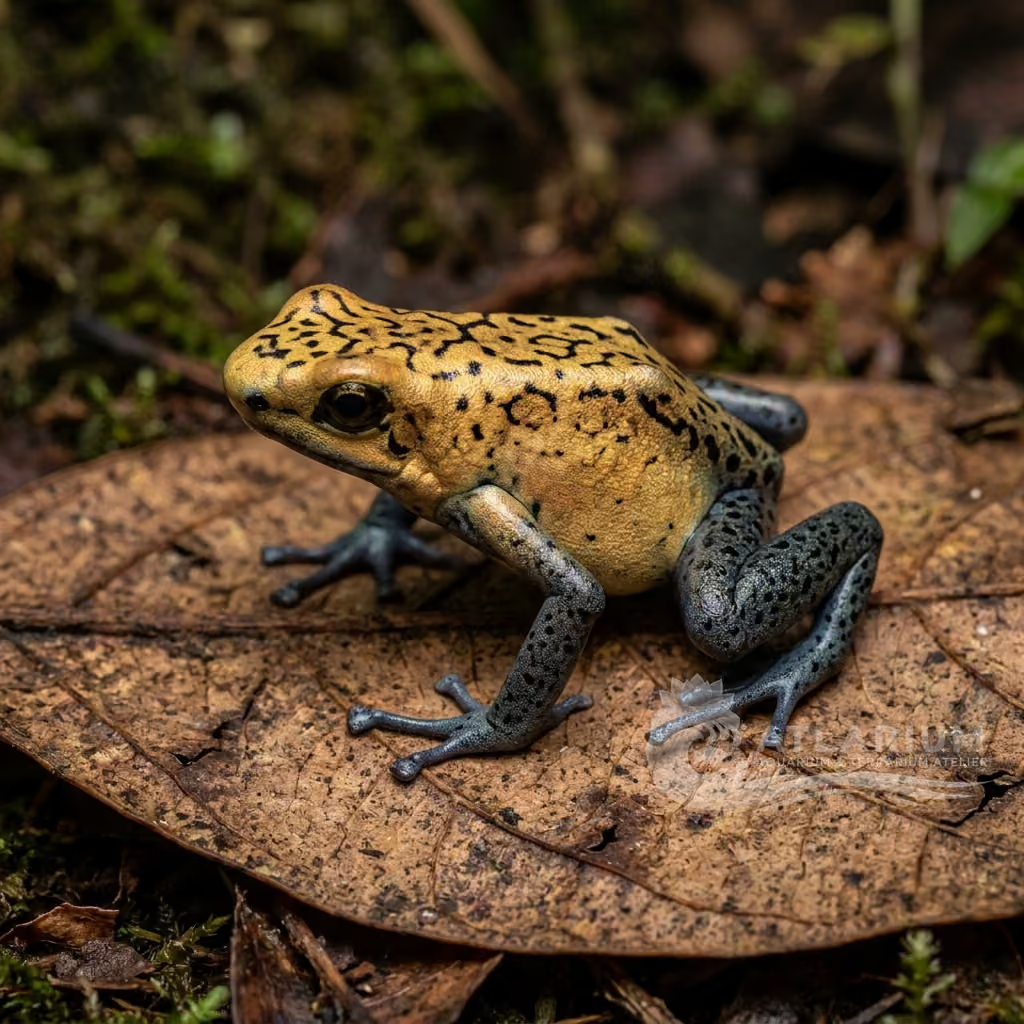
Panamanian Golden Toad
Atelopus zeteki
The Panamanian Golden Frog is an extremely rare, vibrant yellow-gold jewel that is tragically extinct in the wild. It uses unique semaphoring behavior in humid mountain forests and running streams.
Température de l’eau
20 - 24 °C
Valeur du pH
6.5 - 7.5
Environnement
Eau douce / Semi-aquatique
Humidité
80 - 90 %
Température diurne
20 - 22 °C
Température nocturne
16 - 18 °C
Température ambiante
20 - 22 °C
Enclos minimal
>= 45 L

Description de l'espèce
Geographical Origin and Habitat: Originally endemic to the humid mountain forests and rushing volcanic streams near El Valle de Antón in central Panama. A diurnal species that inhabited mossy boulders and riparian margins. Tragically, it is now Extinct in the Wild (EW) due to chytridiomycosis.
Taxonomy and Genetics: A slender, agile toad growing to 4–6 cm in length. The body is a vibrant, uniform golden-yellow or greenish-yellow, often marked with contrasting black spots or stripes on the back. It lacks a visible tympanum and has long, thin limbs without large toe discs.
Behavior and Habits: Strictly diurnal. Because they live near loud waterfalls, they do not communicate with calls; instead, they use a unique behavior called "semaphoring" (waving their front legs in a slow, rhythmic motion) to attract mates or defend territory.
Morphology: Sexual dimorphism is marked by size and shape: adult females are significantly larger, heavier, and rounder, while males are smaller, more slender, and display active semaphoring behavior during breeding.

Soins, reproduction et cohabitation
Terrarium Setup: Require a specialized forest terrarium with a running water system (minimum 45x45x45 cm). Use smooth river stones, vertical logs, and live moss. A high-quality water filtration system simulating a clean stream is highly recommended.
Lighting and Heating: Prefer cool, montane conditions. Maintain temperatures of 20–22°C during the day; temperatures exceeding 24°C can cause fatal heat stress. A night drop to 16–18°C is essential. High-quality UVB (5%) lighting is mandatory as they are diurnal.
Humidity and Hydration: Require high humidity of 80–90% with strong ventilation to prevent stagnant air. Mist the enclosure daily with pure, dechlorinated water. Provide dry areas on elevated rocks for basking and drying off.
Feeding and Supplementation: Diurnal insectivores. Offer small live insects such as micro-crickets, fruit flies, and springtails. Dust prey with calcium, vitamin D3, and multivitamin supplements three times a week to prevent metabolic bone disease.
Compatibility: Males are highly territorial and will wrestle aggressively over territory. Keep them in harems (one male with multiple females) in spacious setups. Never mix them with other species to protect their extremely rare genetic lines.
Health and Common Diseases: Extremely delicate. Highly susceptible to chytridiomycosis and bacterial infections like Red Leg syndrome if water quality or hygiene declines. Never handle them. Maintain pristine, bio-secure conditions.

Origine et répartition géographiques
Originally endemic to the humid mountain forests and rushing volcanic streams near El Valle de Antón in central Panama. A diurnal species that inhabited mossy boulders and riparian margins. Tragically, it is now Extinct in the Wild (EW) due to chytridiomycosis.
Origine
Amérique du Sud hors AmazonieAmérique centrale et Caraïbes

Profil d'amphibien
- Régime alimentaire
- Insectivore
- The Panamanian Golden Frog is a diurnal insectivore that actively hunts along the clear, flowing streams of its cloud forest habitat. Its diet consists of a wide array of small invertebrates, including ants, beetles, flies, and small spiders. They are visually oriented hunters that rely on the daylight to spot the subtle movements of their prey among the rocks and vegetation. Ants are a particularly important part of their diet, as the alkaloids found in these insects are sequestered by the frog to produce its toxic skin secretions.
- Espérance de vie
- 10-15 years
- Taille adulte
- 6 cm
- Mode de vie/microhabitat
- Terrestrial
- They are semi-terrestrial, typically found on mossy rocks, branches, and leaf litter immediately adjacent to crystal-clear mountain streams.
- Cycle d'activité
- Diurnal
- Panamanian Golden Toads are strictly diurnal, communicating through visual signals like hand-waving in their noisy, fast-flowing stream habitats.
- Sociabilité
- Gregarious
- Unlike most amphibians, the Panamanian Golden Frog is strictly diurnal, actively foraging and socializing during the day. They are highly conspicuous, resting on exposed mossy rocks along streams where their bright yellow and black coloration serves as a clear warning to predators. They are highly social and communicative, using a combination of whistling calls and intricate visual signals, such as waving and foot-flagging. Their preference for specific microhabitats makes them highly sensitive to environmental changes.
- Reproduction
- Oviparous
- Breeding is intimately linked to the fast-flowing streams of their mountainous habitat. Due to the loud noise of the rushing water, males have developed a unique method of communication, using visual hand-waving signals—called semaphoring—to attract females and establish territory. After a prolonged amplexus, the female lays long strands of pale eggs, attaching them to submerged boulders in the shaded sections of the stream. The eggs are specifically adapted to develop in these cool, highly oxygenated waters.
- Toxicité
- Highly toxic
- This species is highly toxic, utilizing a potent neurotoxin called zetekitoxin, which is unique to this frog. Their brilliant golden coloration is a classic example of aposematism, serving as a bright warning to any potential predator that they are lethal to consume. The toxins are derived from their diet of specific ants and arthropods, meaning captive-bred individuals are entirely harmless. In the wild, their toxicity provides near-complete protection from predators, though it sadly offers no defense against the chytrid fungus that has decimated their populations.
- Stade de vie
- Metamorphosis
- The eggs laid in fast-flowing streams hatch into specialized tadpoles equipped with suctorial mouths, allowing them to cling to rocks and avoid being swept away by the current. These tadpoles scrape algae and microscopic diatoms from the submerged stones as they slowly develop over several months. Once metamorphosis is complete, the tiny froglets emerge from the water and immediately begin hunting small insects. They gradually acquire their brilliant aposematic coloration as they mature and sequester toxins from their adult diet.
- Tolérance aux manipulations
- Display only
- Handling is strictly prohibited in captivity. They possess potent neurotoxins (zete-toxins) in their skin, and are a critically endangered conservation species.
- Brumation
- They do not undergo brumation, requiring stable, cool to moderate tropical temperatures year-round.
- Mue
- Periodic
- Due to their delicate skin, exceptionally high humidity and pristine water quality are paramount for healthy shedding and overall survival.

Espèces associées
Recommandations regroupées par proches parents, compagnons et soins similaires.