Northern Slimy Salamander
Plethodon glutinosus
A terrestrial salamander from eastern North America, featuring a glossy black body flecked with silvery white. Noted for secreting an incredibly sticky skin mucus.
Température de l’eau
10 - 18 °C
Valeur du pH
6.5 - 7.5
Environnement
Eau douce / Semi-aquatique
Humidité
80 - 100 %
Température diurne
15 - 20 °C
Température nocturne
10 - 14 °C
Température ambiante
15 - 20 °C
Enclos minimal
>= 45 L

Description de l'espèce
Geographical Origin and Habitat: Native to the eastern and southeastern United States. They inhabit damp deciduous forests, rocky hillsides, and ravines, sheltering under rotting logs, moist leaf litter, and large stones.
Taxonomy and Genetics: Belonging to the family Plethodontidae (lungless salamanders). They lack lungs and breathe entirely through their skin and mouth lining.
Behavior and Habits: Strictly nocturnal and terrestrial. They remain hidden during the day and emerge on humid or rainy nights to hunt. If threatened, they secrete an extremely sticky, glue-like white mucus from their skin glands.
Morphology: Reaches 12–17 cm in length. Both sexes are morphologically similar. During the breeding season, males develop a distinct mental gland (a small, circular patch) on the chin.

Soins, reproduction et cohabitation
Terrarium Setup: A horizontal forest enclosure (minimum 60x45x30 cm) is required. Provide a damp substrate of organic soil, topped with a thick layer of sphagnum moss and leaf litter. Decorate with rotting logs and flat stones.
Lighting and Heating: Keep temperatures cool, between 15 and 20°C. Temperatures above 24°C are quickly fatal. No heating is required; keep in a cool room. Provide low, indirect ambient lighting. No UVB is necessary.
Humidity and Hydration: Requires high humidity levels of 75–90%. Spray the terrarium regularly with cool, dechlorinated water. The substrate must remain damp but not waterlogged.
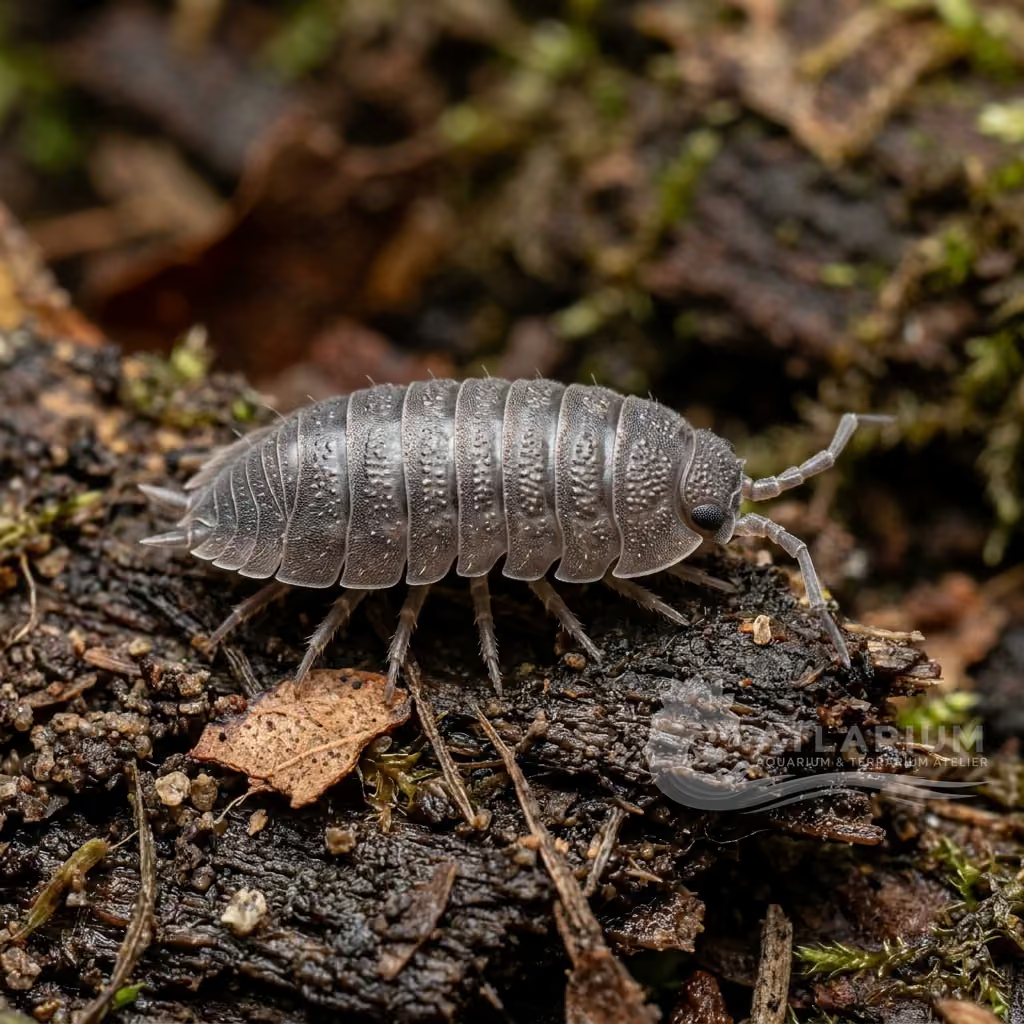
Feeding and Supplementation: Feed on small invertebrates: small crickets, chopped earthworms, isopods, and fruit flies. Dust prey with calcium and vitamins twice a week.
Compatibility: Peaceful. Can be kept in small groups of similarly sized individuals in spacious, well-decorated setups.
Health and Common Diseases: Heat stroke is the primary threat in captivity. Maintain cool temperatures and clean conditions to prevent fungal and bacterial skin infections. Handle only with wet, powder-free gloves.

Origine et répartition géographiques
Native to the eastern and southeastern United States. They inhabit damp deciduous forests, rocky hillsides, and ravines, sheltering under rotting logs, moist leaf litter, and large stones.
Origine
Amérique centrale et CaraïbesAmérique du Nord

Profil d'amphibien
- Régime alimentaire
- Insectivore
- The diet of Plethodon glutinosus consists primarily of appropriately sized prey items found in its natural habitat. In captivity, they should be offered a varied selection of live insects, worms, or small invertebrates to ensure nutritional balance. It is important to gut-load the feeder insects and occasionally dust them with high-quality calcium and vitamin supplements. Monitoring their food intake helps prevent obesity and maintains optimal health. Fresh water must always be available to aid in digestion.
- Espérance de vie
- 5-20 years
- Taille adulte
- 17 cm
- Mode de vie/microhabitat
- Terrestrial
- Plethodon glutinosus leads a specialized lifestyle adapted to the specific niches of its ecosystem, whether that involves climbing, burrowing, or swimming. Its daily routine is a delicate balance of thermoregulation, seeking out hydration, and avoiding predators. In a captive environment, replicating these microhabitats—such as providing ample climbing branches or deep substrate—is crucial for their well-being. They generally thrive when left undisturbed to carry out their natural routines. A proper setup dramatically improves their lifespan and overall vitality.
- Cycle d'activité
- Nocturnal
- The activity pattern of Plethodon glutinosus is heavily influenced by the specific light cycle and ambient temperatures of its native range. It may be primarily diurnal, nocturnal, or crepuscular, meaning its peak activity times align with the safest and most optimal conditions for survival. During these active periods, they can be seen exploring, hunting, or patrolling their territory. Careful regulation of the enclosure's lighting and heating schedules will help maintain these natural circadian rhythms. Disruptions to this pattern can cause significant stress or lethargy.
- Sociabilité
- Solitary
- Plethodon glutinosus is known for its fascinating and unique behavioral traits that reflect its evolutionary adaptations. Observers may notice periods of active foraging interspersed with long spells of resting or hiding. They interact with their environment carefully, using their specialized senses to navigate and detect both prey and potential threats. While some individuals can be quite shy and reclusive, others may exhibit bold and curious behavior when comfortable in their enclosure. Providing a complex habitat with plenty of enrichment is essential for expressing natural behaviors.
- Reproduction
- Oviparous
- Reproduction for Plethodon glutinosus typically follows a seasonal pattern, often triggered by specific environmental changes such as temperature or humidity fluctuations. Mating behaviors can include complex courtship displays or specific vocalizations to attract a partner. After successful mating, the female will carefully deposit eggs or give birth, depending on the reproductive strategy of the species. Incubation or gestation periods require stable, precise conditions to ensure the healthy development of the offspring. Breeders must pay close attention to providing the right nesting environment.
- Toxicité
- Harmless
- The name 'slimy salamander' derives from its primary defense mechanism: a thick, glue-like secretion exuded from its skin when agitated. This sticky substance is extremely difficult to remove and acts as a strong deterrent to predators by gumming up their mouths and facial features. While not dangerous to humans, handlers will find the slime incredibly persistent and hard to wash off, resembling wet cement.
- Stade de vie
- Direct development
- Northern Slimy Salamanders undergo direct development, meaning they bypass the tadpole stage entirely. They hatch from their terrestrial eggs as fully formed, terrestrial juveniles that breathe through their skin and the lining of their mouths. They continue to grow and mature in their damp forest floor habitats throughout their lives.
- Tolérance aux manipulations
- Display only
- Display only. As a defense, they secrete a thick, extremely glue-like slime that is incredibly difficult to wash off human skin.
- Brumation
- They move deep underground to avoid freezing temperatures during winter and also aestivate to escape hot, dry summer periods.
- Mue
- Periodic
- Molt is achieved efficiently in highly humid conditions, with the salamander using its limbs to push the old skin backward.

Espèces associées
Recommandations regroupées par proches parents, compagnons et soins similaires.