Bakhuis Poison Frog
Dendrobates tinctorius
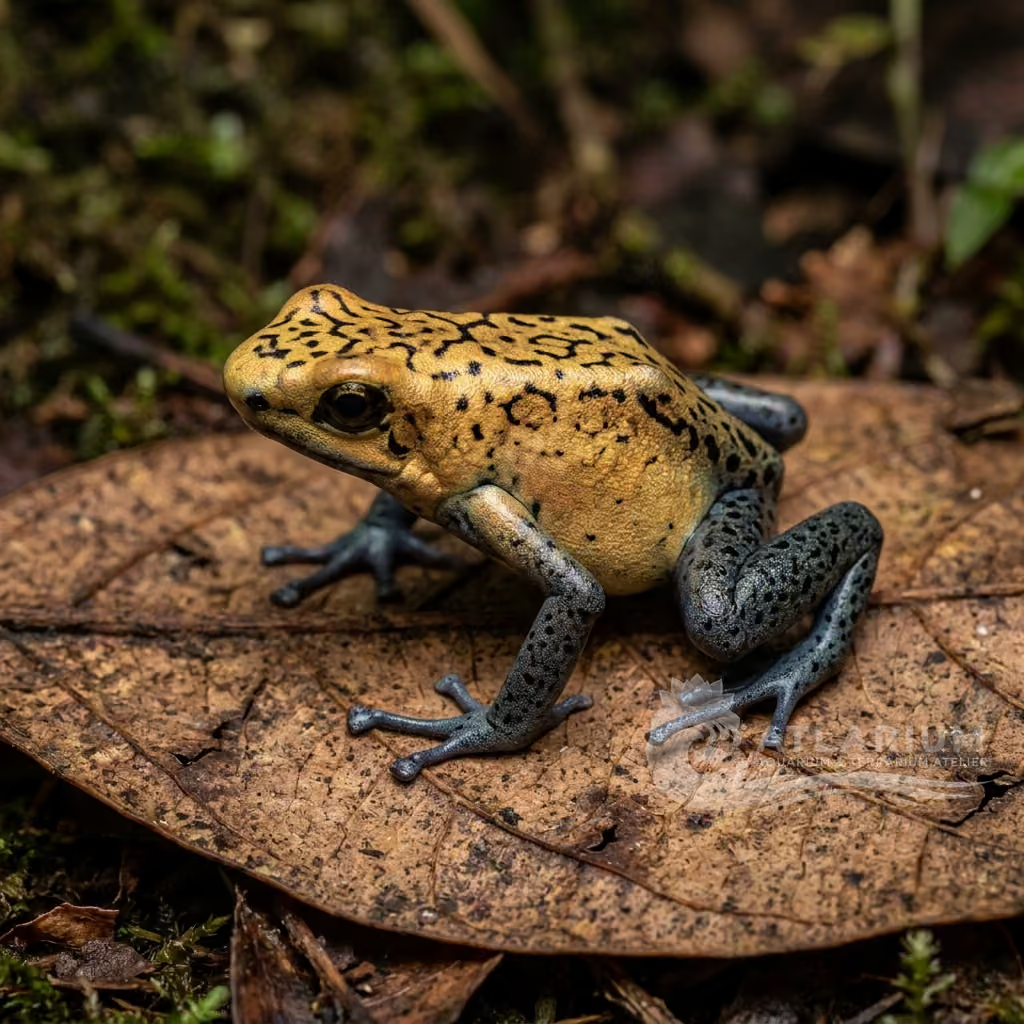
The 'Bakhuis' morph of Dendrobates tinctorius is a dwarf geographic variant from the Bakhuis Mountains of Suriname, featuring a highly detailed, speckled color pattern.
Environnement
Terrestre
Humidité
80 - 100 %
Température diurne
22 - 26 °C
Température nocturne
19 - 21 °C
UVB
Ferguson 1-2
UVI
0 - 1 UVI

Description de l'espèce
Geographical Origin and Habitat: This distinct morph of Dendrobates tinctorius is native to the Bakhuis Mountains range in western Suriname. It inhabits the humid understory of mountain rainforests, living among damp leaf litter, mossy boulders, and fallen logs in a microclimate that remains humid and slightly cooler than the surrounding lowlands.
Taxonomy and Genetics: Part of the family Dendrobatidae. The 'Bakhuis' morph is a geographically isolated genetic lineage. It is characterized by its smaller size relative to other tinctorius morphs, earning it the designation of a dwarf or semi-dwarf form of the species.
Behavior and Habits: Diurnal and terrestrial. They are highly active and visually responsive to their environment. Males demonstrate territorial defense but with less physical violence than larger morphs, using a soft buzzing call. Females compete for mating rights and may wrestle to establish dominance.
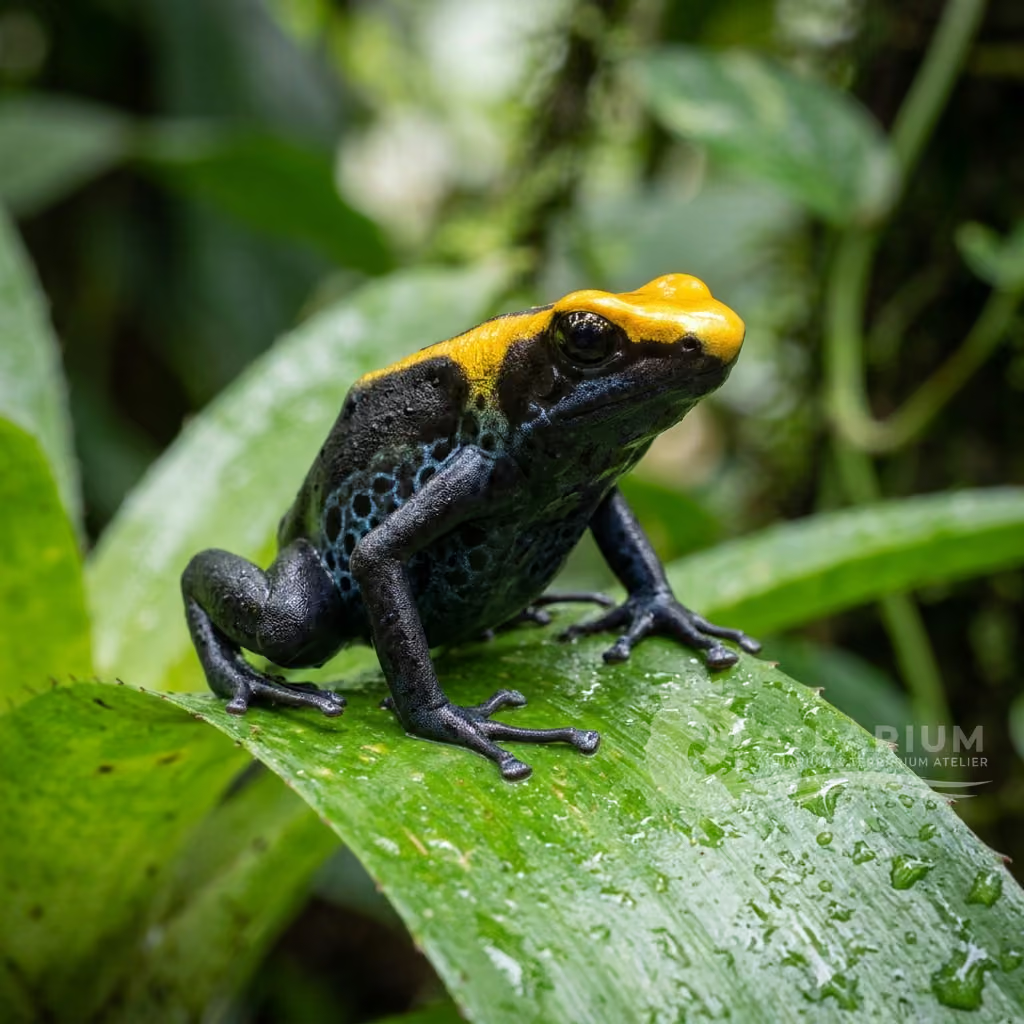
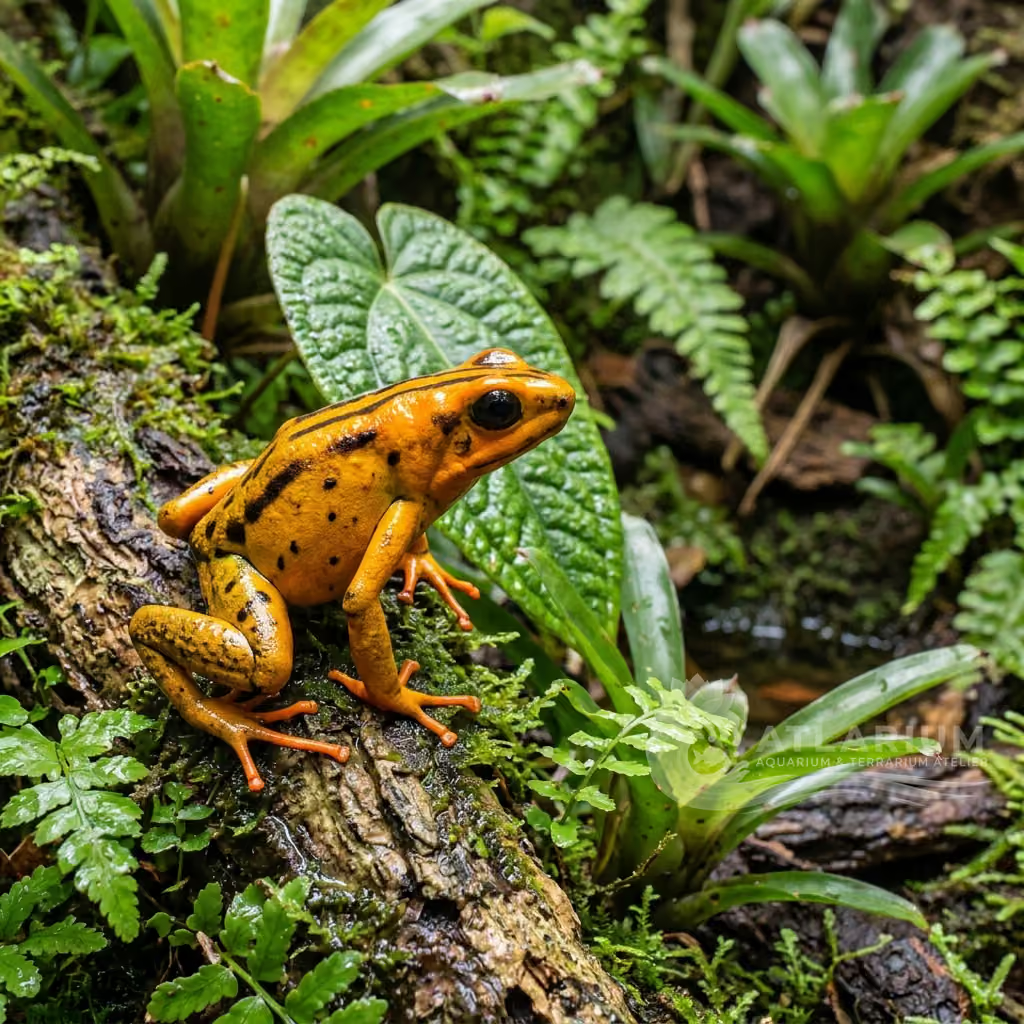
Morphology: One of the smallest geographic variants of Dendrobates tinctorius, with adult sizes ranging between 3.5 and 4.5 cm. The dorsal surface features a black base overlaid with a fine, detailed reticulation of yellow or orange lines, interspersed with white or pale blue spots. The legs are blue or grayish-blue with small black speckles.

Soins, reproduction et cohabitation
Terrarium Setup: A bioactive terrarium of 45x45x45 cm is suitable for a pair or a small trio (one male, two females). Use a clay ball drainage layer, screen mesh, and a soil mix topped with moss and leaf litter. Plant heavily with epiphyte bromeliads, which provide essential climbing and nesting sites.
Lighting and Heating: Provide LED lighting for plant growth and a low-output (2.0) UVB bulb. Maintain daytime temperatures between 21°C and 25°C, with a nighttime drop to 18°C. This mountain morph is highly sensitive to overheating; temperatures above 27°C can be lethal.
Humidity and Hydration: Relative humidity must be kept between 85% and 95%. Mist the enclosure twice daily with reverse osmosis water. Bromeliads are crucial as their water-filled axils are used by frogs to deposit and rear tadpoles. Provide a shallow water bowl (2-3 mm depth).
Feeding and Supplementation: Must be fed live micro-prey daily. Suitable foods include Drosophila melanogaster fruit flies, springtails, and flour beetles. Dust prey items at every feeding with a high-quality calcium powder and multivitamin supplement containing Vitamin A.
Compatibility: Slightly more tolerant of group housing than larger morphs. A trio of one male and two females can be kept together in a well-decorated enclosure, but keepers must observe closely for any signs of female-on-female bullying or food denial.
Health and Common Diseases: Prone to skin fungal infections if the terrarium lacks a proper drainage layer. Nutritional metabolic bone disease (MBD) occurs if calcium or vitamin A supplementation is ignored. Ensure the enclosure has excellent ventilation to prevent stagnant air build-up.

Origine et répartition géographiques
This distinct morph of Dendrobates tinctorius is native to the Bakhuis Mountains range in western Suriname. It inhabits the humid understory of mountain rainforests, living among damp leaf litter, mossy boulders, and fallen logs in a microclimate that remains humid and slightly cooler than the surrounding lowlands.
Origine
Sélection et cultivarsAmazonie, Orénoque et Guyanes

Profil d'amphibien
- Régime alimentaire
- Insectivore
- They consume small invertebrates like ants and mites in the wild. Captive diets consist primarily of flightless fruit flies dusted with calcium. They actively forage using their keen vision to spot prey.
- Espérance de vie
- 10-12 years
- Taille adulte
- 3.2 cm
- Mode de vie/microhabitat
- Terrestrial
- They are predominantly terrestrial amphibians living in the dense leaf litter of tropical rainforests. They occasionally climb lower vegetation to transport tadpoles or seek mates. An extremely high humidity environment between 80% and 100% is required.
- Cycle d'activité
- Diurnal
- These frogs are strictly diurnal and actively forage during the daylight hours. Bright aposematic colors allow them to move boldly without fearing predators. They retreat to leaf litter shelters during the hottest parts of the day.
- Sociabilité
- Gregarious
- They are bold and active frogs that make excellent display animals in planted terrariums. Males are quite territorial and will wrestle others to establish dominance over calling sites. Females are notoriously aggressive and will fiercely fight competing females over resources.
- Reproduction
- Oviparous
- Males attract females using soft buzzing calls from hidden locations under leaves. The female lays a small clutch of gelatinous eggs on a smooth surface after courtship. Males tend to the moist eggs and carry hatched tadpoles to tiny water pools.
- Toxicité
- Toxic
- In their native habitat, they sequester potent lipophilic alkaloid toxins from specialized ants. These toxins are secreted through skin glands as a powerful defense mechanism. In captivity, a fruit fly diet causes them to gradually lose all their toxicity completely.
- Stade de vie
- Neotenic
- Their life cycle begins as an egg hatching into an aquatic tadpole with gills. Over 8 to 12 weeks, the tadpole undergoes profound metamorphosis by developing legs. The miniature froglet eventually leaves the water to begin its fully terrestrial life.
- Tolérance aux manipulations
- Display only
- They possess highly permeable skin that easily absorbs toxins and oils from human hands. Handling must be strictly avoided unless absolutely necessary for health checks. When handling is required, caretakers must use moistened powder-free nitrile gloves.
- Brumation
- Non requise
- This tropical species originates from warm rainforests and does not undergo true brumation. They require consistently warm temperatures maintained between 72°F and 80°F year-round. Any significant temperature drop below 65°F can quickly compromise their immune system.
- Mue
- Yes
- These frogs shed their skin regularly to remain clean and completely free of pathogens. The rapid molting process involves stretching and yawning motions to loosen dead skin. They immediately consume the shed skin to recycle valuable nutrients like calcium.

Espèces associées
Recommandations regroupées par proches parents, compagnons et soins similaires.